Base-City Travel in 2026: 10 Smart Ways to Explore More Without Changing Hotels Every Day
Discover 10 practical base-city travel strategies for exploring multiple destinations with fewer hotel changes, lower transport stress and a more comfortable itinerary.

Travelling to several places during one trip often sounds exciting during the planning stage. In reality, constantly packing suitcases, checking out of hotels, carrying luggage through stations and learning a new neighbourhood every night can quickly become exhausting.
Base-city travel offers a more comfortable alternative. Instead of changing accommodation every day, travellers select one well-connected city or town as their temporary base. From there, they take carefully planned day trips to nearby destinations and return to the same accommodation in the evening.
This approach does not mean seeing less. When planned properly, it can provide more time for meaningful exploration because fewer hours are lost to hotel transfers, repeated check-ins and luggage management. It can be especially useful for couples, families, first-time international travellers, remote workers and anyone who prefers a slower, more organised journey.
The following ten strategies can help you select a suitable base and build a practical multi-destination itinerary in 2026.
For a mountain-trip example using two accommodation bases, see our Dolomites travel guide.
1. Select a Base With Strong Transport Connections

A beautiful city is not automatically a useful travel base. The most important consideration is whether it provides convenient access to the surrounding region.
Before booking accommodation, examine the local railway network, bus routes, ferry services and road connections. A city with a major station may allow travellers to reach several nearby destinations without renting a car. In coastal regions, a port connected to multiple islands or waterfront towns may serve the same purpose.
Pay attention to frequency as well as journey time. A destination located only one hour away may still be inconvenient if transport operates only once or twice per day. Regular services provide greater flexibility and reduce the risk of becoming stranded after missing a departure.
The best base is therefore not necessarily the largest or most famous city. It is the place that creates the simplest connection between your accommodation and the experiences you want to enjoy.
2. Keep Most Day Trips Within a Comfortable Distance

A day trip should leave enough time to experience the destination rather than spending most of the day travelling. For many travellers, a journey of approximately one to two hours in each direction is manageable. Longer distances may still work occasionally, but they can become tiring when repeated throughout the trip.
Consider the complete door-to-door journey instead of looking only at the advertised train or bus duration. Time is also required to reach the station, find the platform, wait for the service and travel from the arrival point to the actual attraction.
A place that appears close on a map may require several transfers. Another destination located farther away may be easier to visit because it has a direct connection. Planning with realistic travel times prevents an attractive itinerary from becoming an exhausting daily commute.
3. Choose Accommodation Near Useful Transport

Accommodation prices often increase near central stations, but choosing the cheapest room on the edge of a city may create additional expenses and inconvenience.
A practical base should provide easy access to the transport you expect to use most frequently. It does not need to stand directly opposite the main station, but reaching the departure point should be simple, safe and reasonably quick.
Before confirming a booking, check the walking route, local public-transport schedule and expected travel time during early mornings or late evenings. Also consider whether the area has supermarkets, restaurants, pharmacies and basic services nearby.
The right location can save valuable time every day. Paying slightly more for convenient accommodation may sometimes cost less overall than repeatedly paying for taxis or missing affordable early departures.
4. Compare Transport Passes With Individual Tickets

Regional rail and public-transport passes can make base-city travel easier, but they are not automatically the cheapest choice.
Begin by listing the day trips you genuinely intend to take. Check the standard ticket price for each journey and compare the total with the cost of an available pass. Look carefully at validity periods, reservation requirements, peak-time restrictions and excluded services.
Some passes include useful additional benefits such as local buses, ferries or admission discounts. Others cover only specific operators and may not work on the fastest service. A pass offers good value when it matches the itinerary—not simply because it is marketed toward tourists.
Transport conditions and prices can change, so travellers should confirm current details through official railway, transit or tourism websites before purchasing.
5. Alternate Busy Excursions With Slower Local Days

Taking a long day trip every morning can make a supposedly relaxing holiday feel like a demanding schedule. A better approach is to alternate major excursions with quieter days in the base city.
After visiting a distant mountain town, island or heritage site, spend the following day exploring a local neighbourhood, park, museum or market. This gives travellers time to rest while still discovering something meaningful.
Slower days also provide space for necessary tasks such as laundry, grocery shopping, organising photographs and reviewing the next part of the itinerary. They can be particularly helpful when travelling with children, older family members or anyone who becomes tired during long journeys.
A successful trip does not need to fill every available hour. Leaving room to recover often makes the memorable days more enjoyable.
6. Study the Last Return Connection
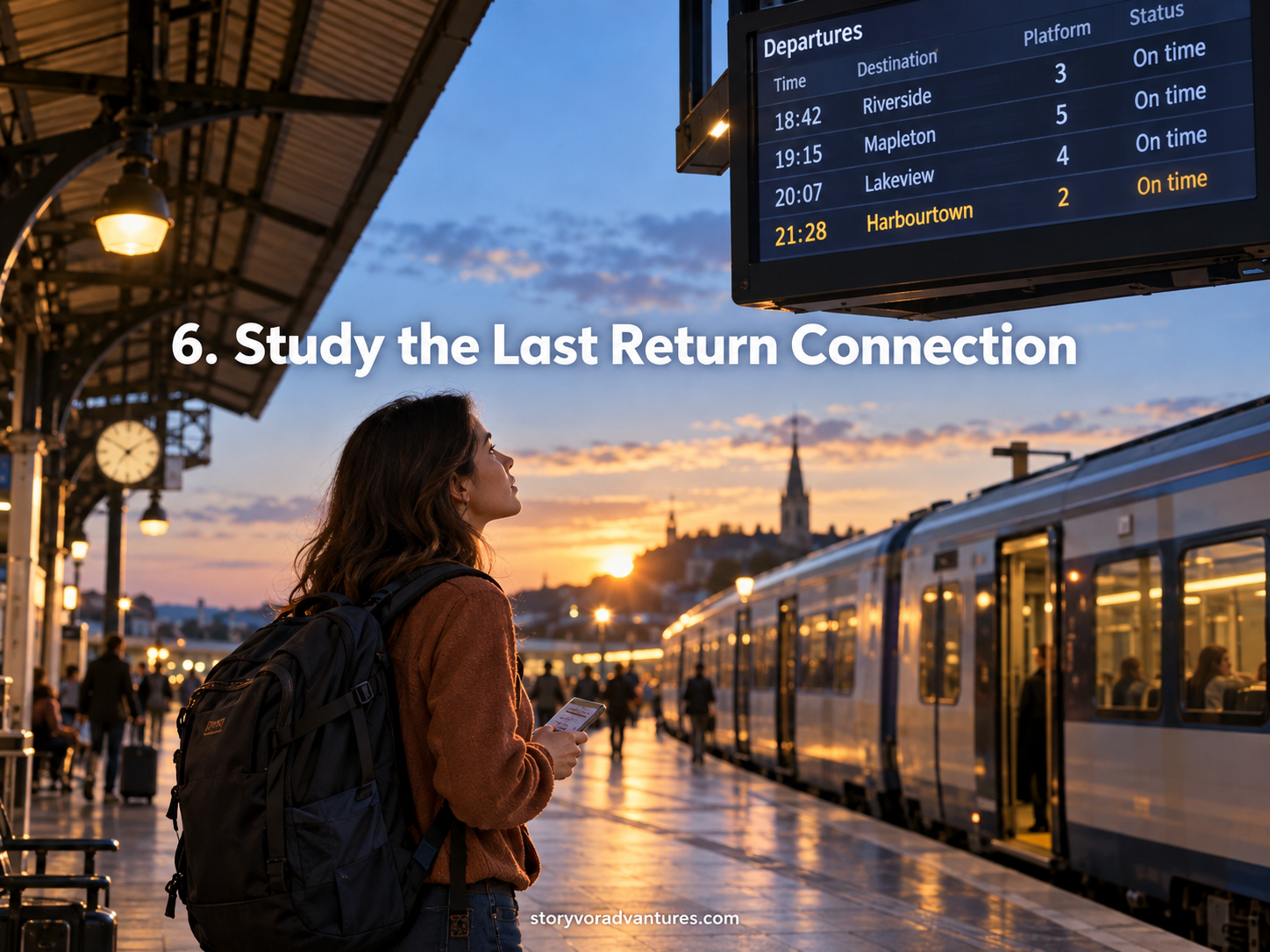
Many travellers carefully plan how to reach a destination but forget to check how they will return.
Before leaving the base city, identify the last practical train, bus or ferry back. Do not assume services operate late simply because the destination is popular. Evening schedules may be less frequent, especially on weekends, public holidays or outside the main tourist season.
Whenever possible, avoid depending on the final service of the day. A cancellation or missed connection could result in an unexpected overnight stay. Keeping an earlier return option provides a useful safety margin.
Save essential schedule information offline and note an alternative route where one exists. If the journey requires several transfers, allow enough time between them instead of relying on a perfect sequence of departures.
7. Prepare a Flexible Day-Trip List

Weather, transport interruptions and seasonal closures can affect even a carefully researched itinerary. Base-city travel works best when the schedule remains flexible.
Create a shortlist of possible day trips rather than permanently assigning every excursion before arrival. Separate them into categories such as clear-weather experiences, indoor cultural visits and short local outings.
A mountain viewpoint may be more rewarding on a clear day, while a museum, historic district or covered market can remain suitable during rain. Travellers can then choose the most appropriate option each morning according to current conditions.
Flexibility also helps reduce unnecessary disappointment. Instead of forcing the original plan to work, travellers can adapt while continuing to use the same comfortable accommodation.
8. Carry a Lightweight Day-Trip Kit
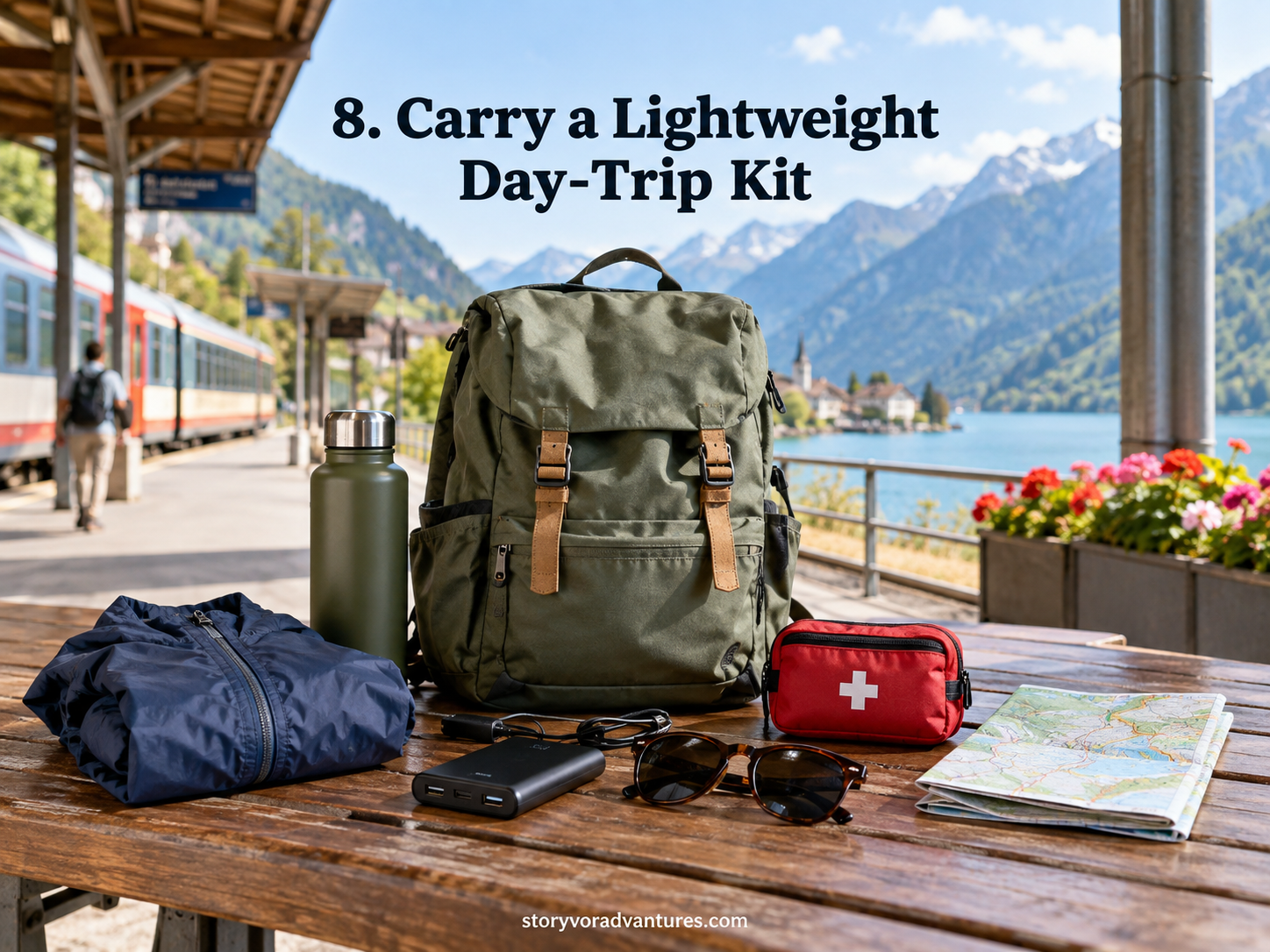
One benefit of maintaining a fixed base is that large suitcases can remain safely at the accommodation. Only the items required for the day need to be carried.
A practical day-trip bag may contain drinking water, basic medication, a portable charger, weather protection, identification, essential booking details and a small amount of emergency money. The exact contents should reflect the destination, activity and local conditions.
Avoid carrying unnecessary valuables. Keep passports and important documents secure according to local requirements, and store digital copies separately where appropriate. If visiting a remote natural area, additional preparation may be necessary because shops, mobile coverage or medical assistance may be limited.
Travelling lightly makes walking and using public transport more comfortable, but essential safety items should never be removed merely to reduce weight.
9. Explore the Base City as a Destination

A common mistake is treating the base city only as a place to sleep. This can cause travellers to overlook the neighbourhoods, food traditions and everyday experiences located directly around them.
Reserve time to explore beyond the main station and hotel area. Visit an independent café, neighbourhood market, public park or locally significant cultural place. Walk through residential areas respectfully and observe how daily life changes between morning and evening.
Staying for several nights can reveal details that short-term visitors often miss. Travellers may begin to recognise familiar streets, understand the public-transport system and discover quieter places that are absent from standard day-trip itineraries.
The base itself should contribute to the journey rather than functioning only as a convenient address.
10. Know When a Second Base Is Necessary

Base-city travel is useful, but attempting to cover an enormous region from one location can create long and repetitive journeys.
If several important destinations require more than two or three hours of travel in each direction, dividing the holiday between two bases may be more sensible. For example, travellers could spend the first part of a trip exploring one region and then move once to another strategically located city.
The objective is not to avoid every accommodation change. It is to eliminate unnecessary changes while keeping the itinerary comfortable and geographically realistic.
Mark all intended destinations on a map and group nearby places together. This simple exercise can reveal whether one base is sufficient or whether two carefully selected locations would reduce the total travel time.
Who Can Benefit From Base-City Travel?
This travel style can be especially useful for first-time international travellers who want a predictable place to return to each evening. Families may appreciate avoiding repeated packing, while couples can enjoy a more relaxed itinerary without abandoning the opportunity to explore multiple locations.
It may also help travellers carrying specialist equipment, working remotely or managing dietary and accessibility requirements. Remaining in one accommodation makes it easier to understand the surrounding services and communicate specific needs.
However, the approach may not suit travellers whose main objective is covering very long distances or completing a linear road trip. The most suitable itinerary depends on personal energy levels, interests, transport availability and the geography of the region.
Real Example: Using Lisbon as a Base
Lisbon can work as a base for a trip that includes both the city and nearby day trips. You could spend one day exploring Lisbon, set aside a separate day for Sintra, and choose another day for Cascais before returning to the same accommodation each evening. Portugal’s rail operator, CP, lists both Sintra and Cascais in Lisbon’s urban train network. Because they use different routes, check the departure station, current timetable and last return train for each day trip before booking your plans.
Important Planning Reminder
Transport schedules, ticket prices, visa conditions, attraction opening hours and local safety requirements can change. Information found in older articles or social-media posts may no longer be accurate.
Before travelling, verify essential details through official government, transport and tourism sources. Keep some flexibility in both your budget and schedule, and consider suitable travel insurance according to your circumstances and planned activities.
Final Thoughts

A memorable journey is not measured by the number of hotels used or the number of cities mentioned in an itinerary.
Base-city travel encourages travellers to explore a region from one comfortable and well-connected location. It can reduce packing, simplify transport decisions and create more time to understand both famous attractions and ordinary local life.
The key is choosing the base carefully. Strong transport connections, realistic journey times, convenient accommodation and a flexible schedule matter more than selecting the most famous city.
With thoughtful planning, one temporary home can become the starting point for many different journeys—and make the entire trip feel calmer, deeper and more rewarding.