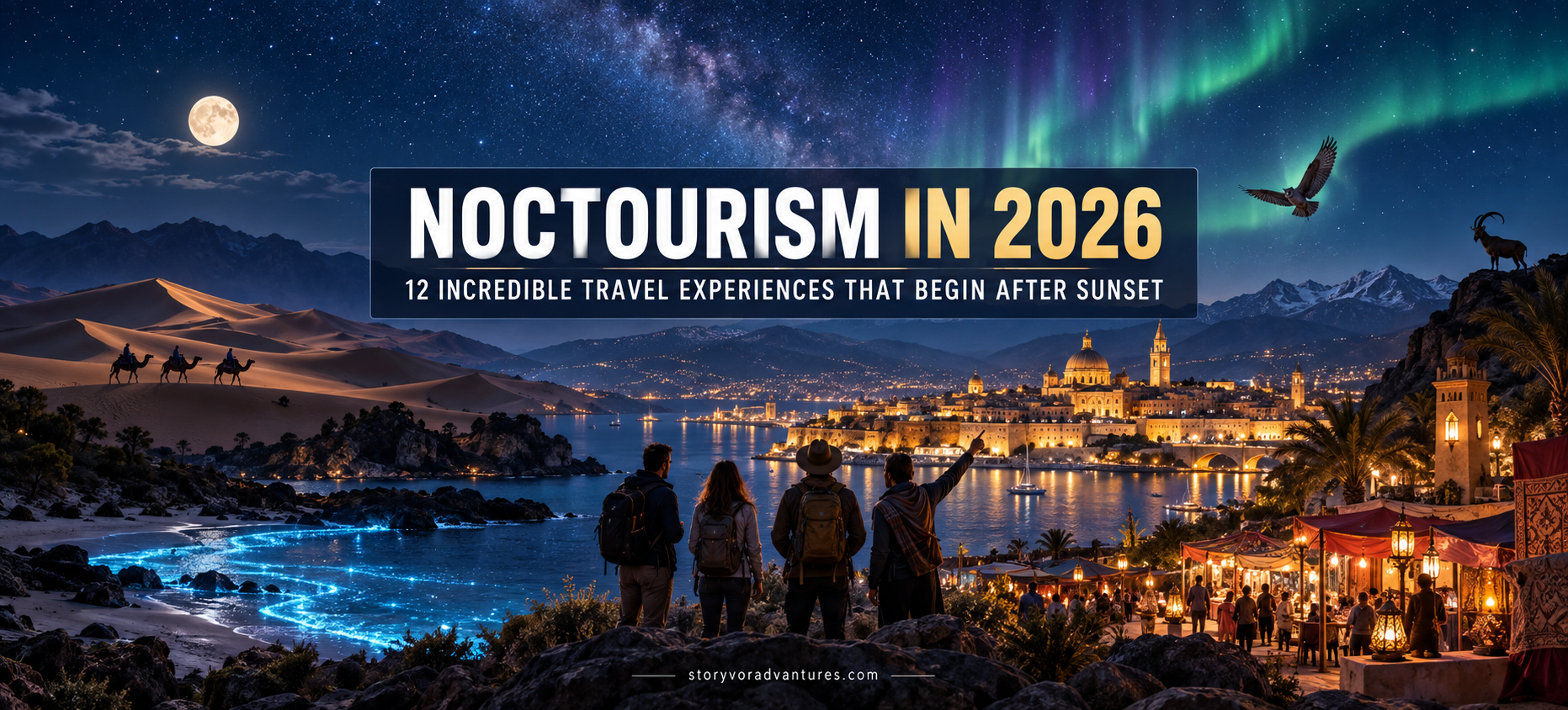
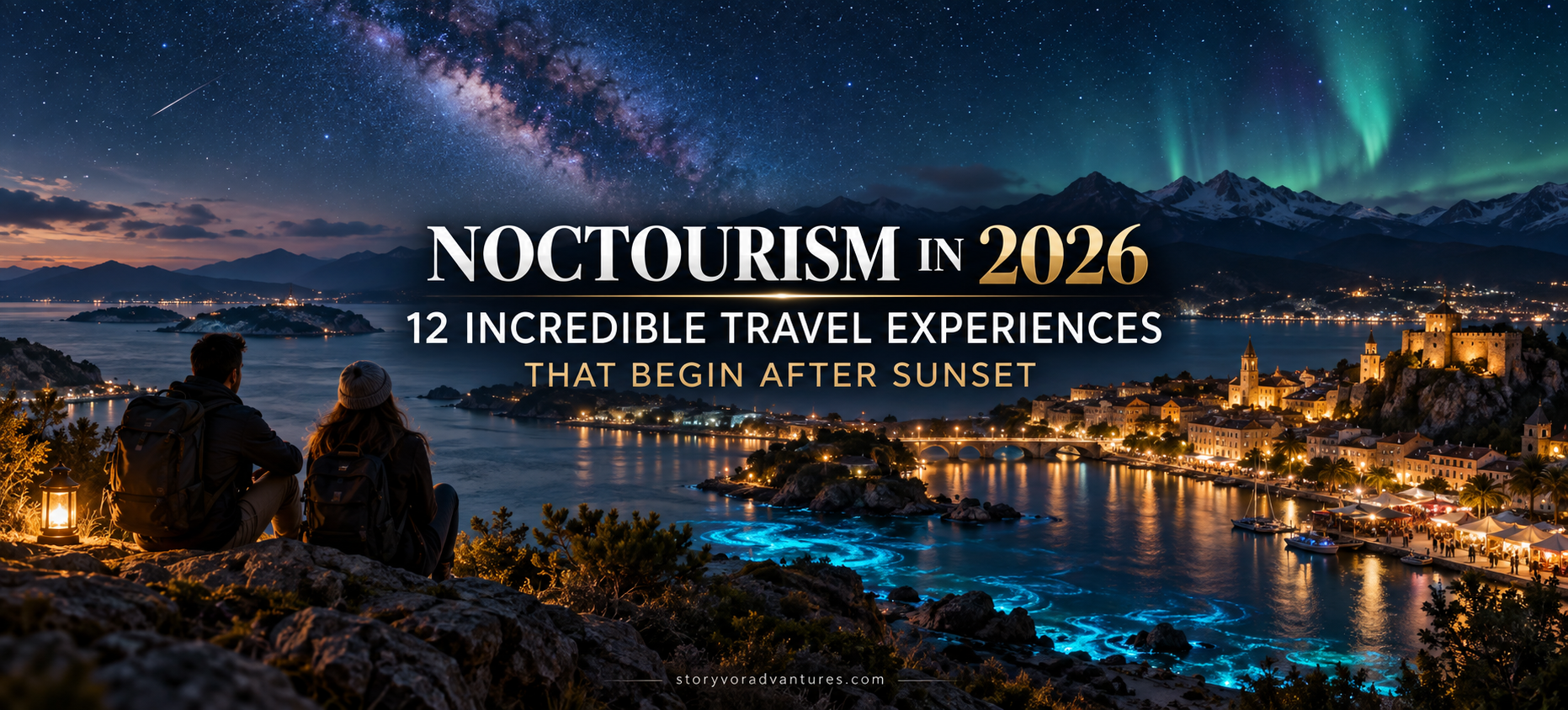
Noctourism in 2026: 12 Incredible Travel Experiences That Begin After Sunset
- For many years, travel planning focused mainly on what people could see between sunrise and sunset. Travellers visited landmarks, beaches, museums and markets during the day before returning to their accommodation at night.
- That pattern is changing.
- In 2026, more travellers are becoming interested in noctourism—travel experiences that take place after sunset. It may involve watching the northern lights, walking through a lively night market, observing wildlife with a trained guide or simply looking at the stars from a remote landscape.
- Night travel can reveal a completely different side of a destination. Busy streets may become peaceful, desert temperatures can feel more comfortable and familiar landscapes can appear almost unrecognisable under moonlight.
- However, noctourism requires thoughtful planning. Darkness changes visibility, transportation options, weather conditions and personal-safety considerations. Wildlife and local communities can also be disturbed when night activities are managed irresponsibly.
- The following experiences show how travellers can explore the world after dark while remaining prepared, respectful and realistic.
1. Stargazing in a Dark-Sky Reserve
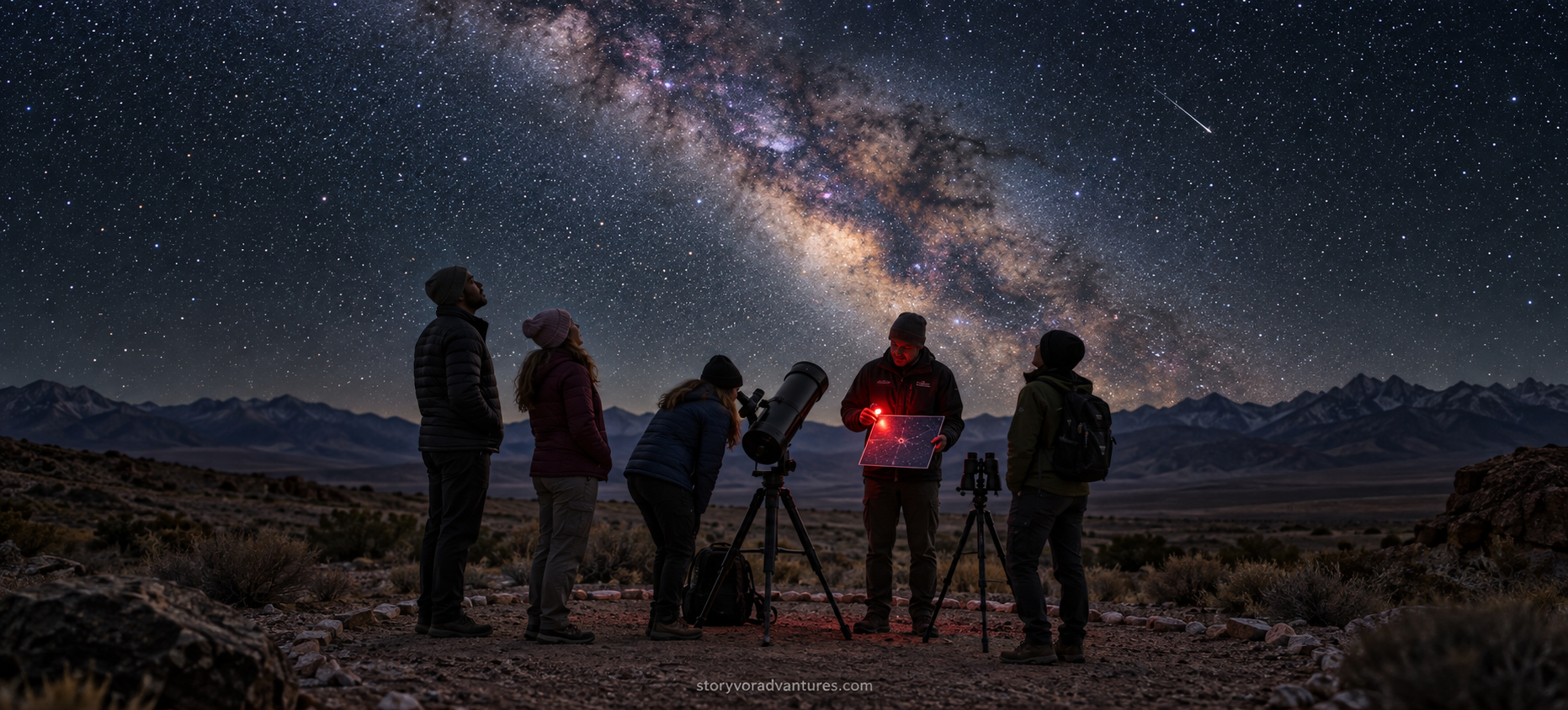
- In heavily populated cities, artificial light can hide thousands of stars. Travelling to an officially recognised or naturally dark location allows visitors to experience the night sky with far greater clarity.
- Dark-sky reserves, remote deserts and mountain regions can offer views of constellations, planets, meteor showers and the Milky Way. Places such as the Atacama Desert in Chile, the Namib Desert in southern Africa and the Aoraki Mackenzie region of New Zealand are widely associated with exceptional night skies.
- The experience does not require advanced equipment. On a clear night, the human eye can reveal an extraordinary amount once it adjusts to the darkness. Binoculars, a simple star-identification application or a guided astronomy session can add useful context.
- Weather, cloud cover, moonlight and seasonal conditions strongly influence visibility. Travellers should check forecasts, bring warm clothing and avoid wandering away from marked areas in unfamiliar darkness.
- Using a red-light torch instead of a bright white light can help preserve night vision and reduce disturbance to other visitors.
2. Watching the Northern Lights
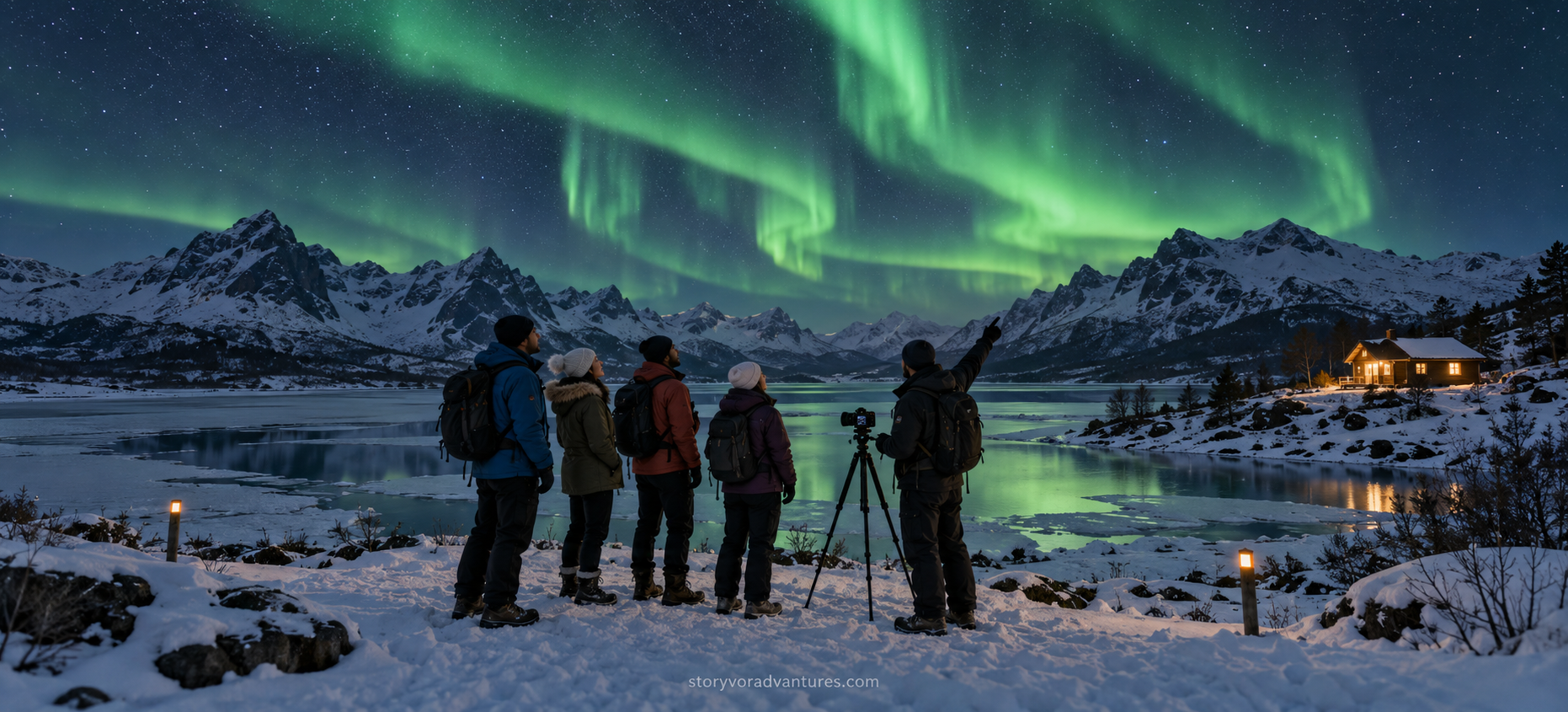
- The northern lights are among the most desired night-travel experiences in the world. Green, purple or red light may appear to move across the sky when charged solar particles interact with Earth’s atmosphere.
- Northern regions of Norway, Sweden, Finland, Iceland, Canada and Alaska are popular for aurora-focused journeys. Nevertheless, travelling north does not guarantee a display. Solar activity, cloud cover, darkness and local conditions all affect visibility.
- A common beginner mistake is arranging only one night for aurora viewing. Allowing several nights can improve the opportunity to experience suitable conditions. Flexible plans are helpful because local guides may change locations according to cloud movement and forecasts.
- Winter conditions can be severe, and viewing areas may be far from towns. Travellers need suitable clothing, safe transportation and realistic expectations.
- Even when the aurora does not appear, a responsible trip can still include snowy landscapes, local culture and other seasonal activities. The journey should offer value beyond a single unpredictable natural event.
3. Exploring Bioluminescent Waters
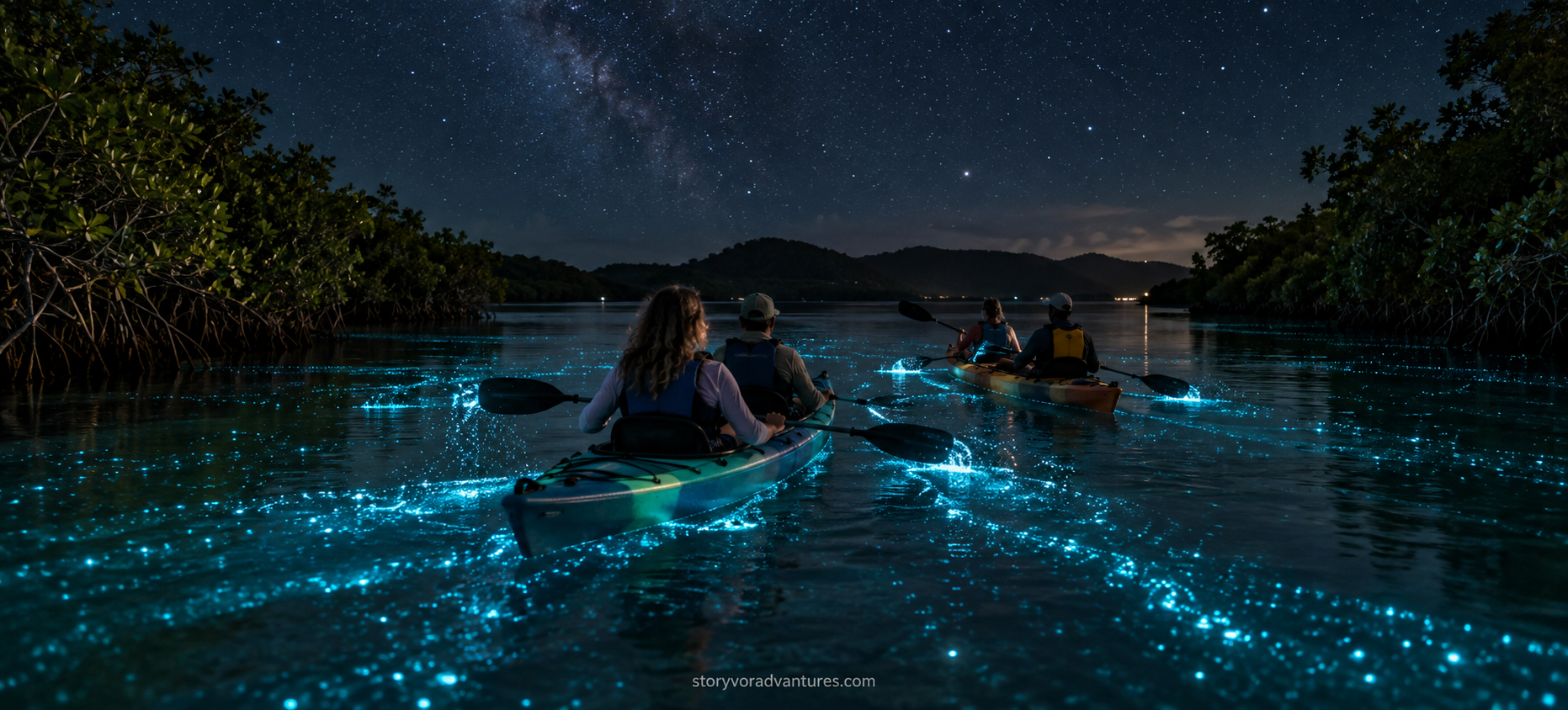
- Some coastlines, bays and lagoons appear to glow at night because microscopic organisms produce visible light when the water moves. A paddle or gentle wave may create tiny blue-green flashes across the surface.
- Bioluminescent experiences are available in different regions, including parts of Puerto Rico, the Caribbean and several tropical coastlines. Their intensity can vary according to water conditions, season, weather, moonlight and the concentration of organisms.
- Online photographs may show colours more intensely than they appear to the human eye. Long camera exposures and image processing can make the glow look brighter, so travellers should arrive with realistic expectations.
- These ecosystems can be highly sensitive. Visitors should select responsible local operators, avoid entering restricted water and never collect organisms as souvenirs. Sunscreen, chemicals, boat pollution and careless swimming may affect fragile habitats in some locations.
- A quiet kayak tour led by a knowledgeable local guide can provide a more respectful experience than a crowded or poorly managed excursion.
4. Joining a Responsible Night Safari
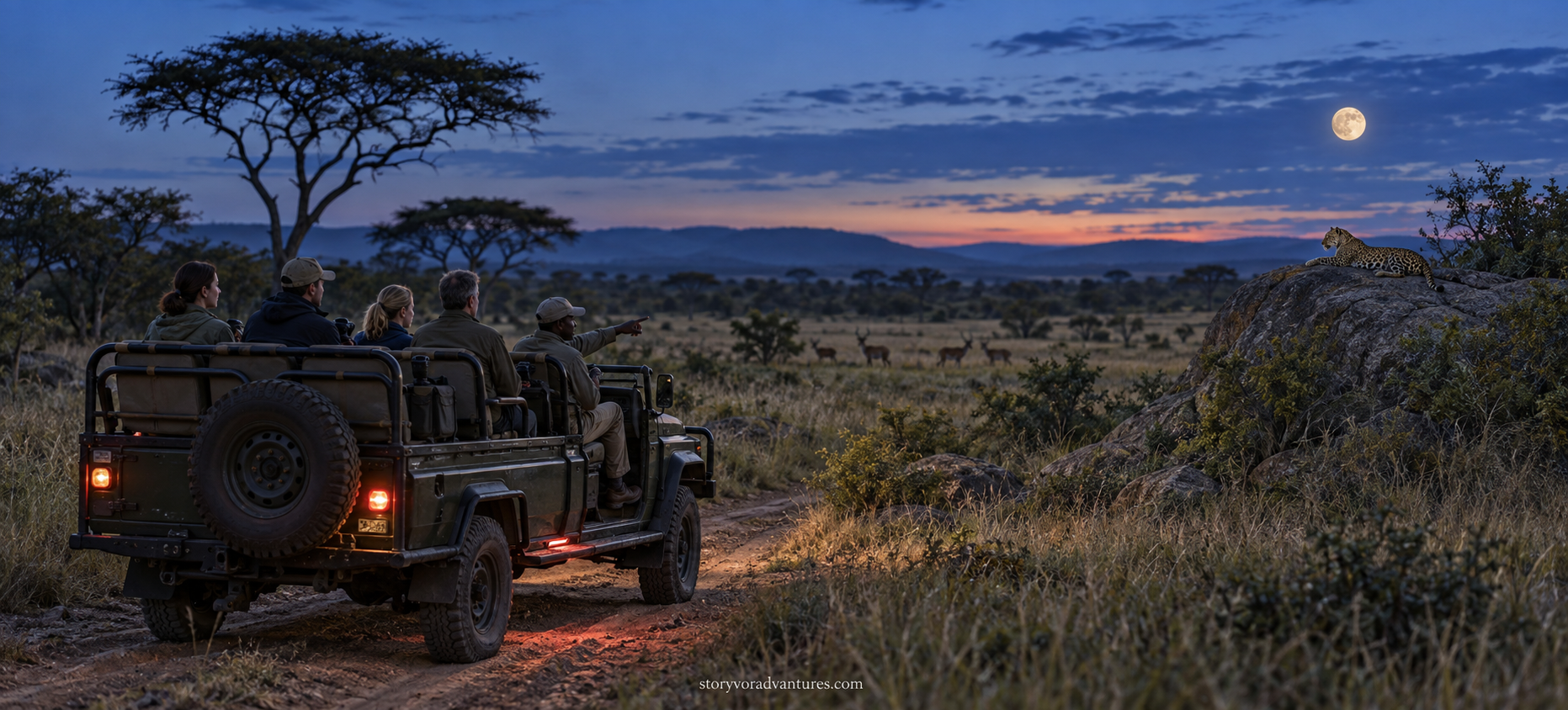
- Forests, grasslands and wetlands behave differently after sunset. Some animals become active only when daytime temperatures fall, while others rely on darkness to hunt, feed or move safely.
- A guided night safari may reveal owls, insects, nocturnal mammals, reptiles and animal behaviour that daytime visitors rarely observe. The experience can take place in a protected reserve, forest or specialised conservation area.
- Responsible wildlife viewing is essential. Powerful lights should not be directed continuously into an animal’s eyes, and vehicles should never chase or surround wildlife. Playing recorded animal calls merely to attract a species can also cause stress or interfere with natural behaviour.
- Choose trained guides who follow park regulations and maintain an appropriate distance. Remain quiet, avoid sudden movements and keep flash photography turned off unless a guide clearly confirms that it is permitted.
- The objective should be to observe animals without changing what they would naturally be doing.
5. Walking Through a Night Market
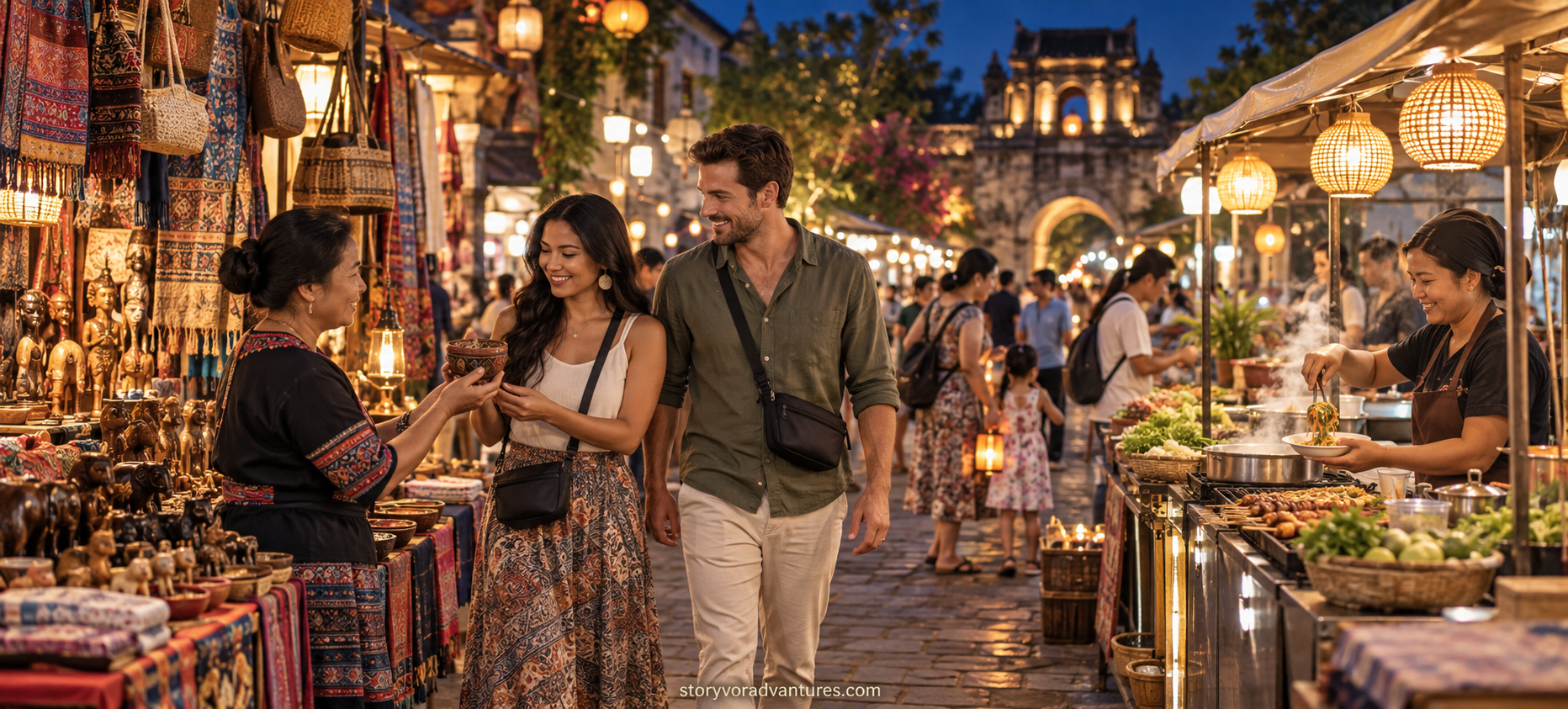
- Night markets bring together food, crafts, conversation and local routines in one energetic setting. They can offer visitors an accessible way to experience everyday culture after daytime attractions have closed.
- Cities across Asia, the Middle East, Europe, Africa and Latin America have their own versions of evening markets. Some focus on street food, while others specialise in handmade products, clothing, music or seasonal celebrations.
- A good night-market experience involves more than photographing colourful stalls. Take time to observe local etiquette, understand how ordering works and support vendors respectfully.
- Choose busy food stalls where ingredients appear fresh and meals are prepared hygienically. Travellers with allergies or dietary restrictions should learn a few relevant local phrases or carry a translated information card.
- Crowded markets also require basic awareness. Keep valuables secure, carry only the money needed for the evening and agree on a meeting point when travelling with other people.
6. Discovering a City After Dark
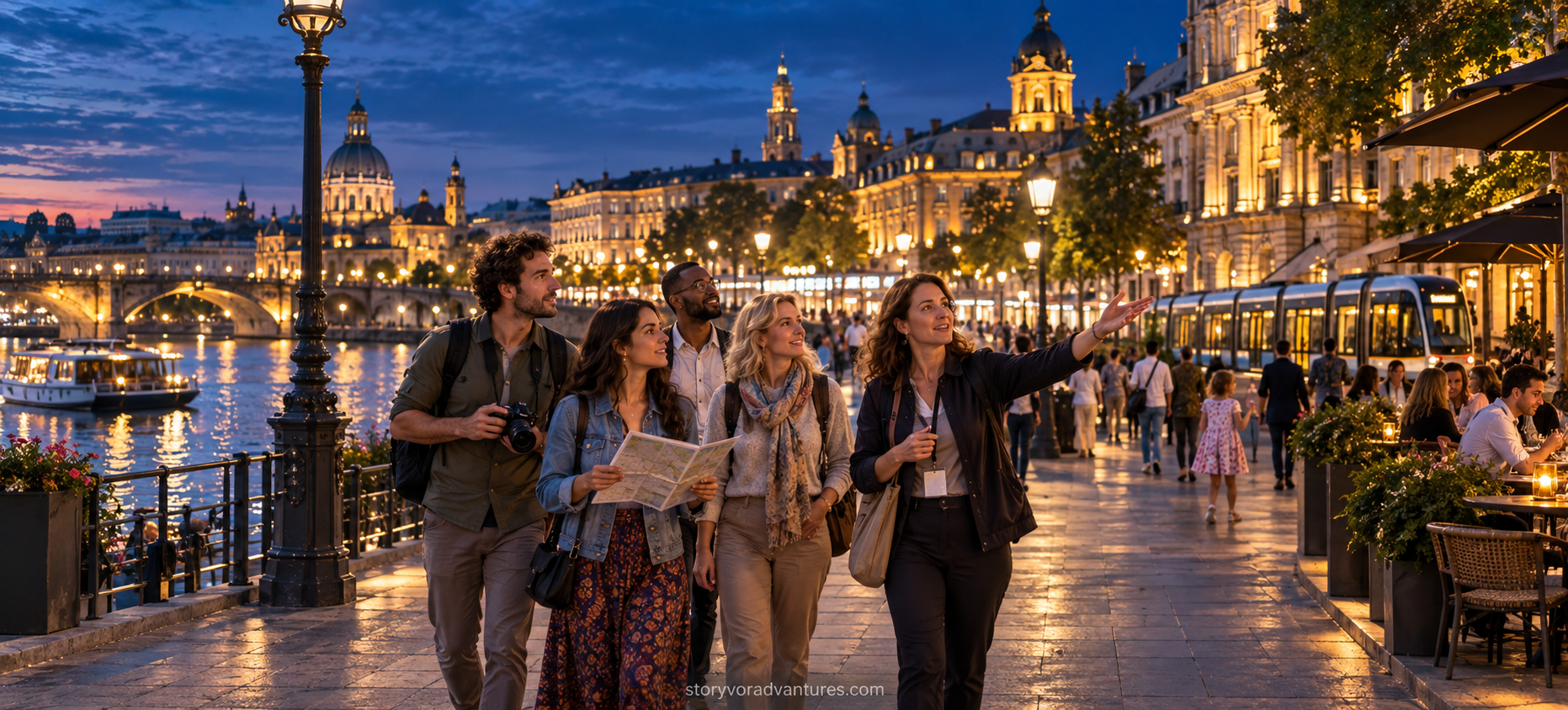
- A city can develop a completely different personality at night. Office districts become quiet, public squares fill with local families and illuminated architecture reveals details that are easy to miss during the day.
- An evening walk may include waterfront areas, public art, late-opening museums, cultural performances or neighbourhood cafés. The best experience is not necessarily found in the loudest entertainment district.
- Before exploring, research which areas remain active and well connected after dark. Public transportation may operate less frequently at night, and some stations or entrances can close earlier than expected.
- A guided walking tour can be useful for a first visit, especially when it explains history, architecture and local traditions rather than simply moving between photo locations.
- Avoid treating residential streets as entertainment venues. Keep noise low, respect private property and remember that the attractive buildings in your photographs may also be people’s homes.
7. Taking a Moonlight Desert Tour
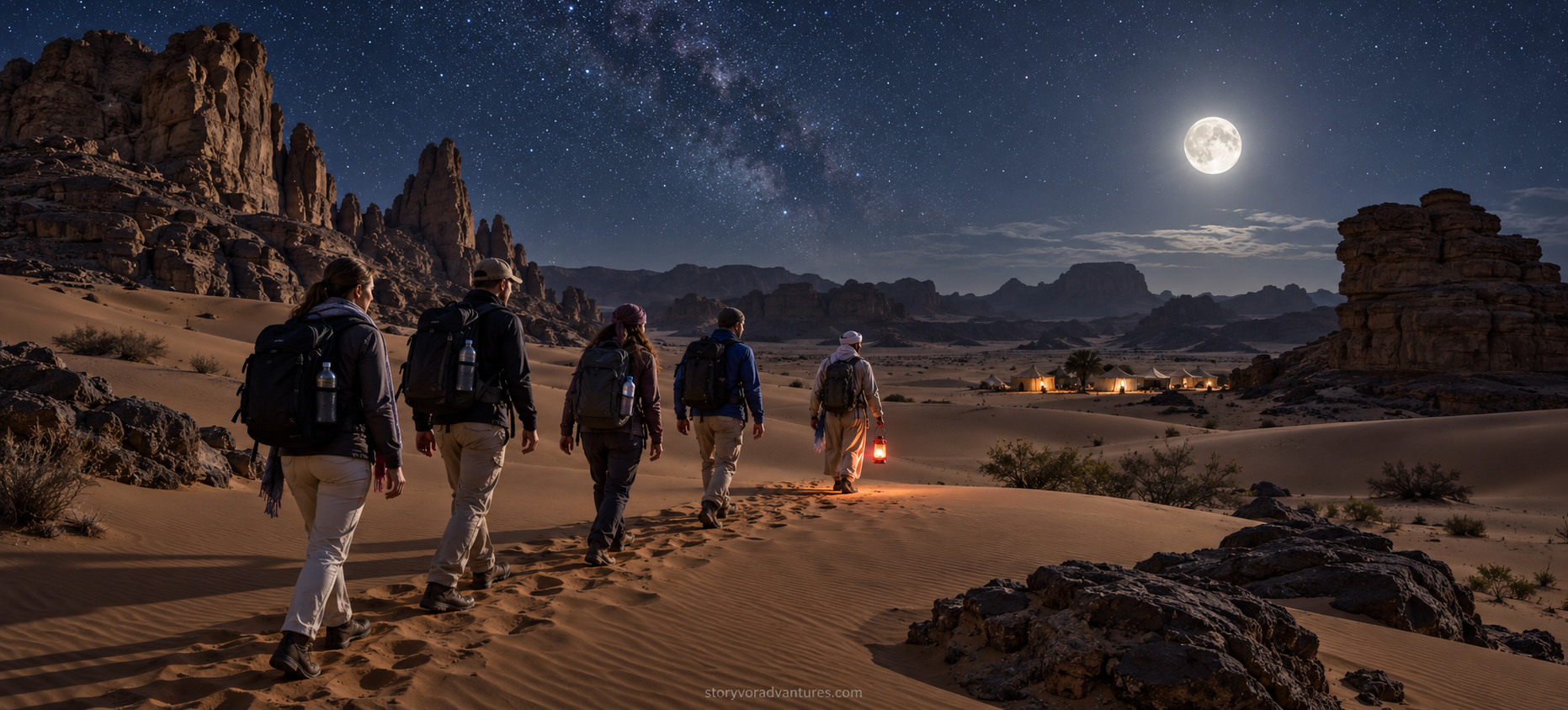
- Deserts can feel harsh during the hottest hours of the day, but their atmosphere changes after sunset. Temperatures fall, colours disappear into silhouettes and the absence of city lights can reveal an enormous sky.
- Guided evening experiences are available in regions such as Wadi Rum, the Sahara and the Atacama Desert. Depending on local rules and environmental conditions, an outing may include a short walk, traditional meal, astronomy session or overnight camp.
- Desert temperatures can fall quickly, so warm layers may be necessary even when the day was hot. Travellers should carry water and remain with an experienced guide because distances and directions become difficult to judge in darkness.
- Responsible operators use established routes and campsites, manage waste carefully and avoid damaging fragile desert vegetation. Cultural experiences should involve local communities fairly rather than presenting traditions merely as tourist performances.
- Silence is one of the desert’s greatest qualities. Loud music and excessive lighting can remove the very atmosphere travellers came to experience.
8. Joining a Guided Volcano Experience at Night
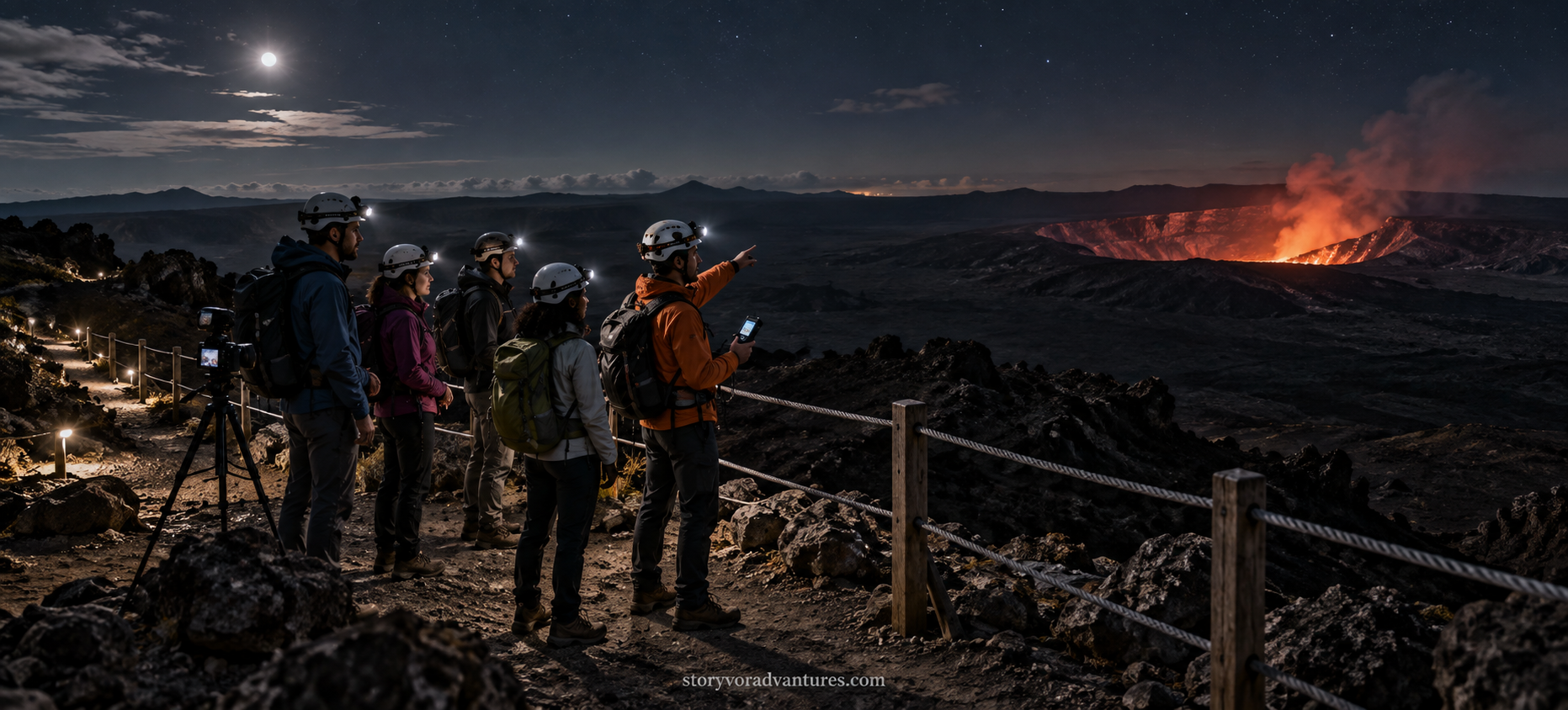
- A volcanic landscape can appear especially dramatic after sunset. In locations where authorities permit access, distant glowing activity or illuminated geological formations may create an unforgettable view.
- Active volcanoes are also unpredictable environments. Conditions can change because of gas emissions, weather, seismic activity or changes in the volcano itself. A location that was accessible during trip planning may be restricted by the time a traveller arrives.
- Never cross barriers, ignore evacuation instructions or approach hazardous areas for a photograph. Independent exploration at night can be particularly dangerous because uneven terrain and sudden weather changes become harder to identify.
- Choose an authorised guide, wear suitable footwear and check official notices immediately before travelling. If access is closed, accept the decision without attempting to find an unofficial route.
- No photograph is worth entering an area that specialists have declared unsafe.
9. Visiting Historic Places After Sunset
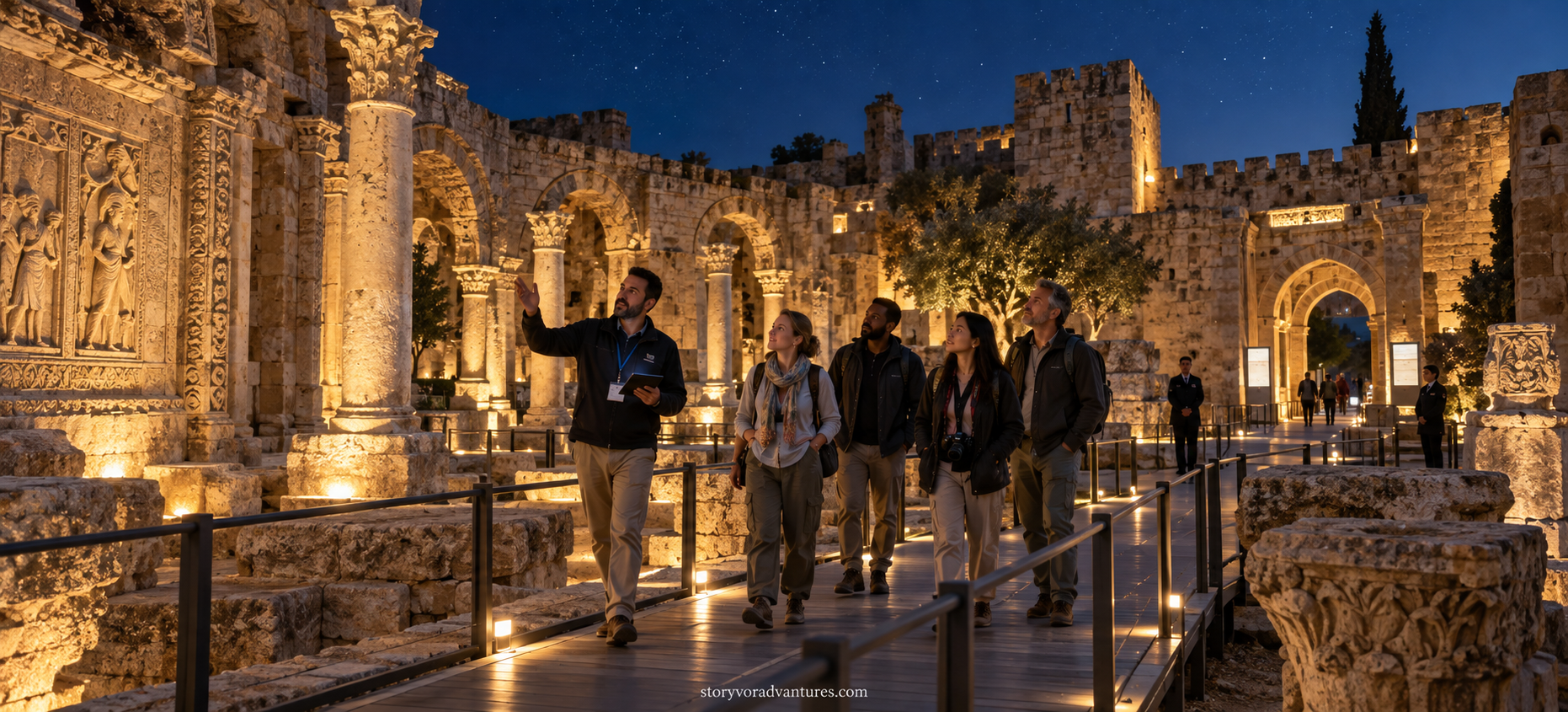
- Historic buildings and archaeological areas often look completely different under carefully designed evening lighting. Shadows reveal textures, daytime crowds may disappear and guided night programmes can use storytelling to bring the past to life.
- Some museums, castles, old towns and heritage sites offer official evening openings or seasonal events. These organised experiences are preferable to entering closed areas or exploring isolated ruins without permission.
- Check authorised opening times rather than relying on outdated blog posts or social-media videos. Access rules may change according to conservation work, local events or seasonal schedules.
- Flash photography, tripods and drones may be restricted. Visitors should avoid touching ancient surfaces, climbing walls or leaving marked paths.
- The most meaningful night visit is not simply about getting an unusual photograph. It is an opportunity to understand why a place matters and why its protection is necessary.
10. Taking an Evening Wildlife Cruise
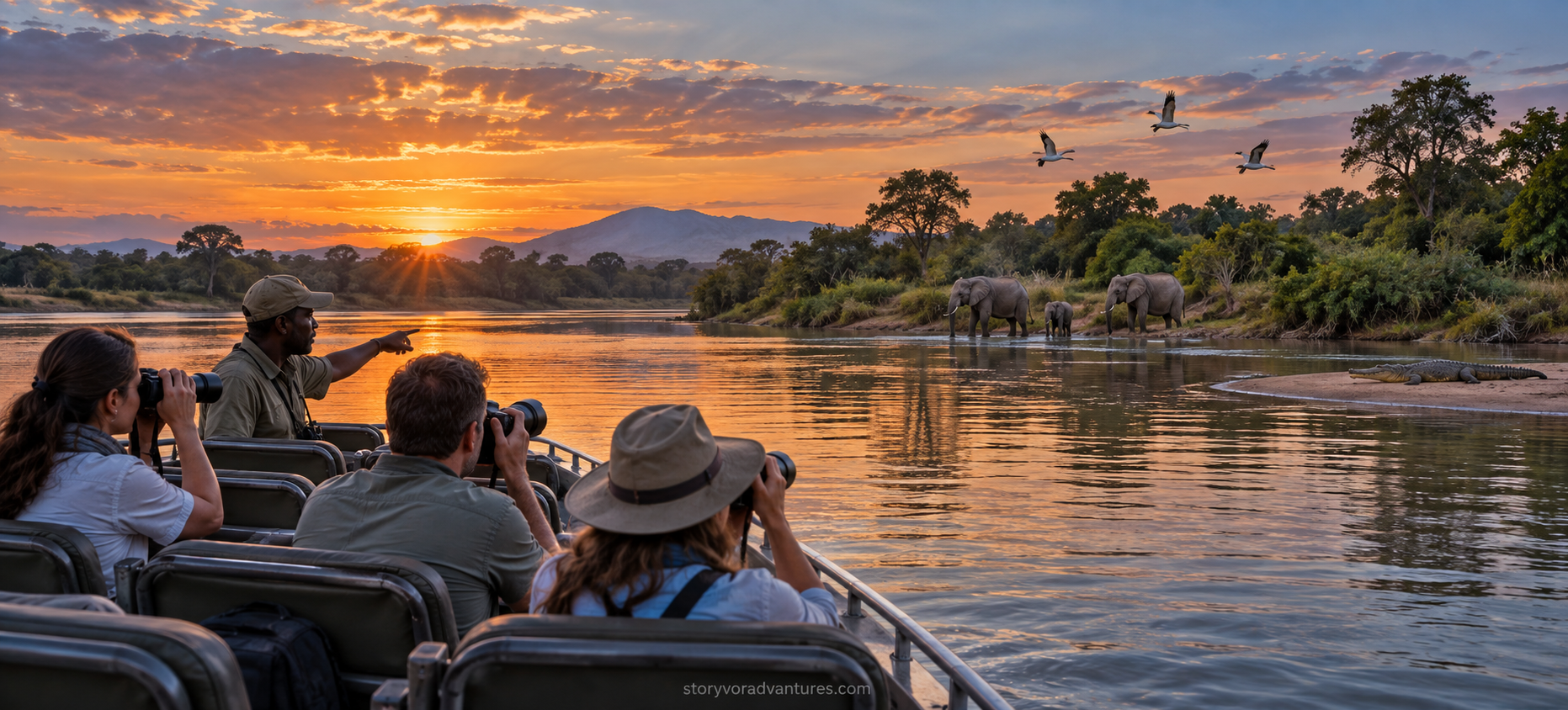
- Rivers, wetlands and coastal environments can become active around sunset. An evening boat journey may reveal birds returning to roost, nocturnal animals approaching the water or marine life becoming visible beneath the surface.
- These experiences are available in various regions, from tropical rivers to mangrove forests and protected coastal areas. What travellers see will always depend on the season, weather and natural behaviour of wildlife.
- Choose a licensed operator that follows speed limits and keeps an appropriate distance from animals. Boats should not block wildlife routes or use bright lights continuously to force an encounter.
- Wear a life jacket and keep cameras secured. In regions with insects, appropriate protective clothing may be more suitable than applying excessive scented products.
- A responsible operator will never guarantee a particular animal sighting. Wildlife is not performing on a schedule, and uncertainty is part of an authentic nature experience.
11. Camping Beneath a Clear Night Sky
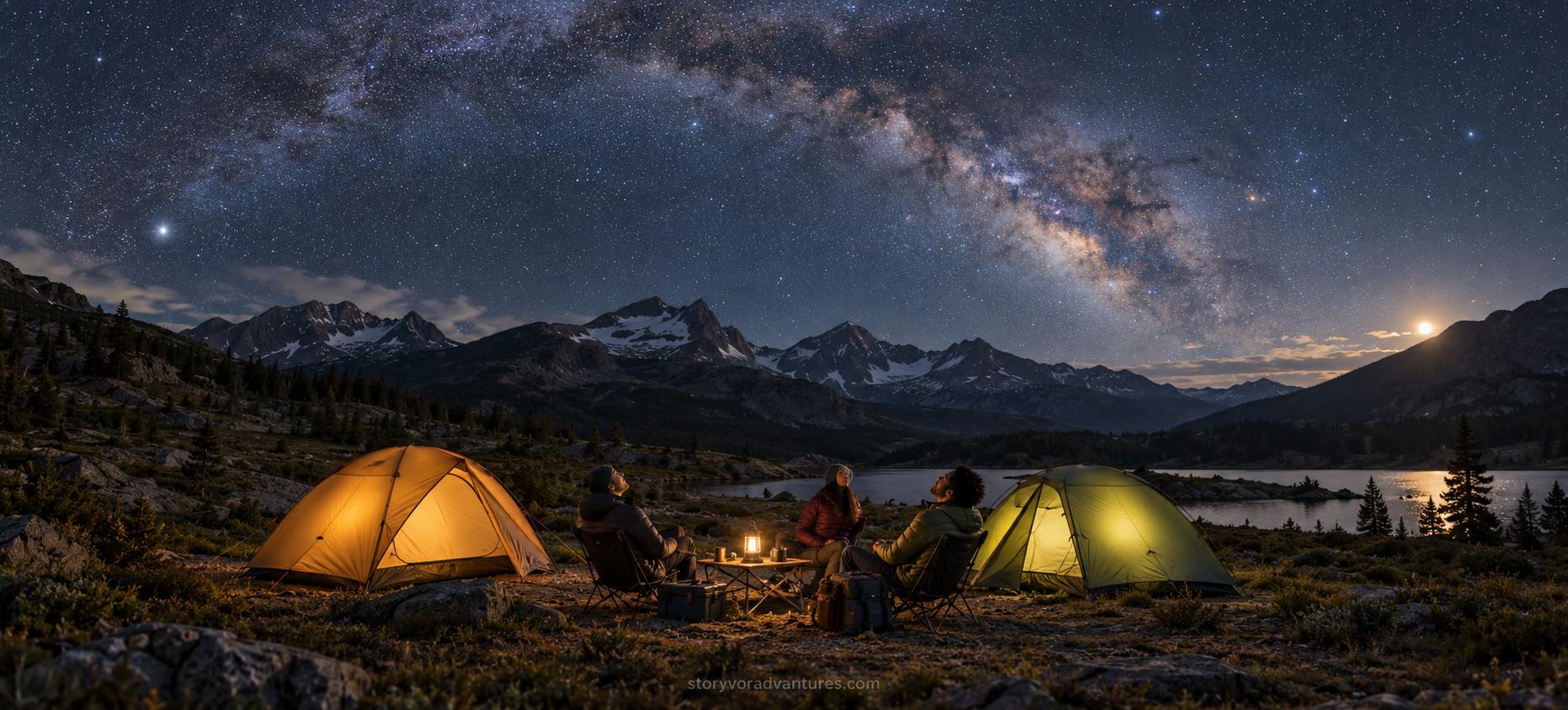
- Camping can turn the night sky from a short activity into the background of an entire journey. Away from artificial light, travellers may hear unfamiliar natural sounds, watch stars move overhead and experience sunrise without leaving the landscape.
- Mountain valleys, deserts, forests and rural areas can all provide memorable night settings, but camping should take place only where it is legally permitted.
- Check weather conditions, fire restrictions, wildlife guidance and campsite regulations. Carry suitable sleeping equipment, lighting, water and a reliable method of communication where possible.
- Food must be stored according to local wildlife requirements. Leaving it outside a tent can attract animals and create risks for both visitors and wildlife.
- Follow leave-no-trace principles by removing waste, avoiding unnecessary noise and using existing campsites whenever required. The goal is to experience the landscape without leaving permanent evidence of your stay.
12. Photographing the World After Dark
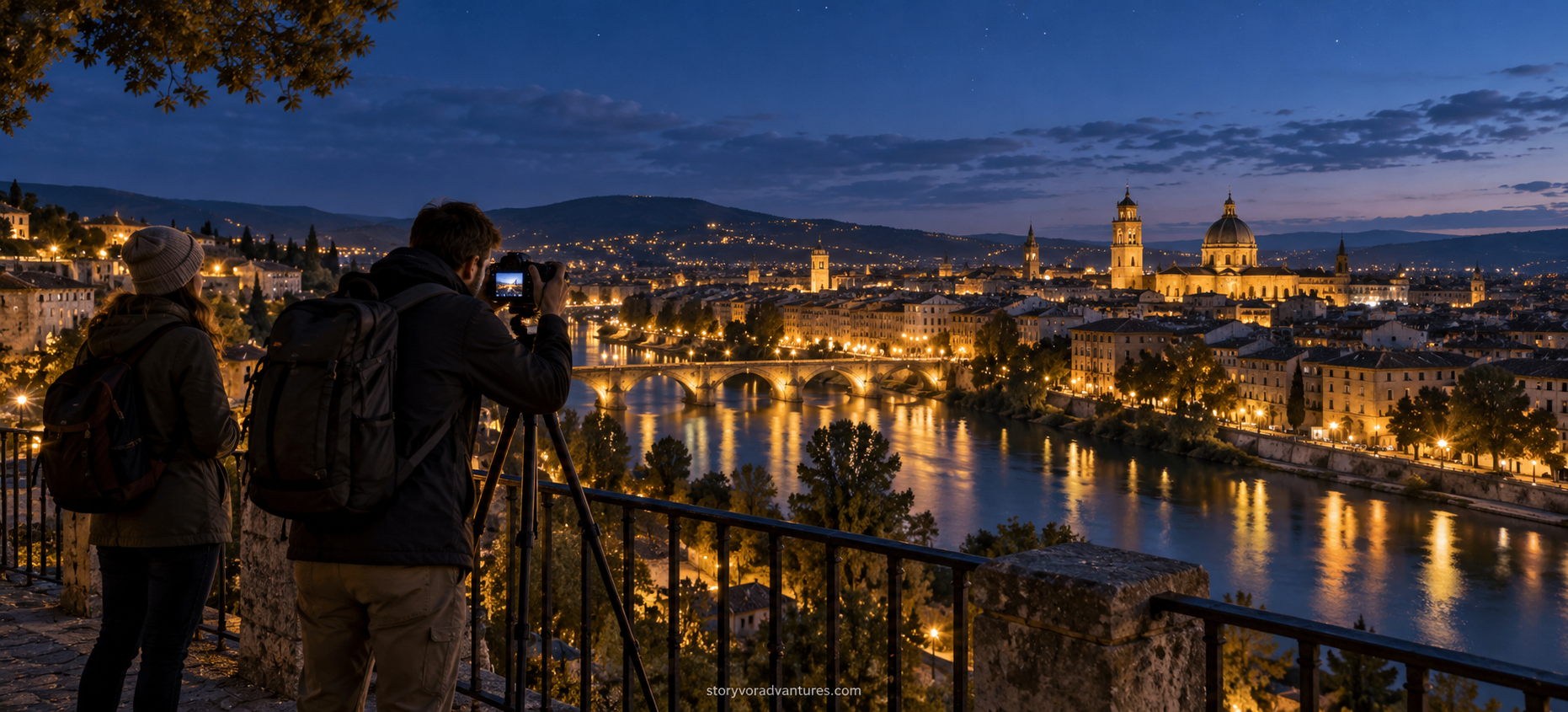
- Night photography encourages travellers to slow down and observe light differently. Reflections on wet streets, stars above a mountain and the movement of city traffic can create scenes that are not available during daylight.
- A tripod or stable surface may help when using longer exposures, but equipment rules vary by location. Some historic sites, transport areas and private properties restrict professional-looking photography equipment.
- Safety must come before composition. Do not stand in a road, climb an unsafe structure or move beyond a barrier to capture a better angle. Remain aware of your surroundings instead of focusing only on the camera screen.
- Ask permission before photographing identifiable people, particularly in quiet neighbourhoods, religious spaces or local markets. Avoid powerful flash around wildlife and never use light painting in a way that disturbs other visitors.
- The best night photograph should preserve a memory without creating a problem for the destination.
How to Plan a Safe Noctourism Experience
- Night activities require more preparation than simply extending a daytime itinerary. Research the route in advance and confirm how you will return to your accommodation. Public transportation may stop operating before an activity ends.
- Save offline maps and carry the accommodation address separately from your phone. Keep a charged power bank, suitable clothing, water and a small torch. Share your plan with a trusted person when visiting a remote location.
- Whenever possible, book guides through verified operators and read recent reviews. Confirm what equipment is included and whether the activity requires a particular fitness level or age restriction.
- Weather can change quickly at night, especially in deserts, mountains and coastal regions. Keep the schedule flexible and be willing to cancel when conditions become unsafe.
How to Make Night Travel More Responsible
- Darkness does not make a destination empty. Local residents may be sleeping, animals may be feeding and sensitive ecosystems may be entering their most active period.
- Keep noise and artificial light to a minimum. Stay on marked paths, follow photography restrictions and never disturb wildlife to create content. Avoid leaving waste or entering areas that are closed after sunset.
- Support local guides, community-run experiences and businesses that manage visitor numbers responsibly. A smaller, well-organised tour may provide a more meaningful experience than a crowded activity designed only for social-media photographs.
- Responsible noctourism allows travellers to enjoy the night without taking away its darkness, silence or natural behaviour.
Frequently Asked Questions
What does noctourism mean?
Noctourism refers to travel activities and experiences that happen after sunset or during the night. Examples include stargazing, night markets, aurora viewing, guided wildlife observation and evening heritage tours.
Is noctourism safe for first-time travellers?
It can be safe when planned carefully. Travellers should research the area, use reliable transportation, choose authorised guides and avoid unfamiliar isolated locations without proper support.
What should I carry during a night activity?
Useful items may include a charged phone, power bank, offline map, small torch, water, weather-appropriate clothing and essential identification. The exact equipment depends on the activity and destination.
Can night activities disturb wildlife?
Yes. Noise, strong lights, flash photography and close approaches can interfere with feeding, hunting and resting behaviour. Always follow the guide’s instructions and maintain an appropriate distance.
Can I photograph every night attraction?
No. Photography may be restricted at heritage sites, religious places, wildlife areas and private properties. Check the rules and ask permission before photographing identifiable people.
Is an aurora or bioluminescence sighting guaranteed?
No. These natural phenomena depend on environmental conditions and cannot be guaranteed. Choose honest operators that explain the possibility of seeing them without making unrealistic promises.
Final Thoughts
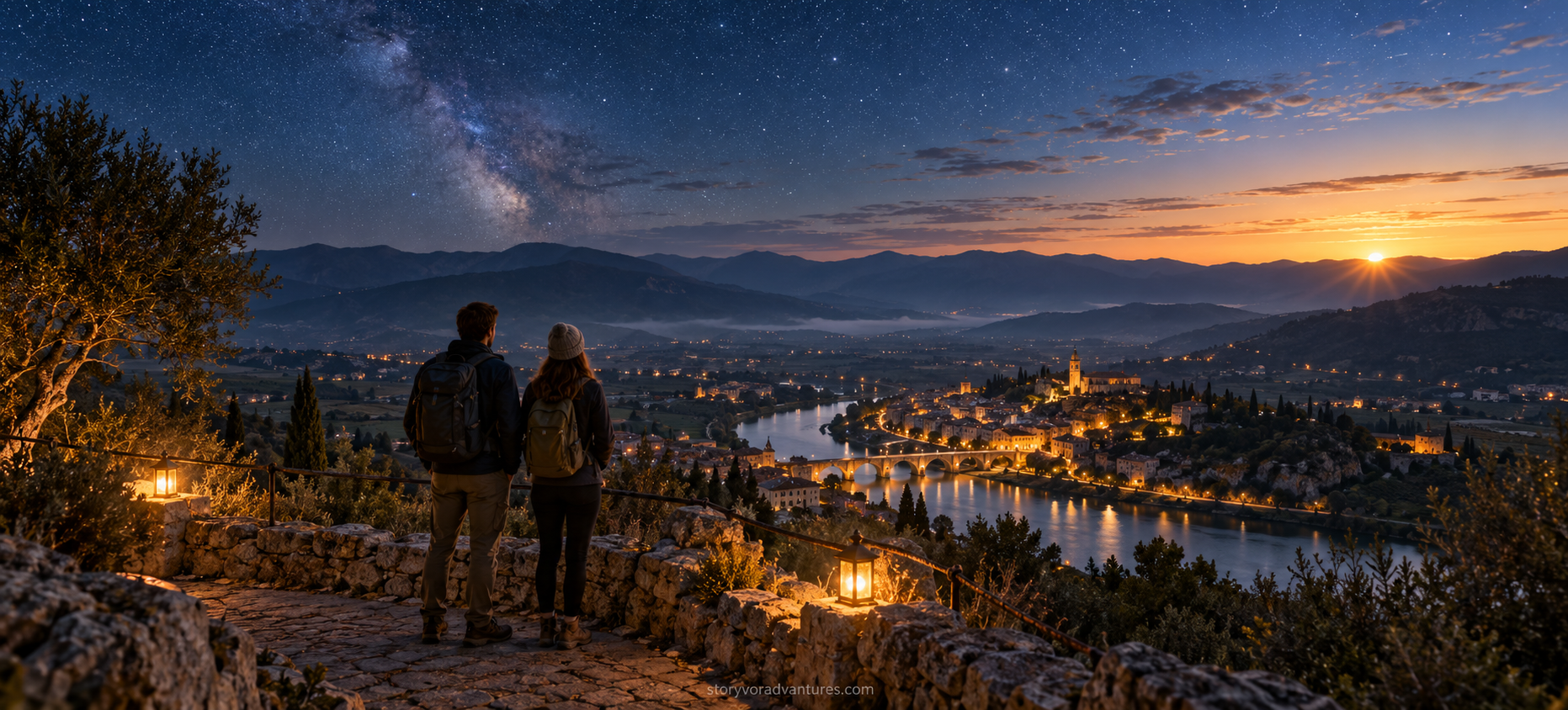
- Travel does not end when the sun disappears. In many places, sunset marks the beginning of a completely different experience.
- Noctourism can help travellers escape daytime crowds, observe nature differently and connect with aspects of a destination that are invisible during normal sightseeing hours. However, darkness also requires greater awareness.
- Prepare transportation, check conditions and choose responsible operators. Respect local communities and remember that nighttime may be the most sensitive period for wildlife.
- The aim is not to fill every night with activities. Sometimes the most memorable experience is simply standing beneath a clear sky, listening carefully and allowing the destination to become quiet.
- Explore after sunset—but do it safely, patiently and respectfully.
- Important: Weather, access rules, opening hours, transportation schedules, wildlife conditions and safety guidance can change. Always verify current information through official authorities, protected-area management and authorised local operators before travelling.
© 2026 storyvoradvantures