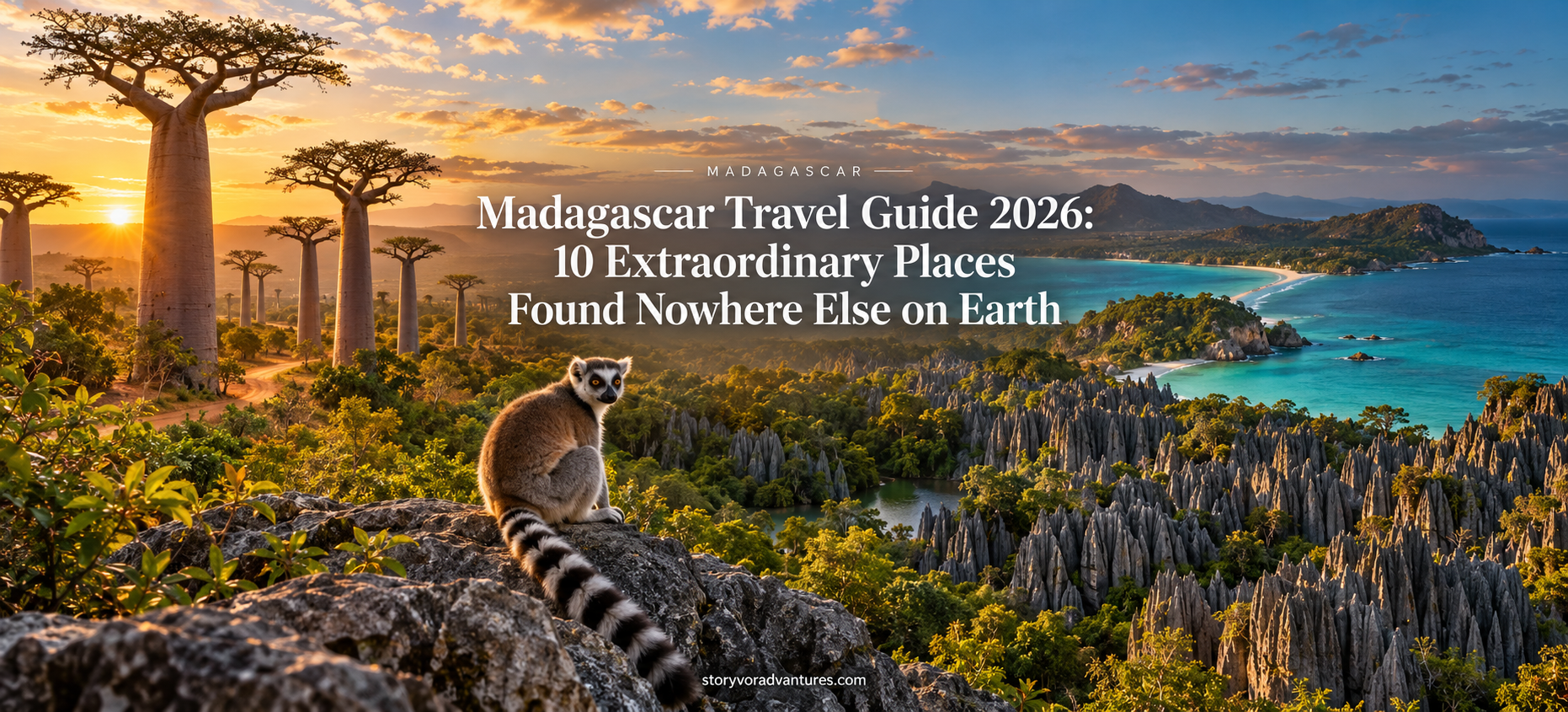
Madagascar Travel Guide 2026: 10 Extraordinary Places Found Nowhere Else on Earth
Discover 10 extraordinary places in Madagascar, including the Avenue of the Baobabs, Tsingy de Bemaraha, tropical islands, rainforests and unique wildlife.
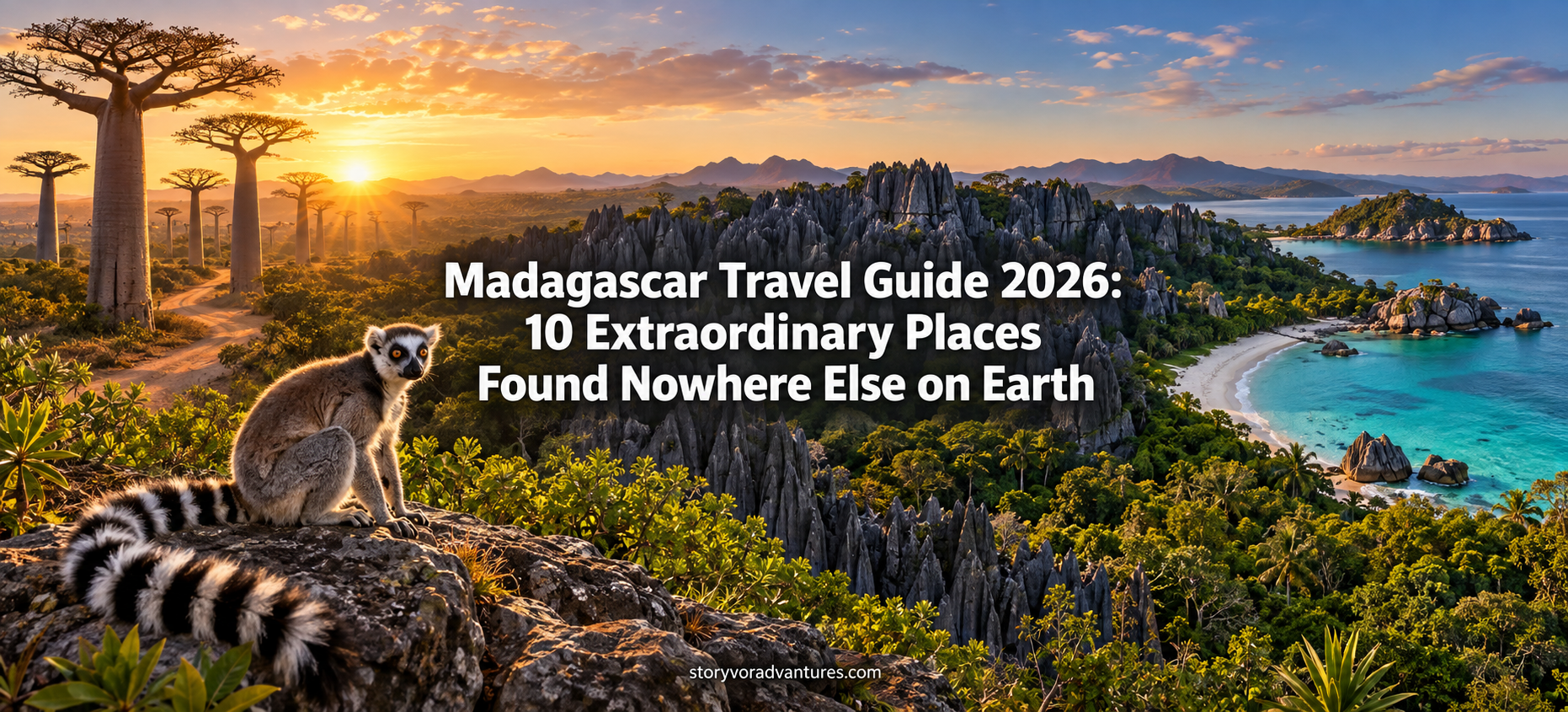
Madagascar is not simply another tropical island. Separated from mainland Africa for millions of years, it developed landscapes and ecosystems with an extraordinary sense of identity. Towering baobab trees, sharp limestone formations, humid rainforests, dry canyons and quiet islands can all be experienced within the same country.
The wildlife is equally remarkable. Lemurs move through forest canopies, chameleons hide among leaves and birds occupy habitats found in few other places. Many species are endemic, meaning they occur naturally in Madagascar and nowhere else on Earth.
However, exploring the country requires patience and preparation. Distances that look short on a map can take considerable time because road conditions vary. Weather can affect access to parks, while some destinations require local guides, boats or specialised vehicles.
This guide introduces ten places that demonstrate Madagascar’s natural and cultural diversity. Travellers should treat them as living environments rather than attractions created only for photographs.
1. Avenue of the Baobabs
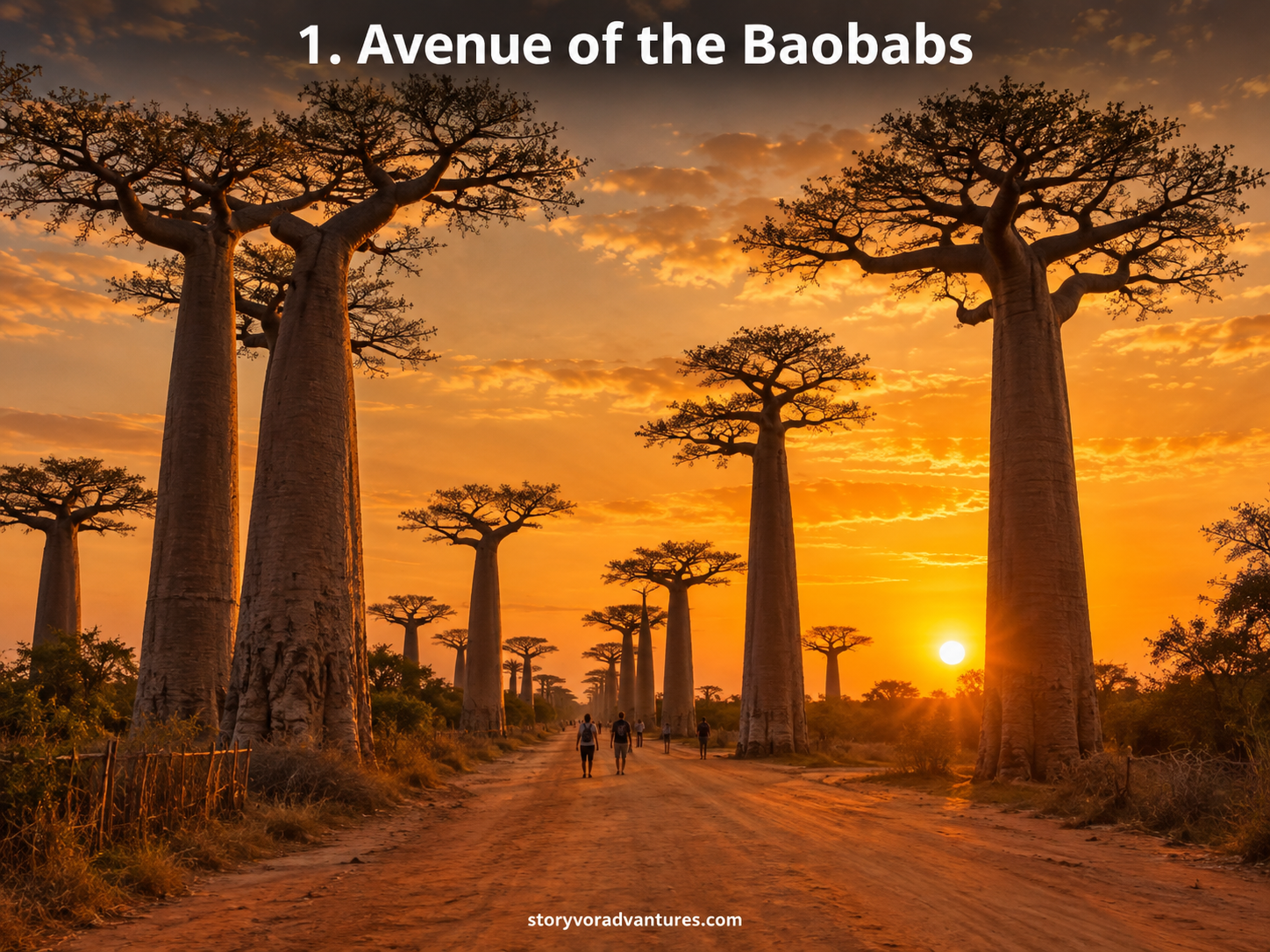
The Avenue of the Baobabs is one of Madagascar’s most recognisable landscapes. Massive Grandidier’s baobab trees stand along a dirt road in the Menabe region near Morondava, creating a natural corridor unlike an ordinary tree-lined avenue.
The trees appear especially dramatic around sunrise and sunset, when their thick trunks become silhouettes against an orange or pink sky. Although the scene feels remote, the road is also used by local communities. Visitors should remain aware of vehicles, carts and residents going about their daily routines.
These trees are more than photography subjects. They are part of a fragile environment affected by changes in land use, water availability and human activity. Travellers should avoid touching sensitive areas, damaging vegetation or leaving the established viewing space.
Visiting outside the busiest photography period may provide a quieter experience. If arriving during sunset, plan the return journey before darkness and use a reliable driver familiar with local road conditions.
2. Tsingy de Bemaraha National Park
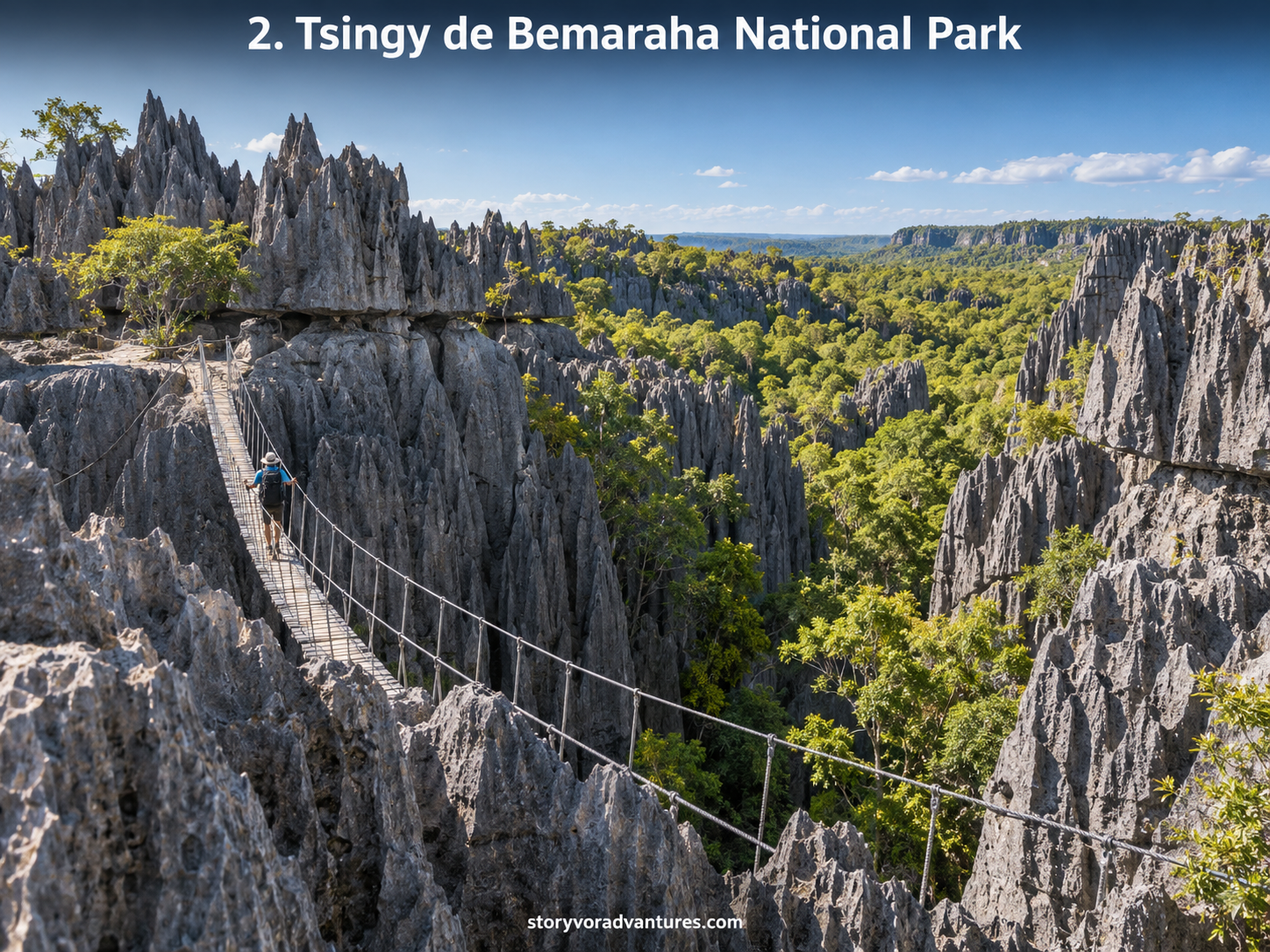
Tsingy de Bemaraha presents one of Madagascar’s most unusual landscapes. Limestone has been shaped into a vast formation of sharp pinnacles, deep cracks, narrow passages and hidden areas of forest.
Exploring parts of the park can involve ladders, suspension bridges and routes through confined rock formations. This is not an ordinary walk, and some circuits may be unsuitable for travellers who have limited mobility, a fear of heights or certain health conditions.
A qualified local guide is essential for understanding the route and moving safely through the terrain. Travellers should follow instructions carefully, wear appropriate footwear and avoid attempting difficult sections simply for photographs.
Access may depend on seasonal road conditions and local operations. Reaching the park can become an adventure of its own, so the itinerary should contain extra time rather than relying on a rushed schedule.
The reward is a landscape that feels almost architectural. From higher viewpoints, the limestone pinnacles stretch across the horizon like a stone forest.
3. Nosy Be Island
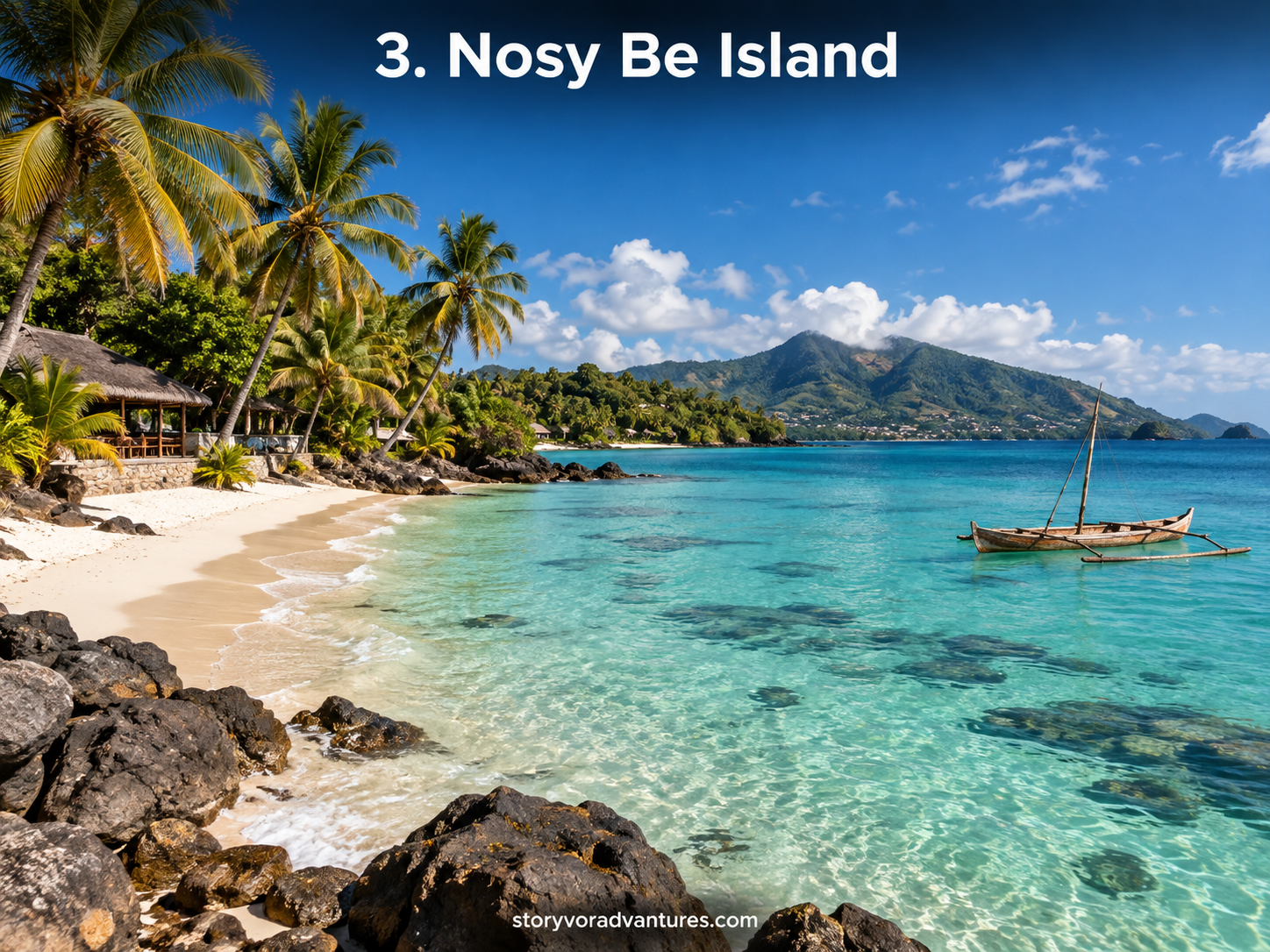
Nosy Be offers a different side of Madagascar. Located off the northwestern coast, the island is associated with warm water, tropical vegetation, beaches and access to smaller surrounding islands.
Travellers can use Nosy Be as a base for boat excursions, snorkelling, diving or quieter coastal days. Marine activities should be arranged with responsible operators who follow safety rules and avoid damaging coral or disturbing wildlife.
The island is not only a resort destination. Markets, villages and agricultural areas reveal elements of everyday life beyond the beach. Exploring respectfully can create a more complete experience than remaining exclusively inside a hotel complex.
Weather and sea conditions influence boat travel. Travellers should never pressure an operator to continue when conditions are unsuitable. Sun protection, hydration and suitable travel insurance are also important when participating in water-based activities.
Nosy Be works well for visitors who want to combine relaxation with nature, but its popularity makes responsible choices particularly important.
4. Isalo National Park
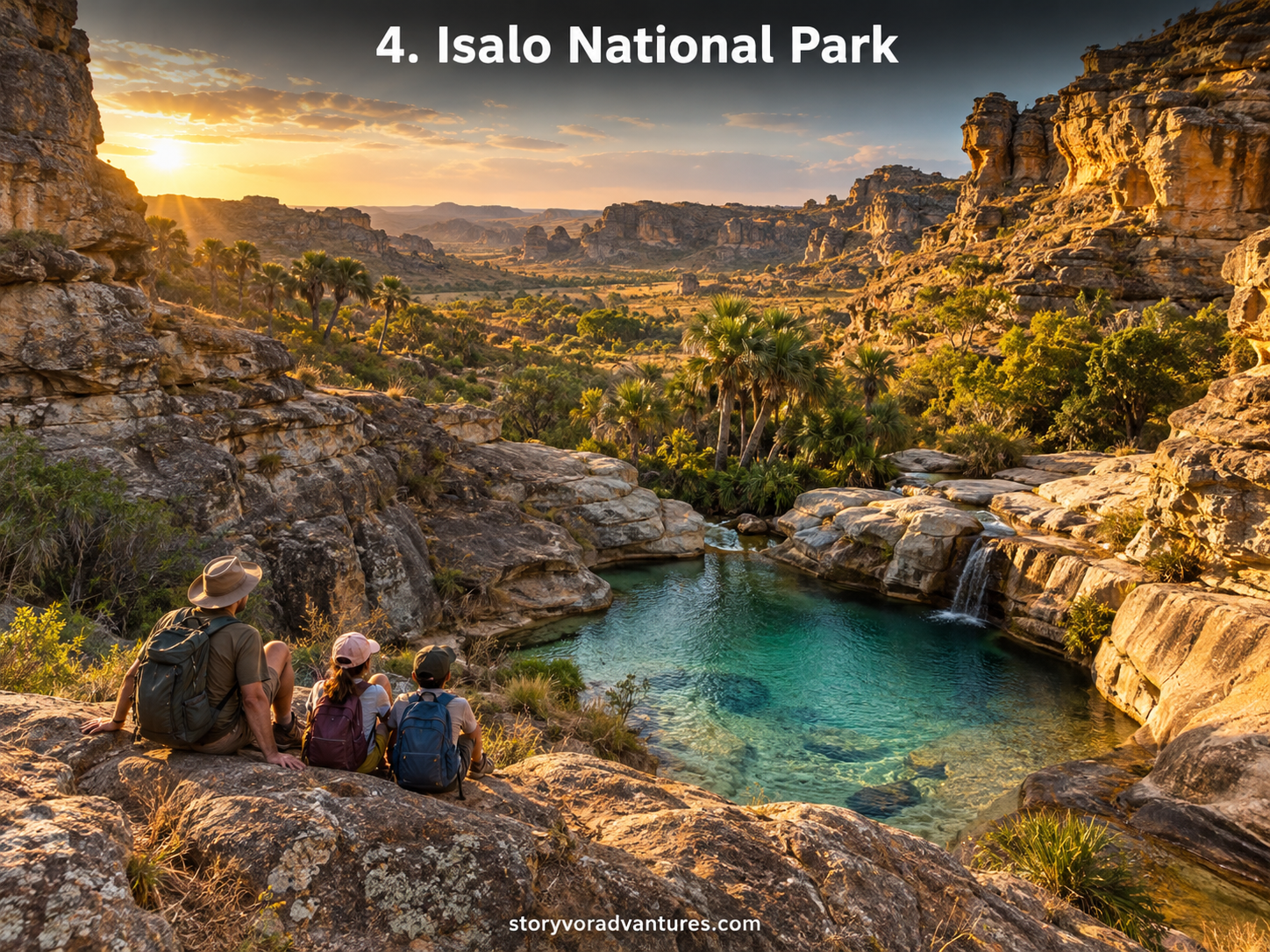
Isalo National Park is known for sandstone formations, broad grasslands, deep canyons and natural pools. Its dry, open scenery feels very different from Madagascar’s eastern rainforests.
Walking routes vary in length and difficulty. Some lead through rocky valleys, while others reach viewpoints or water-filled areas surrounded by vegetation. The heat can become intense, and shade may be limited along exposed sections.
Starting early, carrying sufficient drinking water and following a local guide can make the experience safer and more informative. Travellers should never assume that a natural pool is automatically suitable for swimming; current local instructions must be followed.
Isalo also has cultural importance. The surrounding landscape is connected to local communities and traditions, so it should not be presented merely as an outdoor playground.
Sunset can bring beautiful colour to the sandstone, but returning after dark may create additional challenges. Plan walking times conservatively and listen to the guide’s recommendations.
5. Ranomafana National Park
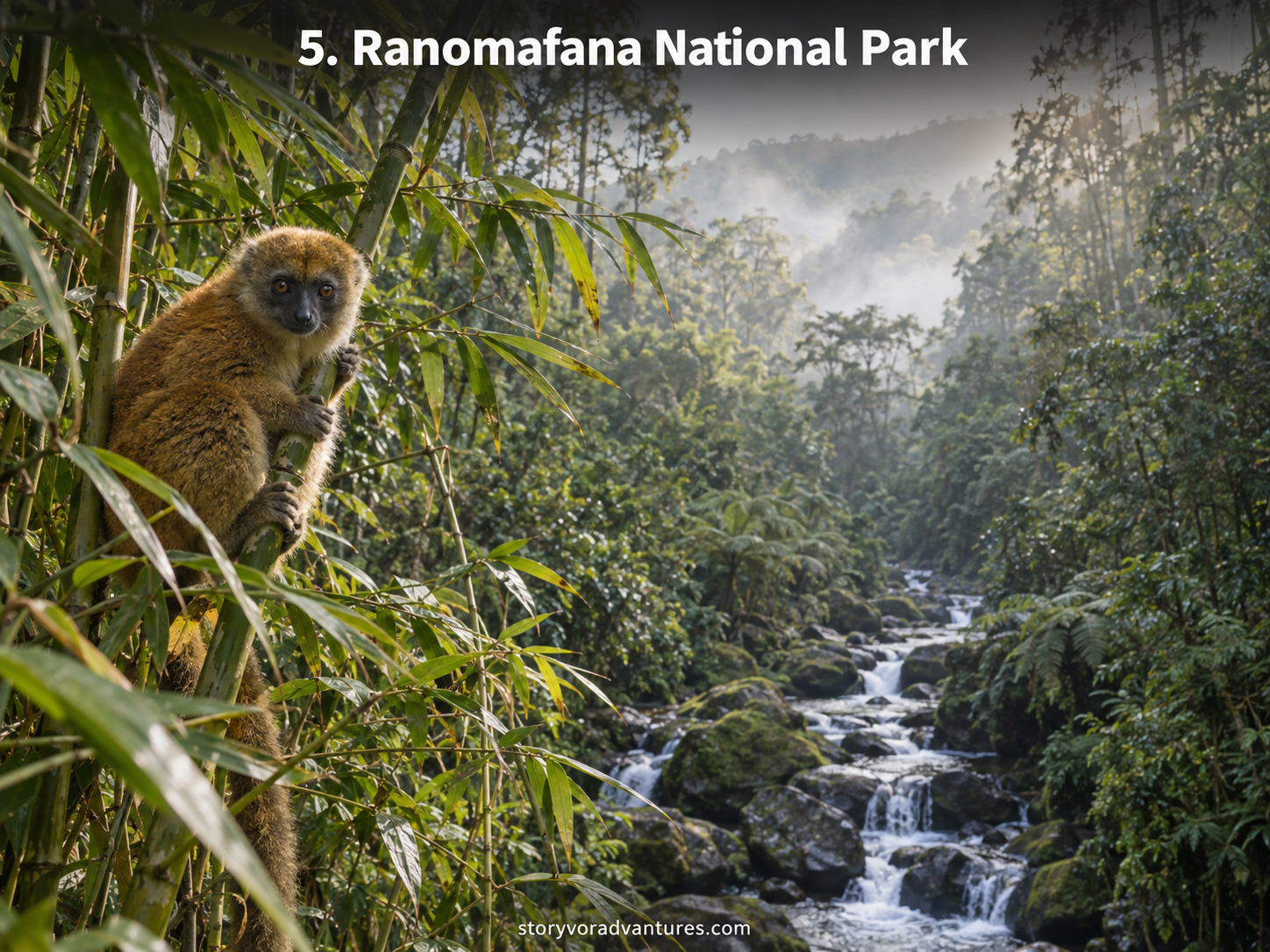
Ranomafana National Park protects a humid rainforest filled with streams, dense vegetation and remarkable biodiversity. The environment can feel completely different from the dry landscapes of western and southern Madagascar.
The forest is known for lemurs, birds, reptiles, amphibians and smaller creatures that are easy to miss without an experienced guide. Wildlife sightings cannot be guaranteed, and responsible visitors should value the forest even when a particular animal remains hidden.
Trails may become wet, muddy and slippery. Lightweight waterproof clothing, suitable footwear and protection for electronic equipment are useful. Travellers should also prepare for insects and changing temperatures.
Moving quietly improves the experience and reduces disturbance. Flash photography, loud conversation and leaving established paths can affect animals as well as other visitors.
Ranomafana demonstrates why Madagascar’s forests deserve protection. The attraction is not just the possibility of seeing a lemur—it is witnessing a complex ecosystem in which countless species depend on one another.
6. Andasibe-Mantadia National Park
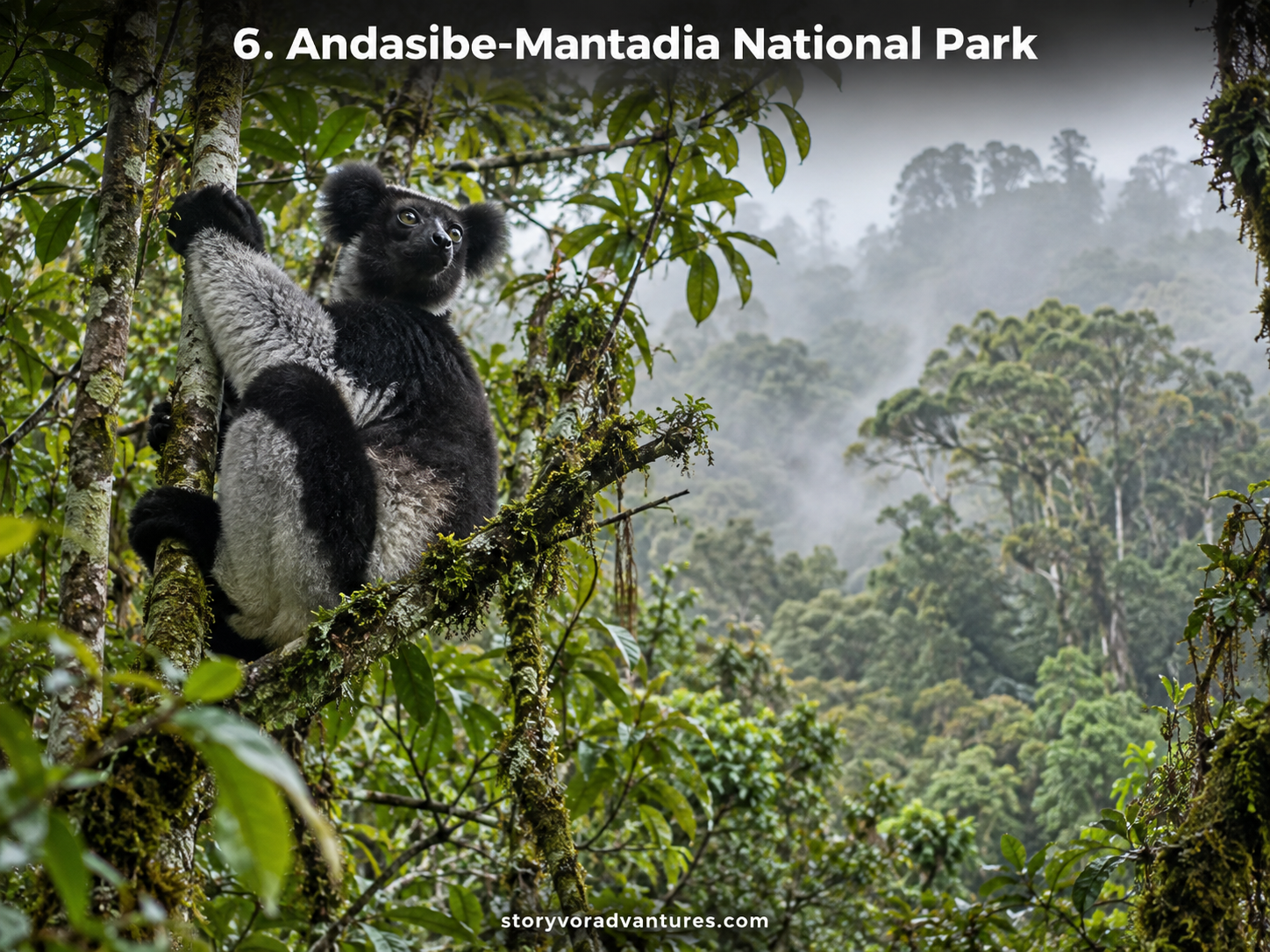
Andasibe-Mantadia is one of Madagascar’s best-known rainforest areas and is particularly associated with the indri, the country’s largest living lemur. Its powerful calls can travel through the forest and may become one of the most memorable sounds of a visit.
The wider area includes different protected forests and walking experiences. Some routes are relatively accessible, while others involve longer or more demanding walks. Local guides help locate wildlife and explain plant life, behaviour and conservation challenges.
Visitors should maintain distance from wild animals and never attempt to feed or touch them. A close photograph is not worth changing an animal’s natural behaviour.
Early morning walks can offer a strong sense of the forest awakening, while authorised night walks in appropriate areas may introduce travellers to nocturnal species. Each activity should be organised according to current regulations.
Andasibe can be easier to include in an itinerary than some of Madagascar’s more remote parks, but journey times should still be planned carefully because road and traffic conditions can vary.
7. Île Sainte-Marie
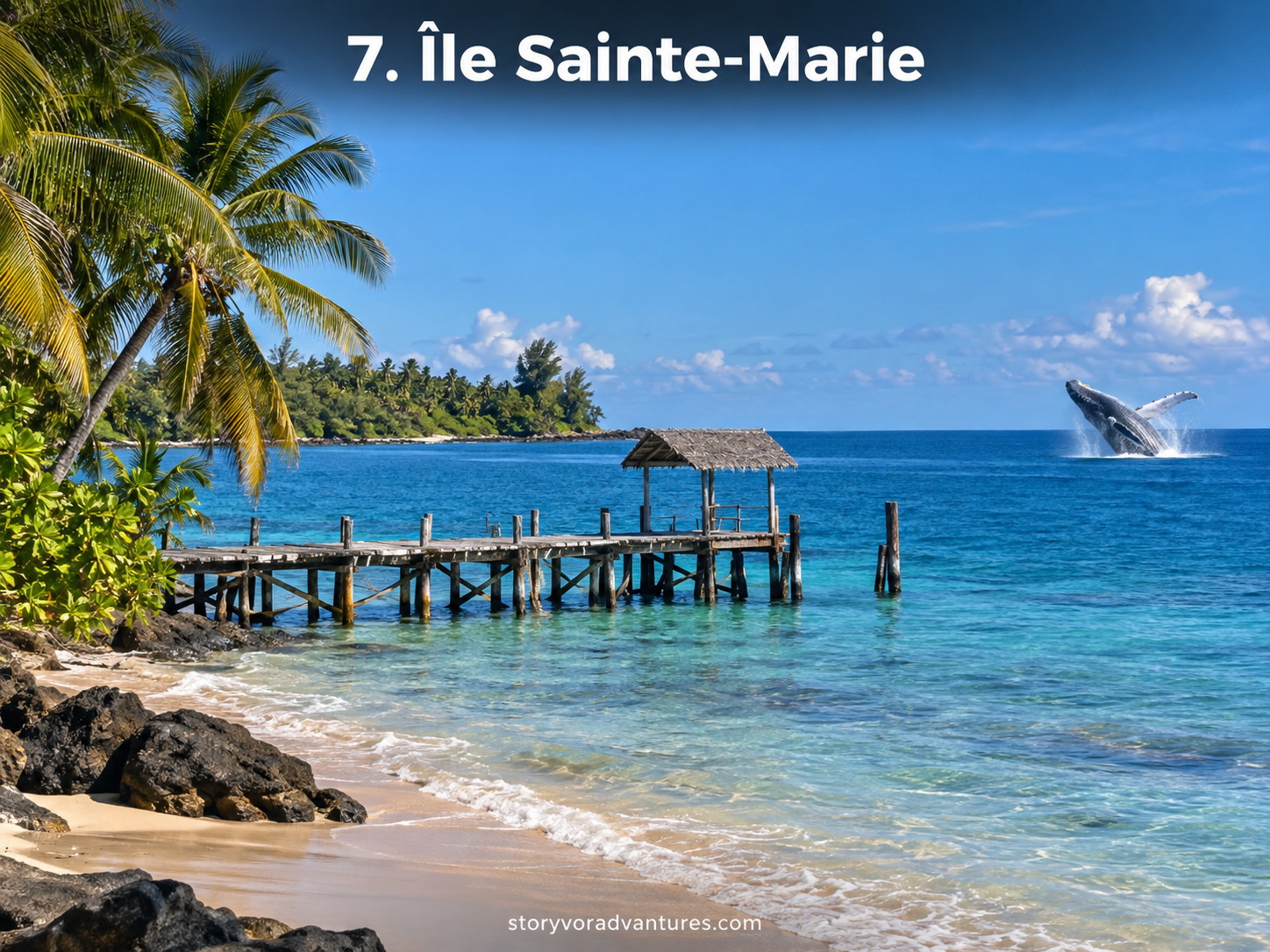
Île Sainte-Marie, also known as Nosy Boraha, lies off Madagascar’s eastern coast. The island combines palm-lined scenery, villages, beaches and a history shaped by maritime travel.
During the appropriate season, the surrounding waters are associated with migrating humpback whales. Wildlife excursions should use responsible operators that maintain safe distances and avoid chasing or surrounding animals.
Outside whale-watching periods, travellers can explore the island’s coastal landscapes, local communities and quieter roads. Cycling or walking may be enjoyable in suitable weather, but distances, surface conditions and personal fitness should be considered.
Tropical weather can affect ferries, flights and boat trips. Keeping flexibility in the itinerary is particularly important when an island connection forms part of an international journey.
Île Sainte-Marie rewards travellers who slow down. Its appeal is not based on completing a list of attractions but on experiencing the relationship between coastal life, history and the changing Indian Ocean.
8. Ifaty and the Spiny Forest
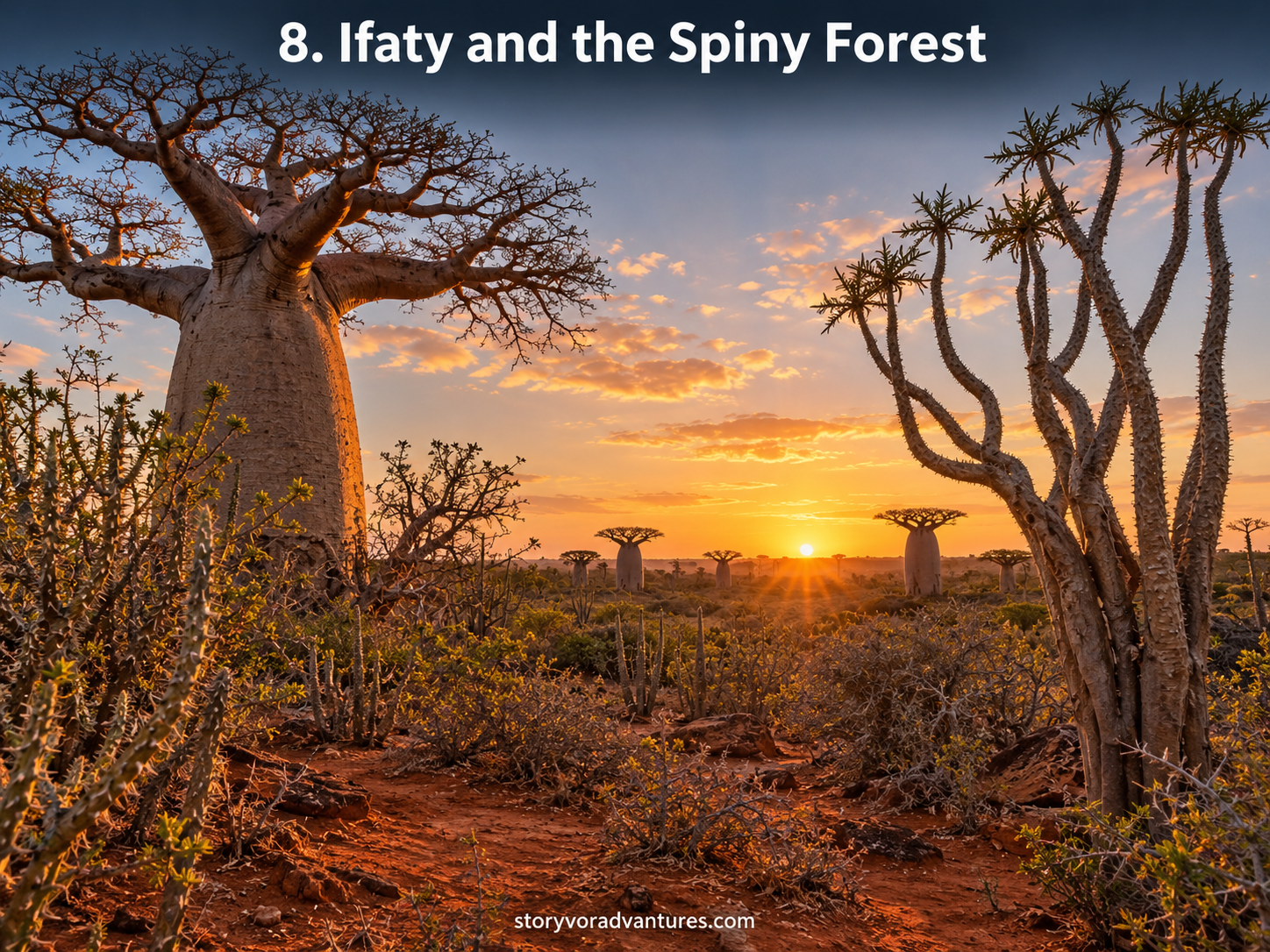
The region around Ifaty is known for beaches, fishing communities and Madagascar’s distinctive spiny forest. This dry habitat contains unusual plants adapted to limited rainfall, including thorny species and baobabs.
The forest may initially appear less dramatic than a tropical rainforest, but its shapes, textures and survival strategies make it one of the country’s most fascinating environments. A knowledgeable guide can explain how plants and animals have adapted to difficult conditions.
Visitors should remain on appropriate paths because dry vegetation can be fragile. Fire is a serious risk in arid environments, so local restrictions must be respected.
Coastal experiences near Ifaty should also be approached responsibly. Coral reefs and marine life can be damaged by careless anchoring, touching or collecting. Travellers should never purchase wildlife products or souvenirs made from protected natural materials.
Spending money with responsible local guides and community businesses can help connect tourism with conservation and local livelihoods.
9. Antsirabe and Its Volcanic Landscape
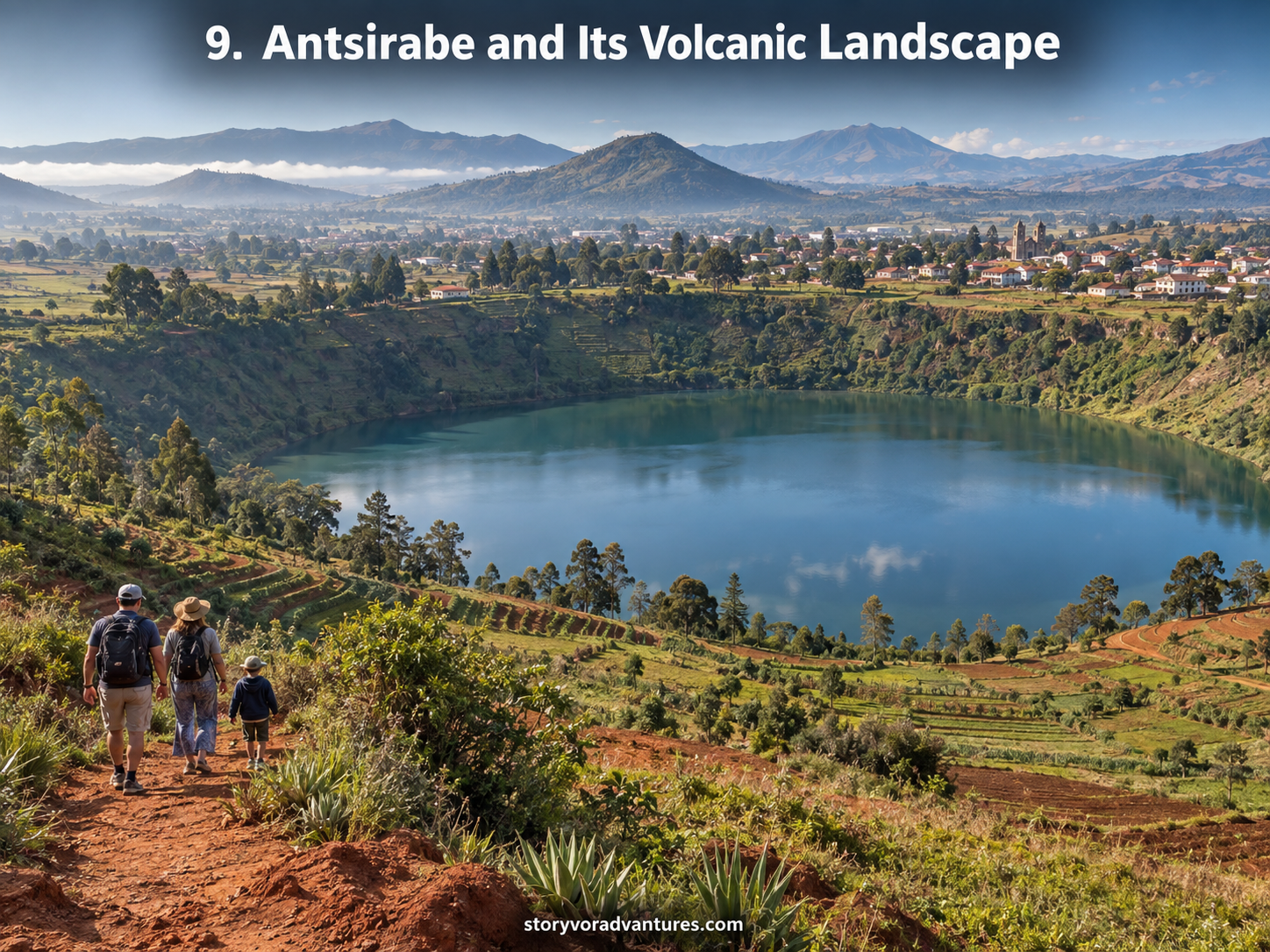
Antsirabe provides a cultural and urban contrast to Madagascar’s national parks and islands. The highland city is known for cooler temperatures, broad streets, thermal history and local craftsmanship.
The surrounding region contains volcanic landscapes and crater lakes that can be explored through organised excursions. Conditions and access vary, so travellers should confirm routes locally rather than relying on old online directions.
Within the city, workshops and markets provide opportunities to understand local skills and everyday life. Visitors should ask permission before photographing craftspeople or individuals, particularly in working environments.
Antsirabe can also serve as a useful pause during an overland journey. Instead of treating it only as a transport stop, spend time learning how highland life differs from the coastal and forest regions.
Responsible purchases from genuine local makers can provide more meaningful souvenirs than products with uncertain origins.
10. Lokobe Nature Reserve
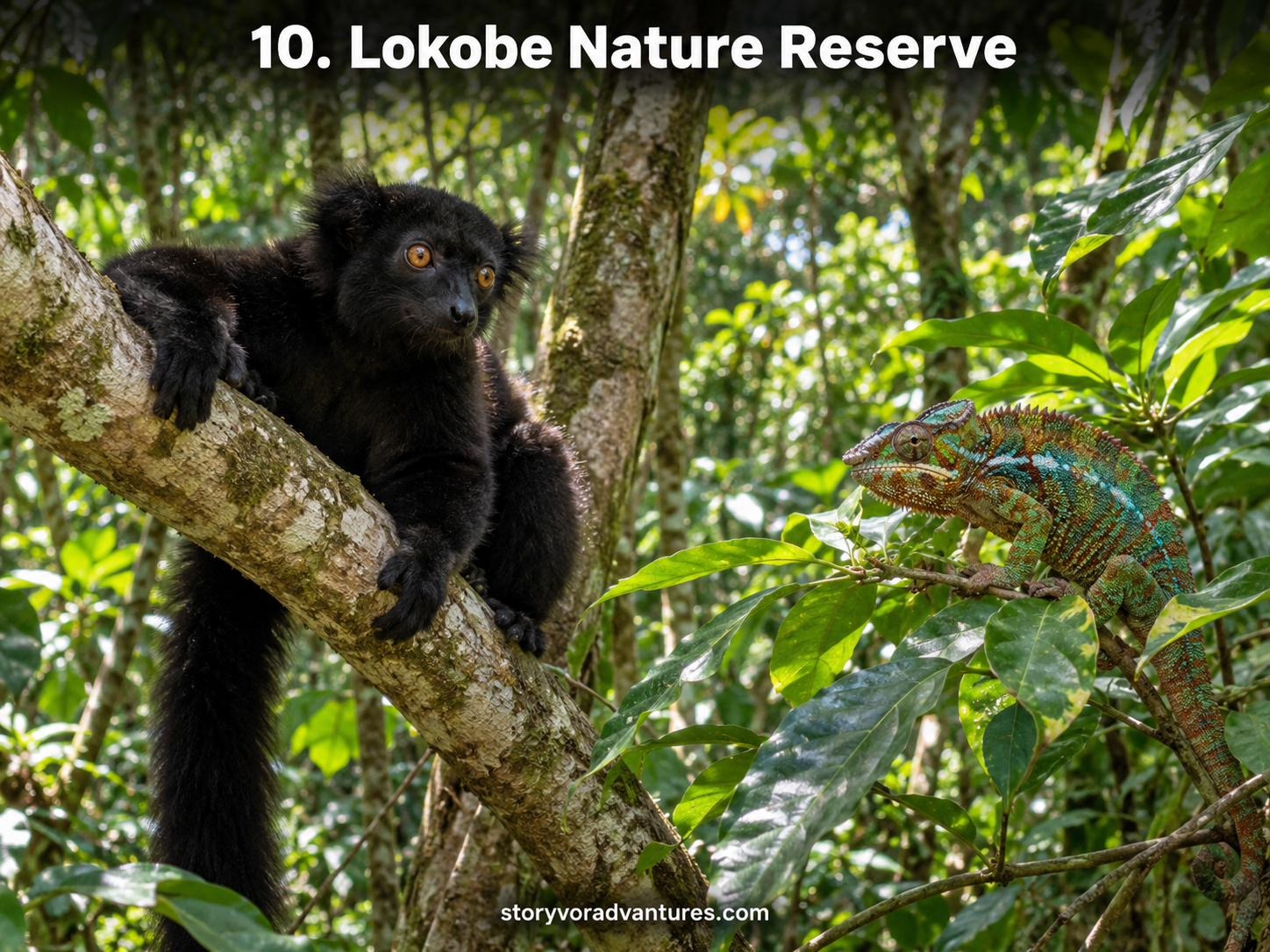
Lokobe protects an important area of remaining forest on Nosy Be. Its dense vegetation provides habitat for lemurs, chameleons, snakes, frogs and a wide variety of plant life.
Reaching the reserve may form part of the experience, sometimes involving travel by road, traditional canoe or organised excursion depending on the selected route. Visitors should choose trained local guides and follow current entry procedures.
Wildlife can be difficult to notice without experienced eyes. A guide may identify a small chameleon resting on a branch or movement high in the canopy that an untrained visitor would completely miss.
Animals should never be handled or manipulated for photographs. If a tour encourages inappropriate contact, travellers should refuse and choose a more responsible provider.
Lokobe shows that a popular island can still contain valuable natural habitat. Protecting the forest is essential for both wildlife and the communities connected to the landscape.
What Is the Best Time to Visit Madagascar?
Madagascar is large enough that weather can differ significantly between regions. A suitable period for one destination may not be ideal for another.
Rain can affect roads, hiking conditions, river crossings and access to remote parks. Some wildlife experiences are also seasonal. Travellers should therefore plan according to the exact regions included in the itinerary rather than expecting one national weather pattern.
A realistic Madagascar trip usually requires more time than the map suggests. Trying to combine distant parks, islands and cities within a short holiday can result in spending most of the journey in vehicles or airports.
Select fewer regions and explore them properly. This approach provides more flexibility when weather, road conditions or transport schedules change.
How to Travel Responsibly in Madagascar
Madagascar’s biodiversity is one of its greatest attractions, but it is also vulnerable. Visitors should use authorised guides, follow protected-area rules and keep a respectful distance from wildlife.
Never feed lemurs, touch chameleons for photographs or purchase products made from protected plants and animals. Avoid leaving marked routes, even if another visitor has created an unofficial shortcut.
Tourism choices can affect communities as well as ecosystems. Choose local guides, responsible accommodation and businesses that treat employees, residents and wildlife respectfully.
Photography should never take priority over safety, privacy or conservation. Ask before photographing people and accept a refusal without argument.
Important Travel Information
Entry requirements, park access, guide rules, domestic flights, road conditions, health advice and regional safety situations can change. Verify essential information through official government, park, airline and public-health sources before travelling.
Some destinations may require a local guide or specialised transport. Remote journeys should include sufficient time, drinking water, basic medication, suitable insurance and contingency money.
This article provides general travel inspiration and does not replace current instructions from authorities, protected-area managers or professional guides.
Final Thoughts

Madagascar feels extraordinary because its landscapes do not belong to a single category. A traveller can stand beneath ancient-looking baobabs, cross a limestone forest, walk through humid rainforest and reach a tropical island within one country.
The wildlife may attract visitors first, but a meaningful journey involves more than finding lemurs or photographing unusual trees. It requires understanding that these species, habitats and communities face real pressures.
Travel slowly, choose responsible guides and accept that nature will not always follow an itinerary. A hidden lemur, a cancelled boat trip or a muddy road does not automatically make the journey unsuccessful.
Madagascar’s greatest value lies in remaining wild, complex and unpredictable. Travellers who approach it with patience and respect can return with something more valuable than a collection of photographs: a deeper understanding of a place that cannot easily be compared with anywhere else.