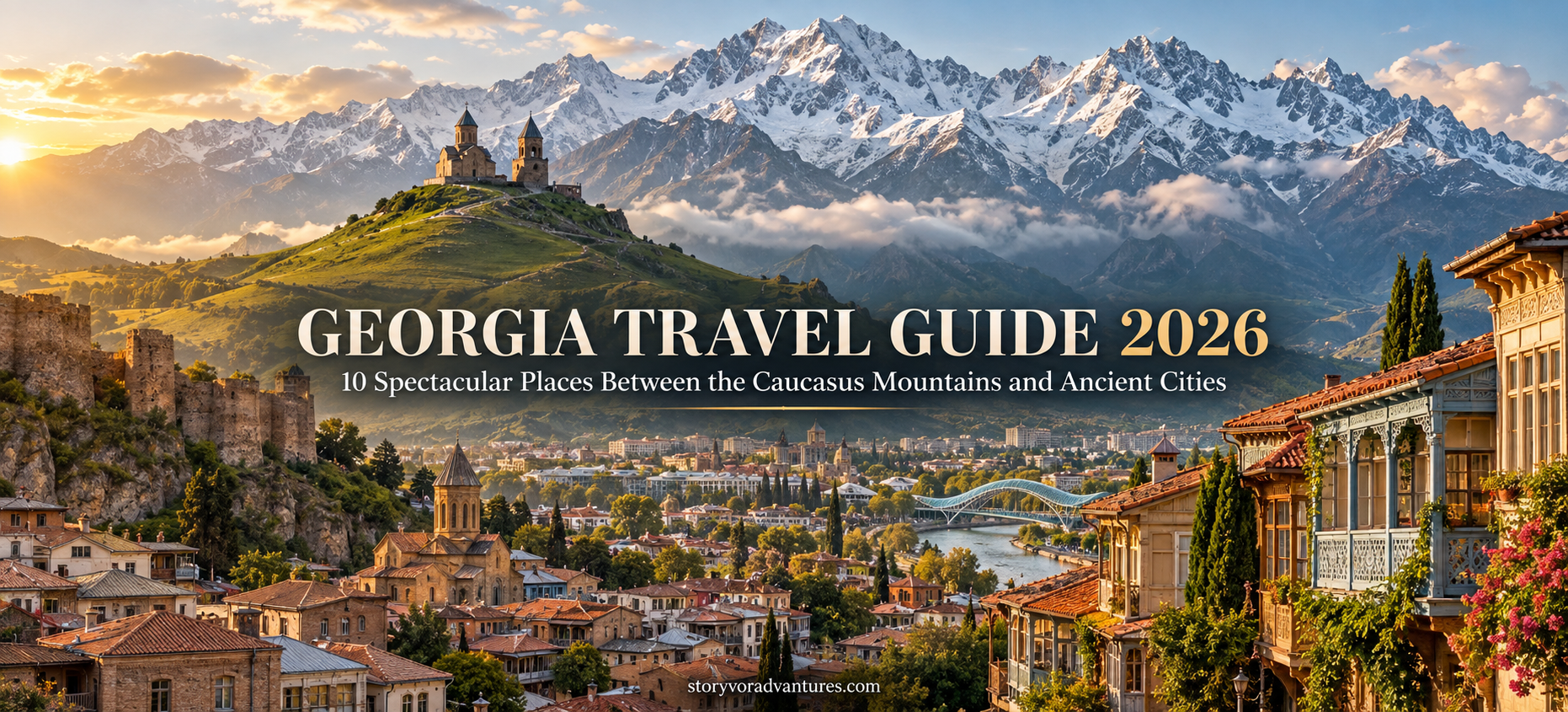
Georgia Travel Guide 2026: 10 Spectacular Places Between the Caucasus Mountains and Ancient Cities
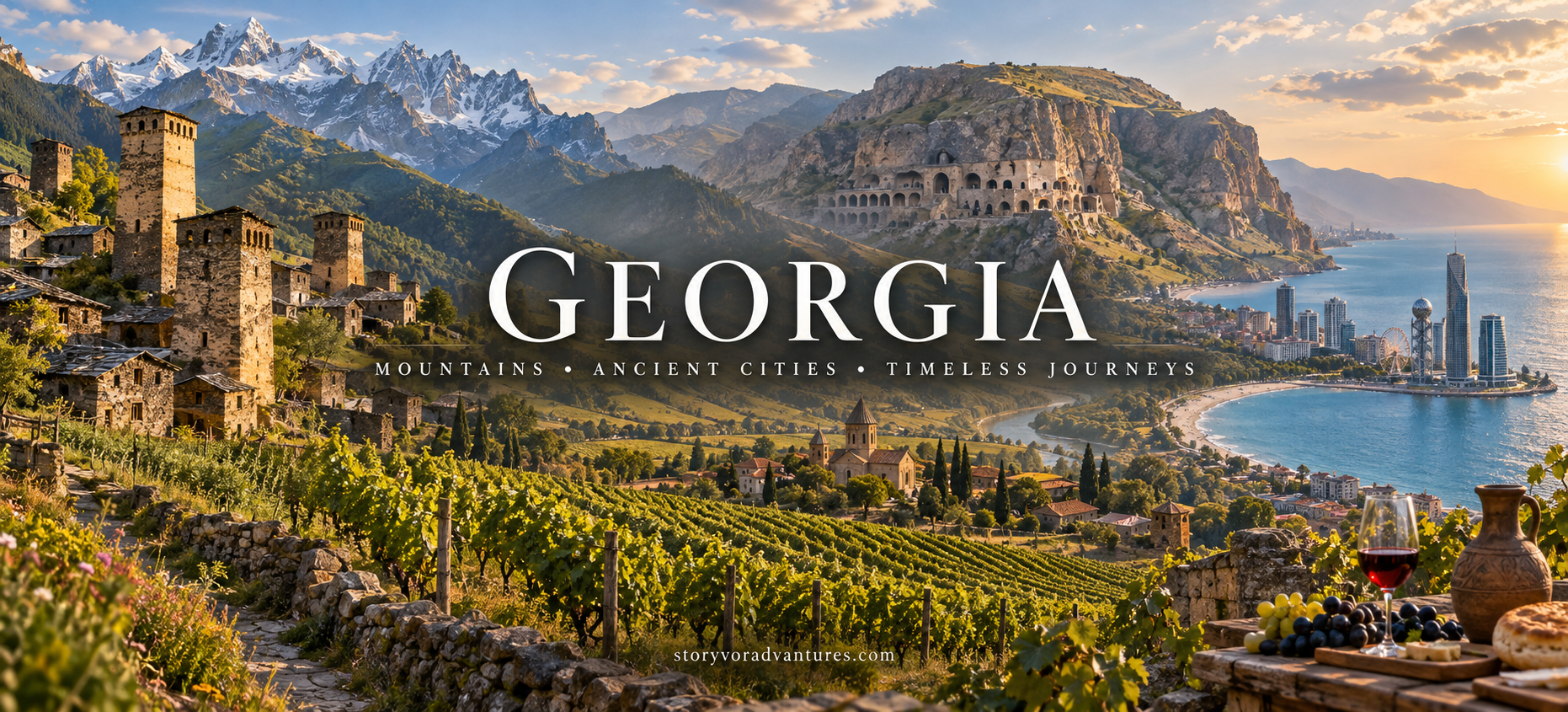
Georgia is a country where snow-covered mountains, ancient cave settlements, subtropical coastlines and colourful historic neighbourhoods exist within a surprisingly compact area. Positioned between Europe and Asia in the South Caucasus, it offers an unusual combination of dramatic landscapes, layered history, distinctive cuisine and living traditions.
A single journey through Georgia can begin among the wooden balconies and sulphur baths of Tbilisi, continue towards remote villages beneath the Caucasus Mountains and finish beside the Black Sea. The country feels adventurous without requiring travellers to choose only one type of experience.
Georgia’s growing popularity does not mean every journey is simple. Mountain weather can change quickly, road conditions vary between regions and some remote places require more time than maps suggest. Careful planning helps travellers enjoy the country without turning the trip into a rushed sequence of long transfers.
This guide explores ten memorable places that reveal different sides of Georgia and can help first-time visitors create a balanced itinerary for 2026.
Important: Entry requirements, transport schedules, attraction fees, road conditions and opening hours may change. Confirm essential information through official authorities and trusted travel providers before your journey.
Quick Planning Guide for Georgia
Spring and autumn are often comfortable seasons for exploring historic cities, valleys and lower mountain regions. Summer brings warmer weather and greater activity along the Black Sea coast, while high mountain areas may become more accessible after winter snow has cleared. Winter can be beautiful, but certain mountain roads and hiking routes may become difficult or temporarily unavailable.
Tbilisi is the main starting point for many international travellers. From the capital, visitors can travel east towards Kakheti, north towards Kazbegi and west towards Kutaisi, Svaneti and the Black Sea coast.
Georgia has trains, buses, minibuses and private transfers, but transport frequency and comfort can differ between routes. Travellers planning to drive should remember that mountain roads may include sharp bends, livestock, changing surfaces and limited lighting. Avoiding unnecessary night driving is a sensible precaution.
1. Tbilisi Old Town
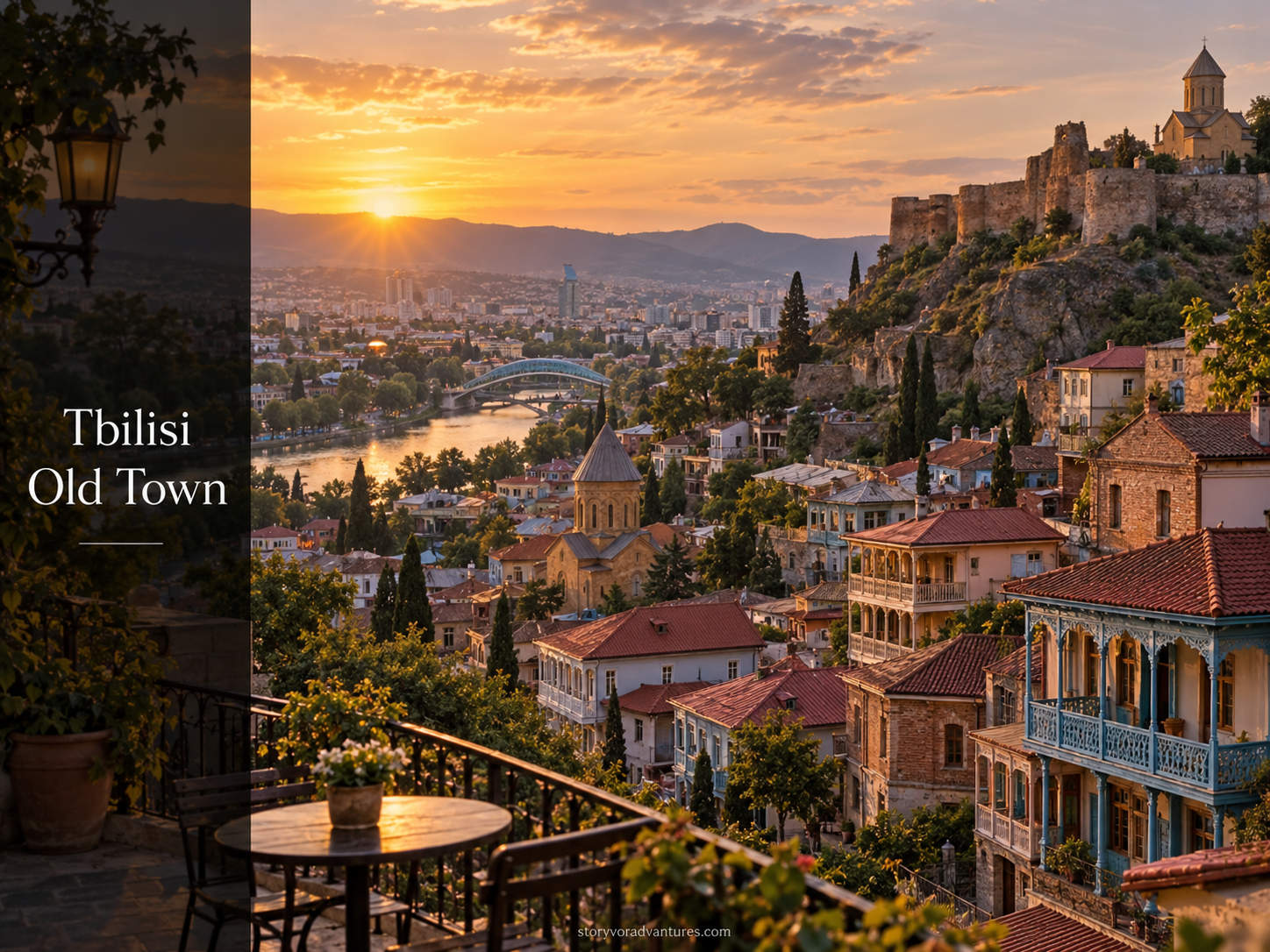
Tbilisi is more than a convenient arrival point. The Georgian capital reflects centuries of cultural exchange through its churches, courtyards, balconies, bathhouses and architecture. Old Tbilisi spreads across sloping streets near the Mtkvari River, creating viewpoints that reveal both historic rooftops and modern structures.
The Abanotubani district is known for its brick-domed sulphur bathhouses. These thermal waters are closely connected with the city’s identity and traditional foundation story. Travellers interested in visiting a bathhouse should check prices, reservation arrangements and private-room facilities before entering.
Narikala Fortress rises above the old neighbourhoods and provides wide views across the city. It can be approached by walking or by using the cable car when operating. Nearby lanes contain cafés, small shops, religious buildings and restored wooden houses, but visitors should also explore beyond the most photographed streets.
Tbilisi’s uneven pavements and steep lanes require comfortable footwear. Crossing roads can demand attention, and valuables should be handled sensibly in busy tourist areas. Spending at least two or three days allows travellers to explore the city without reducing it to a quick overnight stop.
2. Kazbegi and Gergeti Trinity Church
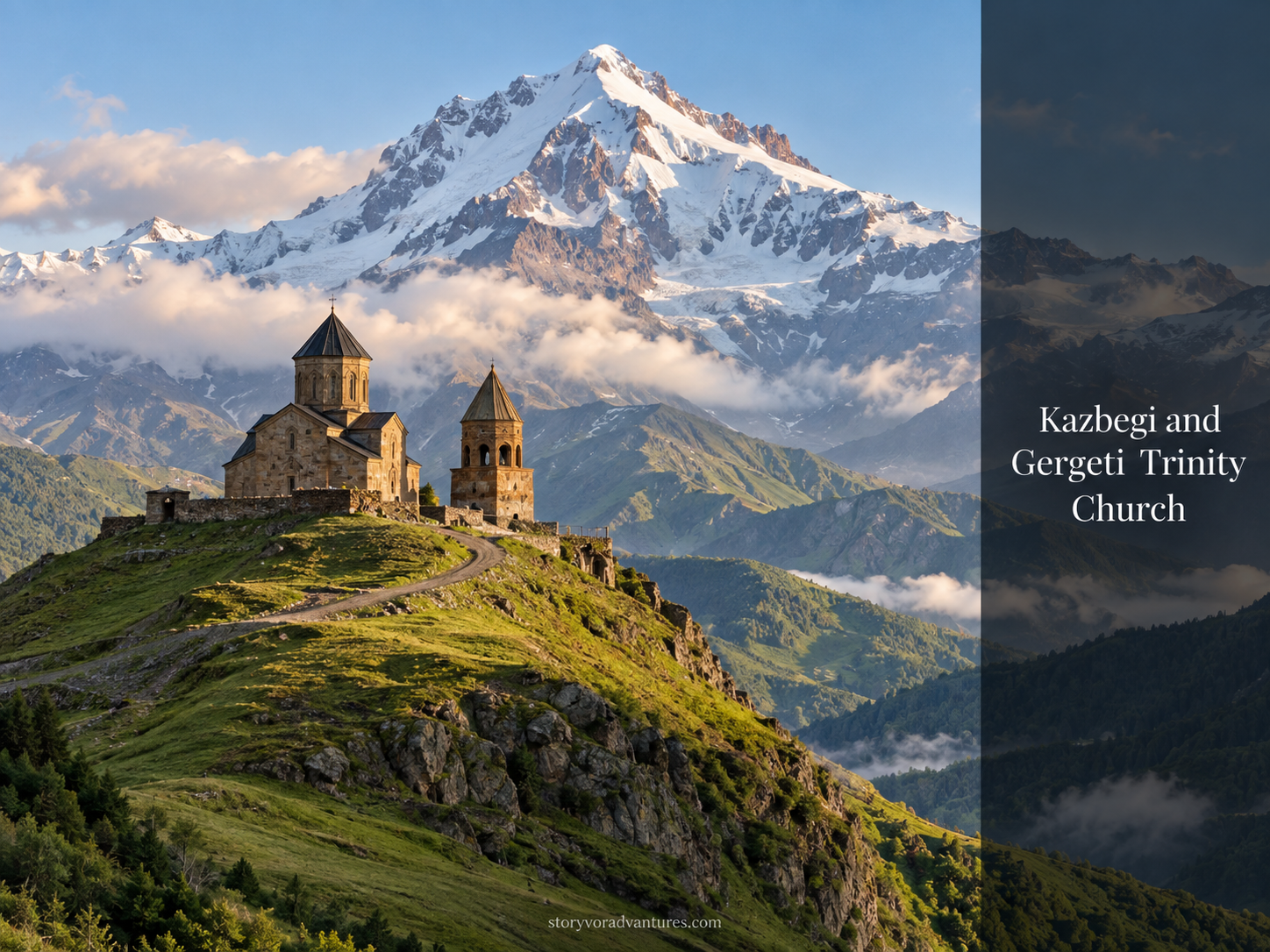
The journey north from Tbilisi towards Kazbegi, officially known as Stepantsminda, introduces travellers to some of Georgia’s most dramatic mountain scenery. The road passes reservoirs, valleys and high viewpoints before reaching a settlement surrounded by the Greater Caucasus.
Gergeti Trinity Church stands on a hill above Stepantsminda, with Mount Kazbek forming a powerful backdrop when the sky is clear. Its position creates one of Georgia’s most recognised views, but the church remains an active religious place rather than simply a photography platform.
Travellers should dress respectfully, follow posted rules and avoid interrupting worship. Mountain weather may conceal the peaks within minutes, so a cloudy arrival should not automatically be treated as a failed visit. The shifting mist can create an equally memorable atmosphere.
The church can be reached using an authorised vehicle route or by hiking, depending on current access and weather. Anyone walking should carry water, suitable footwear and warm layers. Even during a pleasant day in the valley, wind and temperature can feel very different at higher elevations.
Kazbegi deserves more than a hurried day trip when time allows. Staying overnight gives travellers a better opportunity to experience quieter mornings, changing mountain light and nearby valleys without spending most of the day on the road.
3. Kakheti Wine Region
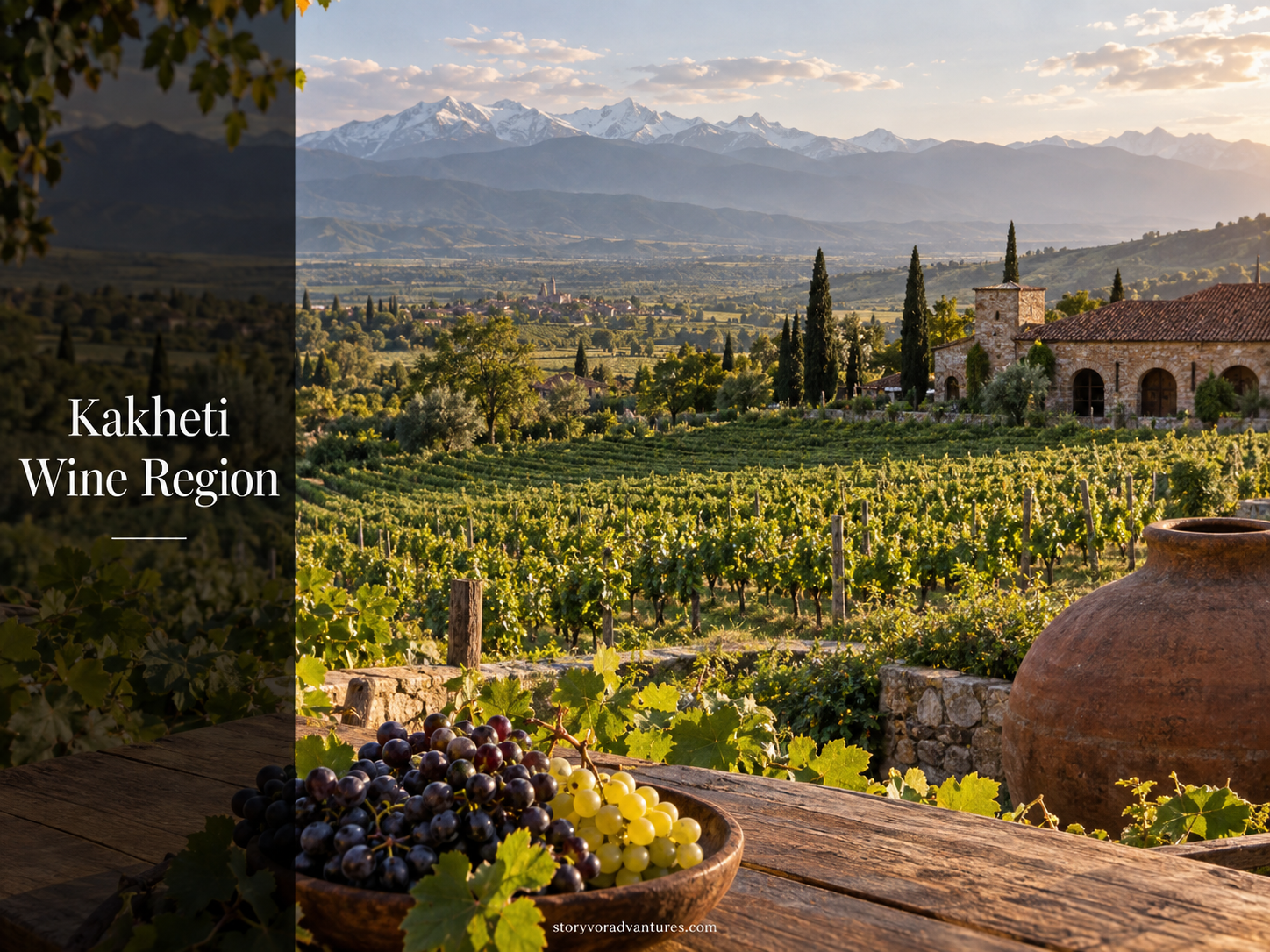
Kakheti lies east of Tbilisi and is widely associated with Georgian wine culture. Vineyards spread across fertile valleys beneath distant mountains, while monasteries, villages and family-operated cellars add history and personal character to the landscape.
Traditional Georgian wine may be produced in large clay vessels known as qvevri, which are buried underground during fermentation and storage. Visiting a responsible winery can help travellers understand this method, the importance of grape varieties and the relationship between wine and Georgian hospitality.
Sighnaghi is one of the region’s most attractive towns. Its hillside position, defensive walls and views across the Alazani Valley make it a convenient stop, although the wider region should not be judged only through this polished destination.
Visitors do not need to drink alcohol to appreciate Kakheti. Local food, architecture, agricultural landscapes and religious sites provide plenty of alternatives. Travellers who participate in tastings should arrange a driver or guided transport instead of driving afterwards.
Choosing small, locally operated experiences can distribute tourism income beyond major establishments. Ask permission before photographing people at work and remember that agricultural land is private property rather than an unrestricted photo location.
4. Svaneti and Mestia
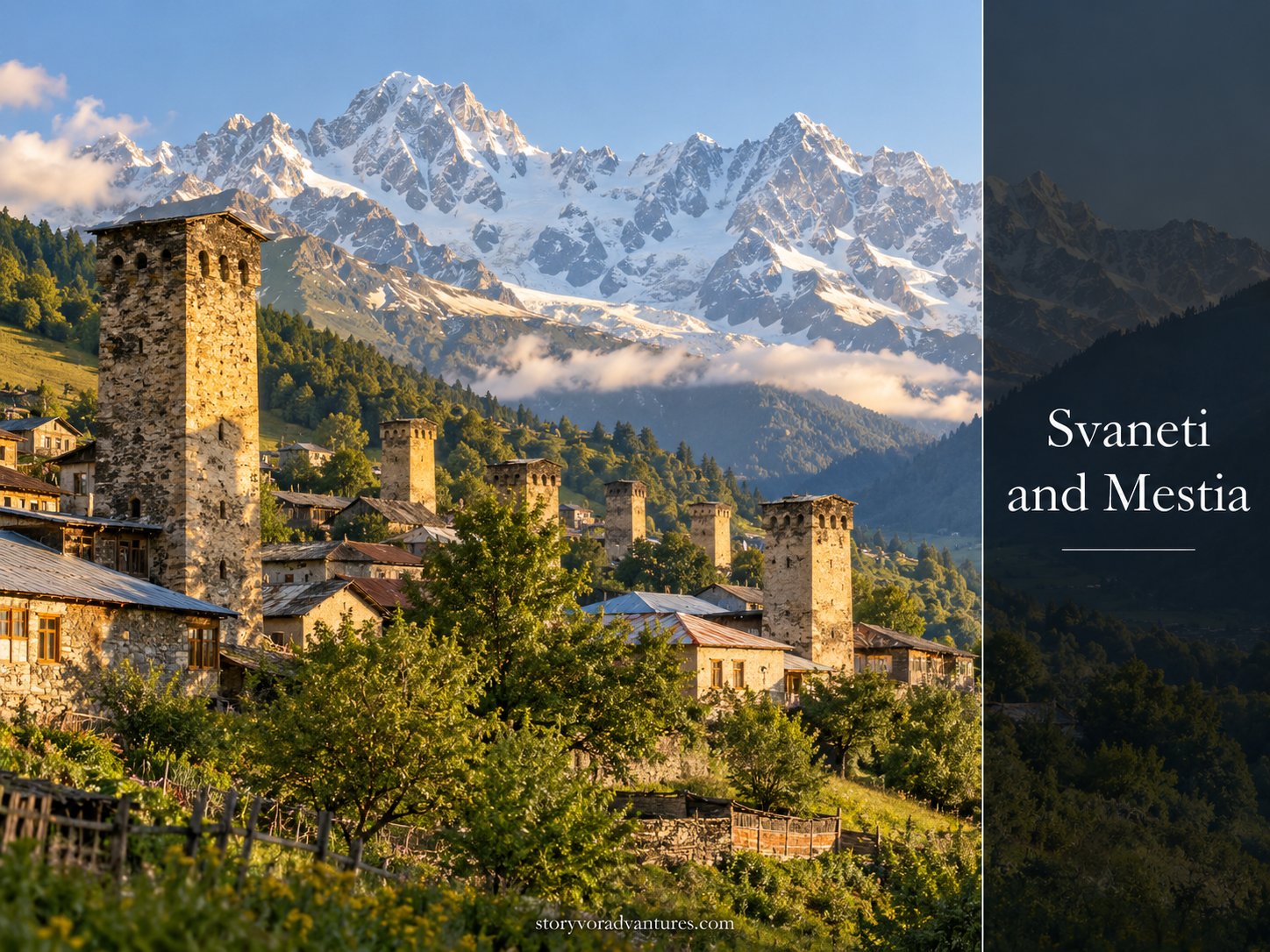
Svaneti is a mountainous region in northwestern Georgia known for medieval defensive towers, high valleys and communities shaped by geographic isolation. Mestia serves as the main travel base and provides accommodation, museums, restaurants and access to surrounding villages.
The stone towers rising beside family homes give the region a distinctive appearance. Historically, they provided protection during periods of conflict and formed part of the domestic landscape. Today they remain important symbols of Svan identity.
Mestia can be reached by road and, under certain conditions, limited flights. Both options can be affected by weather. Travellers should avoid creating a tightly scheduled international connection immediately after leaving the region because delays are possible.
Hiking routes around Mestia range from shorter local walks to demanding journeys between villages. Trail difficulty should be assessed realistically, and travellers must consider snow, river conditions, changing weather and limited phone coverage.
Svaneti should be approached as a living cultural region, not an outdoor theme park. Staying in locally operated guesthouses, learning basic Georgian greetings and respecting household customs can create a more meaningful visit.
5. Ushguli Village
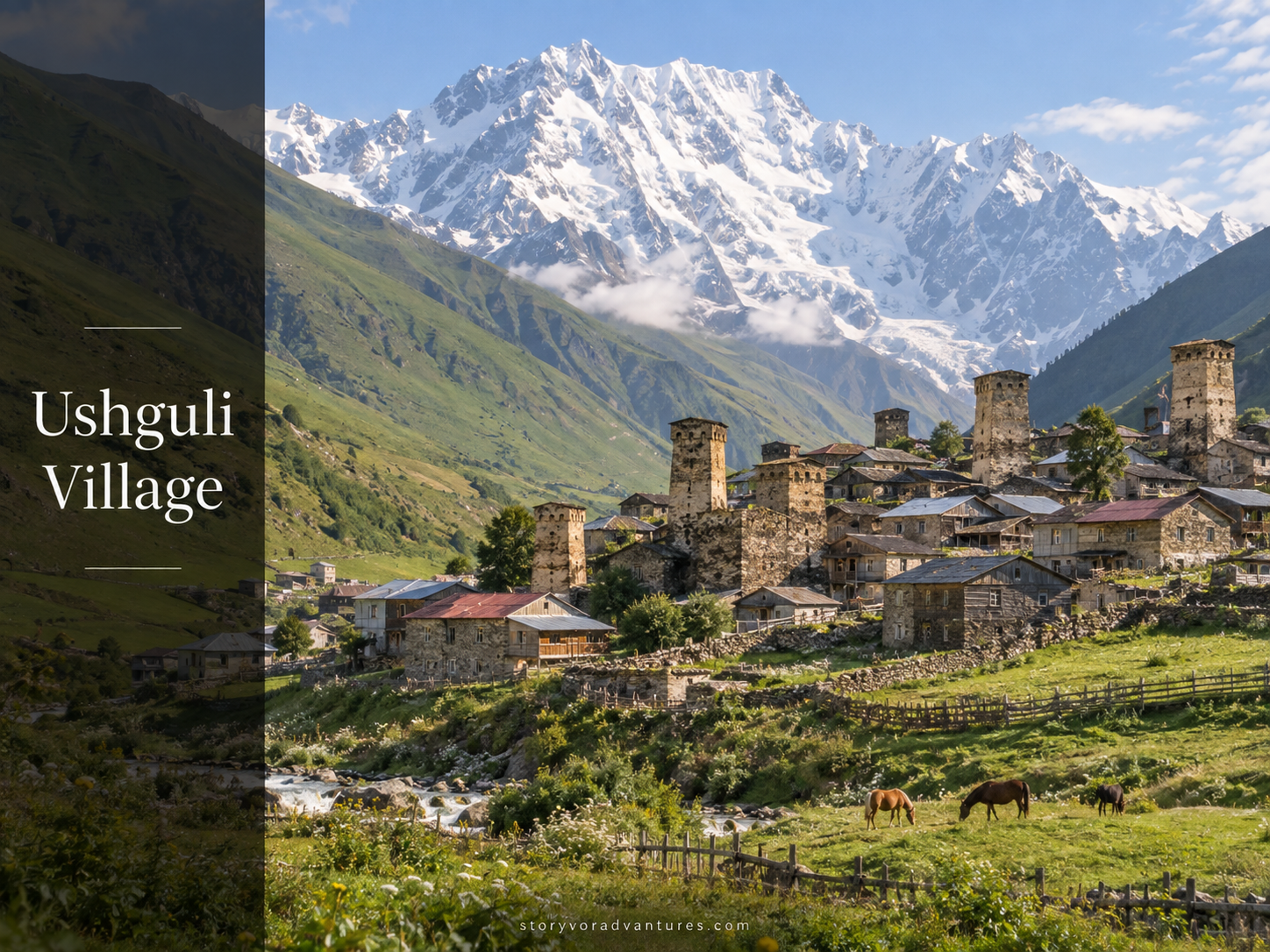
Ushguli is a collection of historic settlements located beneath some of the highest peaks of the Caucasus. Stone homes, defensive towers and grazing animals create a landscape that can appear almost unchanged from a distant period, although local families continue to live and work here.
The communities form part of Upper Svaneti, which is recognised. This recognition reflects the region’s architecture, settlement patterns and exceptional mountain setting.
Reaching Ushguli from Mestia can take considerable time despite the distance shown on a map. Road surfaces, weather and seasonal conditions influence the journey. Travellers unfamiliar with mountain driving may prefer an experienced local driver.
The village has become increasingly visible through social media, creating economic opportunities as well as pressure on residents and the environment. Visitors should not enter homes, gardens or towers without permission. Drones should never be flown without checking local rules and considering residents’ privacy.
Ushguli is most rewarding when travellers slow down. Walking quietly through the landscape, observing village life from a respectful distance and staying overnight can offer a deeper experience than arriving only for a quick photograph.
6. Martvili Canyon
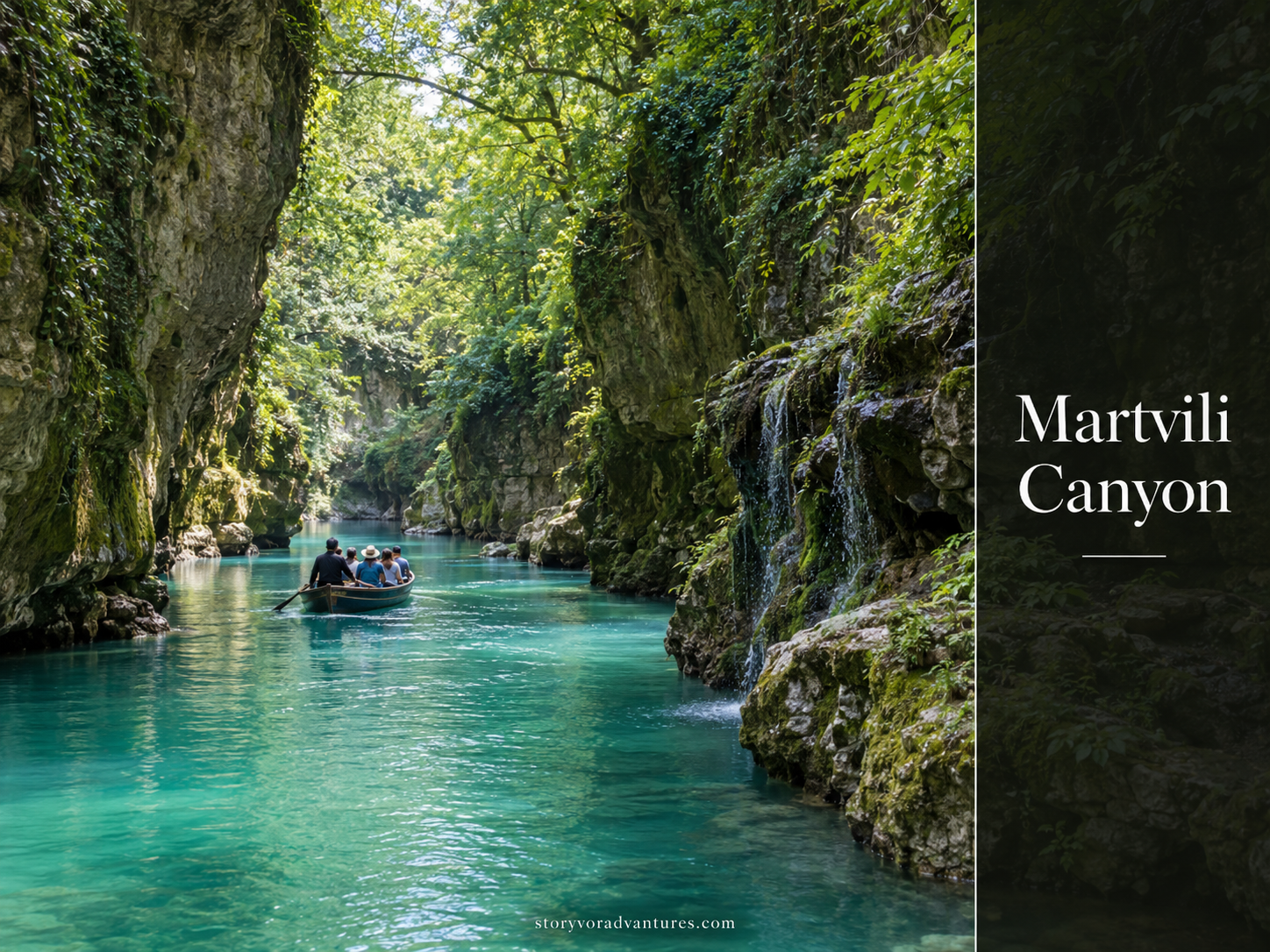
Martvili Canyon provides a greener contrast to Georgia’s high mountain and urban landscapes. Turquoise water flows between forested limestone walls, while established pathways and viewing areas allow visitors to observe different sections of the canyon.
Boat rides may be available when water levels and weather conditions permit. Operations can be suspended for safety reasons, so travellers should not build an entire day around a guaranteed boat trip without checking current conditions.
Rain can make paths slippery, and suitable footwear is important. Visitors should remain behind barriers, follow staff instructions and avoid climbing onto wet rocks for photographs. The water may look calm from above while currents remain difficult to judge.
The canyon can become crowded during popular travel periods. Arriving earlier in the day or travelling outside peak holiday dates may create a calmer experience. Nearby towns and natural attractions can be included in the itinerary so the journey is worthwhile even if conditions limit access.
7. Vardzia Cave City
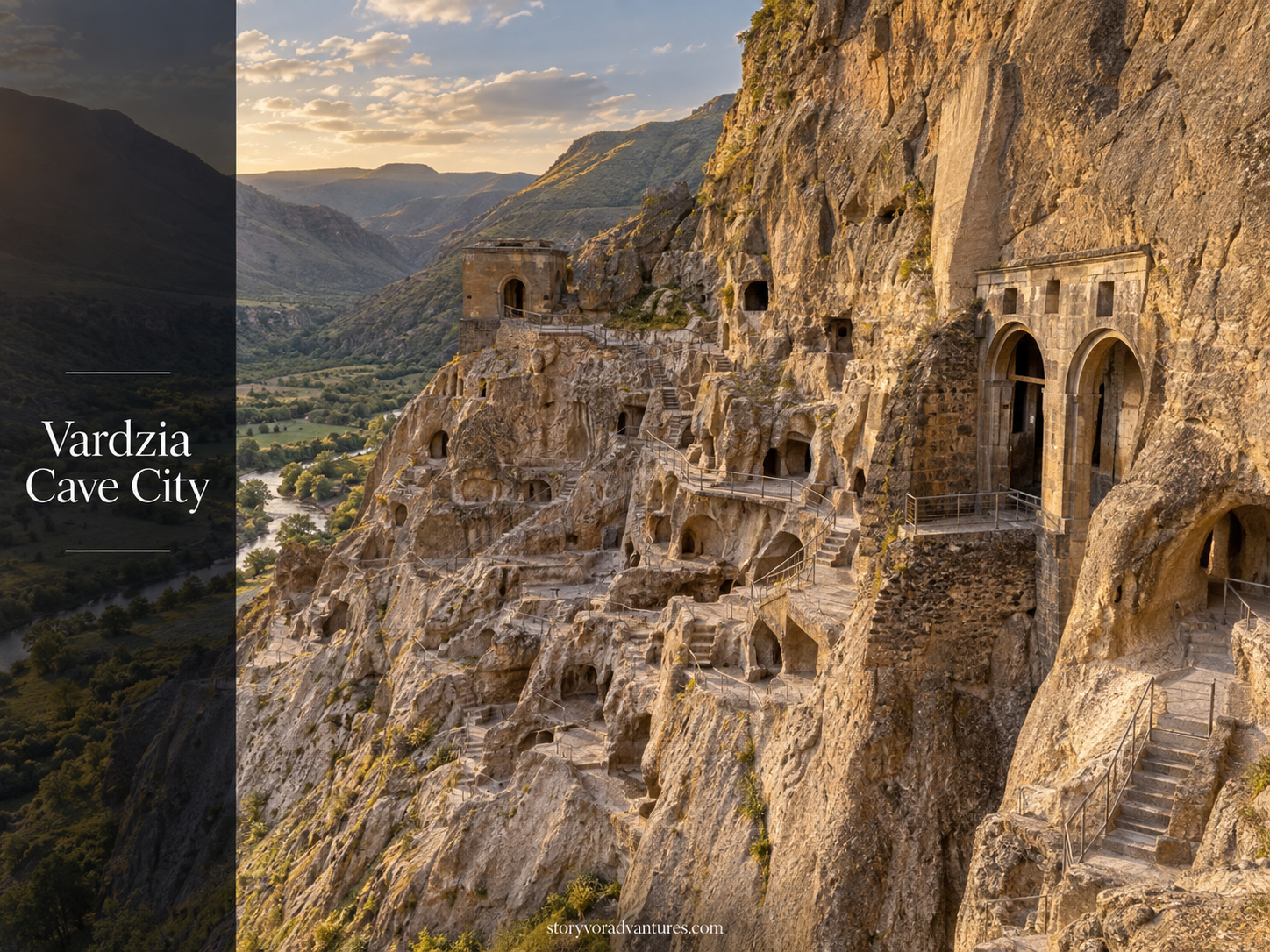
Vardzia is an extraordinary rock-cut complex in southern Georgia. From a distance, rows of openings appear across the cliff face. Inside, passages, chambers, stairways and religious spaces reveal how the settlement developed into a substantial centre during medieval Georgia.
The complex is closely associated with the reign of Queen Tamar and Georgia’s medieval history. Natural damage and historical conflict exposed sections that were once hidden within the mountain, producing the open appearance visible today.
Exploring Vardzia requires climbing steps and moving through narrow or uneven spaces. Visitors who experience difficulty with heights, confined passages or steep surfaces should assess the accessible sections before proceeding.
A guide can provide valuable historical context and prevent the site from becoming merely a collection of caves. The religious spaces should be treated respectfully, with appropriate clothing and quiet behaviour.
Summer heat can be strong around the exposed rock, while colder seasons may bring difficult road conditions. Water, sun protection and a realistic travel schedule are essential because Vardzia is not located immediately beside Georgia’s principal cities.
8. Prometheus Cave
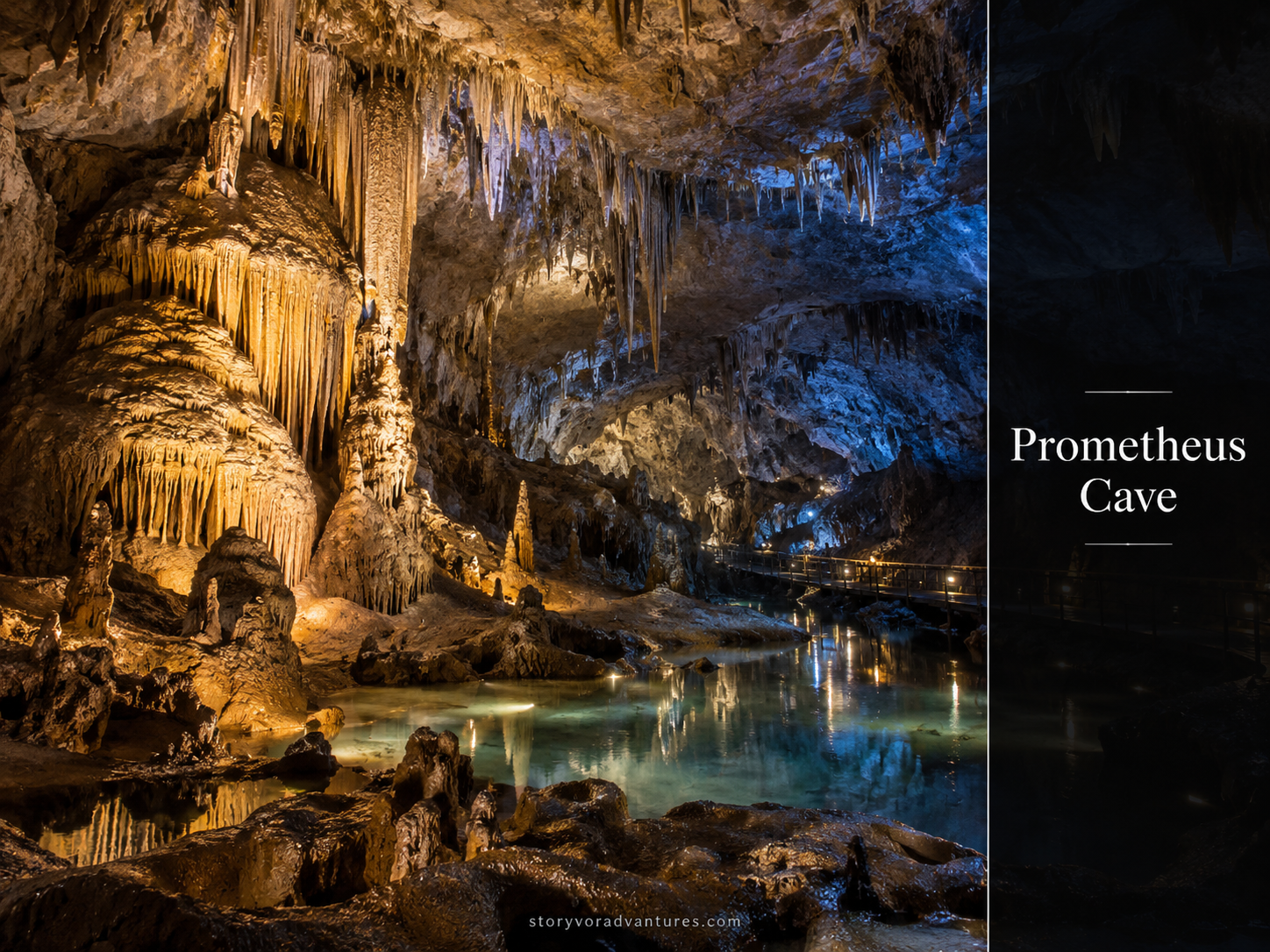
Prometheus Cave, near Tskaltubo and Kutaisi, reveals Georgia from an entirely different perspective. Underground chambers contain stalactites, stalagmites and layered mineral formations shaped gradually by water.
A managed visitor route leads through illuminated sections of the cave. The lighting adds colour and atmosphere, although travellers should remember that the formations are natural structures that developed over immense periods of time.
Temperature inside the cave can be noticeably cooler than outside, making a light layer useful even during warmer months. Paths may be damp, and visitors should wear shoes with reliable grip.
Touching cave formations can deposit oils from human skin and contribute to long-term damage. Visitors should also avoid leaving the marked route or using flash photography where restrictions apply.
Access options, boat sections and tour arrangements may depend on weather or operational decisions. Checking current information before travelling helps prevent disappointment.
9. Batumi and the Black Sea Coast
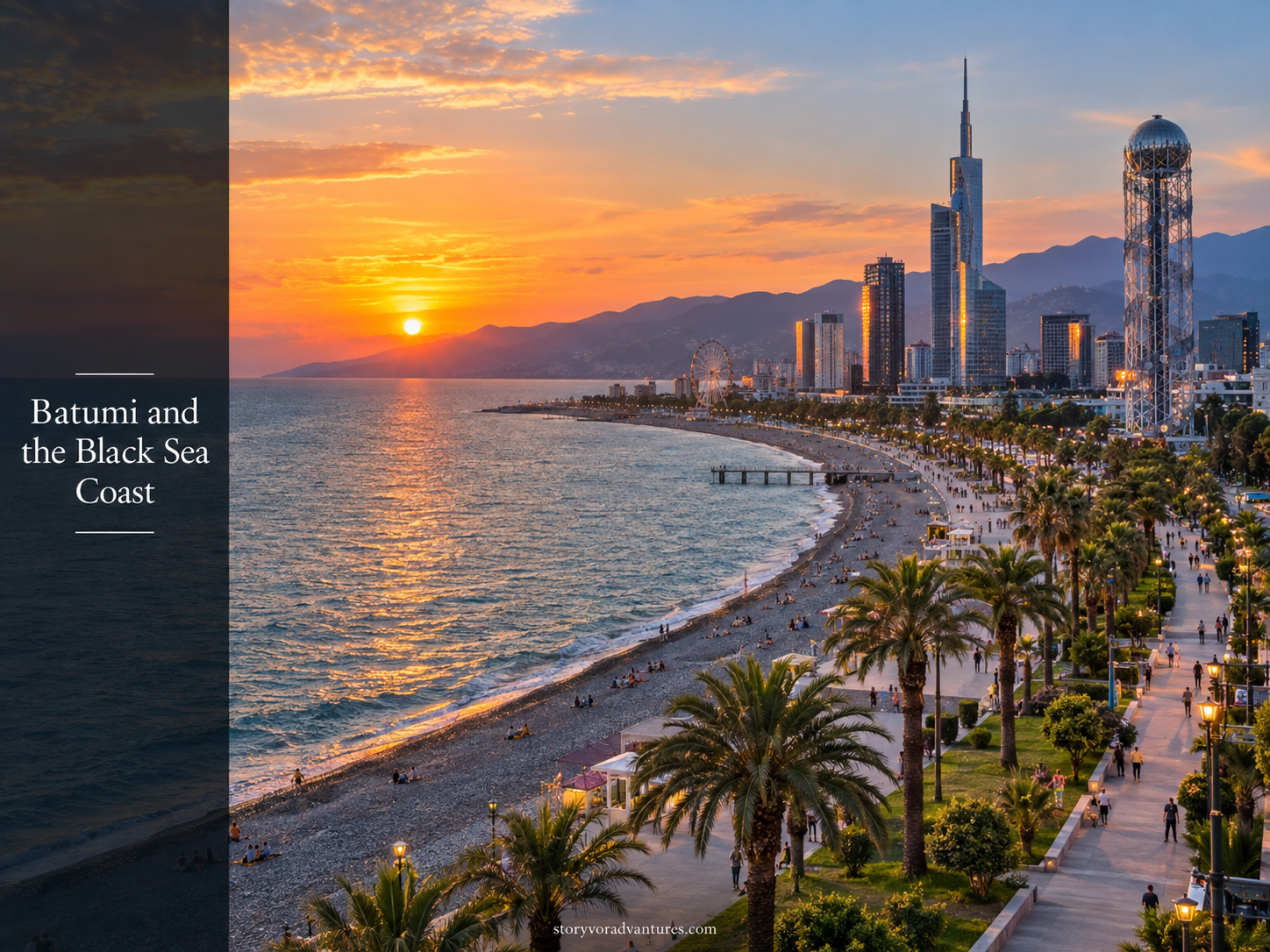
Batumi introduces visitors to Georgia’s subtropical Black Sea coast. The city combines beaches, gardens, contemporary towers and older streets, creating an atmosphere that feels very different from Tbilisi or the mountain regions.
Batumi Boulevard runs along the waterfront and is popular for walking and cycling. The Batumi Botanical Garden, located outside the central area, contains plants from several climatic regions and offers elevated views towards the coastline.
The beach is largely pebbled rather than sandy, so suitable footwear can make swimming more comfortable. Sea conditions should be respected, especially when waves or currents become strong. Travellers should use designated swimming areas and follow local safety advice.
Summer is the busiest season, with greater crowds and higher accommodation demand. Travelling during late spring or early autumn may provide a quieter experience, although weather conditions are less predictable.
Batumi should not be treated only as a resort. Visiting local markets, exploring older neighbourhoods and trying regional Adjarian food can reveal more of the city’s identity beyond its modern seafront.
10. Borjomi-Kharagauli National Park
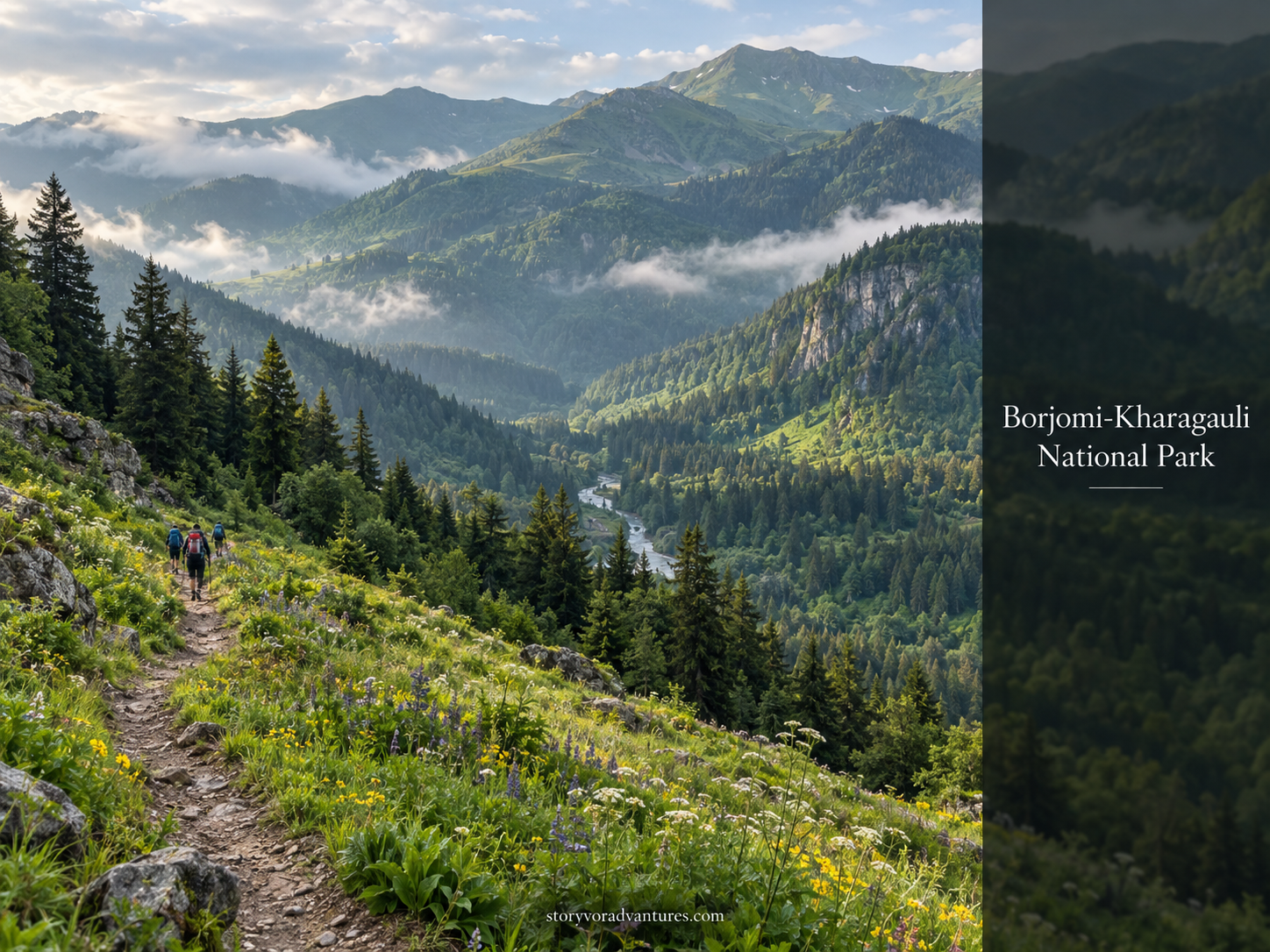
Borjomi-Kharagauli National Park offers forests, mountain ridges and multi-day walking routes across central Georgia. It is a valuable destination for travellers who want to experience the country’s natural environment away from its most photographed attractions.
The wider Borjomi area is famous for mineral water and has long been associated with spa culture. However, the national park provides an entirely different experience built around trails, viewpoints and extended time outdoors.
Hiking routes vary in length and difficulty. Travellers should confirm registration requirements, trail conditions, shelter availability and seasonal restrictions before entering. Offline navigation, sufficient water, food and weather protection are important even on apparently straightforward routes.
Wildlife should be observed without feeding or approaching it. Visitors must carry out their waste, avoid lighting fires outside permitted areas and follow ranger instructions.
A national park is not simply empty land available for unrestricted recreation. Responsible hiking protects vegetation, reduces fire risks and preserves the experience for future visitors.
How Many Days Do You Need in Georgia?
A seven-day trip can combine Tbilisi, Kakheti and Kazbegi at a comfortable pace. Travellers trying to include western Georgia during the same week may spend too much time transferring between regions.
Ten to fourteen days creates a better opportunity to combine the capital, mountains, historic sites and either Kutaisi or Batumi. Svaneti requires additional travel time and should not be inserted into an already crowded itinerary.
A longer journey of approximately two to three weeks allows travellers to include eastern Georgia, the Greater Caucasus, Vardzia, western caves and the Black Sea coast while maintaining rest days.
The best itinerary is not necessarily the one containing the greatest number of locations. Georgia becomes more rewarding when travellers have enough time to enjoy meals, speak with local hosts and adapt to weather changes.
Responsible Travel in Georgia
Religious buildings form an important part of Georgian history and daily life. Visitors should dress appropriately, keep their voices low and follow local photography restrictions. A famous church remains a place of worship even when large numbers of tourists arrive.
Mountain villages deserve the same respect as private neighbourhoods anywhere else. Ask before photographing residents, avoid entering family property and never block roads or agricultural work for pictures.
Use marked trails and avoid creating shortcuts across fragile slopes. Carry reusable water bottles where safe refill options exist, minimise single-use plastic and remove all litter from natural areas.
Supporting local guesthouses, guides, restaurants and craftspeople can help tourism income remain within the communities being visited. Responsible travel is not only about avoiding damage; it is also about making thoughtful choices that benefit local people.
Final Thoughts
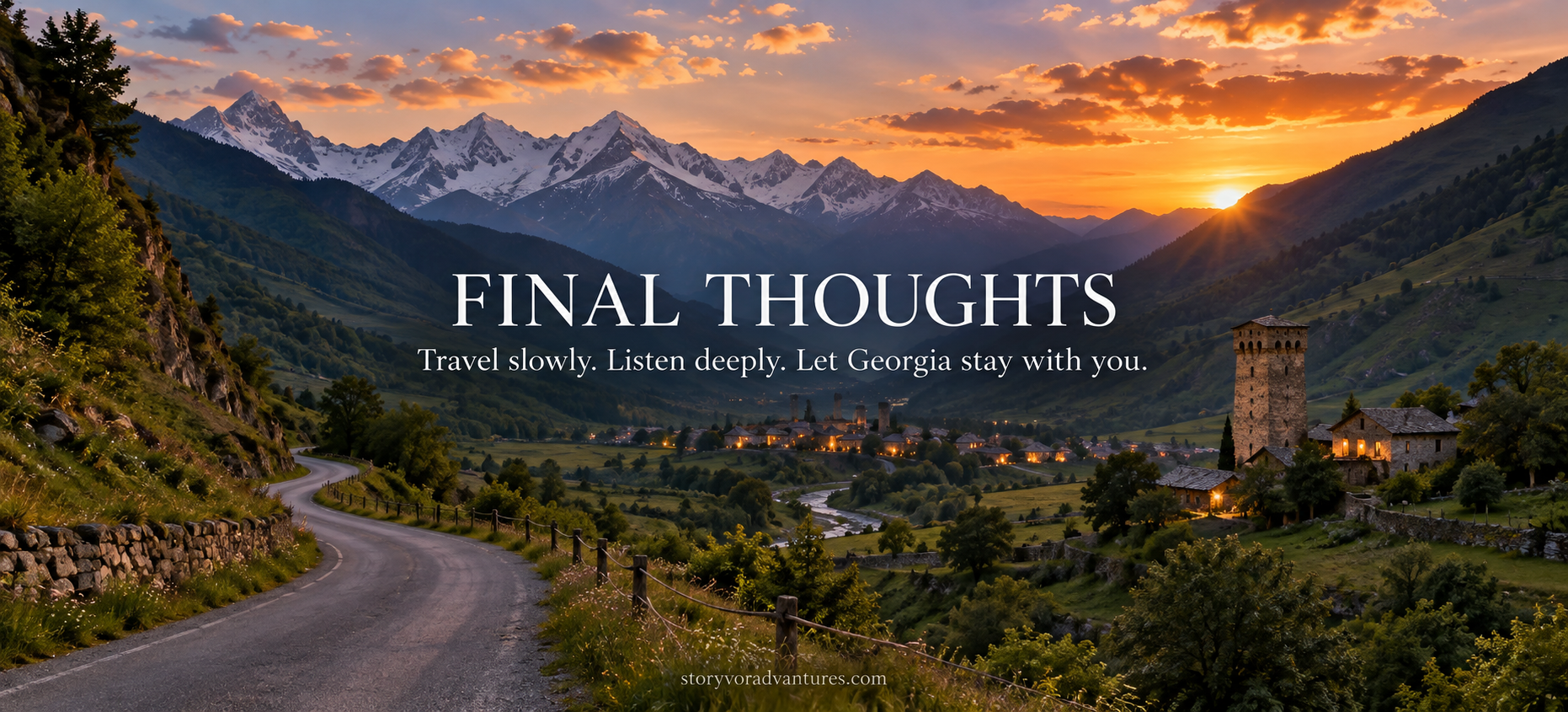
Georgia offers an unusual sense of variety. One day may begin inside a historic Tbilisi courtyard, while the next ends beneath snow-covered peaks. A journey can move from vineyards and cave cities to deep forests and the Black Sea without leaving the country.
Its landscapes are visually impressive, but Georgia’s identity cannot be understood through scenery alone. Hospitality, food, faith, language and regional traditions are equally important parts of the experience.
Travellers who rush from viewpoint to viewpoint may return with many photographs but little understanding of the country. Those who travel more slowly can discover a destination that feels complex, generous and deeply connected to its past.
Plan carefully, remain flexible in the mountains and approach local communities with respect. Georgia’s most memorable moments often happen between the famous attractions—in a family guesthouse, beside a quiet village road or during an unplanned conversation over a shared meal.
Travel notice: Entry rules, attraction fees, transport schedules, mountain access, weather conditions and health requirements can change. Verify important details through official sources before travelling.