Namibia Travel Guide 2026: 10 Otherworldly Places Where the Desert Meets the Wild
Explore 10 otherworldly places in Namibia, from Sossusvlei and Etosha to the Skeleton Coast, with practical tips for planning your 2026 adventure.
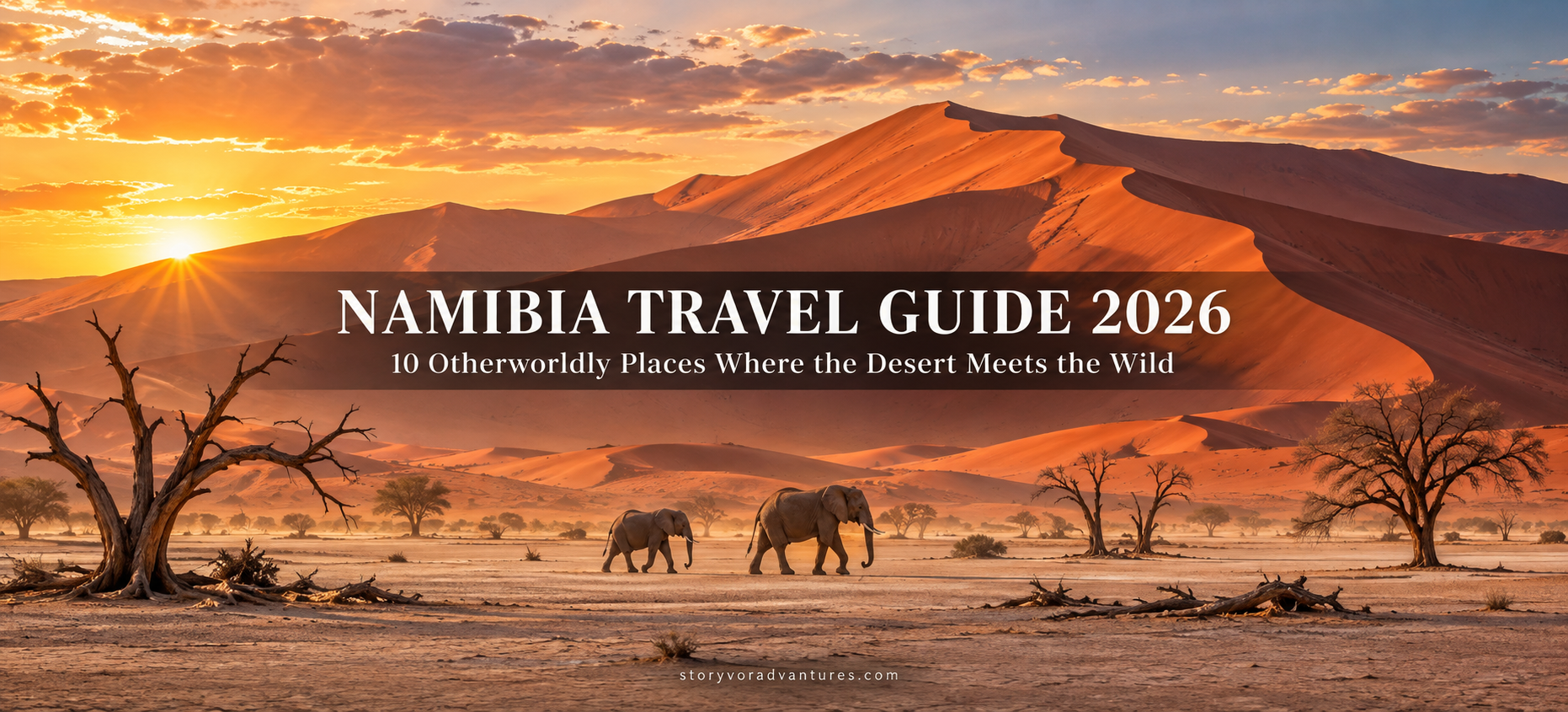
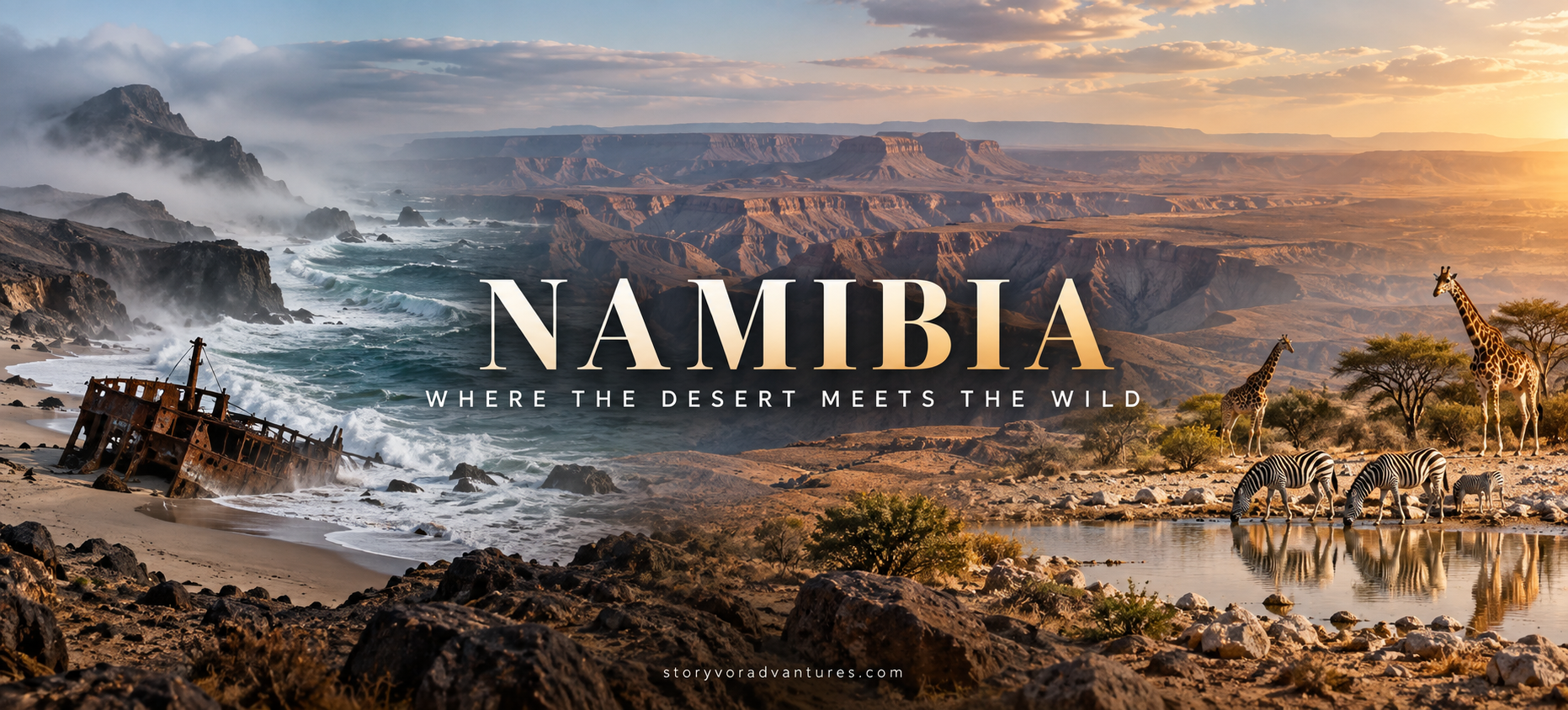
Namibia is a country where nature seems to work on a completely different scale. Giant orange dunes rise above pale desert floors, elephants move through dry valleys, abandoned buildings slowly disappear beneath the sand, and a wild Atlantic coastline stretches into the mist. Few destinations combine silence, wildlife and dramatic landscapes so powerfully.
Located in southwestern Africa, Namibia is an excellent destination for travellers who enjoy road trips, nature photography, wildlife encounters and wide-open spaces. However, travelling here requires thoughtful planning. Distances can be long, fuel stations may be widely separated, mobile coverage can disappear, and some remote roads demand confident driving.
This Namibia travel guide introduces ten extraordinary places that reveal different sides of the country. It is designed to help first-time visitors build a realistic and responsible itinerary rather than simply collect famous photographs.
Important: Entry requirements, park fees, road conditions, permits, accommodation prices and opening hours can change. Always confirm current information with official authorities and your travel providers before making a booking.
Quick Planning Guide for Namibia
The most comfortable months for wildlife viewing and outdoor exploration are generally during the cooler, drier part of the year. Daytime temperatures can still be strong, while desert nights may become surprisingly cold. Different regions have different conditions, so travellers should prepare for heat, wind, dust and rapid temperature changes.
A self-drive journey offers flexibility, but visitors should not underestimate the size of the country. Gravel roads are common outside major cities, and travel times may be longer than they appear on a map. Renting an appropriate vehicle, carrying sufficient drinking water and checking the spare tyre are essential precautions.
Travellers who prefer not to drive independently can join organised tours connecting Windhoek with destinations such as Sossusvlei, Etosha National Park, Swakopmund and Damaraland. Guided travel can be especially valuable in wildlife areas and remote desert regions.
1. Sossusvlei and Deadvlei
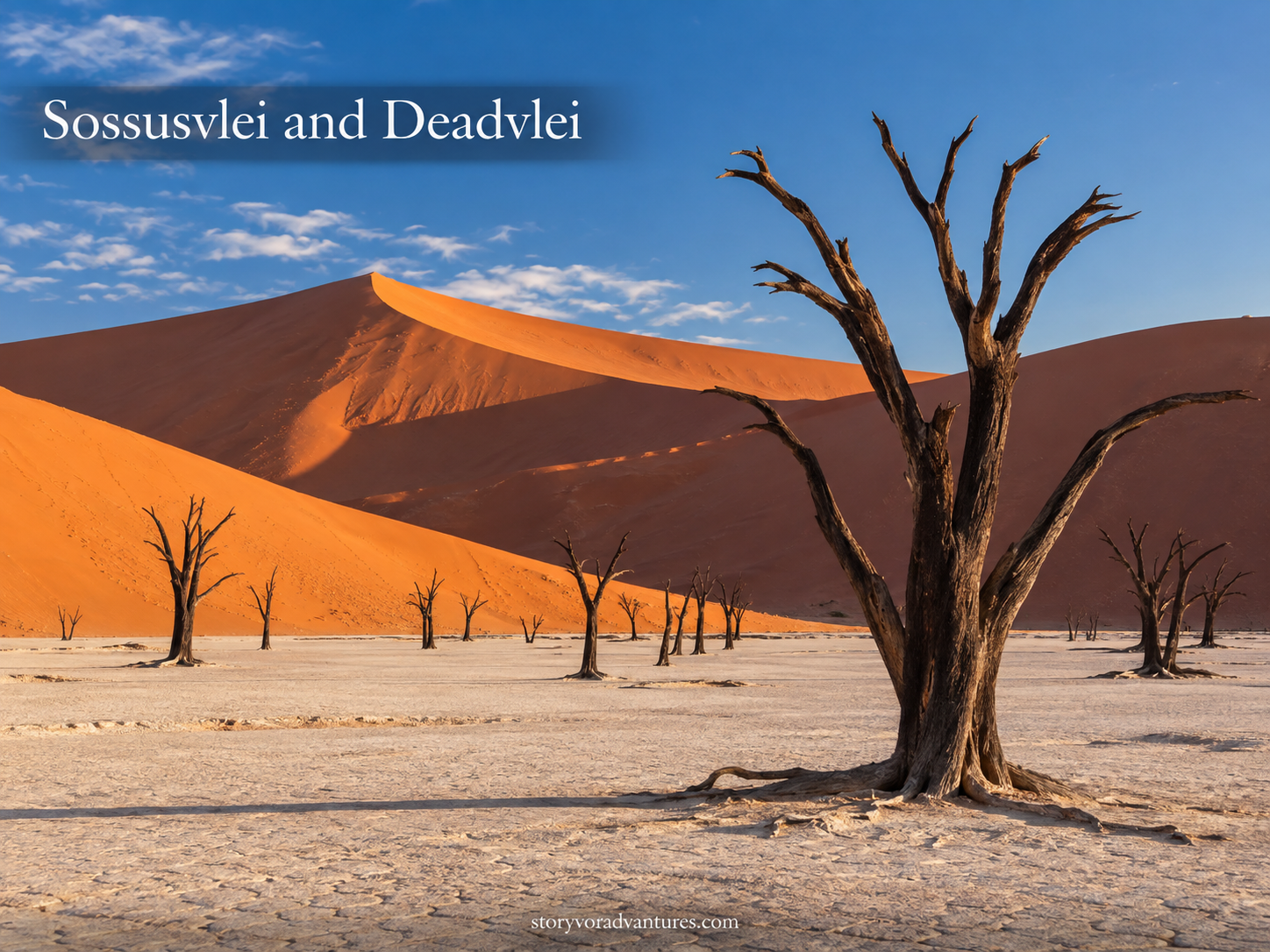
Sossusvlei is one of Namibia’s most recognisable landscapes. Towering red and orange dunes surround a bright desert basin, creating a scene that changes colour as the sun moves across the sky. Early morning light produces long shadows along the dunes, making this one of the country’s most impressive locations for landscape photography.
Nearby Deadvlei creates an even more unusual sight. Dark, skeletal camel-thorn trees stand across a pale clay pan beneath enormous dunes. The trees died long ago after changes in the local water supply, but the extremely dry climate has prevented them from decomposing in the usual way. Their twisted forms now create a striking contrast against the white ground and deep-blue sky.
Reaching the area requires an early start because heat can become intense later in the day. Visitors should carry water, wear sun protection and follow marked access routes. The final approach may involve deep sand, so travellers should understand whether their vehicle is suitable or use an authorised shuttle service.
Sossusvlei lies within the Namib Sand Sea, which UNESCO recognises for its exceptional coastal desert landscape and ecological processes. Visitors can help protect this fragile environment by remaining on permitted routes and taking all waste away with them.
2. Etosha National Park
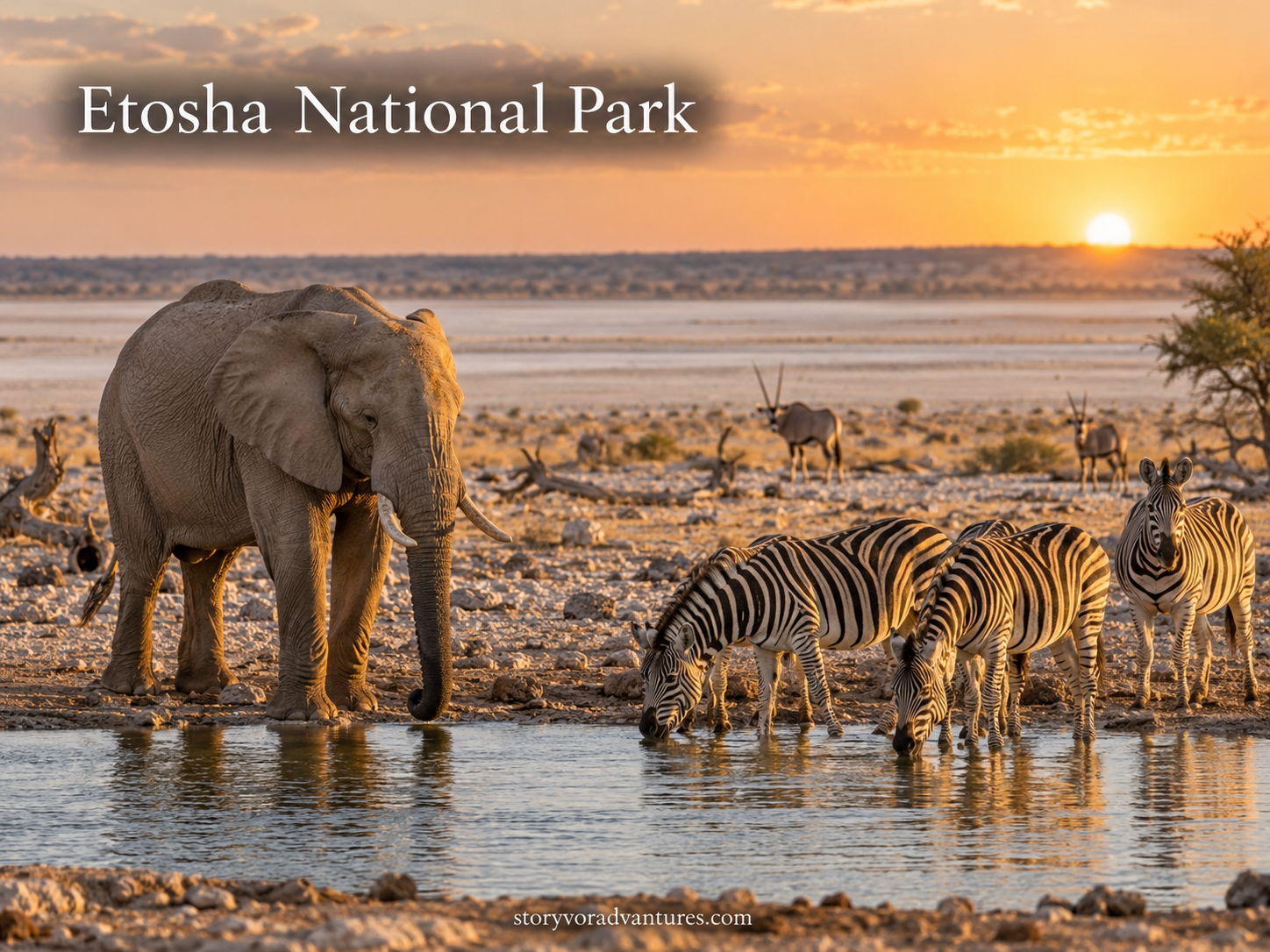
Etosha National Park offers one of Africa’s most distinctive wildlife-viewing experiences. At its centre lies the vast Etosha Pan, a pale salt basin that can appear almost endless from the surrounding viewpoints. During dry periods, animals gather near waterholes, allowing patient visitors to observe wildlife without travelling constantly across the park.
Elephants, giraffes, zebras, springbok and several species of antelope may be seen within the park. Lions and other predators also live here, although sightings are never guaranteed. Wildlife experiences depend on season, weather, water availability and simple luck, which is part of what makes every visit different.
Some camps have viewing areas overlooking waterholes, giving travellers the opportunity to watch animals quietly during the evening. Binoculars can make these observations more rewarding without encouraging visitors to move dangerously close to wildlife.
Drivers must remain inside their vehicles except at designated areas and should obey all speed limits and park regulations. Feeding animals, blocking their movement or surrounding them with vehicles can cause stress and create dangerous situations. Responsible viewing means giving wildlife enough space to behave naturally.
3. Skeleton Coast
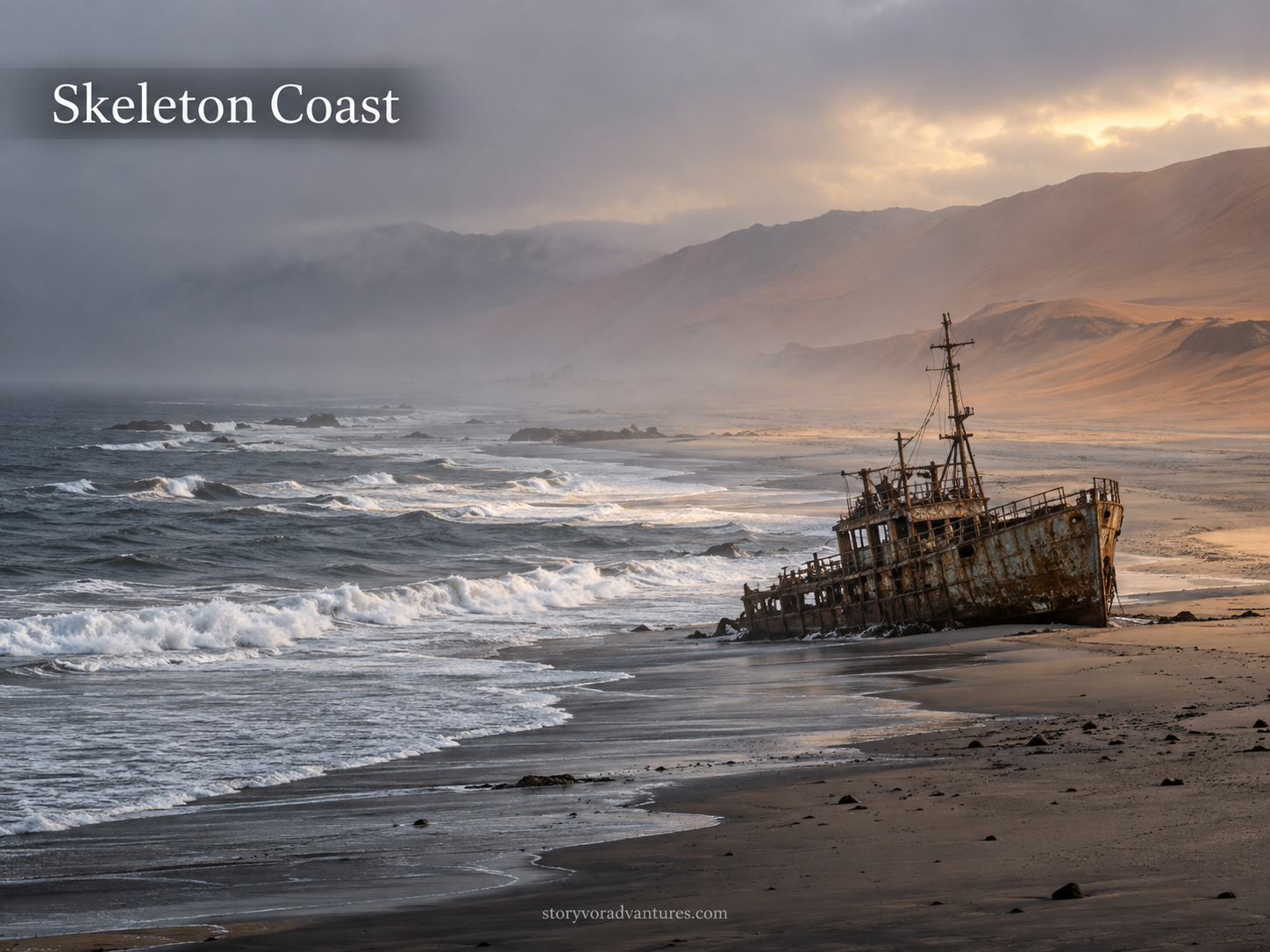
The Skeleton Coast is a remote meeting point between desert and ocean. Cold Atlantic currents create fog along the coastline, while strong waves and shifting sand have historically made navigation difficult. Shipwreck remains, empty beaches and immense dunes contribute to the region’s haunting reputation.
Despite its severe appearance, the coast supports a surprising variety of life. Seals gather in large colonies at certain locations, while desert-adapted plants and animals survive through highly specialised strategies. Fog provides an important source of moisture in an environment where rainfall is extremely limited.
Some parts of the wider coastal region are accessible by road, while more remote sections may require permits, authorised guides or fly-in arrangements. Travellers should never assume that an isolated track is open simply because it appears on a digital map.
The beauty of the Skeleton Coast comes from its isolation, but that isolation also creates risk. Fuel, food, communication and vehicle recovery options may be limited. Visitors should use established routes, check conditions before departure and avoid approaching seals or other animals too closely.
4. Fish River Canyon
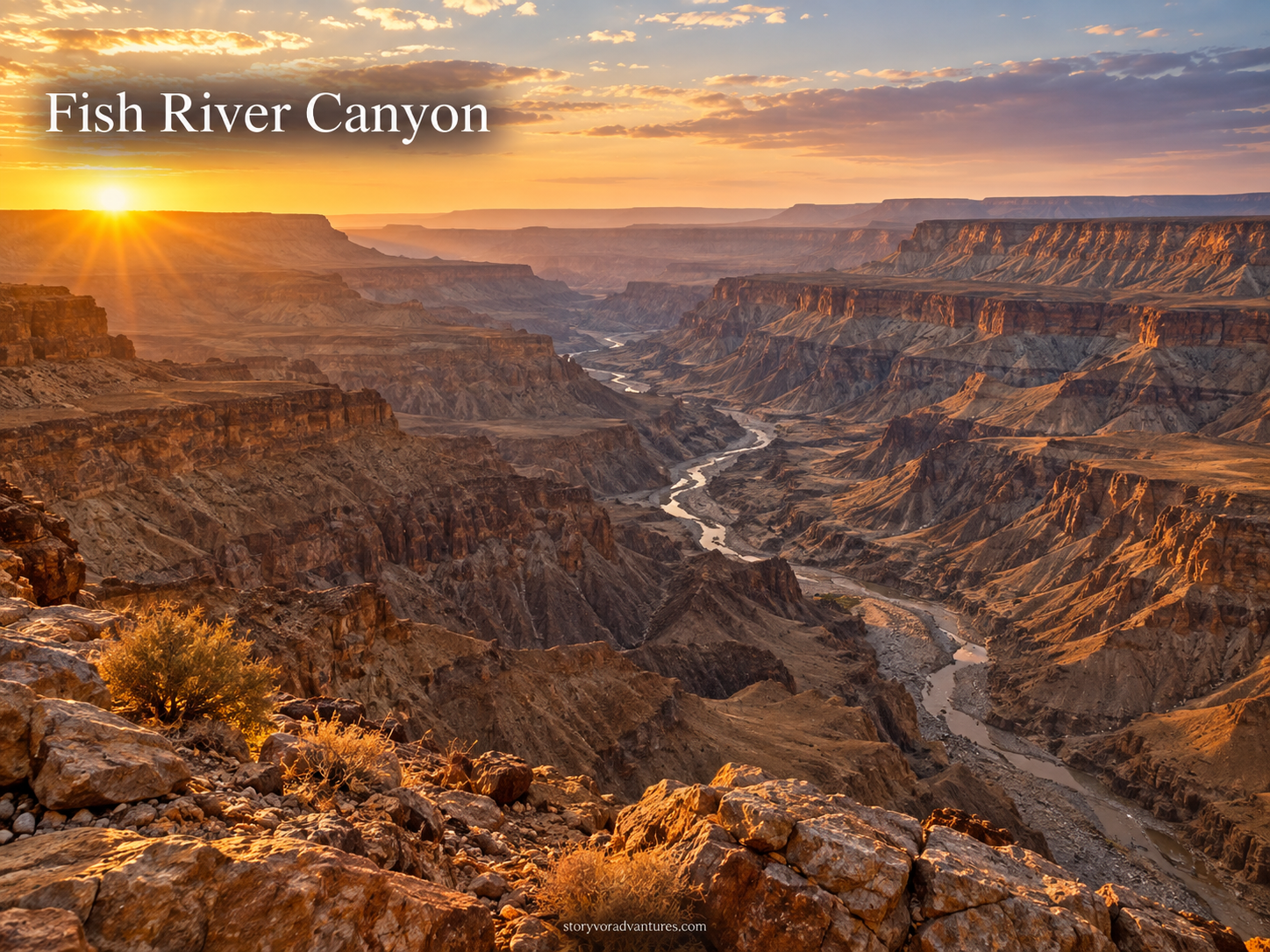
Fish River Canyon cuts through the dry landscape of southern Namibia and is often described as one of Africa’s most impressive canyon systems. From the main viewpoints, visitors can see rocky layers descending toward the winding riverbed far below.
Sunrise and late afternoon can reveal the canyon’s colours and textures more clearly than the harsh middle of the day. Even travellers who do not hike can appreciate the scale of the landscape from official viewpoints.
The multi-day canyon hiking route is a serious wilderness experience rather than a casual walk. Access can be seasonal and may require advance reservations, medical documentation or permits, depending on current regulations. Heat, limited water and difficult terrain make preparation essential.
Visitors should never climb beyond barriers or approach unstable edges for photographs. The landscape can make distances look smaller than they really are, and emergency assistance may take considerable time to arrive. Travellers planning any extended hike must verify current rules directly with the responsible authorities.
5. Spitzkoppe
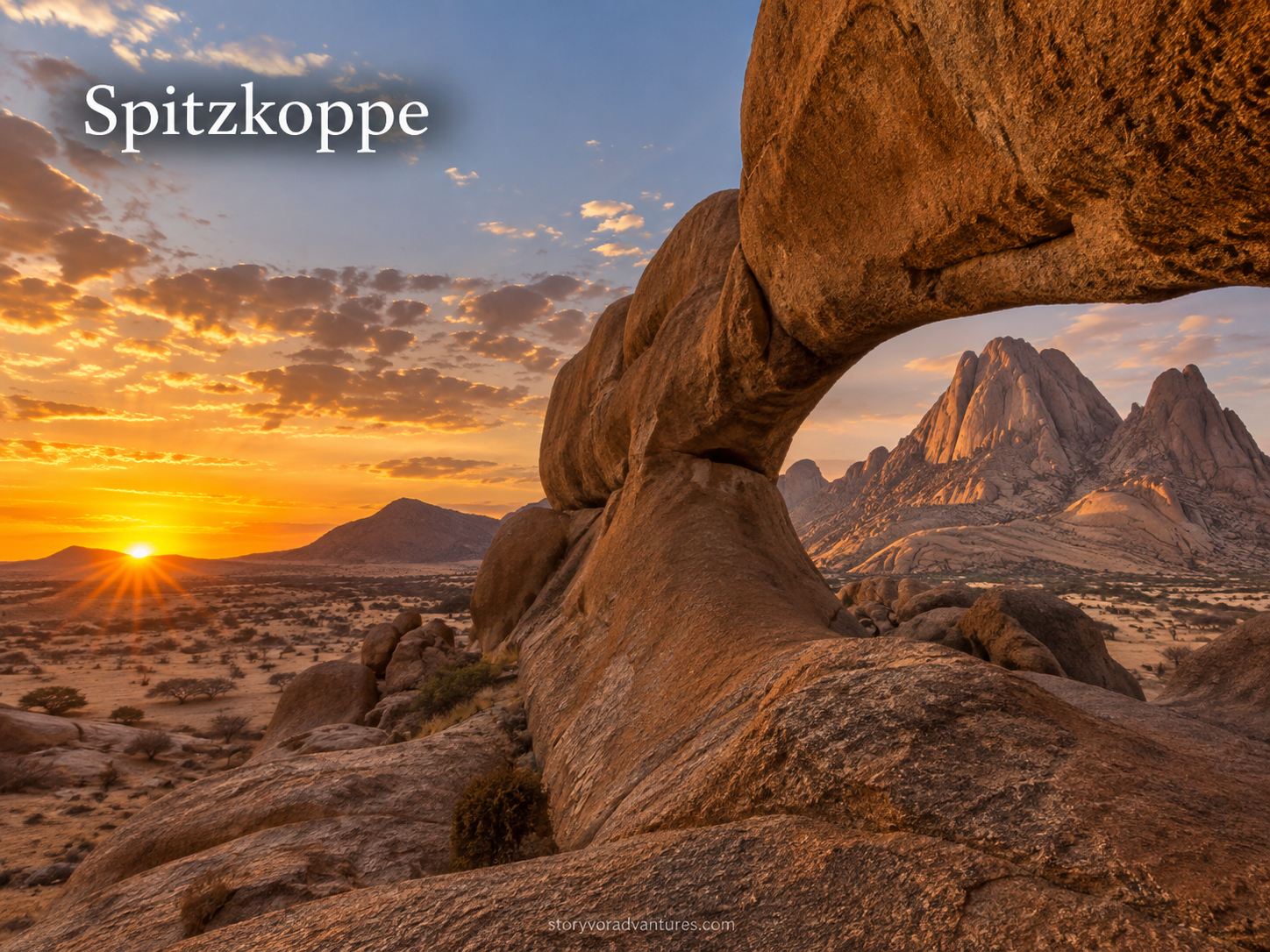
Rising dramatically from the surrounding plains, Spitzkoppe is a collection of granite peaks and rock formations that look especially beautiful during sunrise and sunset. The warm stone glows in shades of orange and red, while the open landscape creates excellent conditions for stargazing after dark.
Natural arches, rocky pathways and ancient rock-art sites add depth to the experience. The area is not simply a photography stop; it is part of a cultural landscape connected to generations of human history.
Local guiding services can help visitors understand the geology, rock art and community significance of the area. A guide can also reduce the risk of walking onto unsafe or restricted routes.
Travellers should avoid touching or marking rock art, climbing fragile formations or leaving litter at campsites. Carrying sufficient water is essential because shade can be limited and temperatures may rise quickly during the day.
6. Sandwich Harbour
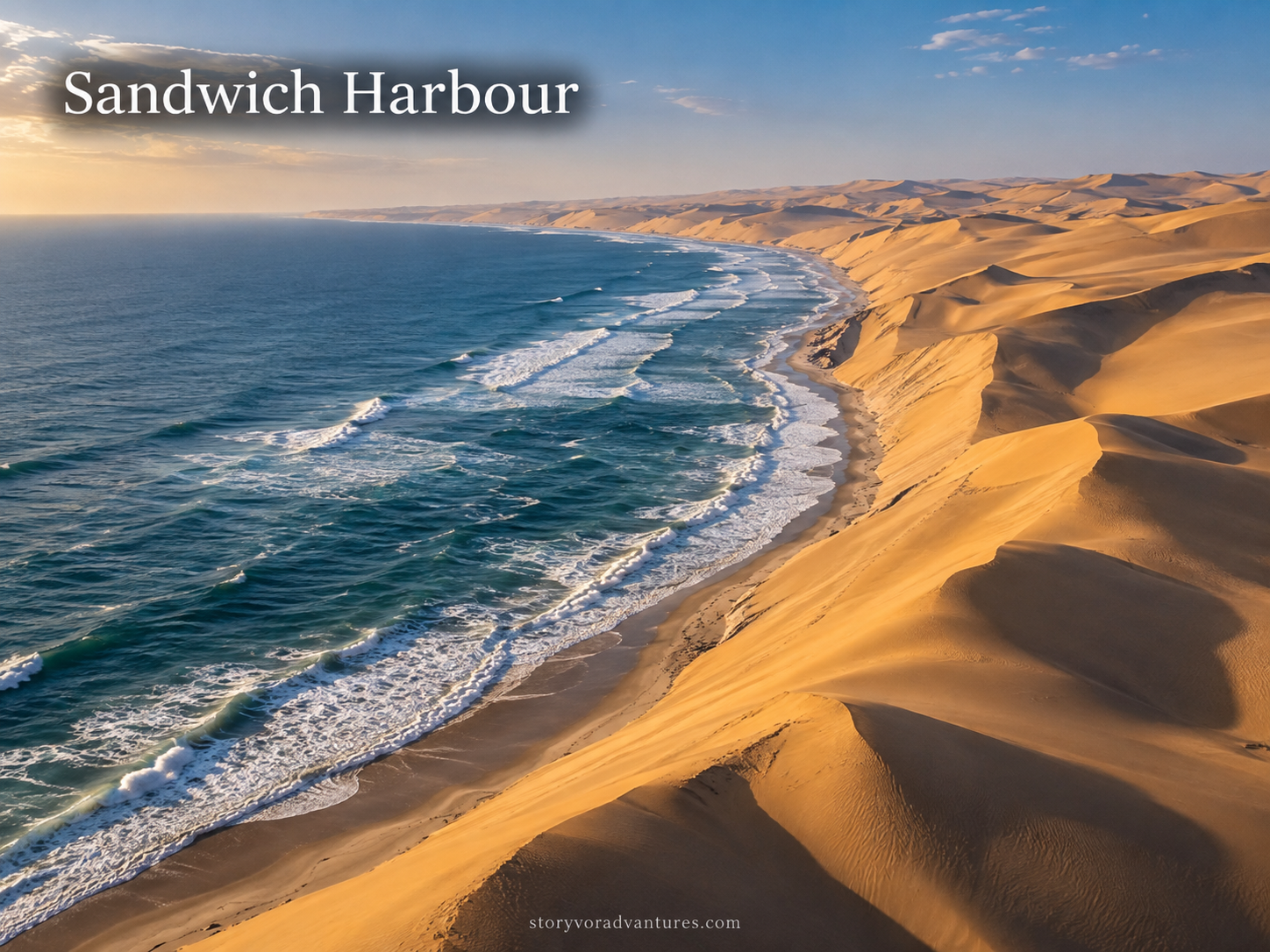
Sandwich Harbour is one of Namibia’s most dramatic coastal environments. Here, huge dunes appear to fall directly toward the Atlantic Ocean, creating a narrow landscape shaped by sand, wind, water and tides.
The journey can be as memorable as the destination, but it should not be treated as an ordinary beach drive. Soft sand, steep dunes and changing tides can make the route dangerous for inexperienced drivers. Access conditions and environmental restrictions may also change.
Joining an experienced authorised guide is the safest and most responsible way to explore the area. Local guides understand the tides, approved routes and techniques needed to travel through the dunes without becoming stranded or unnecessarily damaging the landscape.
Wildlife should be observed quietly, and vehicles must follow permitted tracks. Driving carelessly across sensitive surfaces can disturb habitats and leave marks that remain visible long after a visitor has departed.
7. Twyfelfontein
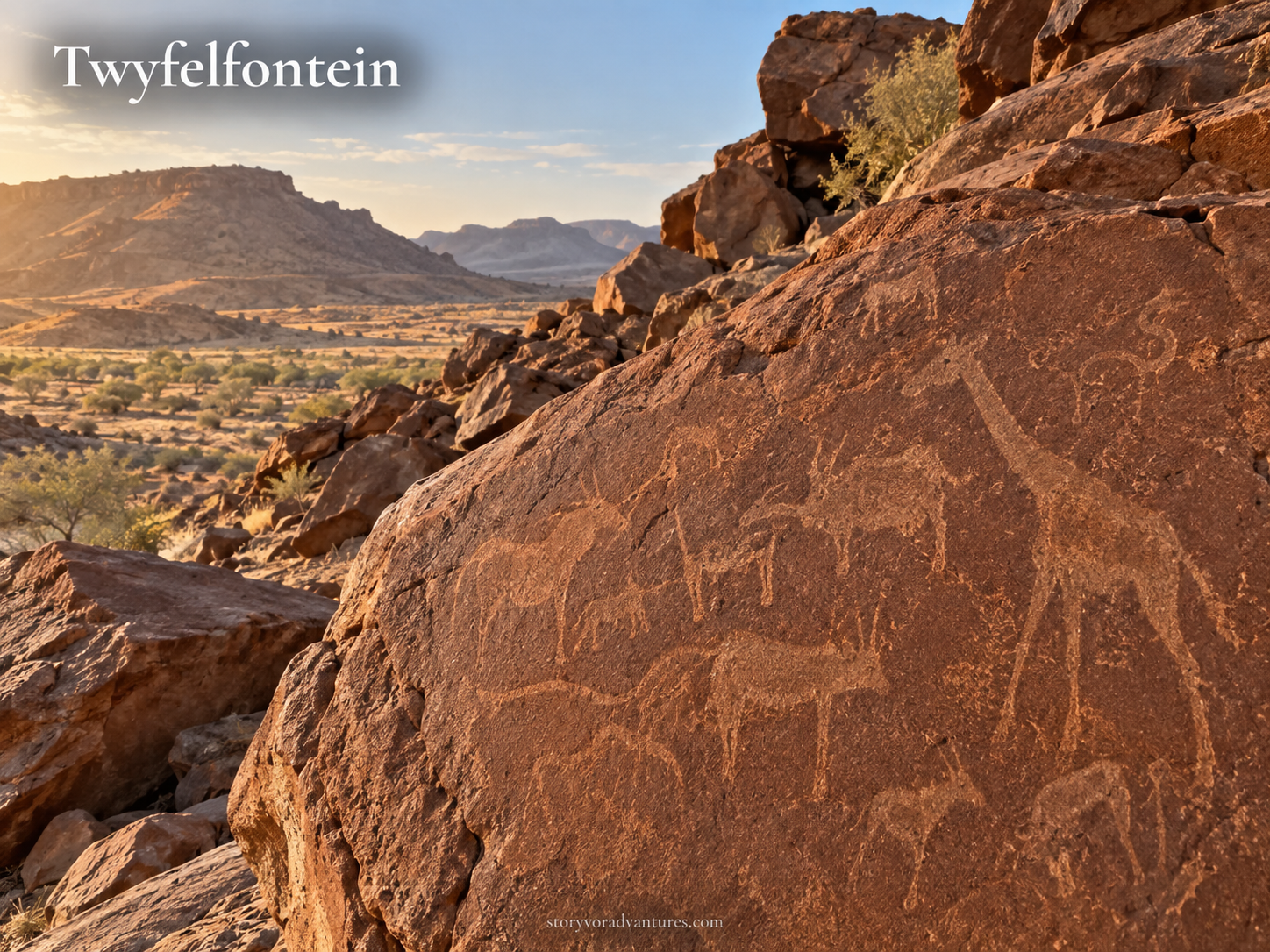
Twyfelfontein offers a different kind of journey into Namibia’s past. The area contains thousands of rock engravings and other archaeological traces created by communities that understood this dry environment long before modern roads reached it.
Images of animals, tracks and symbolic forms appear across the stone surfaces. They provide evidence of how earlier hunter-gatherer communities observed wildlife and interacted with the wider landscape. Twyfelfontein is officially recognised.
Walking with a local guide makes the visit more meaningful because the engravings are not always immediately obvious. Guides can explain what is known about the images while also acknowledging that some interpretations remain uncertain.
Visitors should never trace, wet or touch the engravings to improve photographs. Even small physical contact can contribute to gradual deterioration. Staying on designated paths protects both the archaeological sites and the fragile desert environment surrounding them.
8. Kolmanskop Ghost Town
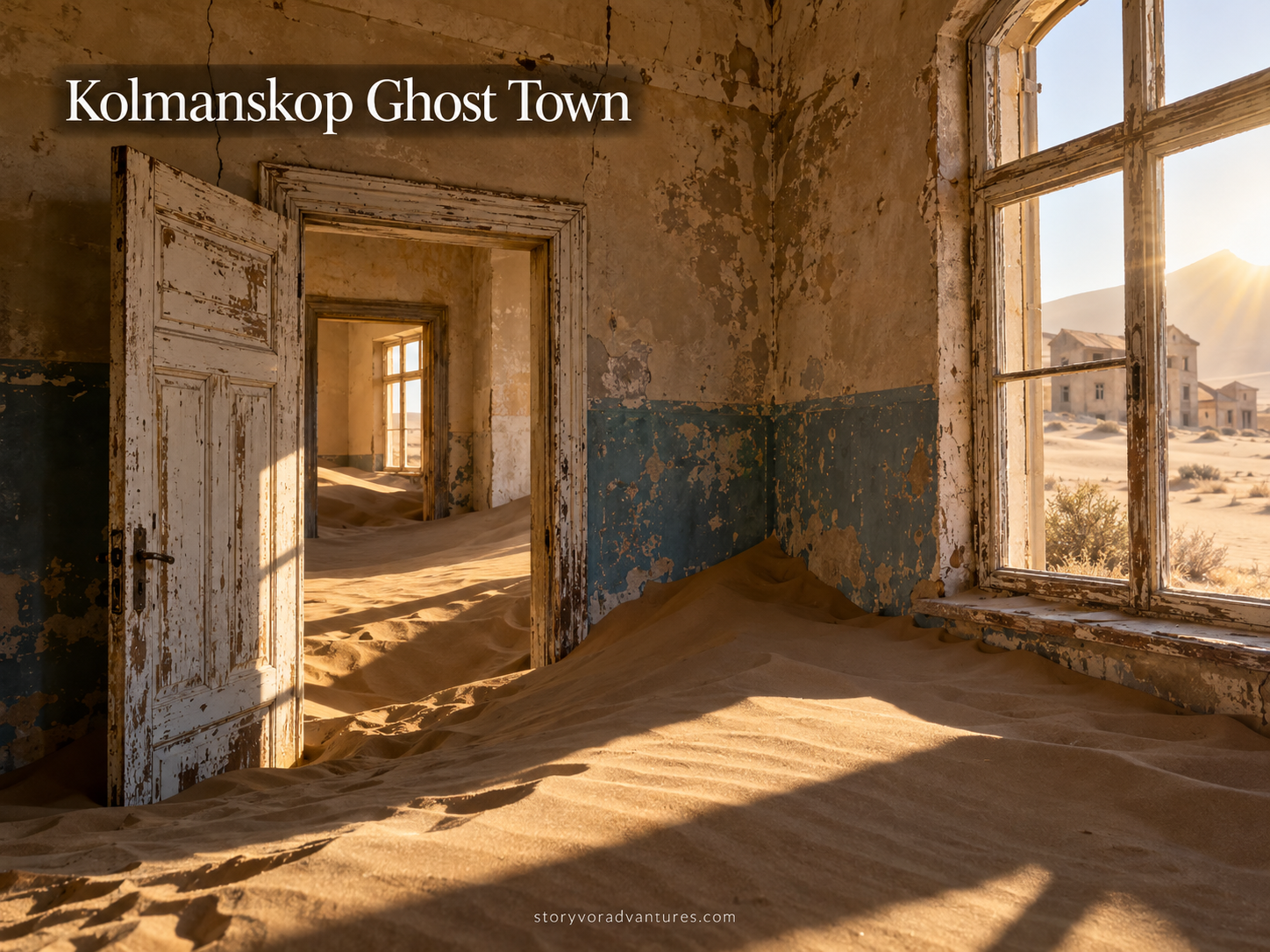
Near Lüderitz, the abandoned settlement of Kolmanskop presents one of Namibia’s most unusual human-made landscapes. The town developed during the diamond-mining era and once included substantial homes and community facilities. After mining activity shifted elsewhere, residents gradually left, allowing the desert to move inside.
Today, sand fills doorways, covers floors and forms small dunes inside empty rooms. Light entering through broken windows creates constantly changing scenes, making Kolmanskop especially popular with photographers.
The location also tells a complicated story about wealth, colonial control, labour and resource extraction. Visitors should look beyond its visual appeal and learn about the people and systems connected to the settlement’s history.
Entry requirements, permit rules and visiting hours should be checked before travelling. Some structures may be unstable or restricted, so travellers must follow official routes and avoid entering closed buildings merely to obtain a dramatic photograph.
9. Damaraland
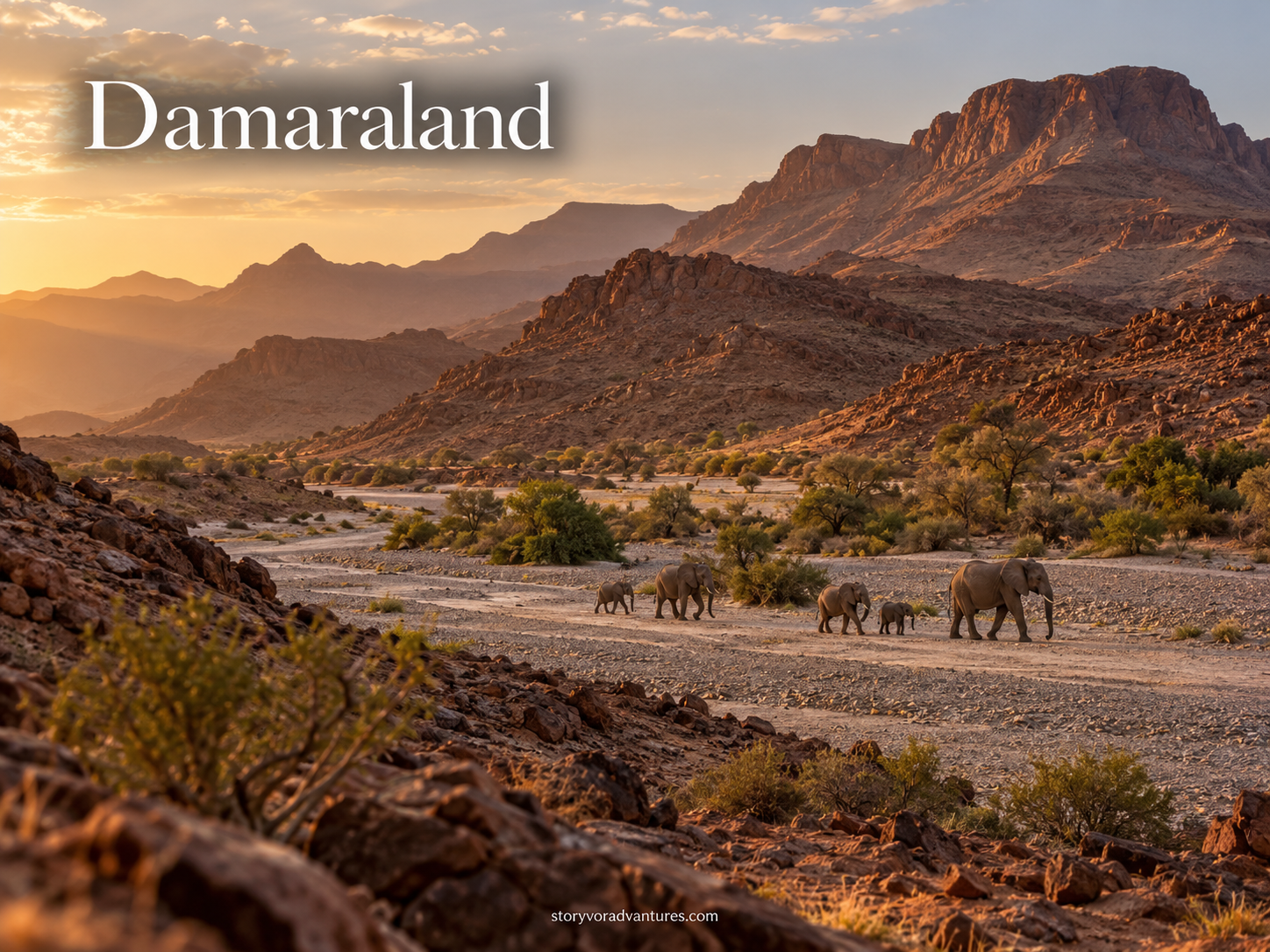
Damaraland is a broad region of mountains, rocky plains and dry river valleys. Its landscapes feel remote, yet they support communities and wildlife adapted to extremely demanding conditions.
The region is known for the possibility of seeing desert-adapted elephants. These animals are not a separate species, but they have developed behaviours that help them travel across dry environments in search of food and water. Sightings are unpredictable and should always occur through responsible guiding practices.
Community-based conservancies and lodges play an important role in parts of the region. Choosing locally connected guides and accommodation can help direct tourism income toward conservation and nearby communities.
Travellers should never chase elephants or block their path. Even when an animal appears calm, it remains powerful and unpredictable. A qualified guide can recognise warning behaviour and maintain a safe viewing distance.
Damaraland is best explored slowly. Its appeal lies not only in spotting wildlife but also in experiencing silence, open space and the subtle colours of a landscape that initially appears empty.
10. Zambezi Region
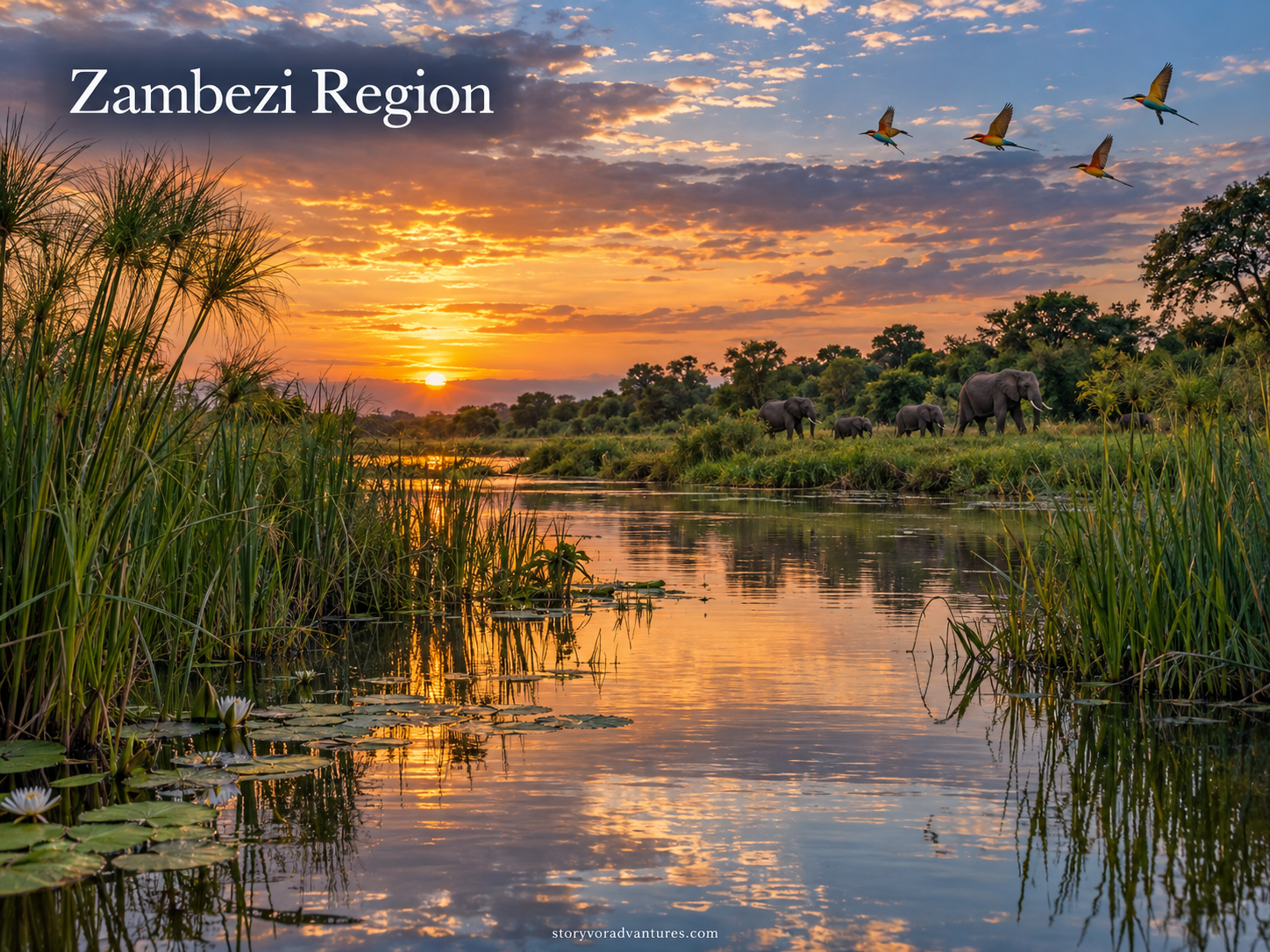
The Zambezi Region provides a striking contrast to Namibia’s famous deserts. Rivers, wetlands and greener landscapes create habitats for birds, elephants, hippos and other wildlife. Travellers who only visit the central desert and Etosha may be surprised by how different this northeastern part of the country feels.
Boat trips and guided drives offer opportunities to experience the river environment, particularly during the softer light of early morning or late afternoon. The region can also connect naturally with longer journeys toward Botswana, Zambia or Zimbabwe, although border and vehicle requirements must be checked carefully.
Wildlife near water requires particular caution. Hippos and crocodiles can be dangerous, and travellers should never swim or approach riverbanks without reliable local guidance. Malaria risk can also vary by region and season, so visitors should seek professional health advice well before departure.
Community-run activities can provide insight into local life when organised respectfully. Visitors should ask permission before photographing people and avoid treating villages as displays created solely for tourists.
How Many Days Do You Need in Namibia?
A short journey of approximately seven days can introduce visitors to Windhoek, Sossusvlei and one additional region, but it will involve careful planning. Around ten to fourteen days provides a more comfortable schedule for combining the desert, coast and Etosha National Park.
Travellers hoping to include the far south, Skeleton Coast, Damaraland and the Zambezi Region may require considerably longer. Namibia rewards a slower itinerary because road journeys form an important part of the experience.
Trying to include every famous location can result in spending most of the trip inside a vehicle. It is usually better to select a manageable route and leave enough time for rest, weather changes and unexpected delays.
Essential Road-Trip Preparation
Before beginning a self-drive trip, inspect the vehicle and confirm how to use the spare wheel and basic equipment. Ask the rental company which roads are permitted under the agreement and whether additional insurance conditions apply to tyres, glass or underbody damage.
Download offline maps, but do not rely on them as the only source of navigation. Carry drinking water, food, sun protection, warm layers and an emergency communication plan. Fuel should be topped up whenever practical because the next station may be much farther away than expected.
Avoid driving after dark whenever possible. Animals may enter the road, visibility can be poor and assistance may be difficult to obtain in remote areas. Tell your accommodation provider about your planned route and expected arrival time.
Responsible Travel in Namibia
Namibia’s open landscapes can appear indestructible, but many desert environments recover very slowly from damage. Travellers should use established roads, avoid creating new tyre tracks and never remove stones, plants or archaeological objects.
Water is a limited resource in many regions. Short showers and responsible use of lodge facilities can reduce unnecessary pressure on local supplies. Refillable bottles are useful where safe drinking-water refill stations are available.
Wildlife should never be fed or disturbed for photographs. Travellers should also select guides and tour operators that follow park rules, respect local communities and avoid promoting dangerous animal interactions.
Photography should be approached with respect. Always ask permission before photographing individuals, particularly in rural communities. A meaningful travel photograph should never come at the cost of another person’s dignity or privacy.
Final Thoughts
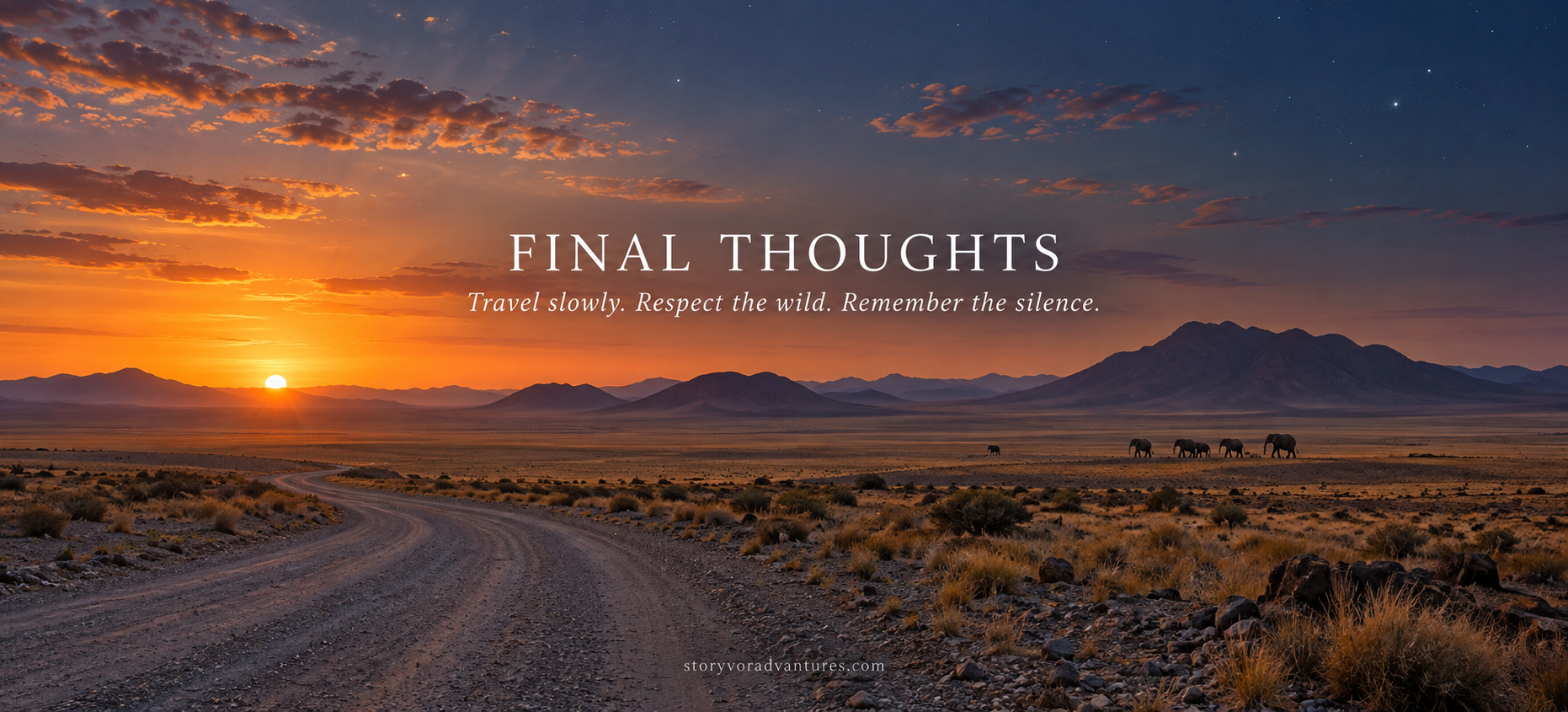
Namibia is not a destination that needs constant entertainment. Its greatest experiences often come from stillness: watching sunrise reach the top of a dune, waiting beside a distant waterhole, listening to wind move across an empty plain or standing beneath a night sky untouched by city lights.
From the red dunes of Sossusvlei and wildlife of Etosha to the foggy Skeleton Coast and greener Zambezi Region, every part of Namibia reveals a different relationship between land, climate, animals and people.
The country can be challenging for travellers who underestimate its distances, but careful preparation transforms those distances into part of the adventure. Travel slowly, follow local guidance and leave fragile places exactly as you found them.
Namibia does not simply show visitors a beautiful landscape. It offers the rare feeling of entering a world where the desert, ocean and wildlife still control the rhythm of the journey.
Travel notice: Weather, road conditions, health advice, entry rules, park fees and permit requirements can change. Verify essential information through official government, conservation and travel sources before departure.