The Ultimate 2026 Guide to New Zealand’s South Island: 20 Epic Spots & Your Perfect Road Trip
Discover 20 breathtaking places in New Zealand’s South Island with a detailed 2026 road-trip itinerary, driving tips, best seasons and travel advice.
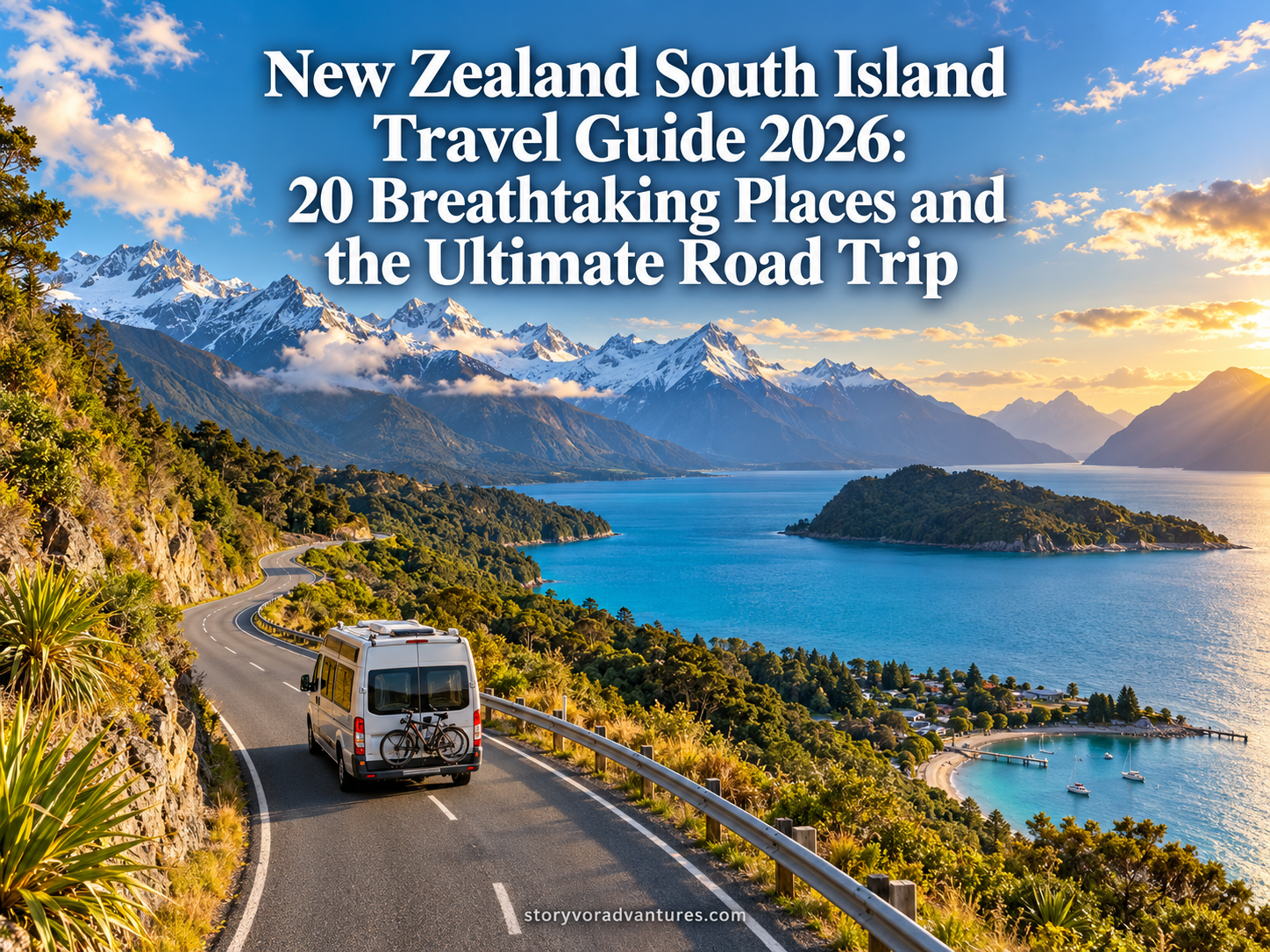
Here at StoryVor Adventures, we believe the journey should be just as breathtaking as the destination. Nowhere is that truer than New Zealand’s South Island. Picture this: you’re cruising past snow-capped peaks, stopping by vividly turquoise lakes, wandering through lush temperate rainforests, and sharing quiet coastlines with local wildlife. The scenery shifts dramatically around every bend, rewarding those who take their time rather than rushing from point to point.
We’ve curated this guide to highlight 20 spectacular South Island destinations, woven together into the ultimate road-trip itinerary. Whether you’re a first-time visitor or a seasoned solo traveler looking for a balanced mix of iconic landmarks and hidden gems, this route has you covered.
Important Note: Mountain weather, road access, and ferry schedules can change in the blink of an eye. Always double-check official local updates before you head out, and prioritize safety above all else.
South Island Travel Essentials
| Planning Detail | StoryVor’s Practical Advice |
|---|---|
| Ideal Trip Length | 21–28 days for the full loop; 14 days if you’re sticking to the highlights. |
| Best Time to Go | November to April offers longer days and warmer, milder weather. |
| Winter Travel | Stunningly beautiful, but demands extra prep for snow, ice, and potential road closures. |
| Main Gateways | Fly into either Christchurch or Queenstown. |
| Driving Side | Keep left! |
| Getting Around | Rental cars or campervans offer ultimate freedom. Non-drivers can easily use buses or guided tours. |
| Advance Bookings | Absolutely essential in summer for accommodation, ferries, Great Walks, and popular Fiordland cruises. |
Keep in mind that New Zealand’s roads are often narrower, steeper, and curvier than they look on a map. Treat driving times as loose estimates. If you’re visiting from abroad, be sure to review the New Zealand Transport Agency’s official visitor-driving guidance before picking up your keys.
The 20 Best Places to Visit on the South Island
1. Christchurch: The Perfect Launchpad
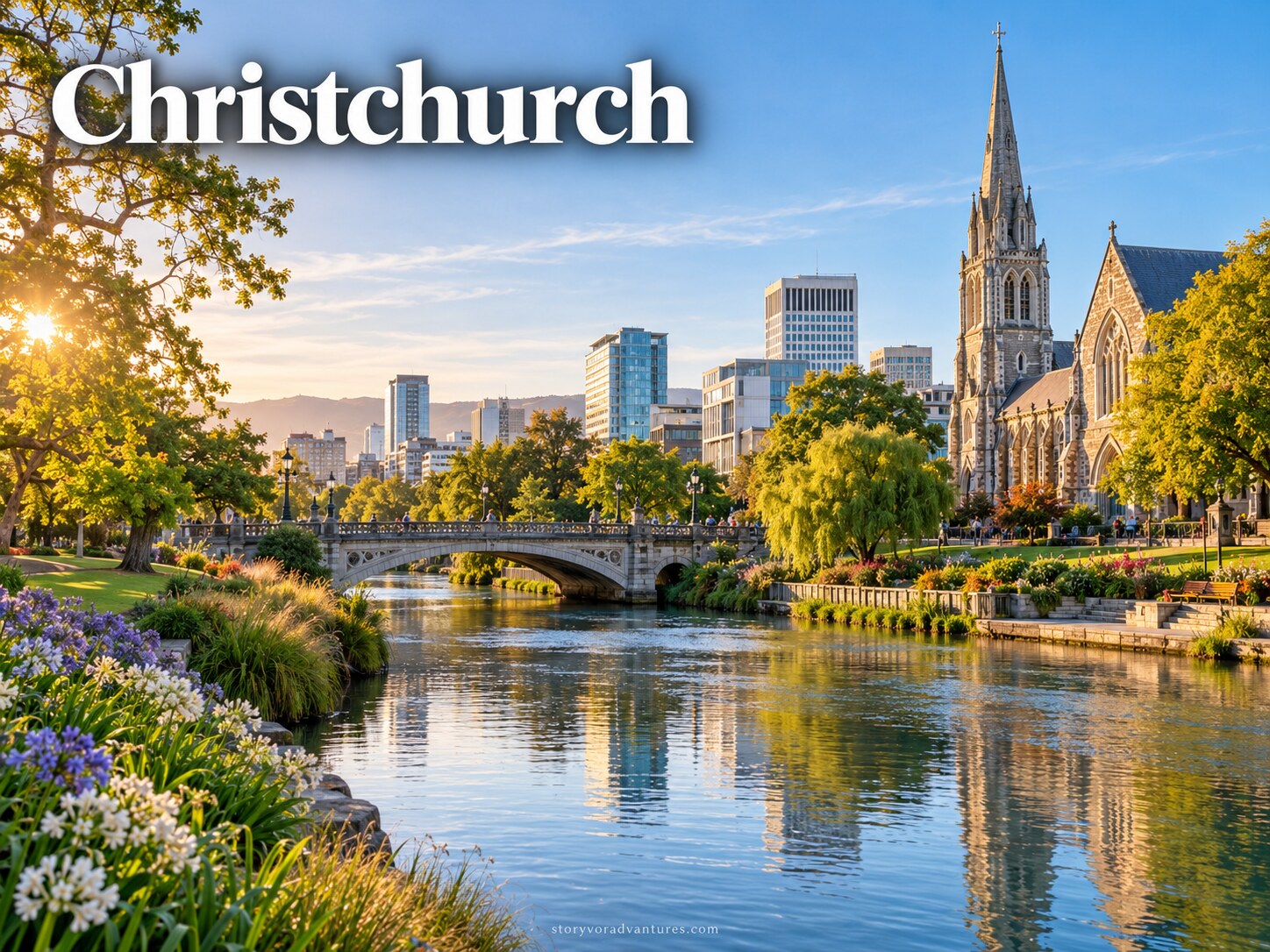
Don’t just grab your bags and hit the road. Christchurch is a brilliantly resilient, creative hub where historic architecture meets modern design along the Avon River. Spend a day exploring the Botanic Gardens, ride the historic vintage tram, and wander through the vibrant Riverside Market for incredible local food. It’s also the most practical place to pick up your rental, load up on road-trip snacks, and check the forecast.
- StoryVor Tip: Take an afternoon stroll down New Regent Street for some of the best boutique cafes and pastel-coloured Spanish Mission architecture in the country.
- Recommended stay: 2 nights. (Check the Christchurch tourism website for local events).
2. Akaroa and Banks Peninsula: Coastal Volcanic Charm

Just a winding, scenic drive from Christchurch, Akaroa offers a relaxed start to your adventure. Nestled in a dramatic volcanic crater that opens to the sea, this historic town is famous for its French heritage. You’ll find streets with French names, charming colonial cottages, and excellent local bakeries. It’s also home to the rare, tiny Hector’s dolphins.
- StoryVor Tip: Book a wildlife cruise to see the dolphins, but if you prefer to stay on land, grab a warm pastry from a local French bakery and sit by the harbor.
- Recommended stay: 1 night, or as a day trip from Christchurch. (More info at ChristchurchNZ’s Akaroa guide).
3. Kaikōura: Where the Mountains Meet the Ocean
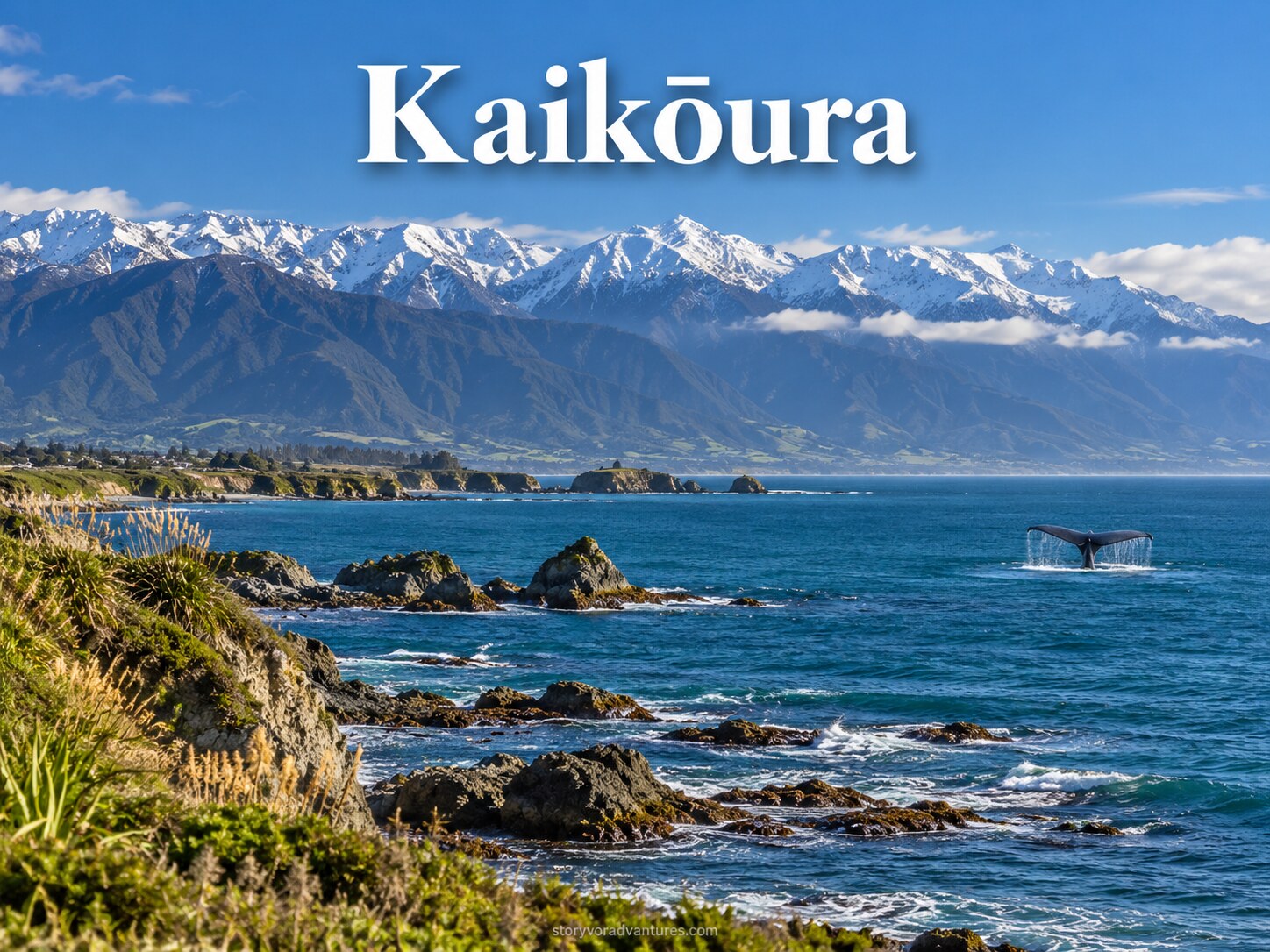
Kaikōura is visually stunning—the snow-capped Seaward Kaikōura Range practically drops straight into the deep Pacific Ocean. This unique geography creates a deep underwater canyon, making it a global hotspot for marine life. Whale-watching is the main draw here, but the Kaikōura Peninsula Walkway offers incredible clifftop views and close-ups of fur seal colonies.
- StoryVor Tip: “Kaikōura” translates to “meal of crayfish” in Māori. Don’t leave without grabbing fresh seafood from one of the iconic roadside food trucks along the coast!
- Recommended stay: 1–2 nights. (Plan via the Kaikōura visitor website).
4. Marlborough Sounds: Forested Ridges & Hidden Bays
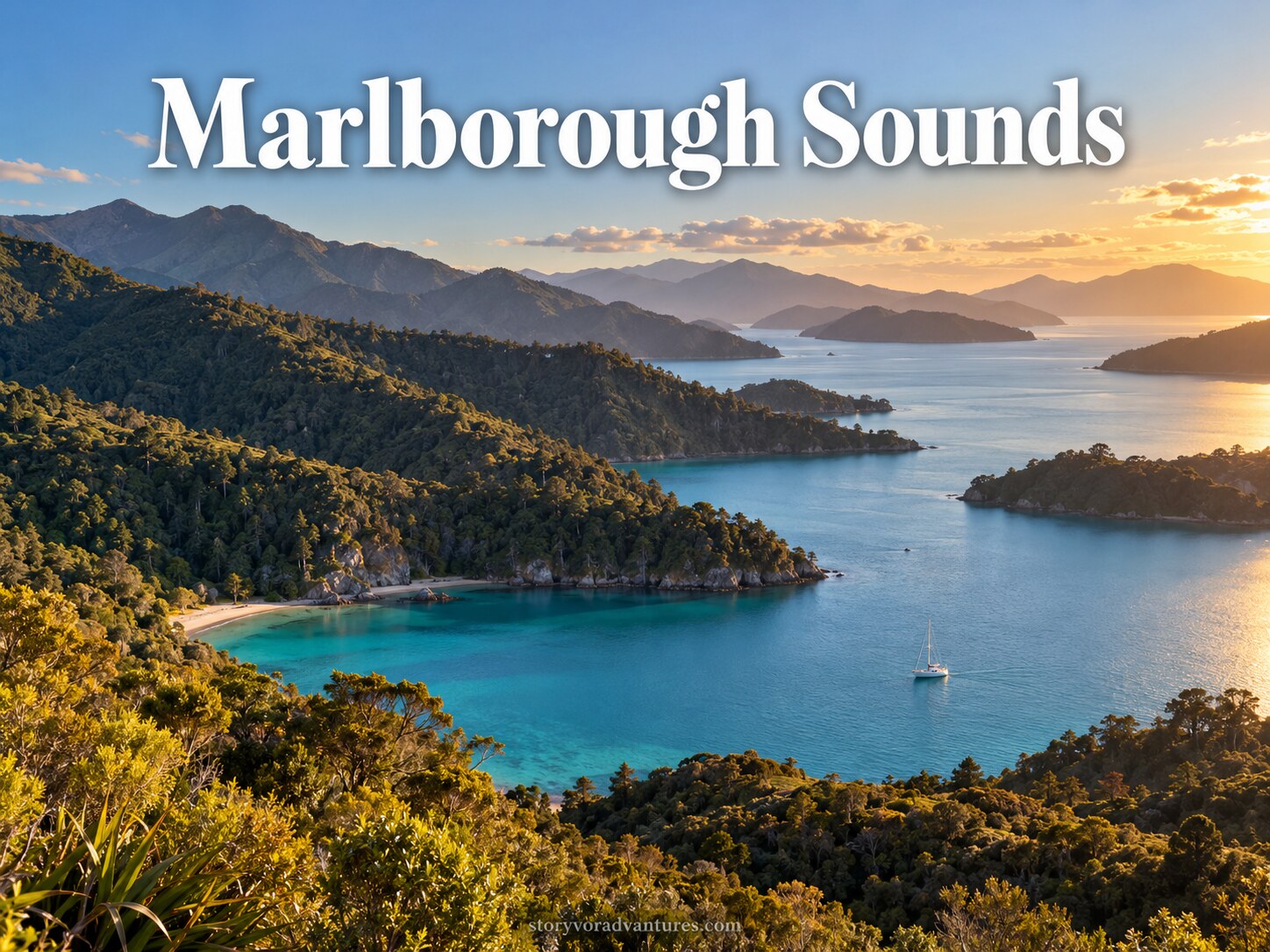
At the top of the South Island lies a massive network of sunken valleys and secluded bays. Base yourself in Picton to explore the Marlborough Sounds via water taxi, sea kayak, or by hiking sections of the famous Queen Charlotte Track. The water here is mesmerizingly calm, surrounded by lush green hills.
- StoryVor Tip: You don’t have to be a hardcore hiker to enjoy it. Book a half-day cruise that stops at a remote lodge for lunch—it’s the perfect way to soak in the serenity.
- Recommended stay: 2 nights. (Explore options at Marlborough New Zealand).
5. Abel Tasman National Park: Golden Sands & Clear Waters
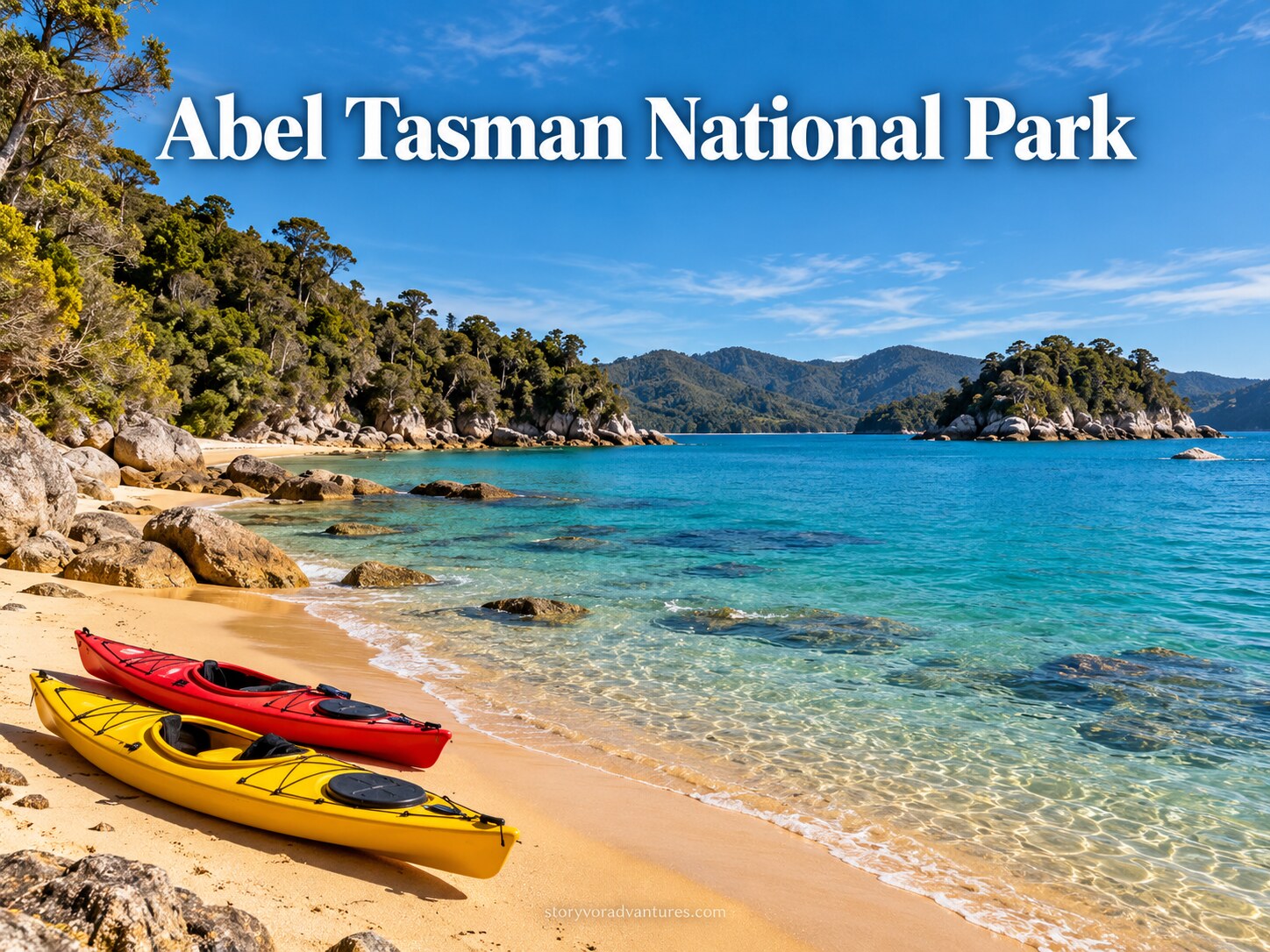
It might be the country’s smallest national park, but Abel Tasman punches well above its weight. Think golden sandy beaches, pristine azure water, and lush coastal trails. You can hike the Coast Track, kayak past Split Apple Rock, or catch a water taxi between bays if your feet need a break.
- StoryVor Tip: Keep an eye out for Cleopatra’s Pool—a natural rock pool with a moss-lined waterslide hidden just off the main track.
- Recommended stay: 2 nights. (Check alerts on the Department of Conservation’s Abel Tasman page).
6. Nelson Lakes National Park: The Quiet Alpine Escape
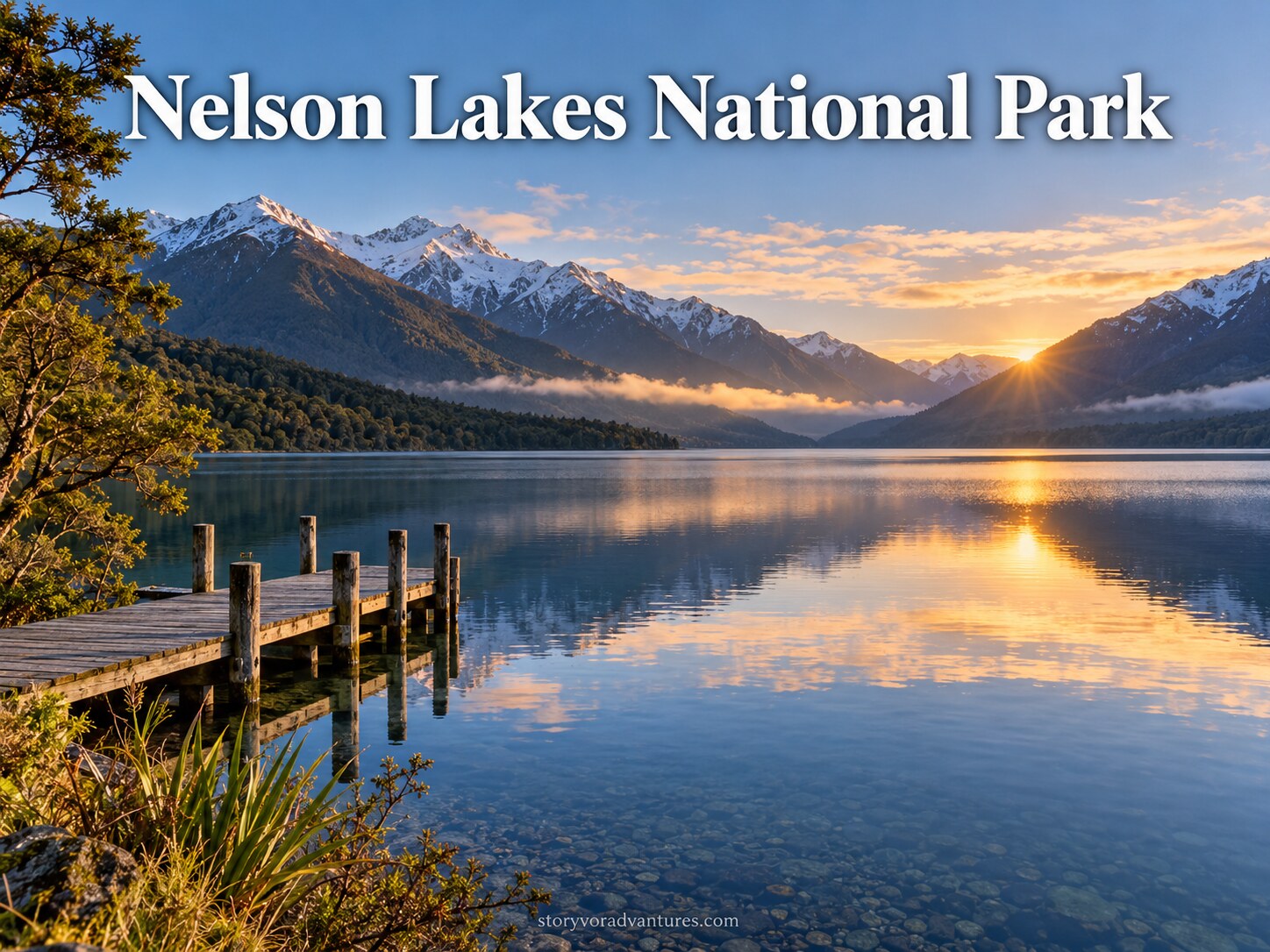
Centred around the breathtaking Lakes Rotoiti and Rotoroa, this is the northern tip of the Southern Alps. It’s the perfect spot if you want jaw-dropping mountain scenery without the heavy crowds of major resort towns. The hiking here ranges from easy lakeside strolls to challenging alpine passes.
- StoryVor Tip: You absolutely have to take a photo at the iconic Lake Rotoiti wooden jetty, but pack a heavy-duty bug spray—the sandflies here take no prisoners!
- Recommended stay: 1–2 nights. (Track details at the Nelson Lakes National Park page).
7. Punakaiki and Paparoa National Park: The Rugged West Coast
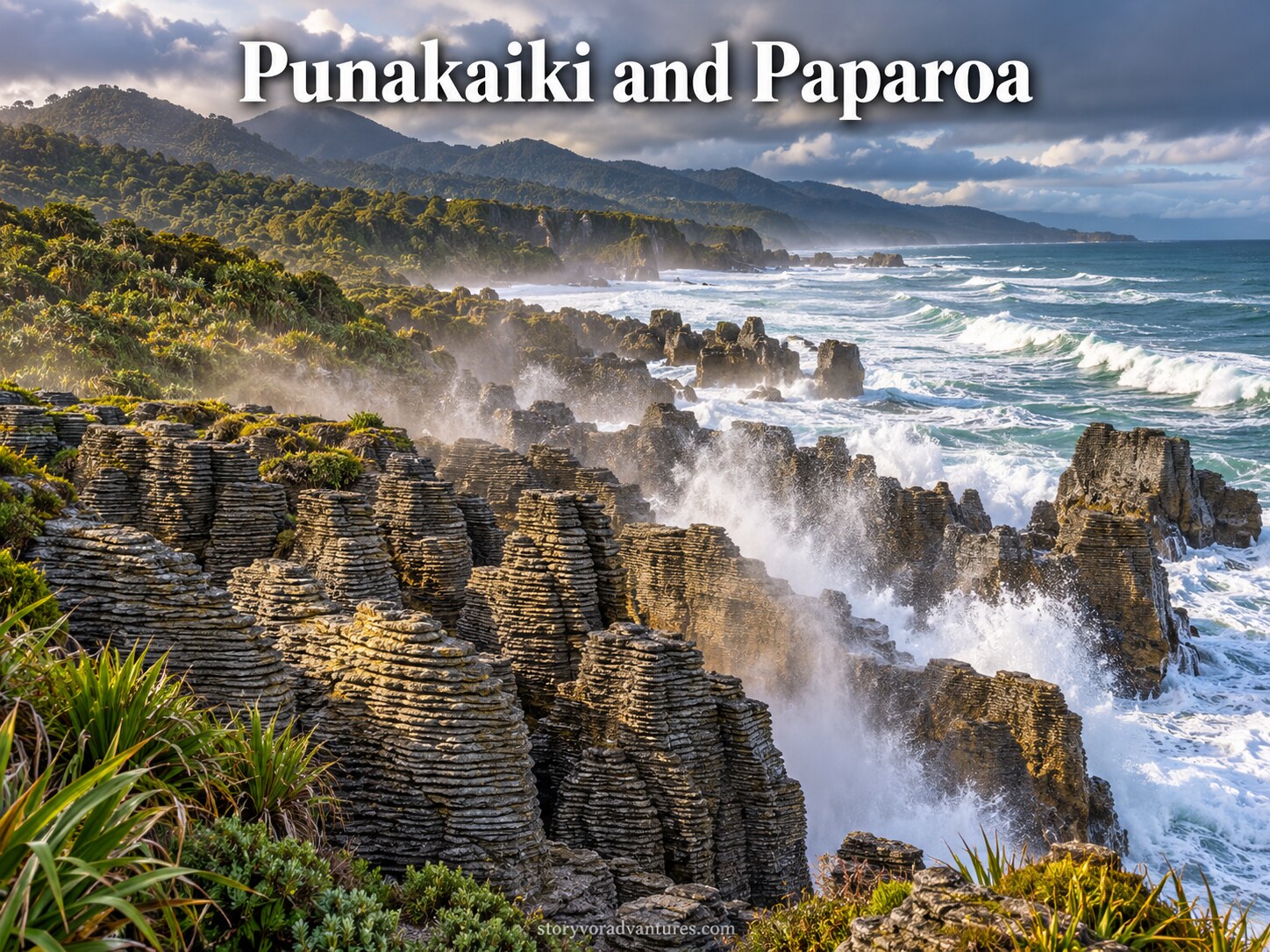
Famous for the Pancake Rocks and booming blowholes, Punakaiki is a spectacular showcase of the Tasman Sea’s raw power. The limestone rocks here look like giant stacks of pancakes, carved by millions of years of wind and water. The main paved loop is short and accessible, but the surrounding Paparoa region offers deep, prehistoric-looking rainforests.
- StoryVor Tip: Time your visit for high tide! That’s when the ocean swells crash into the caverns and shoot massive geysers of water through the blowholes.
- Recommended stay: 1 night. (Park info via the Paparoa National Park guide).
8. Franz Josef Glacier: Ice Meets Rainforest
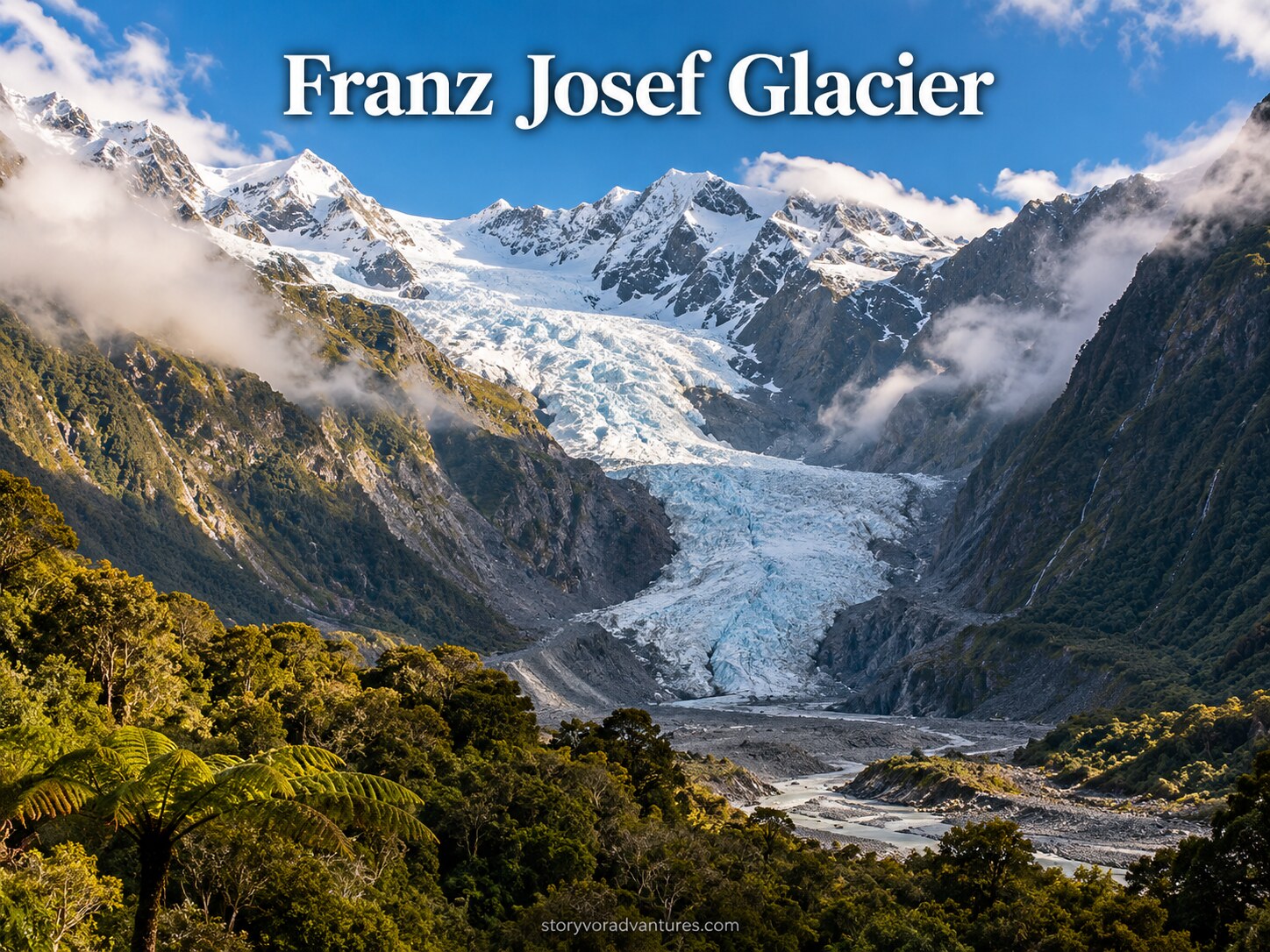
It’s incredibly rare to see a glacier descend so close to a temperate rainforest, but Franz Josef (Kā Roimata o Hine Hukatere) does exactly that. The valley is imposing and powerful. You can take a 1.5-hour valley walk for distant views, or book a guided heli-hike to actually strap on crampons and explore the ice caves up close.
- StoryVor Tip: After a long day of exploring the cold glacial valley, treat yourself to a soak in the Franz Josef Glacier Hot Pools. It’s pure bliss.
- Recommended stay: 1–2 nights. (Check the Westland Tai Poutini National Park information).
9. Fox Glacier and Lake Matheson: The Ultimate Reflection
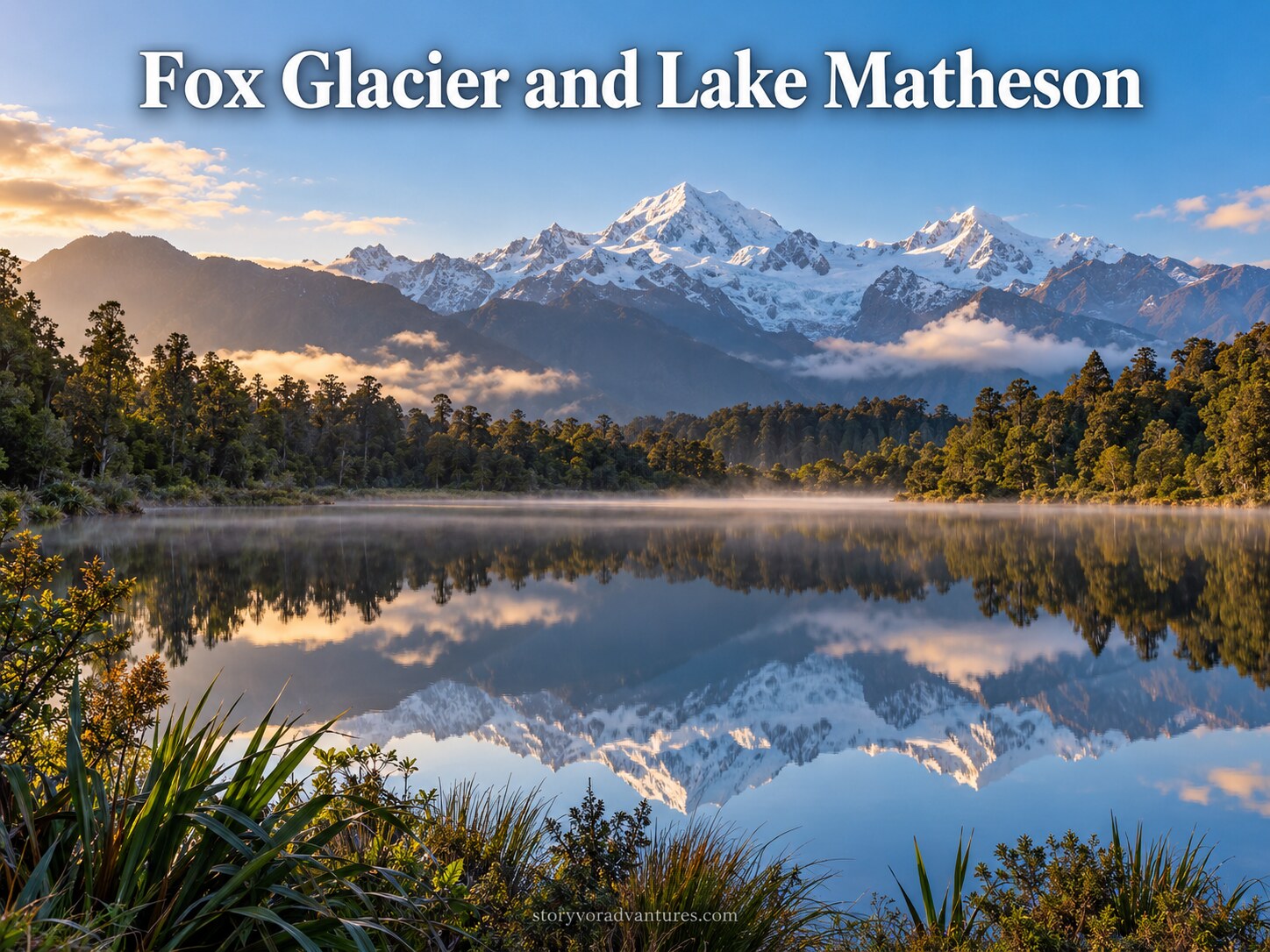
Just a short drive down the road is Fox Glacier and the iconic Lake Matheson. Fox is slightly longer and less crowded than Franz Josef. However, the real star here is Lake Matheson. On a still, calm morning, the dark, mirror-like waters of the lake perfectly reflect New Zealand’s highest peaks: Aoraki/Mount Cook and Mount Tasman.
- StoryVor Tip: Wake up early and do the Lake Matheson circuit at dawn. The morning mist clearing to reveal the perfect mountain reflection is a photographer’s ultimate dream.
- Recommended stay: 1 night. (Consult the Fox Glacier area information).
10. Wānaka: The Laid-Back Alpine Hub

Wānaka offers a stunning lakefront, easy access to Mount Aspiring National Park, and a far more relaxed, bohemian vibe than neighboring Queenstown. From photographing #ThatWanakaTree to hiking the grueling but rewarding Roys Peak, there is endless outdoor adventure here.
- StoryVor Tip: If Roys Peak is too crowded, hike the Rocky Mountain Track instead. It’s shorter, less busy, and offers incredible panoramic views over Lake Wānaka and the surrounding islands.
- Recommended stay: 2 nights. (Destination planning at Lake Wānaka Tourism).
11. Queenstown: The Adventure Capital
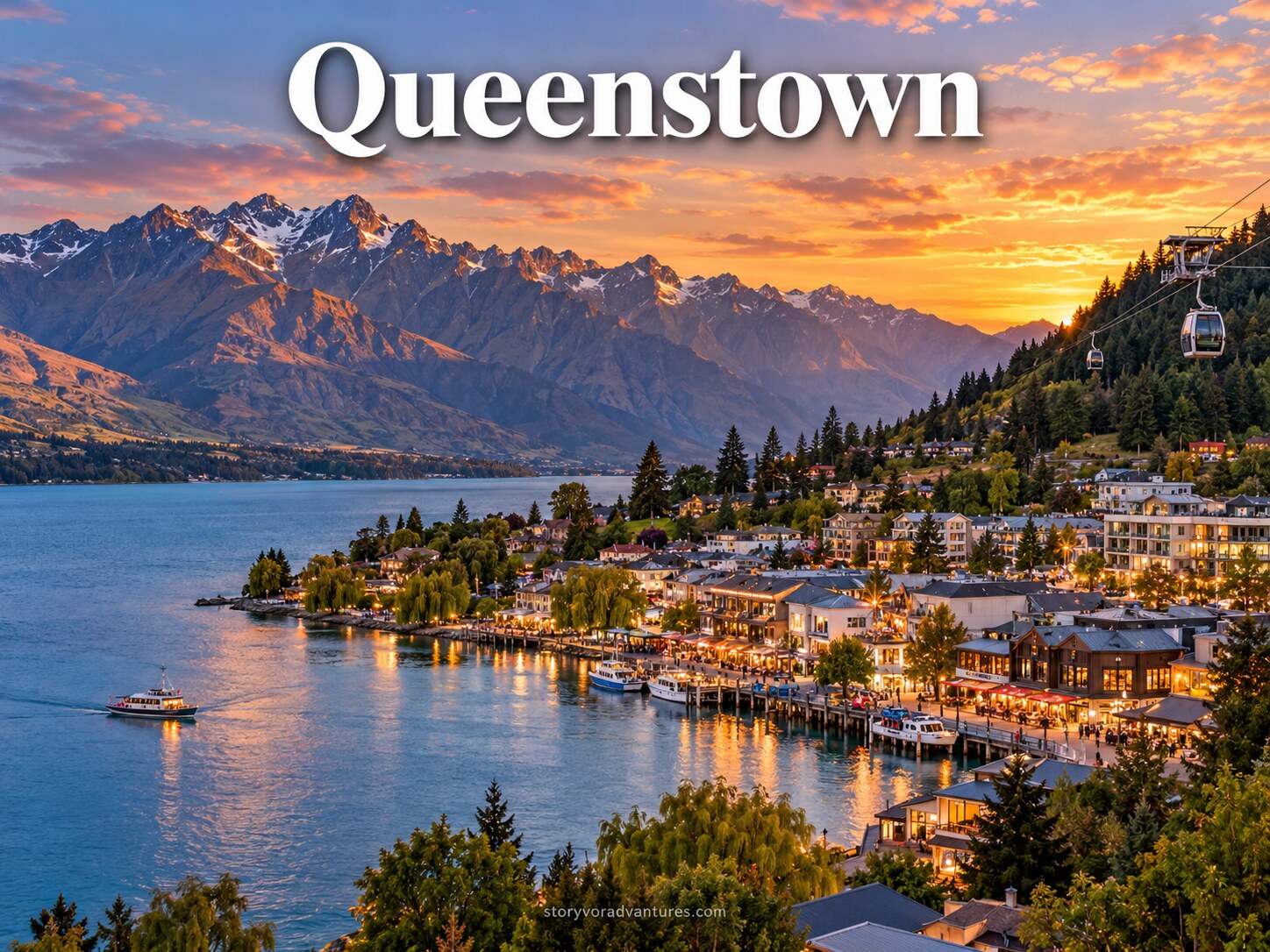
Surrounded by the Remarkables mountain range on the edge of Lake Whakatipu, Queenstown’s energy is infectious. Yes, you can bungy jump, skydive, and ride the Shotover jet boats, but you can just as easily take the Skyline Gondola for epic views, wander the Queenstown Gardens, or sip Pinot Noir in the nearby Gibbston Valley.
- StoryVor Tip: You can’t leave without eating at the legendary Fergburger. The line is always long, so call ahead to place your order and skip the queue!
- Recommended stay: 3 nights. (Compare options on the official Queenstown tourism website).
12. Te Anau: Your Gateway to Fiordland
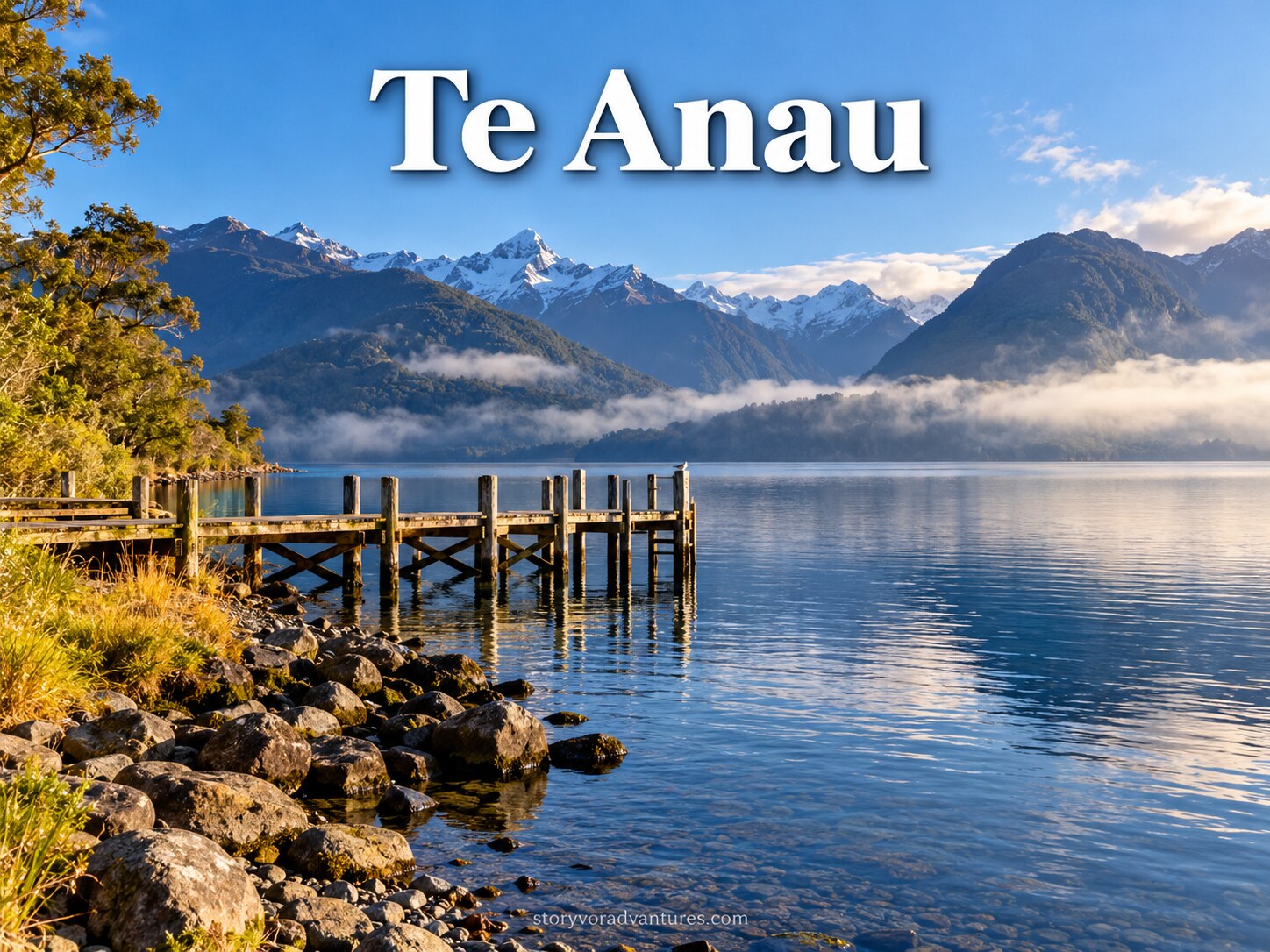
Don’t make the mistake of rushing Fiordland in a single, exhausting day trip from Queenstown. Base yourself in Te Anau. It sits on the edge of the South Island’s largest lake and puts you right at the doorstep of Milford Sound, Doubtful Sound, and several Great Walks (like the Kepler Track).
- StoryVor Tip: Take the boat across Lake Te Anau to explore the underground Glowworm Caves. Seeing thousands of tiny bioluminescent lights in the pitch black is pure magic.
- Recommended stay: 3 nights (especially if doing both major sounds). (See the Fiordland page).
13. Milford Sound / Piopiotahi: The Iconic Fiord
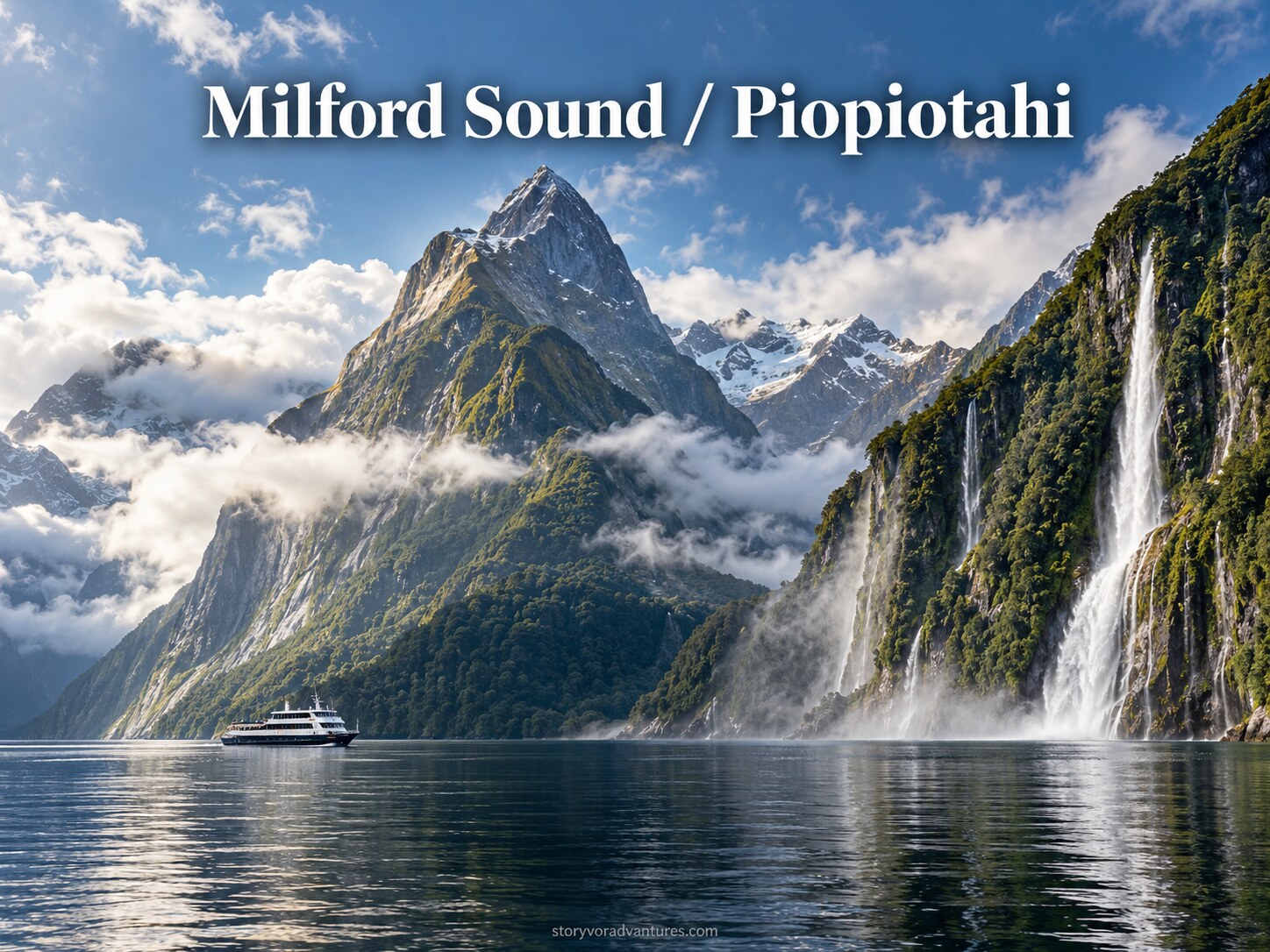
Described by Rudyard Kipling as the “eighth wonder of the world,” Milford Sound is legendary for its sheer cliffs, towering Mitre Peak, and deep, dark waters. The drive in on the Milford Road is an adventure in itself, passing through the Homer Tunnel and sweeping alpine valleys.
- StoryVor Tip: Don’t be disappointed if it rains. Rain transforms the steep rock faces into a wonderland of thousands of cascading, temporary waterfalls. It’s moody, atmospheric, and unforgettable.
- Recommended stay: Day trip from Te Anau, or stay overnight if you can secure a booking. (Check official Milford Road conditions).
14. Doubtful Sound / Patea: The Silent Escape
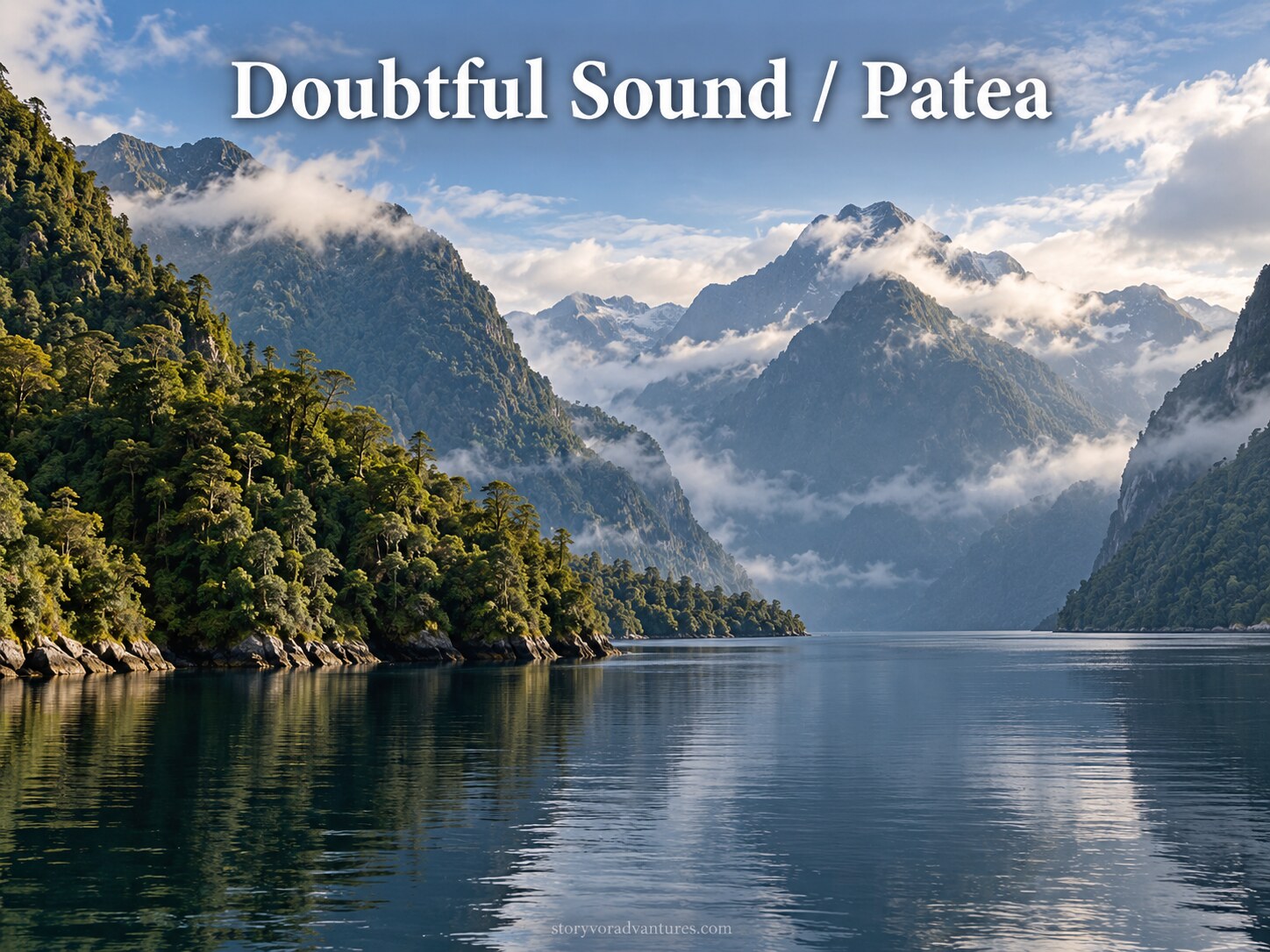
Three times longer and vastly more expansive than Milford, Doubtful Sound is for those who crave deep, untouched wilderness. Reaching it is a journey: you take a boat across Lake Manapouri, followed by a bus ride over the spectacular Wilmot Pass. It’s quieter, wilder, and known as the “Sound of Silence.”
- StoryVor Tip: If your budget allows, book an overnight cruise. Waking up in the misty silence of the fiord, with bottlenose dolphins swimming past your boat, is life-changing.
- Recommended stay: Full-day trip or overnight cruise. (Confirm schedules via the official Fiordland website).
15. The Catlins: Hidden Waterfalls & Wild Coasts
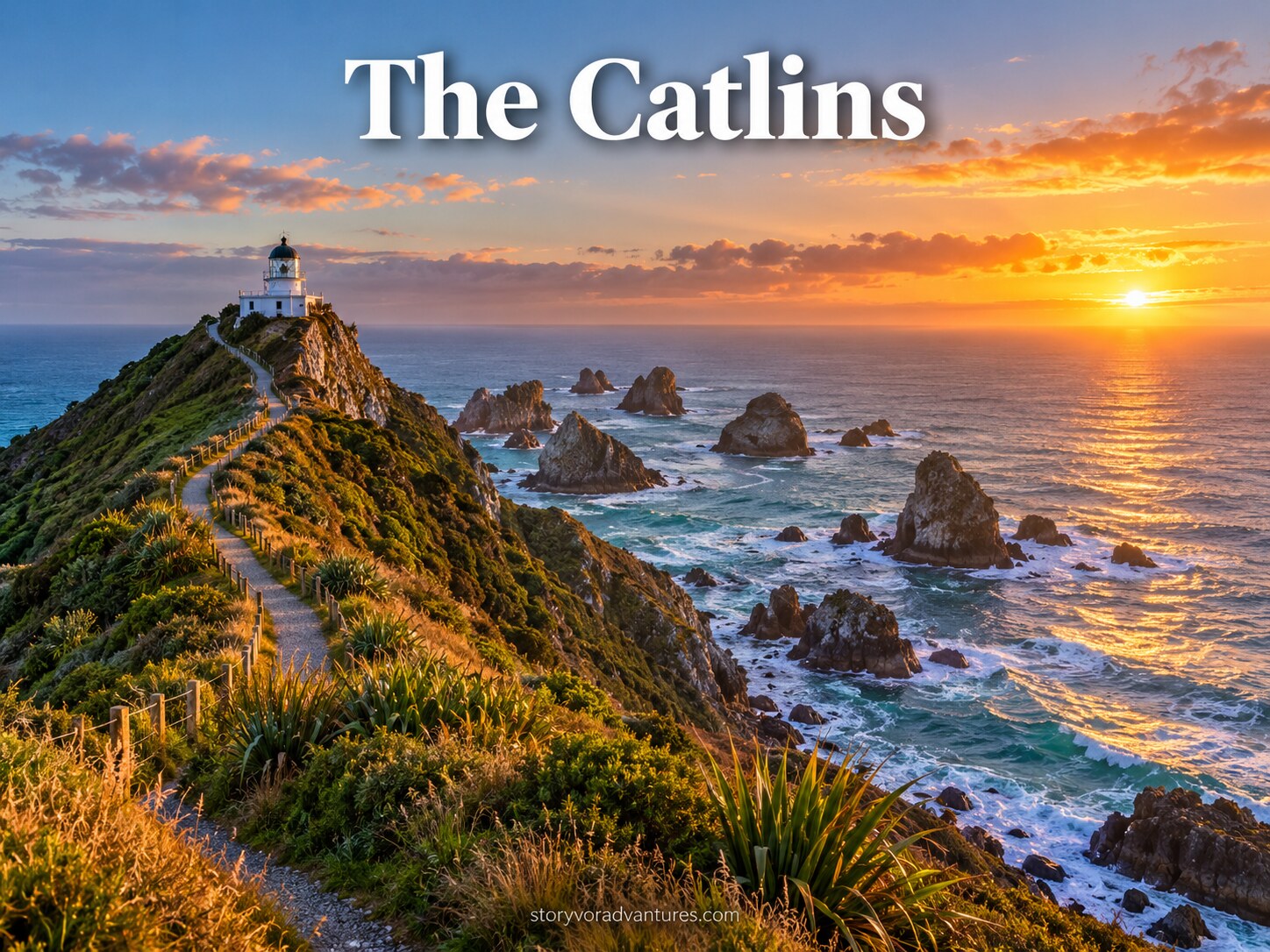
Tucked away in the southeastern corner, the Catlins is a rugged, off-the-beaten-path gem. Instead of one major town, you’ll find a string of coastal viewpoints, the iconic Nugget Point Lighthouse, the cascading Purakaunui Falls, and rugged beaches teeming with sea lions and rare penguins.
- StoryVor Tip: Check the tide schedules carefully. Incredible spots like Cathedral Caves are completely inaccessible at high tide, so planning your driving route around the ocean is key.
- Recommended stay: 2 nights. (Route details at the Catlins visitor website).
16. Dunedin and the Otago Peninsula: History Meets Wildlife
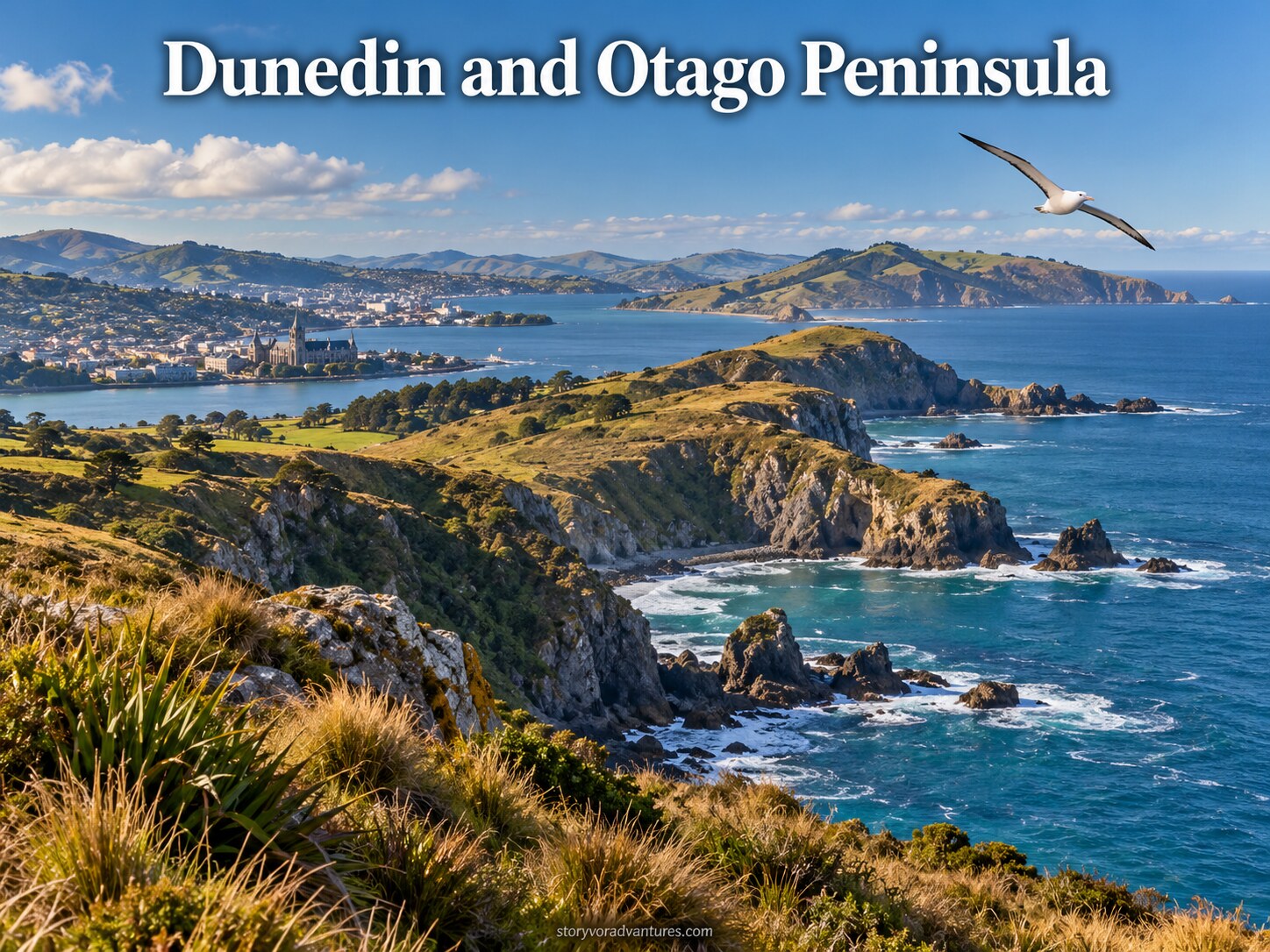
Dunedin is a vibrant university city with striking Scottish heritage architecture and the steepest residential street in the world (Baldwin Street). Just a short, winding drive away is the Otago Peninsula, an incredible sanctuary for Northern Royal Albatrosses, rare yellow-eyed penguins, and New Zealand fur seals.
- StoryVor Tip: The drive along the peninsula’s high road offers mind-blowing coastal views, but the roads have sheer drops and no guardrails. Take it slow and enjoy the ride!
- Recommended stay: 2 nights. (Plan via Dunedin’s official tourism website).
17. Rakiura / Stewart Island: The Deep South
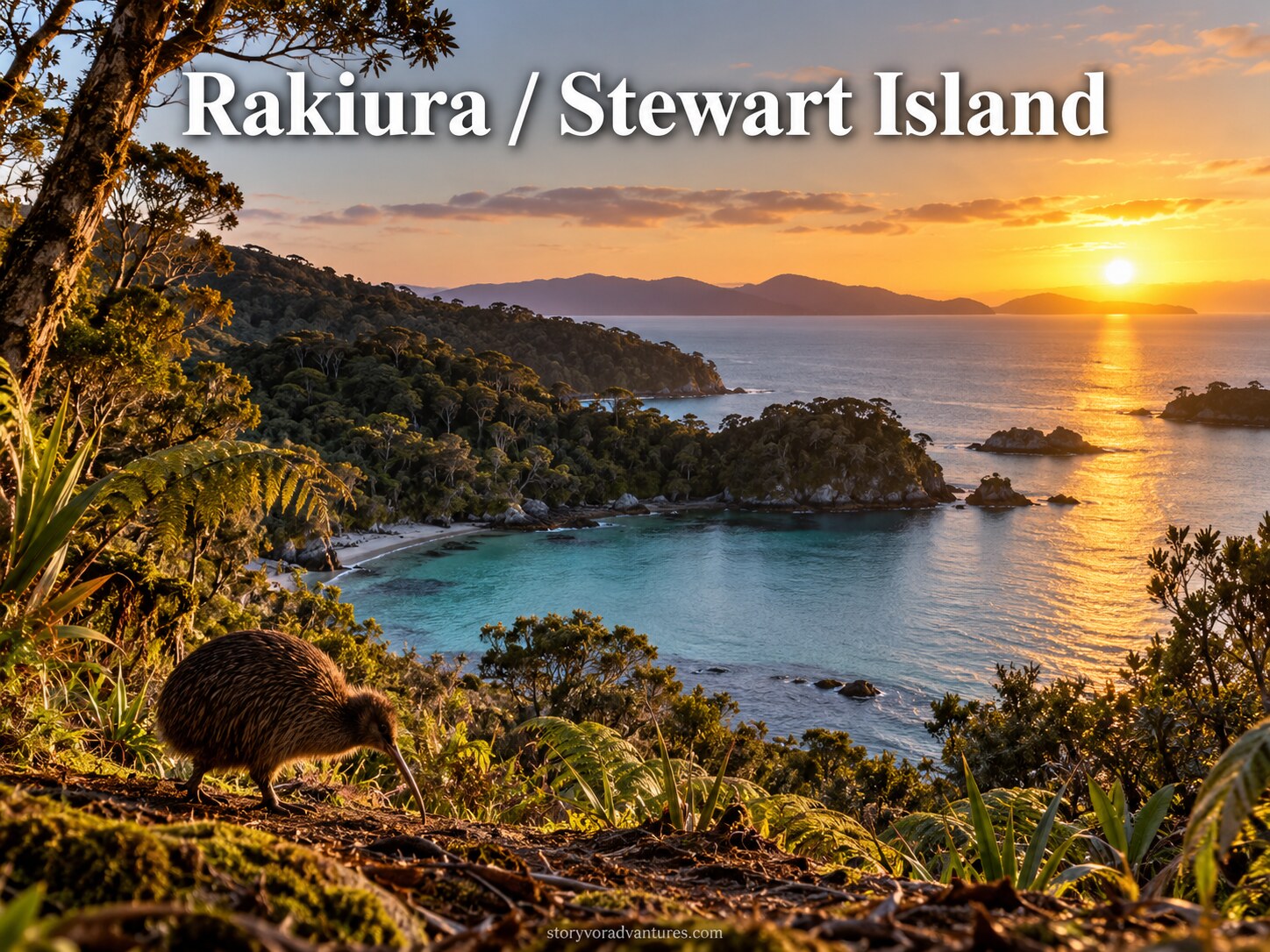
If you really want to drop off the grid, catch the ferry from Bluff to Stewart Island. With its dense native forests, pristine bays, and incredible dark skies, it feels like a true frontier. Over 85% of the island is a national park, and life moves at a wonderfully slow pace here.
- StoryVor Tip: This is one of the only places in the world where you have a highly realistic chance of spotting a wild Kiwi bird roaming around, especially at dusk.
- Recommended stay: 2–3 nights. (Review conditions at the Rakiura National Park page).
18. Aoraki / Mount Cook National Park: Into the High Alps
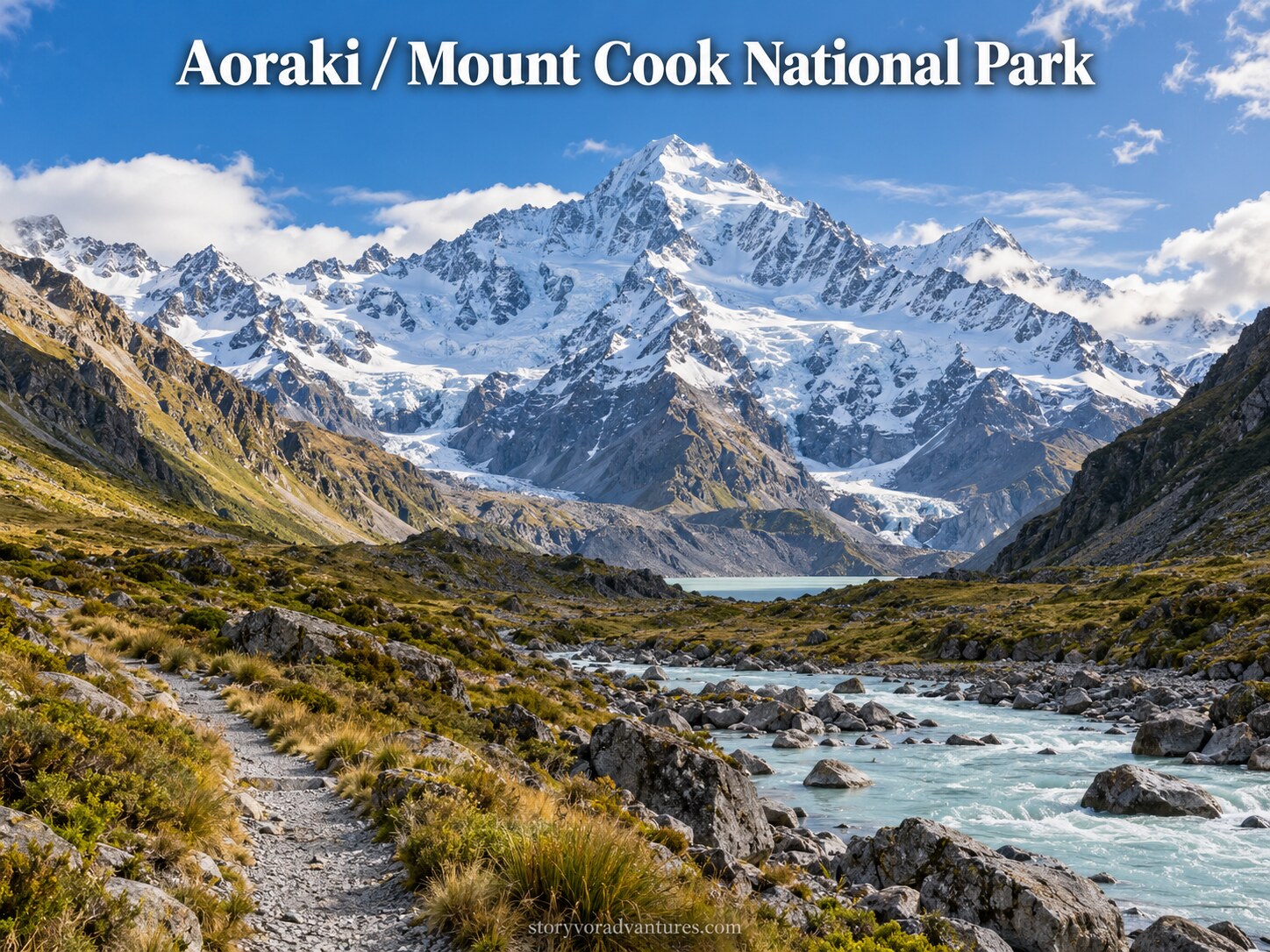
The drive alongside the impossibly turquoise waters of Lake Pūkaki builds the suspense before you even arrive at the alpine village. This park is home to New Zealand’s highest peak and longest glaciers. You’ll feel incredibly small standing among these towering giants.
- StoryVor Tip: The Hooker Valley Track is arguably the best day-walk in New Zealand. It’s relatively flat, crosses three swing bridges, and ends at a glacier lake complete with floating icebergs right at the base of Mount Cook.
- Recommended stay: 2 nights. (Check the Aoraki/Mount Cook National Park guide).
19. Lake Tekapo / Takapō: Stargazing Central
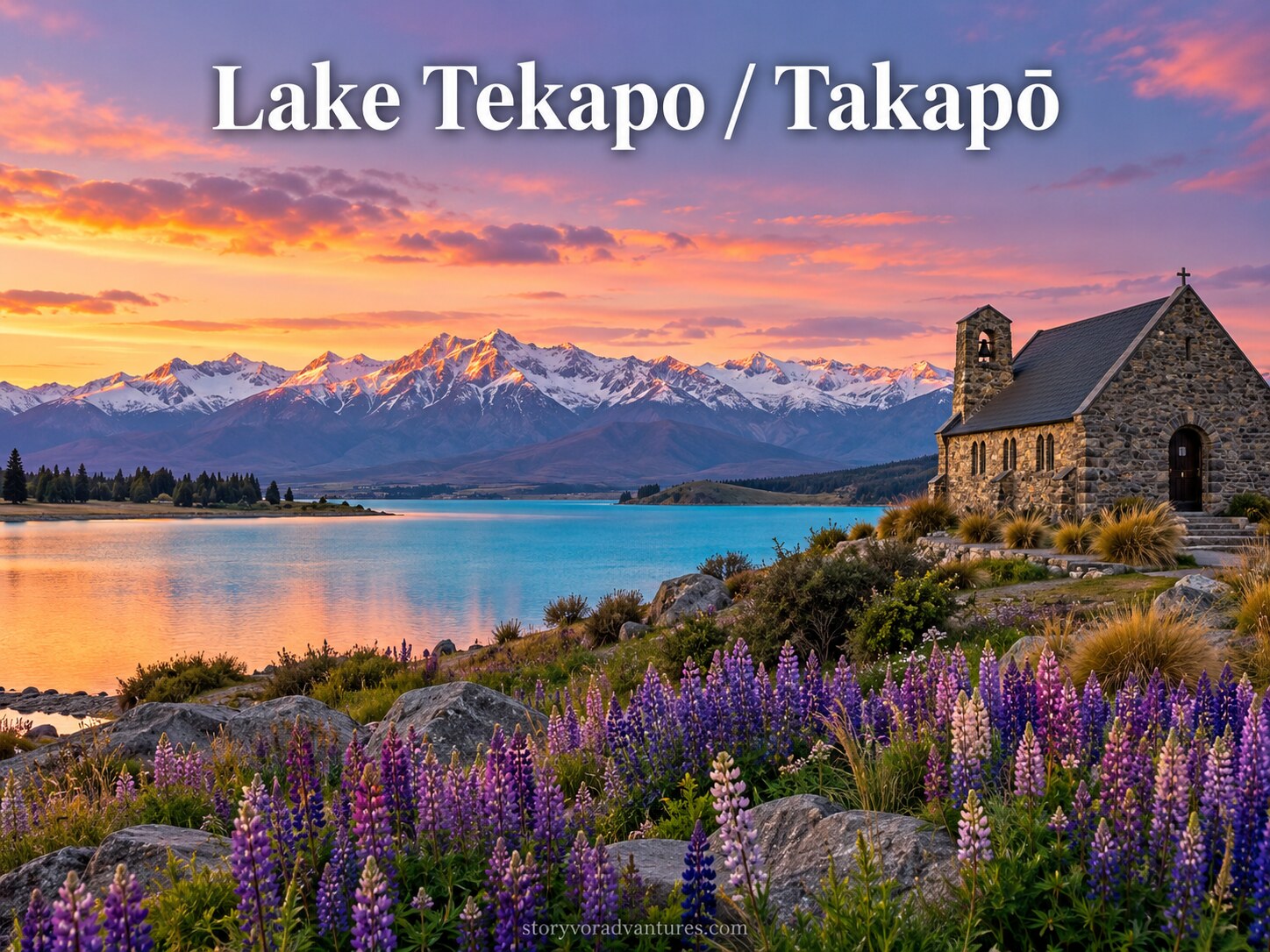
Famous for its milky-blue water (caused by finely ground rock flour from glaciers) and the historic, stone-built Church of the Good Shepherd, Tekapo is a staple on any South Island road trip. If you visit in early summer, the shores are exploded in vibrant pink and purple lupin flowers.
- StoryVor Tip: Tekapo sits within an International Dark Sky Reserve. Bundle up, book a guided tour at the Mount John Observatory, and prepare to see the Milky Way clearer than you ever have in your life.
- Recommended stay: 1–2 nights. (Info at Tourism New Zealand’s Lake Tekapo guide).
20. Arthur’s Pass National Park: The Grand Finale
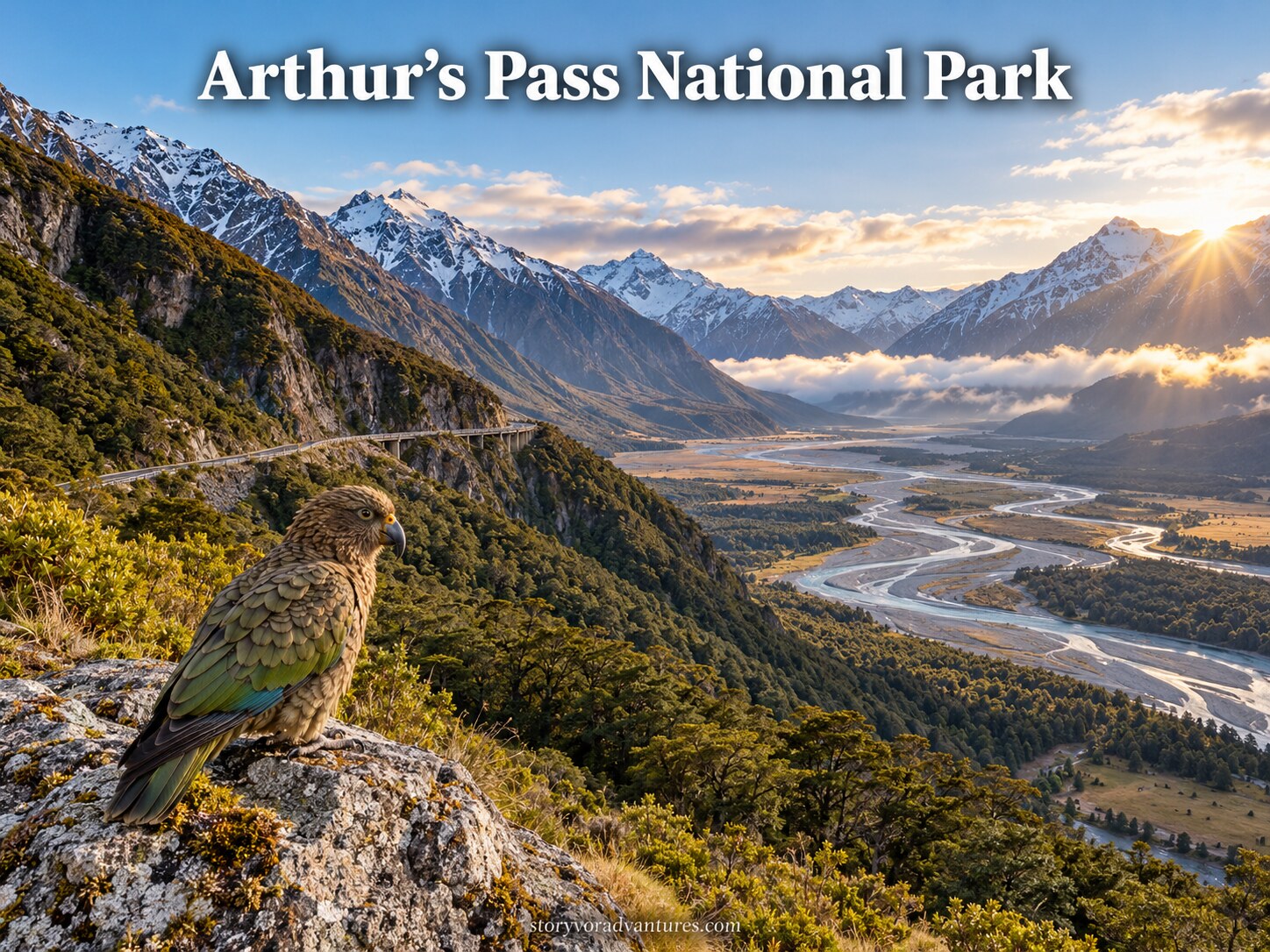
Finish your loop by crossing back through the Southern Alps via Arthur’s Pass. It’s a dramatic, steep, and deeply forested mountain pass featuring engineering marvels like the Otira Viaduct. Stop to hike up to the 131-metre Devil’s Punchbowl Waterfall before making your way back to the plains of Canterbury.
- StoryVor Tip: You will almost certainly meet the native Kea here—the world’s only alpine parrot. They are incredibly smart and cheeky, but guard your car keys and snacks, and never feed them!
- Recommended stay: 1 night. (Check the Arthur’s Pass information).
Ultimate South Island Road-Trip Route
This complete route works best over 21 to 28 days:
Christchurch → Akaroa → Kaikōura → Marlborough Sounds → Abel Tasman → Nelson Lakes → Punakaiki → Franz Josef → Fox Glacier → Wānaka → Queenstown → Te Anau → Milford Sound → Doubtful Sound → The Catlins → Dunedin → Bluff and Rakiura/Stewart Island → Aoraki/Mount Cook → Lake Tekapo → Arthur’s Pass → Christchurch
The route is deliberately designed with several two-night stays. Those pauses provide recovery time, reduce driving fatigue, and create flexibility when weather disrupts outdoor plans. Stewart Island adds several days and can be removed from a shorter itinerary. Travelers with only two weeks should focus on Christchurch, Lake Tekapo, Aoraki/Mount Cook, Wānaka, Queenstown, Te Anau, Milford Sound, and the West Coast, then return by the most practical route.
Suggested 24-Day Itinerary
| Days | Destination |
|---|---|
| 1–2 | Christchurch |
| 3 | Akaroa |
| 4 | Kaikōura |
| 5–6 | Marlborough Sounds |
| 7–8 | Abel Tasman National Park |
| 9 | Nelson Lakes |
| 10 | Punakaiki |
| 11–12 | Franz Josef & Fox Glacier |
| 13–14 | Wānaka |
| 15–17 | Queenstown |
| 18–20 | Te Anau, Milford Sound & Doubtful Sound |
| 21 | The Catlins |
| 22 | Dunedin |
| 23 | Aoraki/Mount Cook |
| 24 | Lake Tekapo & return toward Christchurch |
(To include Rakiura/Stewart Island, Arthur’s Pass, and more relaxed stops, extend the journey to 28 days).
Best Time to Visit
Summer, from December through February, provides long daylight hours and broad access to outdoor activities, but it also brings larger crowds and higher demand. Spring and autumn can offer a good balance of scenery and quieter travel, although weather remains changeable. Winter creates beautiful alpine landscapes but introduces snow, ice, shorter days, and possible road restrictions.
There is no season that guarantees perfect conditions across the entire island. The West Coast and Fiordland can receive rain throughout the year, while alpine areas may feel cold even in summer. Build flexibility into the route rather than planning every hour.
Budget Planning
A South Island road trip can range from a hostel-and-small-car journey to a premium holiday with scenic flights, cruises, and boutique accommodation. Your largest costs will usually be international flights, vehicle hire, fuel, accommodation, and paid activities. Cooking some meals and choosing free walks can control spending, but do not reduce the budget by skipping insurance, safe accommodation, or necessary equipment.
Vehicle and accommodation prices vary significantly by season and booking date, so compare the full cost rather than a headline rate. For campervans, consider holiday-park fees, fuel consumption, and legal overnight-parking rules. Freedom camping does not mean camping anywhere; follow local signs and check official guidance on the New Zealand government freedom-camping website.
Responsible Travel
Use marked tracks, carry out all rubbish, and keep a respectful distance from wildlife. Clean footwear and outdoor equipment when moving between sensitive natural areas to reduce the spread of pests and disease. Never fly a drone without confirming whether permission is required, particularly on conservation land.
Respect Māori place names and cultural sites, support locally owned businesses, and avoid treating small communities as photo sets. New Zealand’s Tiaki Promise provides clear principles for caring for the country, traveling safely, and respecting people and culture.
Essential Road-Trip Safety
New Zealand drives on the left. Roads may be narrow, winding, steep, or unsealed, and travel times are often longer than they appear on navigation apps. Take regular breaks, avoid driving immediately after a long international flight, and never stop in an unsafe location for photographs.
Before each long drive, check weather and the NZTA Journey Planner for closures or delays. If your overseas license is not in English, confirm translation or international-driving-permit requirements before arrival. Seat belts are compulsory, and using a handheld phone while driving is illegal.
Frequently Asked Questions
How many days are needed for the South Island? Fourteen days can cover a focused highlights route, but 21 to 28 days is far better for the 20 destinations in this guide. The island looks compact on a map, yet mountain roads, changing weather, and scenic stops make rushed itineraries exhausting.
Should I start in Christchurch or Queenstown? Christchurch is generally the most practical starting point for a full loop because it has strong flight connections and vehicle-rental options. Queenstown works well for a shorter trip focused on the lower South Island and Fiordland.
Is a campervan necessary? No. A standard rental car combined with motels, hostels, holiday parks, or apartments is often easier for first-time visitors. A campervan provides flexibility but requires careful attention to parking, overnight-camping rules, and vehicle size.
Can the South Island be explored without driving? Yes, but the route must be simplified. Intercity buses, trains, local transfers, and organized tours connect many major destinations. Remote trailheads and smaller coastal areas are less convenient without a vehicle.
Is Milford Sound worth visiting in the rain? Yes. Rain can produce numerous temporary waterfalls and a powerful atmosphere. Severe weather may still cause road or cruise disruption, so check official updates and keep your schedule flexible.
The South Island is not a destination that rewards speed. Its greatest moments often appear between major stops: morning mist above a lake, an empty coastal road, a sudden view of the Southern Alps, or an unexpected pause caused by weather. A successful journey is not measured by how many locations are photographed, but by how well the route balances discovery, rest, safety, and respect for the environment.
Use this 20-place guide as a flexible framework rather than a rigid checklist. Choose fewer destinations if your time is limited, allow extra days for changing conditions, and verify important information through the official links before departure. With thoughtful planning, a South Island road trip can become one of the most varied and memorable journeys in the world.
Travel notice: This article is intended for general travel-planning information. Entry rules, road conditions, prices, schedules, track access, and safety advice may change. Always confirm current information with official authorities and service providers before traveling.