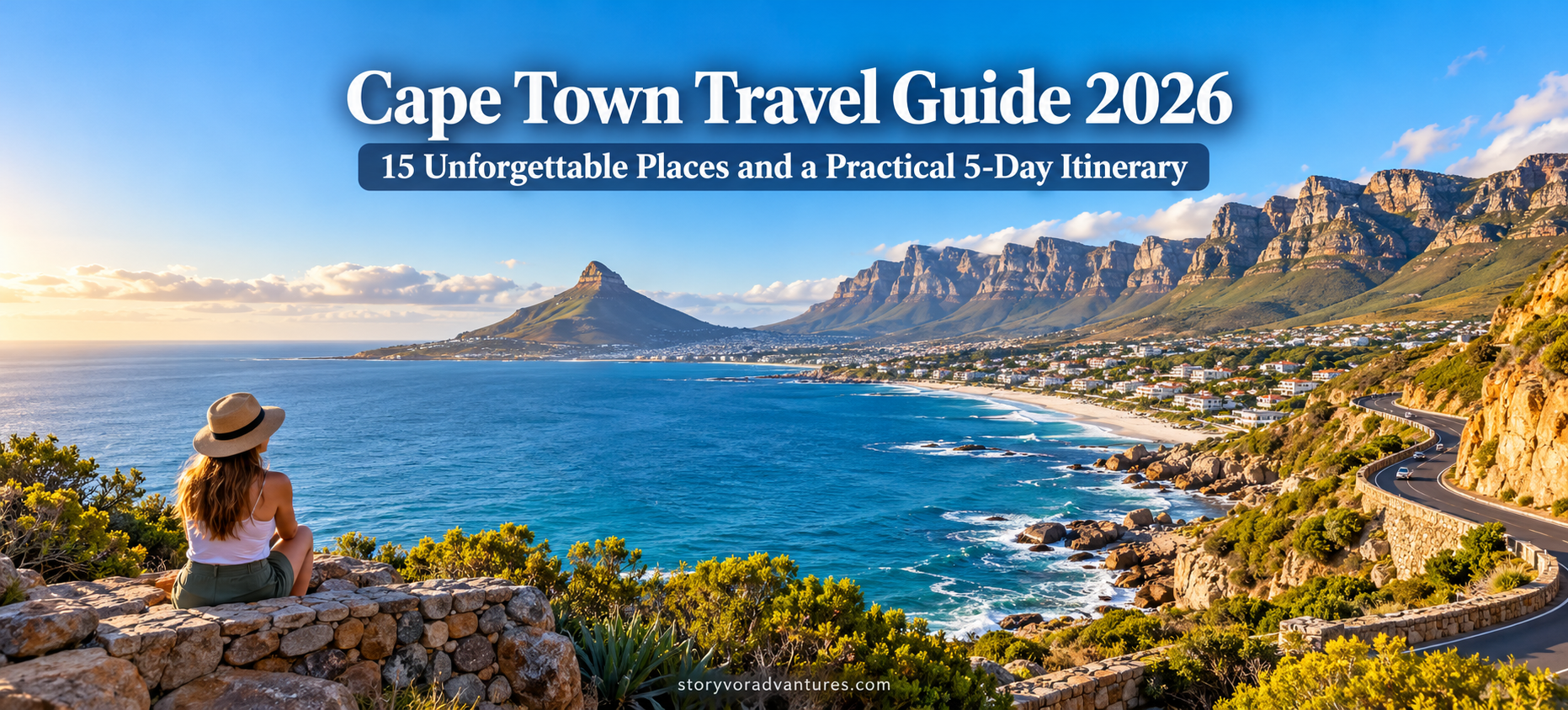
Cape Town Travel Guide 2026: 15 Unforgettable Places and a Practical 5-Day Itinerary
Explore 15 unforgettable places in Cape Town with a practical 5-day itinerary covering Table Mountain, beaches, history, wildlife and travel tips.
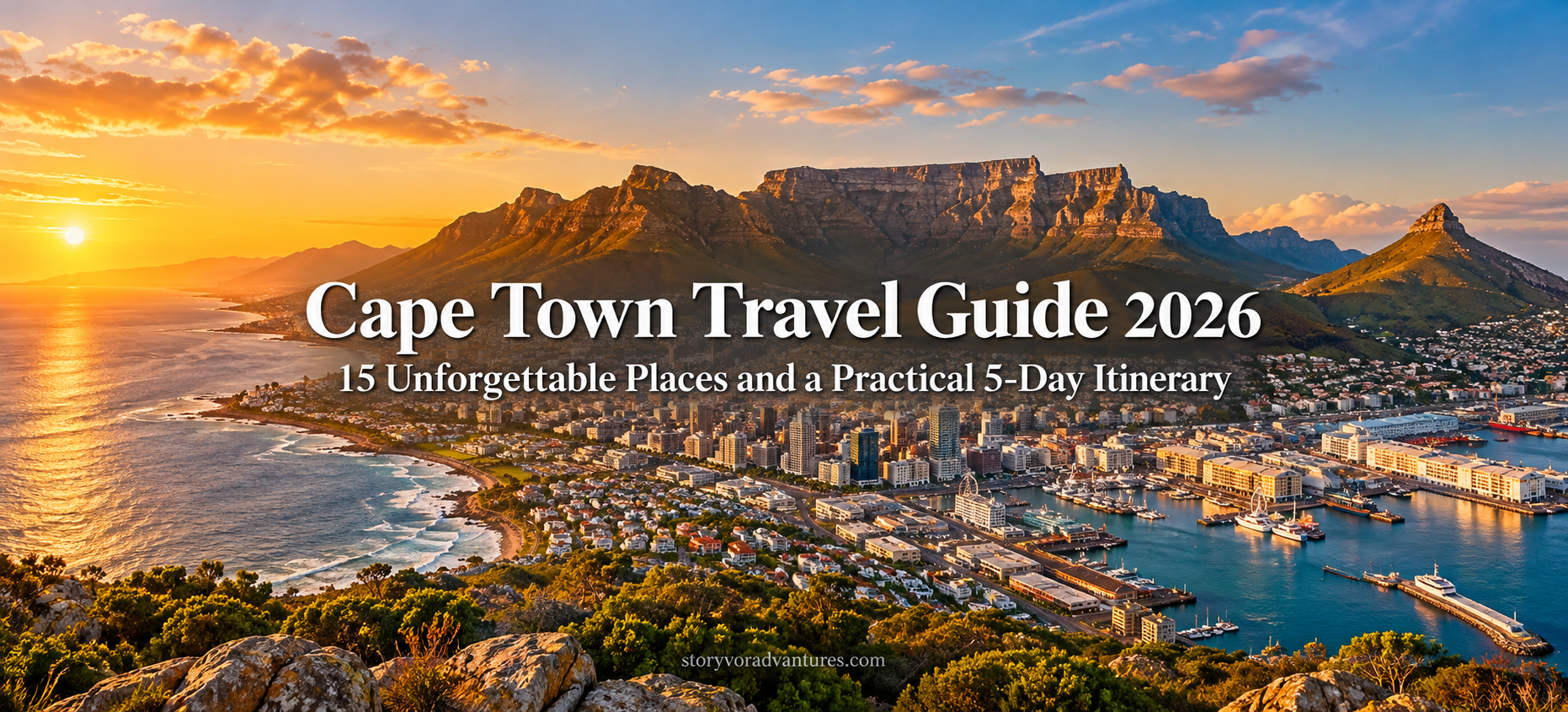
Cape Town is one of those rare cities where a single day can include a mountain viewpoint, a historic neighbourhood, a coastal drive and dinner beside a working harbour. Table Mountain rises directly behind the city, Atlantic beaches stretch along the western suburbs, and the Cape Peninsula continues towards cliffs, wildlife and small coastal communities.
That variety is also what makes Cape Town difficult to plan. Many attractions that appear close together on a map require separate half-day or full-day trips. Table Mountain depends on the weather, Robben Island requires a scheduled ferry, and Cape Point sits far beyond the central city.
For a first visit, I would avoid treating Cape Town as a checklist. Five well-planned days provide enough time to experience its major landscapes and history without spending the entire trip inside a vehicle.
Cape Town Travel Essentials
| Travel detail | Practical information |
|---|---|
| Country | South Africa |
| Province | Western Cape |
| Suggested stay | Five to seven days |
| Main airport | Cape Town International Airport |
| Currency | South African rand |
| Best bases | City Bowl, V&A Waterfront, Sea Point and Camps Bay |
| Getting around | MyCiTi buses, e-hailing services, organised tours and rental cars |
| Driving side | Left |
| Main language for visitors | English is widely understood |
| Advance booking | Table Mountain, Robben Island and popular tours |
Cape Town welcomed a substantial number of international overnight visitors in 2025, confirming its importance as a global destination. Popular attractions and accommodation can therefore become busy during peak periods. Destination Intelligence
1. Table Mountain
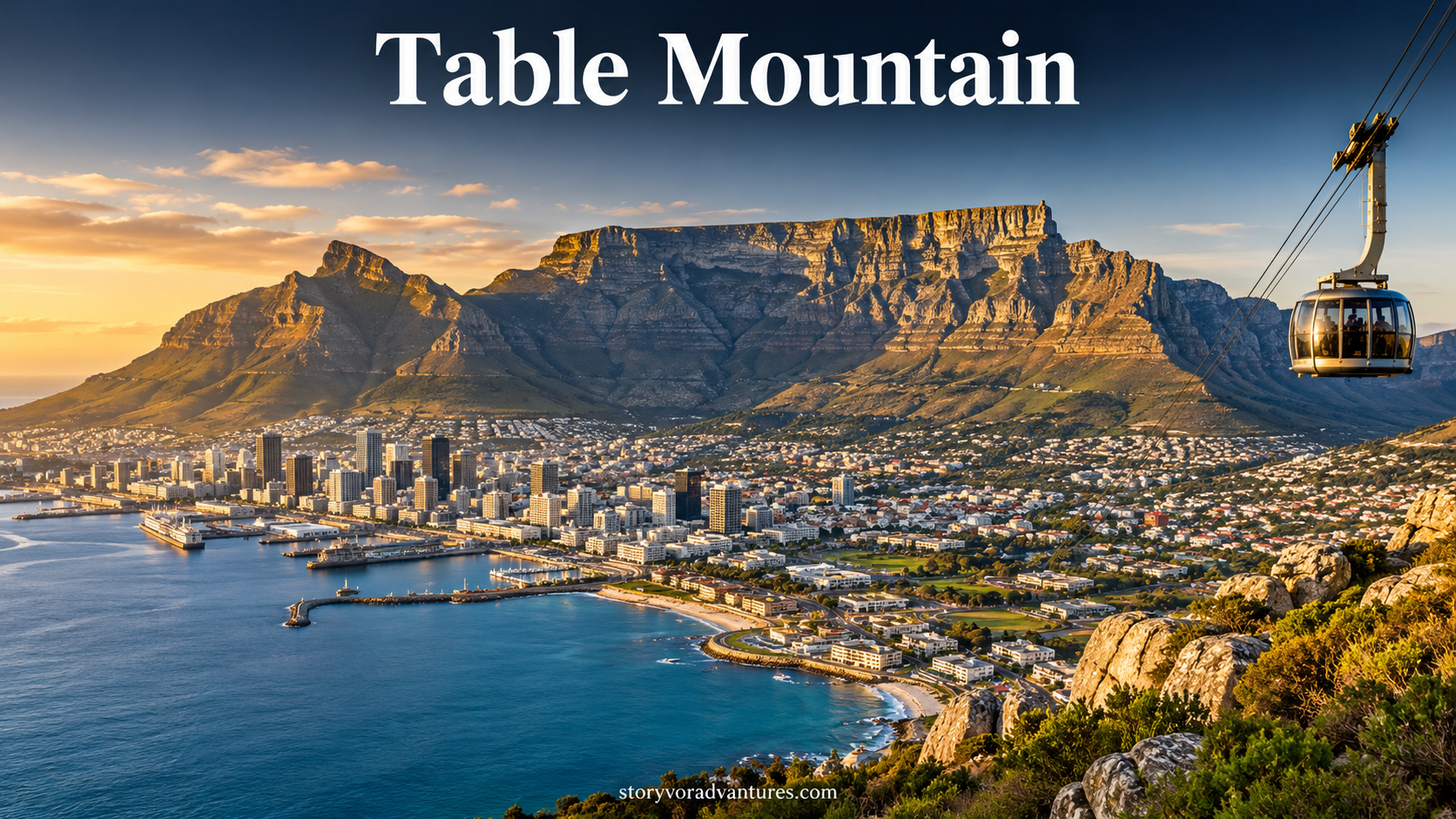
Table Mountain is the natural landmark that defines Cape Town. It can be seen from neighbourhoods, beaches and roads across the city, but the view from the summit reveals how dramatically mountains, urban areas and ocean meet.
The aerial cableway provides the easiest journey to the top. Visitors who prefer hiking can choose from several routes, but the mountain should not be underestimated. Paths can be steep, clouds can reduce visibility quickly and strong winds can affect both hiking conditions and cableway operations.
I would keep Table Mountain flexible within the itinerary instead of assigning it permanently to one afternoon. Check the weather every morning and visit on the clearest available day. The cableway operates only when conditions permit, and operating times can change. Table Mountain
Once at the summit, allow time for the walking paths and viewpoints rather than returning immediately after taking one photograph.
2. V&A Waterfront
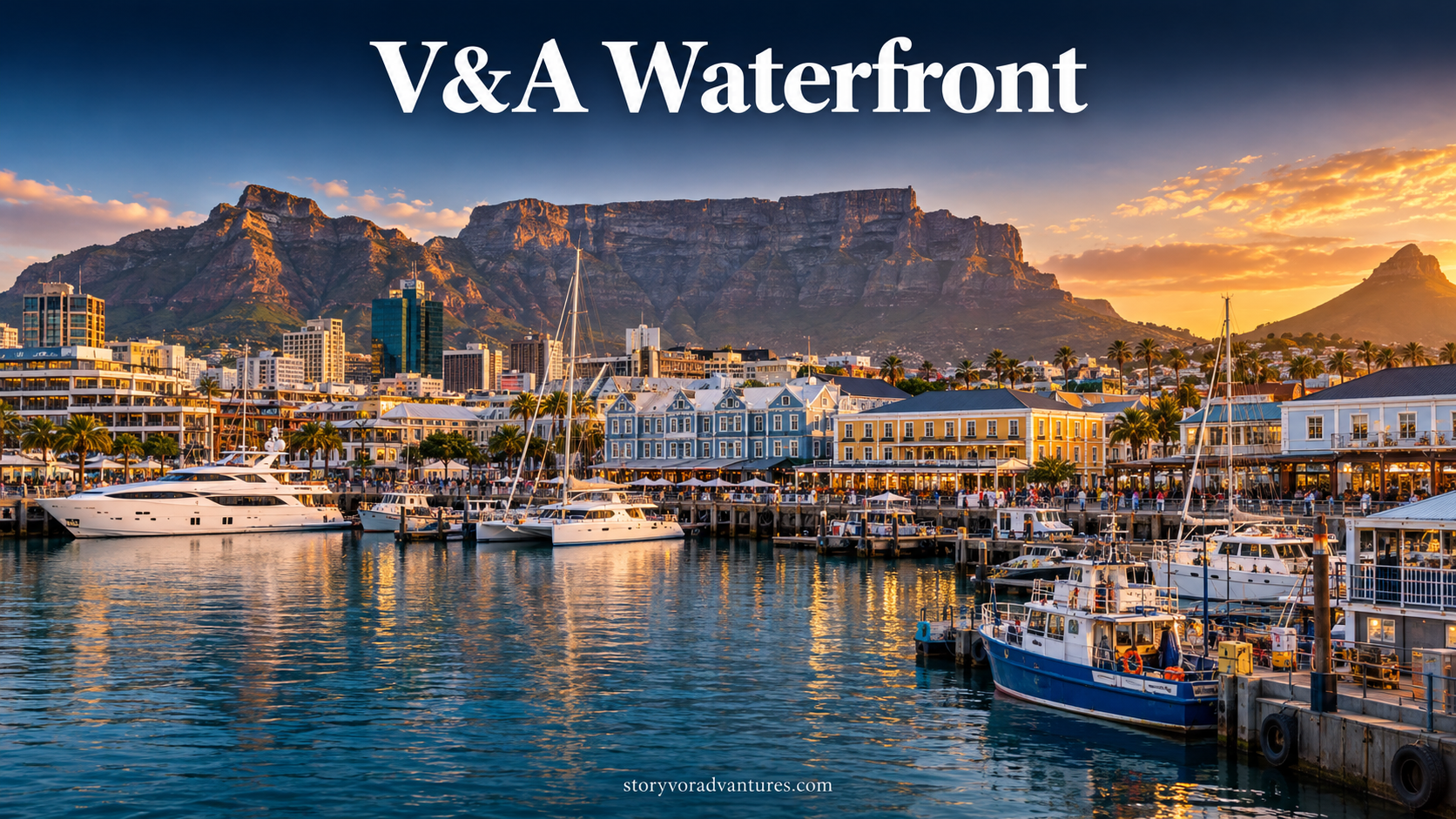
The V&A Waterfront combines a working harbour with restaurants, shops, museums, hotels and boat departures. It is one of the easiest areas for first-time visitors because many services are concentrated within a walkable district.
The waterfront works particularly well on the first afternoon after arriving in Cape Town. Travellers can walk around the harbour, watch boats, visit the Watershed craft market and enjoy views towards Table Mountain.
It is polished and visitor-friendly, but it should not become the only part of Cape Town you experience. Use it as an introduction and transport point, then explore neighbourhoods and landscapes beyond the harbour.
The Nelson Mandela Gateway for Robben Island ferries is also located here, making the waterfront an important departure point rather than simply a shopping area.
3. Robben Island
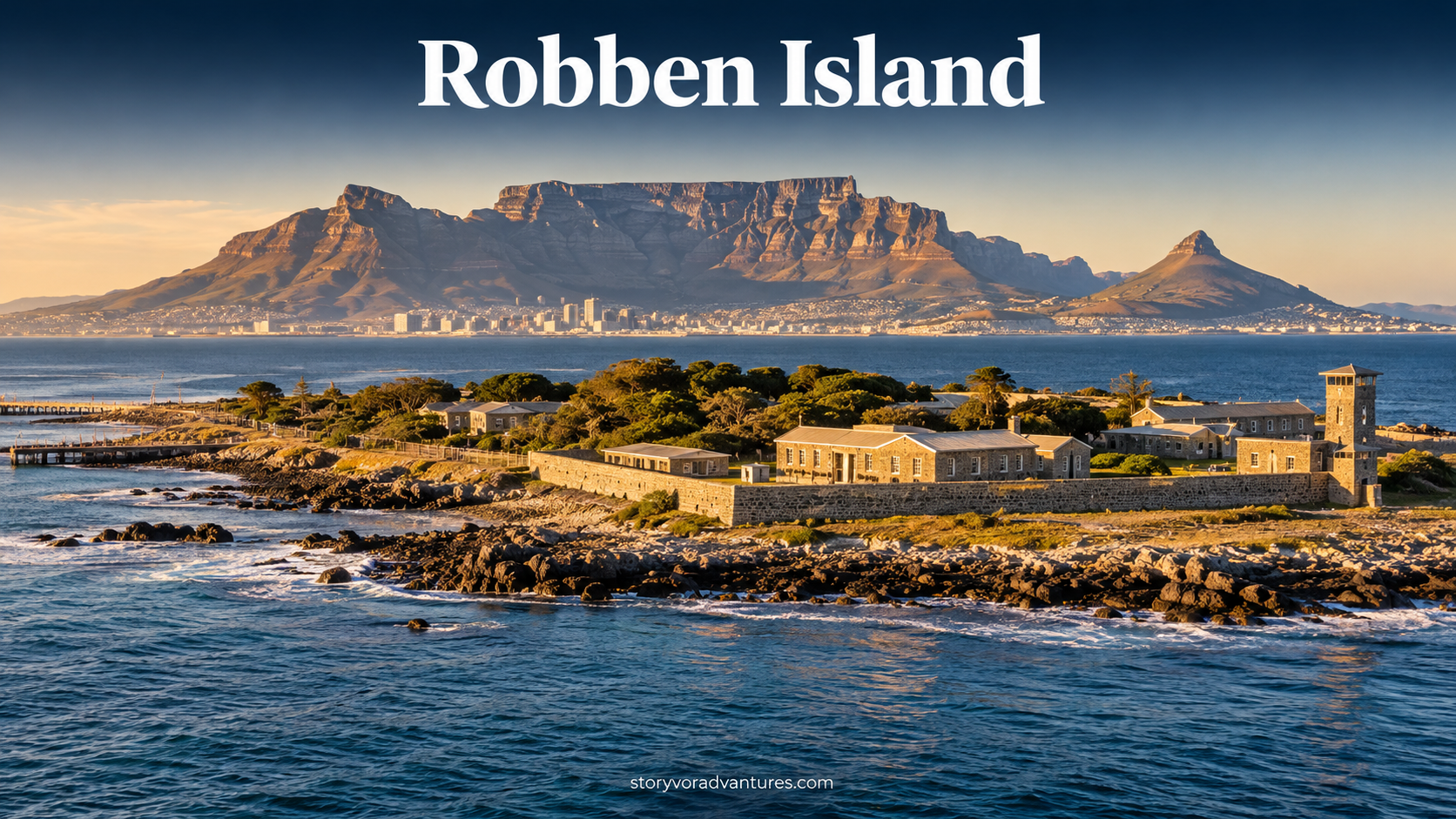
Robben Island carries enormous importance in South Africa’s political history. Nelson Mandela and many other political prisoners were imprisoned there during apartheid.
The standard visit includes the ferry journey from the V&A Waterfront and a guided experience on the island. The complete trip takes several hours, so it should be treated as a major part of the day rather than added casually between other attractions. The official museum currently states that tours depart from the Nelson Mandela Gateway and take approximately three and a half hours, although schedules can change. Robben Island Museum
Book through the official museum website and arrive early. Ferry services can be affected by weather and sea conditions.
This is not merely a place for photographs. Listen carefully to the guides, allow the history to remain uncomfortable where necessary and avoid rushing through the experience.
4. Bo-Kaap
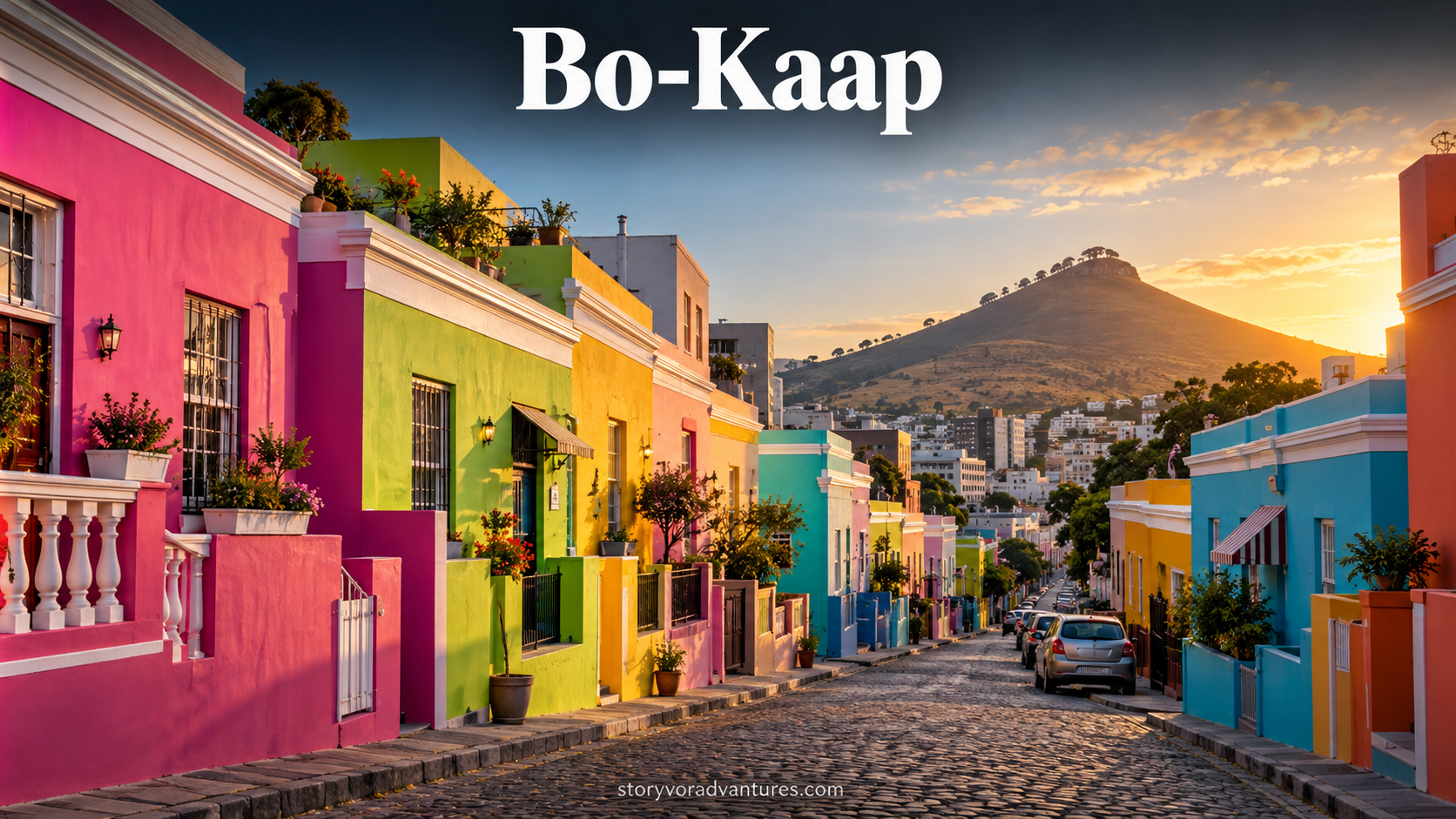
Bo-Kaap is recognised for its colourful houses and cobbled streets, but its meaning extends far beyond its appearance.
The neighbourhood is closely associated with Cape Malay culture and Cape Town’s Muslim community. A respectful visit can include the Bo-Kaap Museum, local food and a guided walk explaining the area’s history. The Auwal Mosque on Dorp Street is recognised as South Africa’s oldest mosque. Cape Town Tourism
Bo-Kaap is a living residential neighbourhood, not an outdoor photography studio. Avoid blocking doorways, photographing residents without permission or making excessive noise.
A locally led walking or cooking experience can provide more value than simply spending fifteen minutes beside the brightest houses.
5. Company’s Garden and the Historic City Centre
Company’s Garden offers a quieter introduction to central Cape Town. The green space is surrounded by important institutions, including the South African Museum, the National Gallery and historic buildings.
From here, visitors can walk towards Greenmarket Square, St George’s Cathedral and several streets connected with the city’s colonial and apartheid-era history.
The centre should be explored with awareness rather than by wandering without a plan, particularly when streets become quiet. A guided historical walk can provide useful context while helping first-time visitors navigate efficiently.
This section of the city reveals that Cape Town’s story is not limited to dramatic scenery. Its beauty exists alongside difficult histories of slavery, colonialism, forced removal and racial segregation.
6. District Six Museum

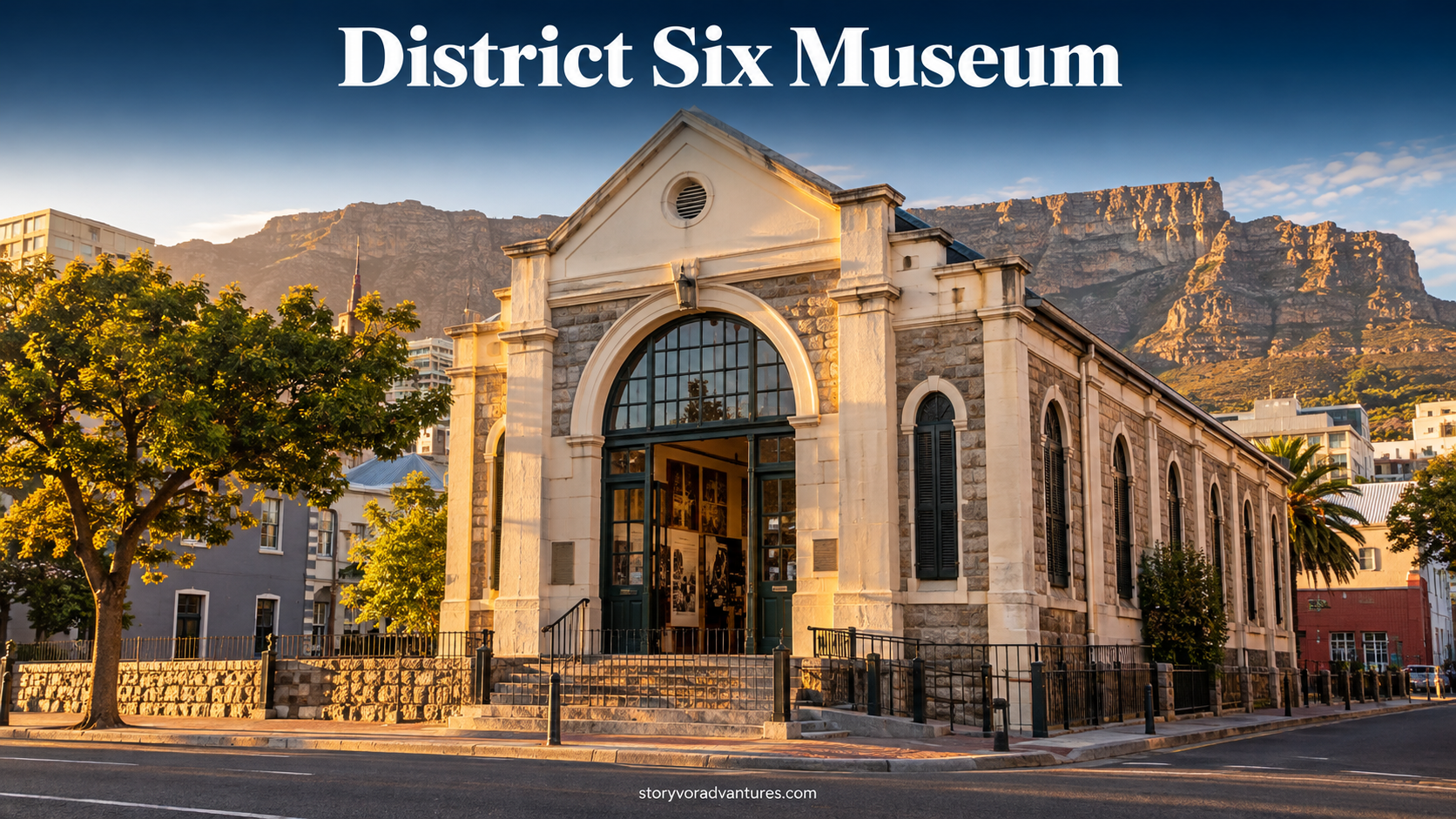
The District Six Museum documents the experiences of a diverse community that was forcibly removed under apartheid.
Maps, photographs and personal memories explain how government policies separated residents from their homes and reshaped the city. The museum is most meaningful when approached slowly. It is not necessary to examine every object, but visitors should allow enough time to understand the human consequences behind the displays.
District Six adds essential context to the rest of Cape Town. Without places like this, it is easy to see the city only through beaches, restaurants and mountain views.
Check current opening times before visiting and consider joining a guided experience when available.
7. Kirstenbosch National Botanical Garden

Kirstenbosch National Botanical Garden lies against the eastern slopes of Table Mountain. It combines landscaped areas, indigenous vegetation, forest paths and wide mountain views.
The Boomslang Canopy Walkway rises through the trees and provides a different perspective across the garden. Visitors can spend several hours walking, relaxing or learning about South Africa’s distinctive plant life.
Kirstenbosch is an excellent alternative when the Table Mountain summit is closed by wind or cloud. The experience remains outdoors but does not require a difficult mountain hike.
Some upper areas are steep, so select walking routes according to mobility and available time. SANBI provides official visitor information, accessibility guidance and garden rules. SANBI
8. Camps Bay
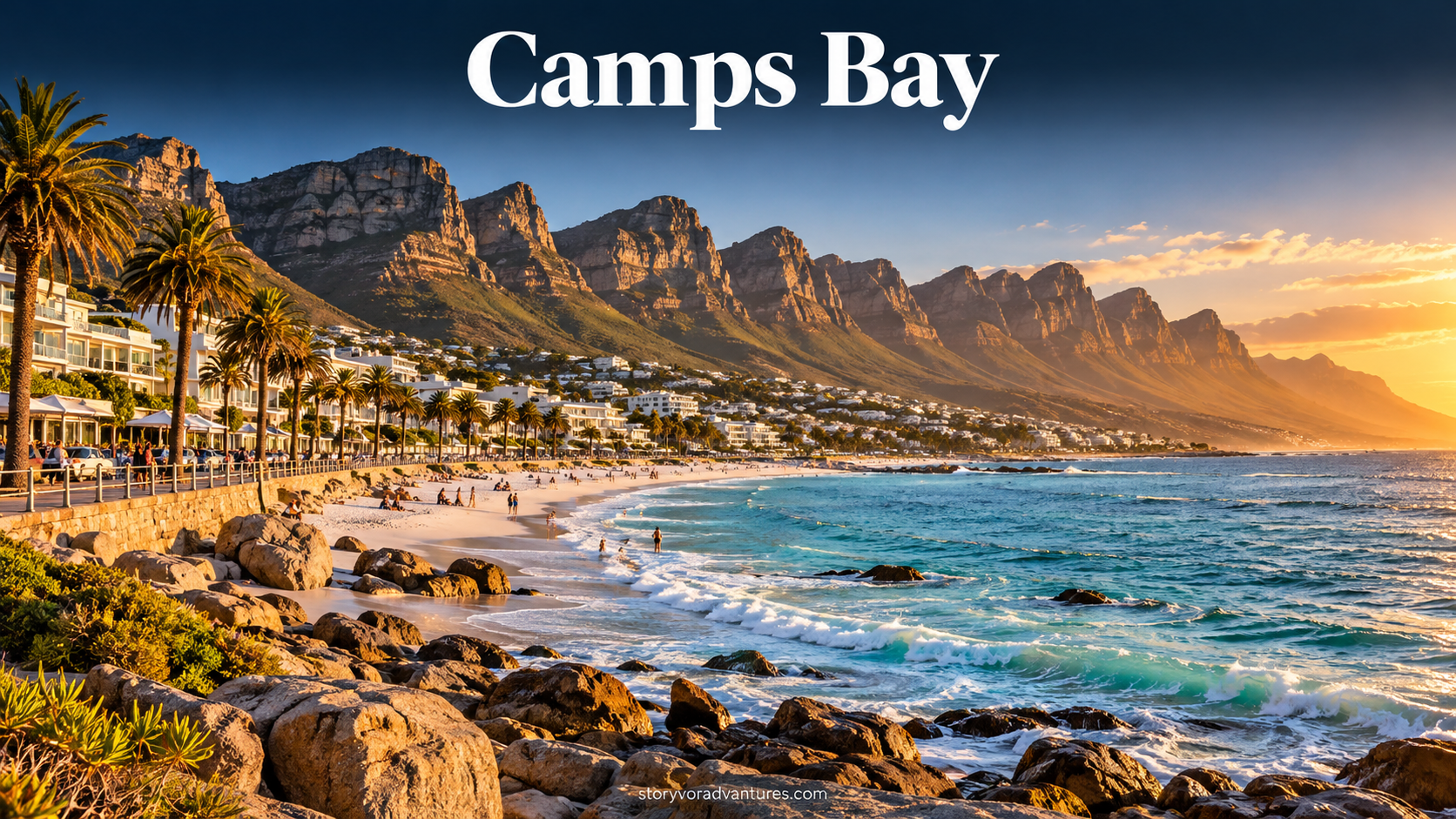
Camps Bay sits between the Atlantic Ocean and the Twelve Apostles mountain range. Its beach, palm-lined road and mountain backdrop create one of Cape Town’s most recognisable coastal scenes.
The area is popular for sunsets, cafés and restaurants. On warm days, the beach can become busy, while the Atlantic water remains surprisingly cold.
Camps Bay works well after visiting Table Mountain or Lion’s Head because it requires less structured planning. Walk along the beachfront, find a suitable sunset viewpoint and allow time for traffic when returning towards the city centre.
Keep valuables secure and avoid leaving phones, bags or cameras unattended while swimming or photographing the coast.
9. Clifton Beaches
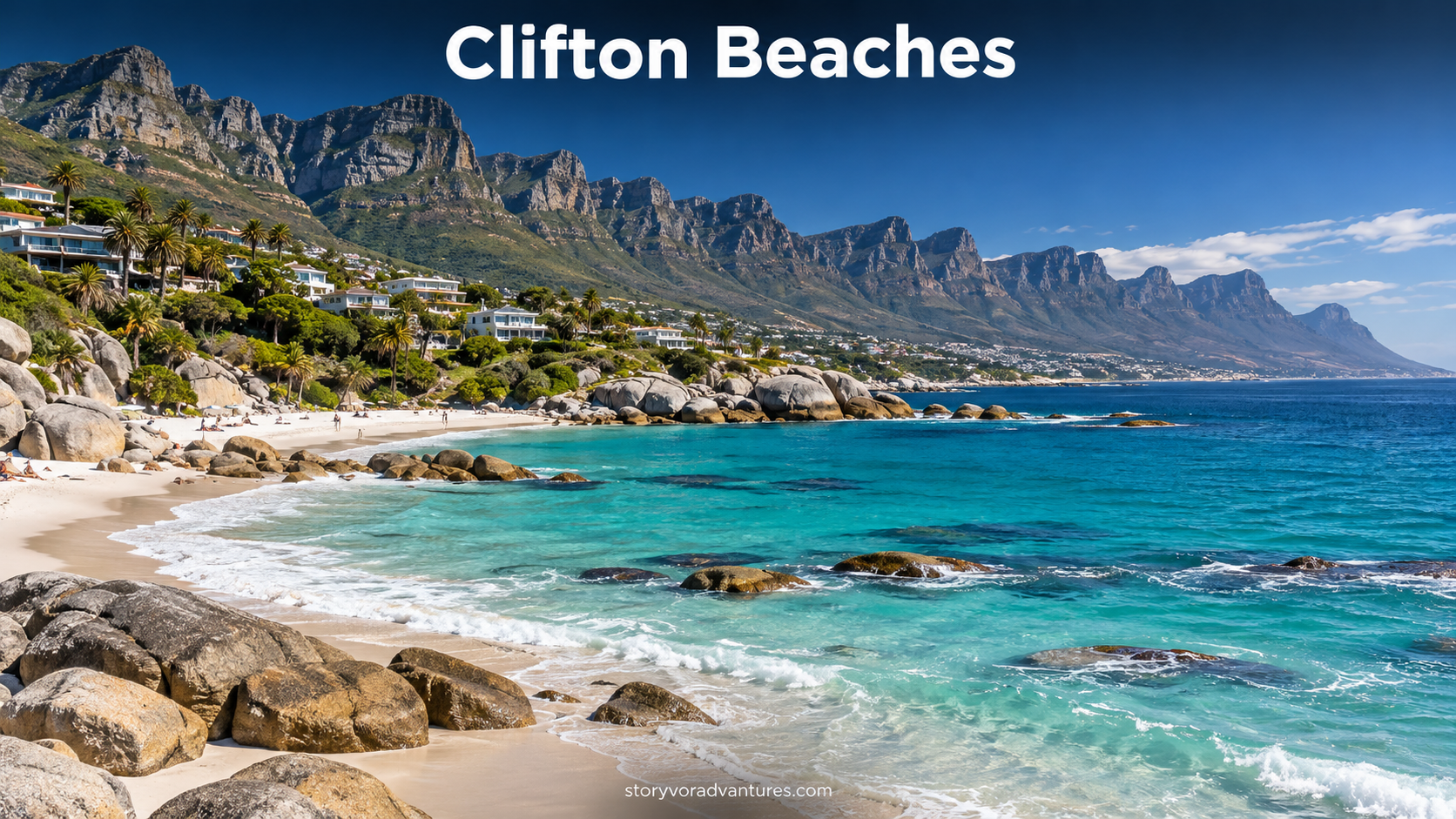
Clifton is divided into four beaches separated by granite rocks. Each has a slightly different atmosphere, but all provide sheltered coastal scenery close to the city.
Reaching the sand requires descending steps from the road, which means visitors should carry only what they need. Parking is limited, and ride-hailing services can be easier during busy periods.
The beaches are well suited to a relaxed afternoon, although the water is usually cold. Strong sunlight can still cause burns even when the sea breeze feels cool, so carry sun protection and drinking water.
Clifton can be combined with Camps Bay, but avoid trying to visit every beach simply for another photograph.
10. Lion’s Head and Signal Hill

Lion’s Head rises between Table Mountain and Signal Hill and provides panoramic views across the city, coastline and surrounding mountains.
The upper trail includes steep and exposed sections, so it should not be presented as an effortless sightseeing walk. Wear suitable shoes, carry water and avoid hiking alone or after dark. If you are uncomfortable with heights or uncertain weather, turn around instead of forcing the climb.
Signal Hill provides a more accessible alternative and is popular for sunset views. It can become crowded, so arrive early and arrange reliable return transport.
Never allow social-media photographs to pressure you into taking unnecessary risks near cliff edges.
11. Chapman’s Peak Drive
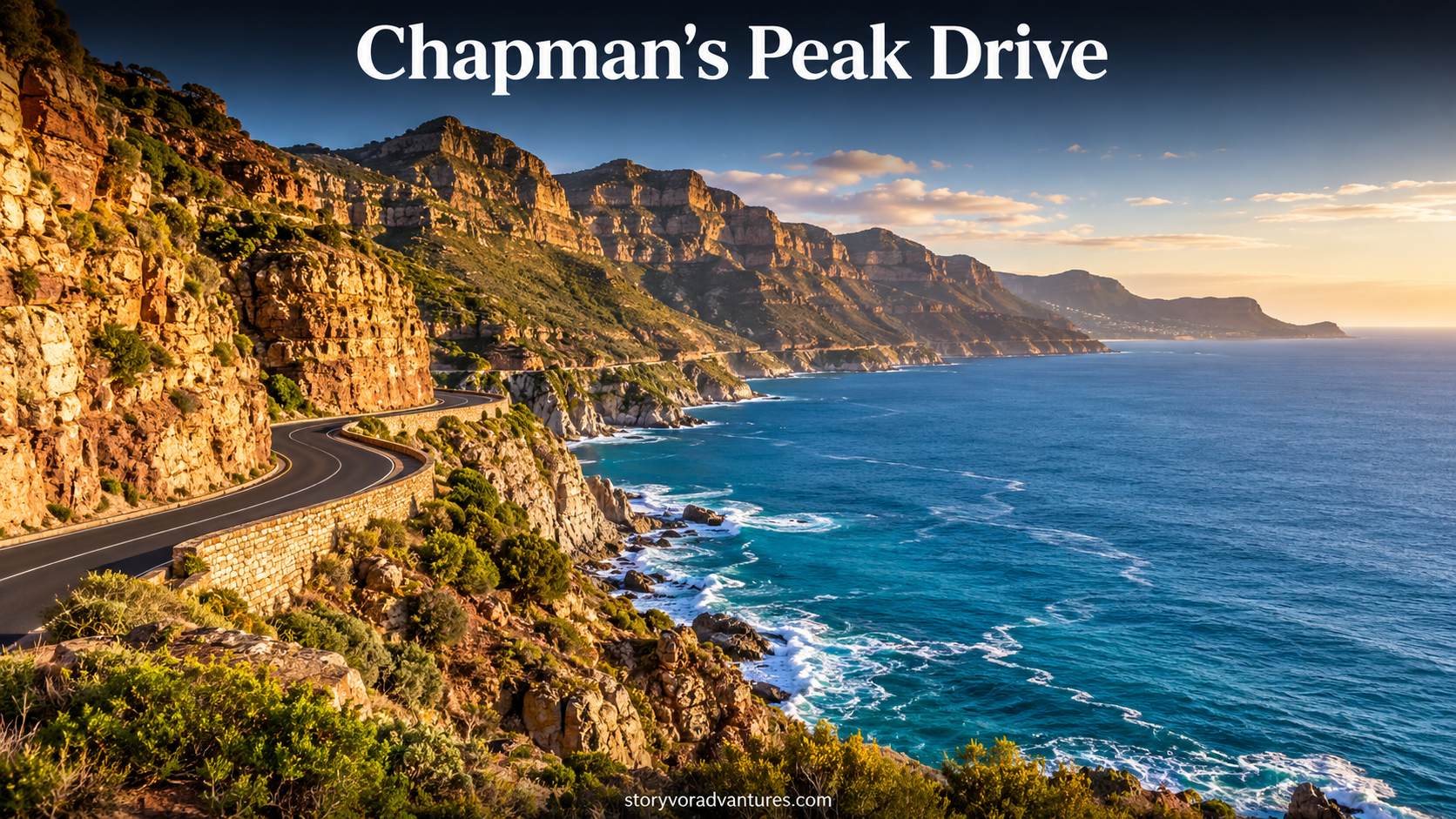
Chapman’s Peak Drive curves along steep mountains above the Atlantic between Hout Bay and Noordhoek. It is one of the most dramatic road journeys around Cape Town.
The drive includes viewpoints where travellers can stop safely and appreciate the coastline. Road conditions, maintenance and weather can occasionally affect access, so check its official status before leaving.
Chapman’s Peak is best included in a full Cape Peninsula day rather than visited as a separate return journey. Begin early, allow time for stops and avoid rushing towards Cape Point before closing hours.
Passengers should enjoy the views while the driver remains focused on the narrow, winding road.
12. Boulders Beach Penguin Colony
Boulders Beach near Simon’s Town is known for its colony of African penguins.
Boardwalks allow visitors to observe the birds while reducing disturbance to their nesting and resting areas. Penguins may look calm or approachable, but they are wild animals and should never be touched, fed or surrounded for photographs.
Visit early for a quieter experience and follow all instructions from park staff. Keep food secure and remain on authorised paths.
Boulders Beach fits naturally into a Cape Peninsula route with Simon’s Town, Cape Point and the Cape of Good Hope.
13. Simon’s Town
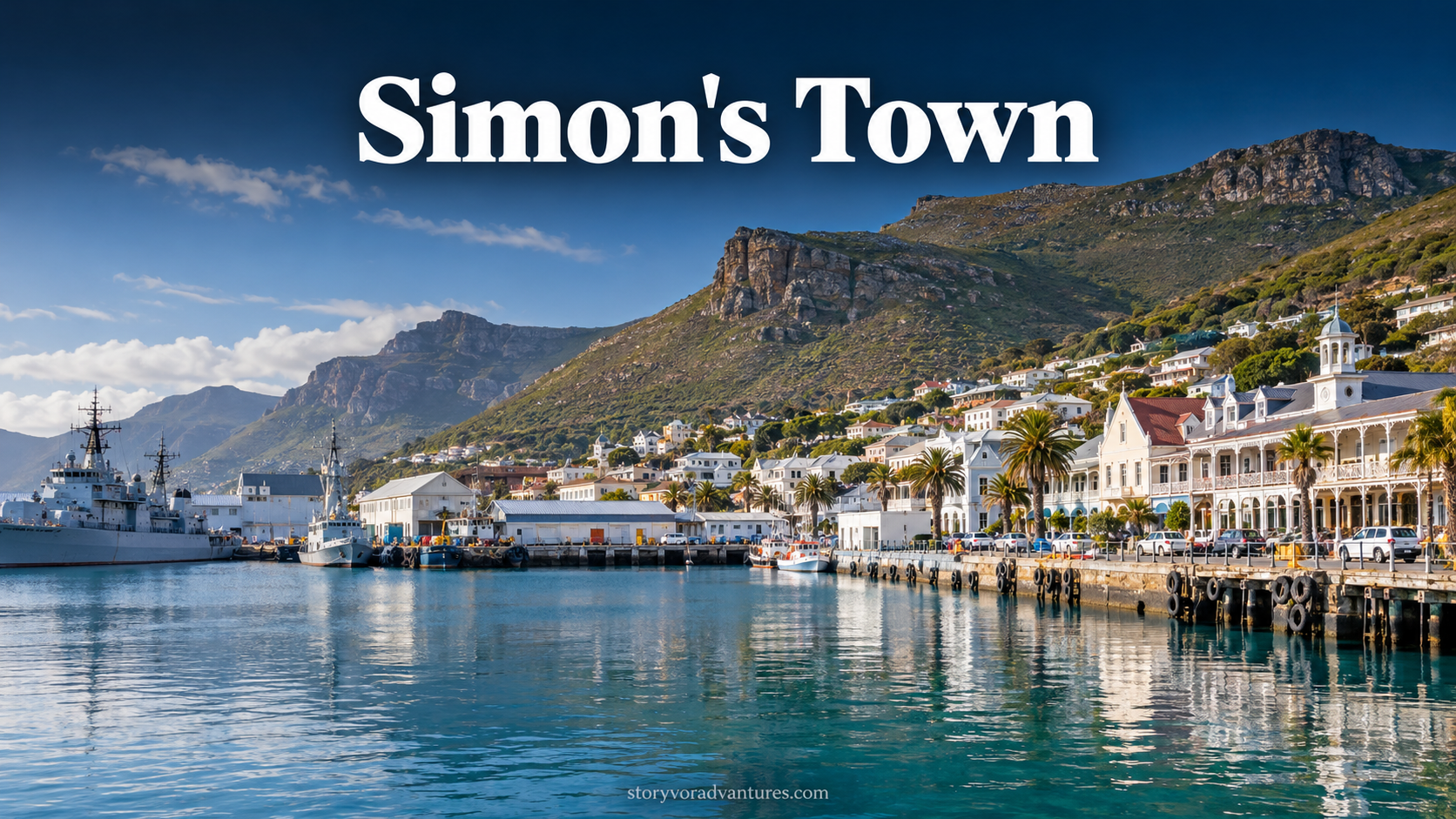
Simon’s Town is a historic naval town on False Bay. Many visitors pass through quickly on the way to the penguins, but the town itself deserves a little time.
Its streets contain historic architecture, cafés, museums and views across the harbour. The waterfront atmosphere feels different from central Cape Town and offers a useful break during a long peninsula drive.
Simon’s Town can serve as a lunch stop before continuing towards Cape Point. Travellers interested in maritime history may wish to stay longer or visit the South African Naval Museum.
Do not schedule the day so tightly that every stop becomes a race against the clock.
14. Cape Point and the Cape of Good Hope
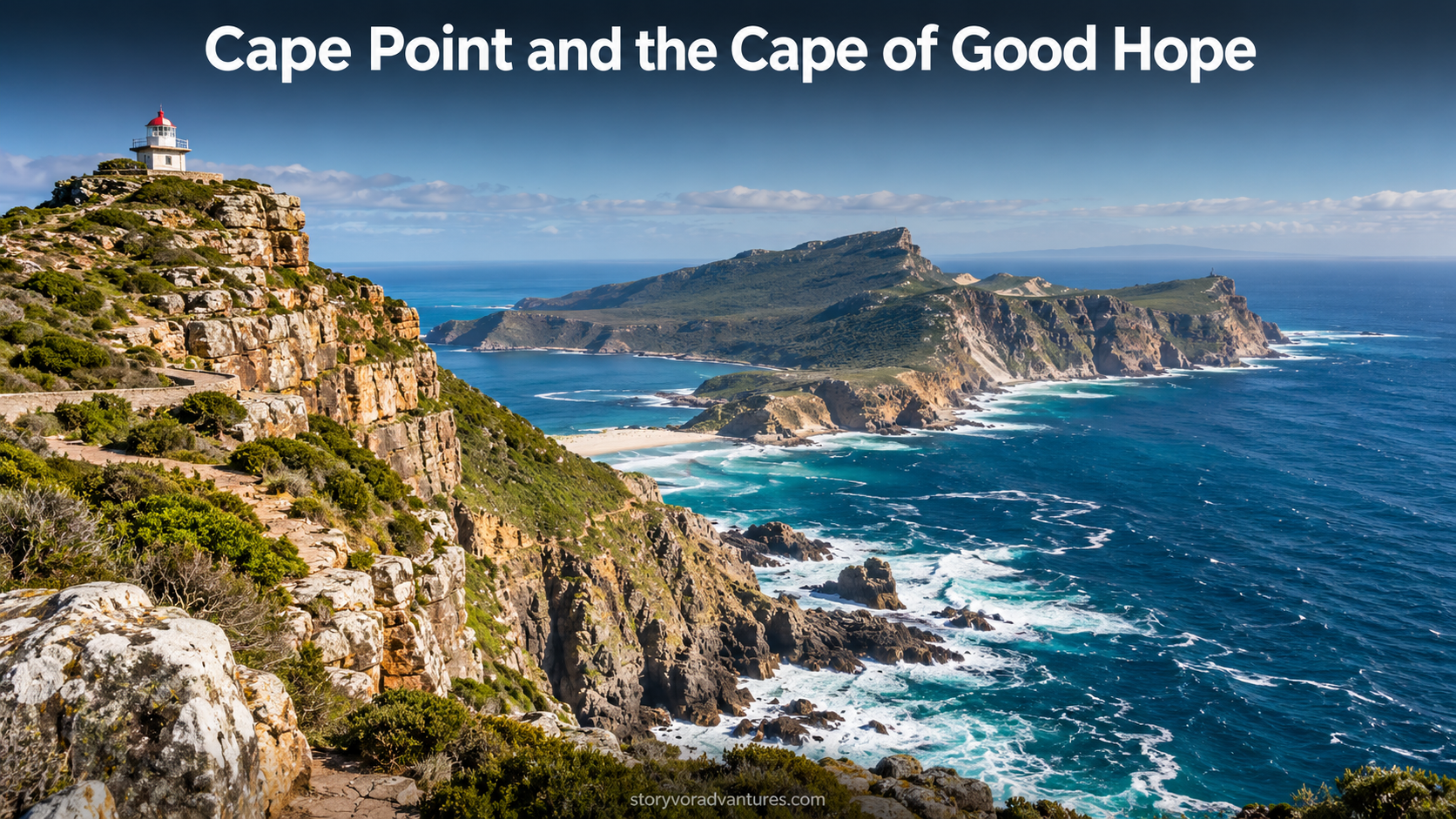
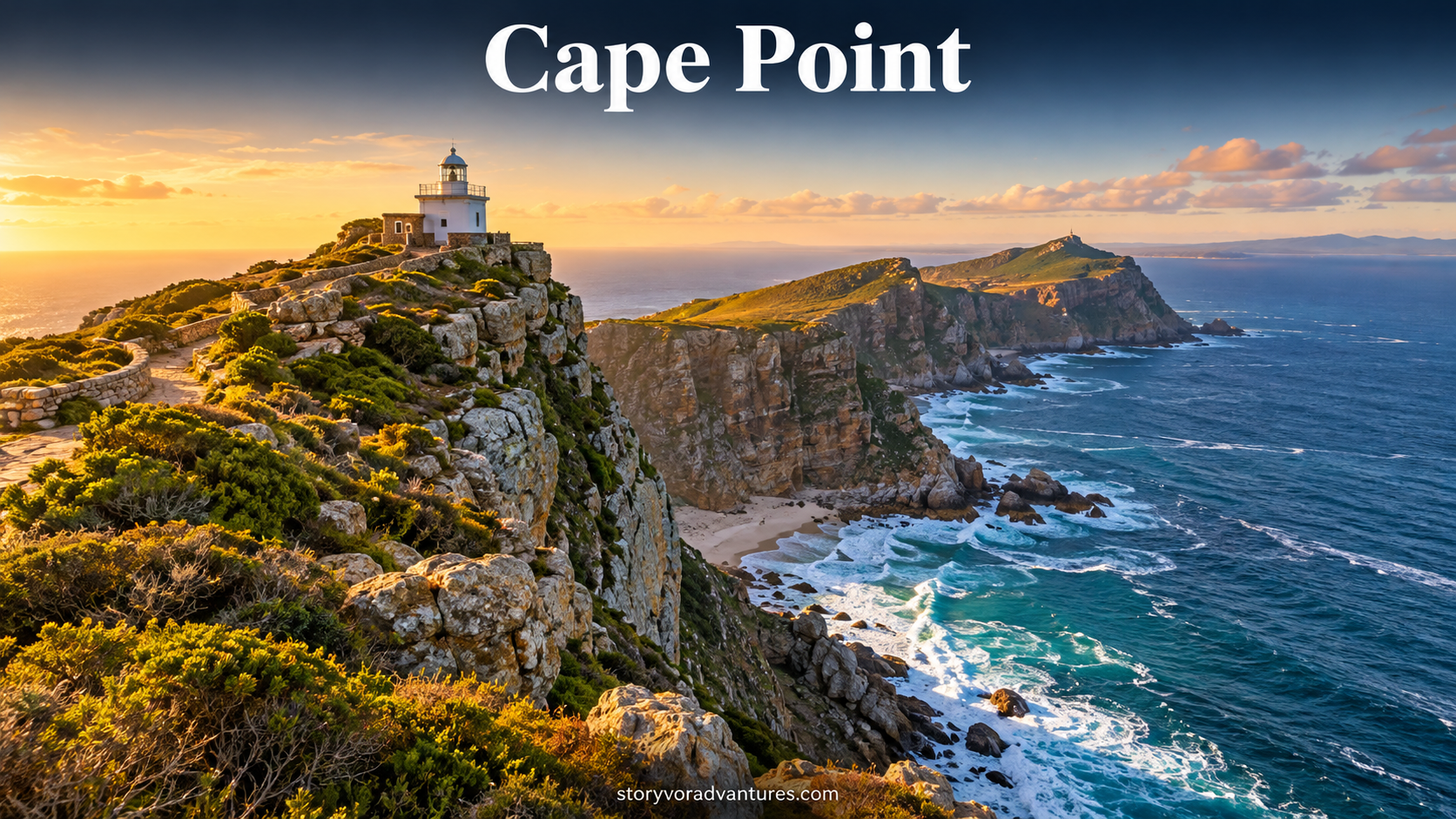
Cape Point sits within Table Mountain National Park at the southern end of the Cape Peninsula.
The area combines cliffs, walking trails, beaches and historic lighthouse viewpoints. Visitors can walk uphill or use the funicular for part of the journey. Strong wind is common, and conditions can feel very different from central Cape Town.
The Cape of Good Hope is nearby and has its own coastal viewpoints. Contrary to a common misconception, it is not the southernmost point of Africa; that distinction belongs to Cape Agulhas.
Keep food out of sight because baboons can become aggressive around visitors carrying visible food. Never feed wildlife or leave the vehicle near animals unless park instructions allow it.
15. Constantia Wine Valley

Constantia lies within Cape Town’s southern suburbs and provides a quieter landscape of vineyards, historic estates and mountain slopes.
Groot Constantia is one of the best-known estates and offers a combination of history, architecture, food and wine-related experiences. Visitors who do not drink alcohol can still enjoy gardens, meals and the historic setting.
Use a guided tour or ride-hailing service if anyone in the group intends to taste wine. Driving after drinking is dangerous and unnecessary.
Constantia can be combined with Kirstenbosch, but allowing separate half-days creates a more relaxed experience.
A Practical 5-Day Cape Town Itinerary
Day 1: Waterfront, Bo-Kaap and the City Centre
Begin at the V&A Waterfront to become familiar with the harbour area. Continue to Bo-Kaap for a respectful guided walk or museum visit.
Spend the afternoon around Company’s Garden and the historic city centre. Finish at Signal Hill if the weather is clear and safe return transport has been arranged.
This first day remains relatively flexible, making it suitable after a morning arrival.
Day 2: Table Mountain, Camps Bay and Clifton
Check the Table Mountain cableway status early. If conditions are clear, visit the summit before clouds or wind develop.
After returning, continue towards Clifton and Camps Bay. Spend the late afternoon beside the coast and remain for sunset.
If Table Mountain is closed, exchange this day with Kirstenbosch, Constantia or an indoor museum plan.
Day 3: Robben Island and District Six
Take a pre-booked morning trip to Robben Island. Because the full experience requires several hours, avoid scheduling another distant attraction immediately afterwards.
Later, visit the District Six Museum if its opening hours allow, or explore the waterfront more slowly.
Robben Island ferries may be affected by weather, so maintain some flexibility within the itinerary.
Day 4: Complete Cape Peninsula Day
Leave early and travel through Hout Bay and Chapman’s Peak Drive. Continue towards Simon’s Town and Boulders Beach before reaching Cape Point and the Cape of Good Hope.
This is a long day involving substantial driving. Use an organised peninsula tour if you do not want to drive or navigate independently.
Carry water, sun protection and an additional layer for coastal wind.
Day 5: Kirstenbosch and Constantia
Spend the morning at Kirstenbosch National Botanical Garden. Walk through selected areas rather than trying to cover every trail.
Continue to Constantia for lunch, gardens or a responsible wine-tasting experience. Return to the city before evening traffic becomes heavy.
Travellers more interested in hiking can replace Constantia with Lion’s Head, provided weather and safety conditions are suitable.
Best Time to Visit Cape Town
Cape Town’s warmer and drier summer period generally falls between December and February. These months are popular for beaches, outdoor dining and coastal trips, but accommodation and major attractions can become busy.
Spring and autumn can provide comfortable sightseeing conditions with fewer peak-season crowds. Winter brings cooler temperatures and more rain, although clear days still occur.
Weather can vary between the city centre, mountain and peninsula on the same day. Carry layers and keep mountain activities flexible.
Where to Stay in Cape Town
V&A Waterfront
The waterfront is convenient for first-time visitors, Robben Island departures and restaurants. Accommodation can be expensive, but the location simplifies several activities.
City Bowl
The City Bowl provides access to central attractions, restaurants and transport. Choose a well-reviewed property on a busy, established street rather than selecting accommodation only by price.
Sea Point
Sea Point offers a long ocean promenade, restaurants and a residential atmosphere. It is useful for visitors who want coastal evenings without staying in the busiest beach district.
Camps Bay
Camps Bay provides beaches, sunsets and mountain views. It works well for a relaxed or premium stay but requires additional travel to reach museums and historical sites.
Getting Around Cape Town
The MyCiTi bus service covers selected routes, including connections through several central and coastal areas. Ride-hailing services are also commonly used for direct journeys.
A rental car becomes most useful for the Cape Peninsula and Constantia, although an organised tour can remove the pressure of driving and parking.
Avoid walking long distances through unfamiliar or quiet areas simply because a map shows that two attractions are close. Ask your accommodation or a trusted local operator about the most suitable transport for each journey.
Practical Safety Advice
Cape Town welcomes large numbers of visitors, but travellers should use the same careful planning expected in any major city.
Keep valuables out of sight, avoid displaying expensive equipment unnecessarily and do not leave bags visible inside a parked car. Use established transport after dark and avoid isolated beaches, mountain paths or unfamiliar streets when alone.
For hiking, travel with other people, check the weather, carry sufficient water and inform someone of your plan. Follow current local guidance because conditions can change.
Safety advice should support a well-planned trip rather than create unnecessary fear. Most problems are better reduced through preparation, reliable transport and awareness of the surrounding area.
Responsible Travel in Cape Town
Cape Town’s most popular attractions are also neighbourhoods, wildlife habitats and protected natural areas.
Respect residents in Bo-Kaap, follow boardwalk rules at Boulders Beach and never feed baboons, penguins or other wildlife. Stay on marked mountain paths and carry all rubbish out.
Supporting community-led tours, independent restaurants, local guides and locally produced crafts helps tourism benefit more than a small group of visitor-focused businesses.
Frequently Asked Questions
Is five days enough for Cape Town?
Five days is enough for the major attractions, Table Mountain, Robben Island and a Cape Peninsula trip. Seven days would create more flexibility for weather, beaches, hiking and the nearby Winelands.
Do I need a car?
A car is not necessary for every day. The central city, waterfront and several coastal areas can be reached through public transport, tours or ride-hailing services. A car is most useful for the peninsula and surrounding areas.
Should I book Table Mountain in advance?
Advance online booking can reduce uncertainty, but the cableway remains weather-dependent. Check the official operating status before travelling to the lower station.
How long does the Robben Island trip take?
The official museum currently describes the complete experience, including ferry travel, as approximately three and a half hours. Allow additional time for check-in and possible delays. Robben Island Museum
Can I visit Boulders Beach and Cape Point together?
Yes. They fit naturally within a full-day Cape Peninsula route, preferably with an early departure.
Is Cape Town suitable for families?
Yes, provided activities are selected according to age, mobility and weather. The waterfront, penguin boardwalks, beaches and Kirstenbosch can work particularly well for families.
Final Thoughts
Cape Town should not be reduced to one mountain photograph. Its real character comes from the contrast between extraordinary scenery and complicated human history.
Table Mountain provides the famous view, but Robben Island and District Six explain parts of the city that a viewpoint cannot. Bo-Kaap introduces living culture, the peninsula reveals the scale of the coastline, and Kirstenbosch shows why the region’s natural environment deserves careful protection.
For a first visit, I would keep one day flexible for weather, avoid crowding every hour with attractions and spend enough time in each place to understand why it matters.
The strongest Cape Town itinerary is not the one containing the most stops. It is the one that balances landscapes, history, communities and the simple pleasure of watching the city change between mountain and sea.
Important: Entry requirements, attraction prices, ferry schedules, cableway operations, road access and weather conditions can change. Verify current details through official tourism websites and service providers before travelling.