London Travel Guide 2026: 15 Must-Visit Places and the Ultimate 5-Day Itinerary
Explore London in 2026 with 15 must-visit places, a complete five-day itinerary, the best areas to stay, transport, airport, budget and safety tips.
London brings together royal landmarks, historic markets, world-class museums, riverside attractions and culturally diverse neighbourhoods. However, its enormous size, busy transport network and relatively high costs can make a first visit difficult to organise without a practical plan.
A successful London itinerary should group nearby attractions together, leave enough time for major museums and account for advance booking requirements. Travellers should also compare airport connections, accommodation areas and transport options before confirming their trip.
This guide covers 15 important places to visit, a practical five-day itinerary, suitable areas to stay, local transport, airport transfers, estimated daily costs and essential safety information. Opening hours, ticket prices and entry requirements can change, so important details should always be confirmed through official websites before travelling.
London Travel Essentials
- Country: United Kingdom
- Currency: British pound sterling (£)
- Language: English
- Time zone: GMT (winter) / BST (summer)
- Recommended stay: 4 to 7 days minimum to avoid burnout.
- Main airports: Heathrow, Gatwick, Stansted, Luton, London City, and Southend
- Best for: Deep royal history, world-class free museums, high-end theatre, global street food, and neighbourhood hopping.
- Public transport: Underground (the Tube), buses, Elizabeth line, DLR, and Overground.
- Payment: Cash is rarely needed now. Contactless bank cards and mobile payments (Apple/Google Pay) are accepted almost everywhere, from the Tube to street food stalls.
Is London Actually Worth Visiting?
London is a worthwhile destination for travellers interested in royal history, major museums, theatre, architecture, food and multicultural neighbourhoods. Its variety allows visitors to combine several different experiences within one trip.
The most efficient approach is to explore the city in geographical clusters. Westminster connects Buckingham Palace, Westminster Abbey and Big Ben, while the South Bank offers riverside walks, cultural venues and views across the Thames. The City of London provides convenient access to St Paul’s Cathedral, Tower Bridge and the Tower of London.
Although accommodation and paid attractions can be expensive, London also offers many free experiences. National museums, public parks, neighbourhood walks and riverside paths can help travellers control their budget without reducing the overall quality of the trip.
15 Must-Visit Places in London With Practical Planning Tips
15 Must-Visit Places in London With Practical Planning Tips
1. Buckingham Palace and St James’s Park
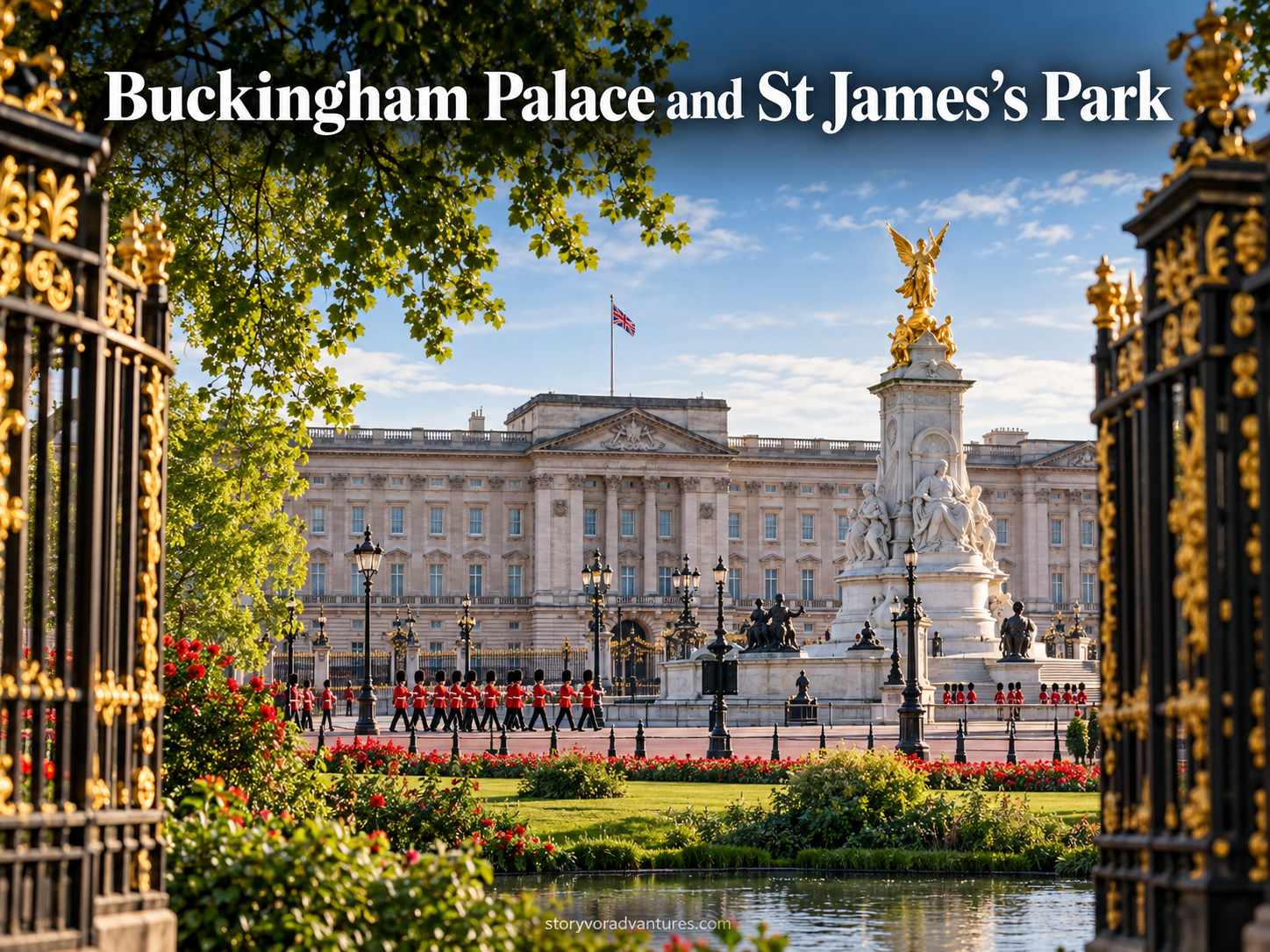
You can’t skip Buckingham Palace on a first trip, but how you visit matters. Consider timing your visit to see the Changing of the Guard, but the crowds at the gates are notoriously thick.
- Planning Tip: Instead of standing right at the gates where you’ll mostly see the backs of people’s heads, stand on the steps of the Victoria Memorial right in front of the palace for a sweeping, elevated view of the guards marching up The Mall.
- Be sure to check the exact schedule as it doesn’t happen every day. If you want to see the actual interior, the State Rooms are only open for a short window during the summer, so check the official trust website early.
- Afterward, take a peaceful walk through St James’s Park—it’s free, full of pelicans and swans, and the bridge in the middle of the lake offers a spectacular, perfectly framed view of the palace through the trees.
2. Westminster Abbey
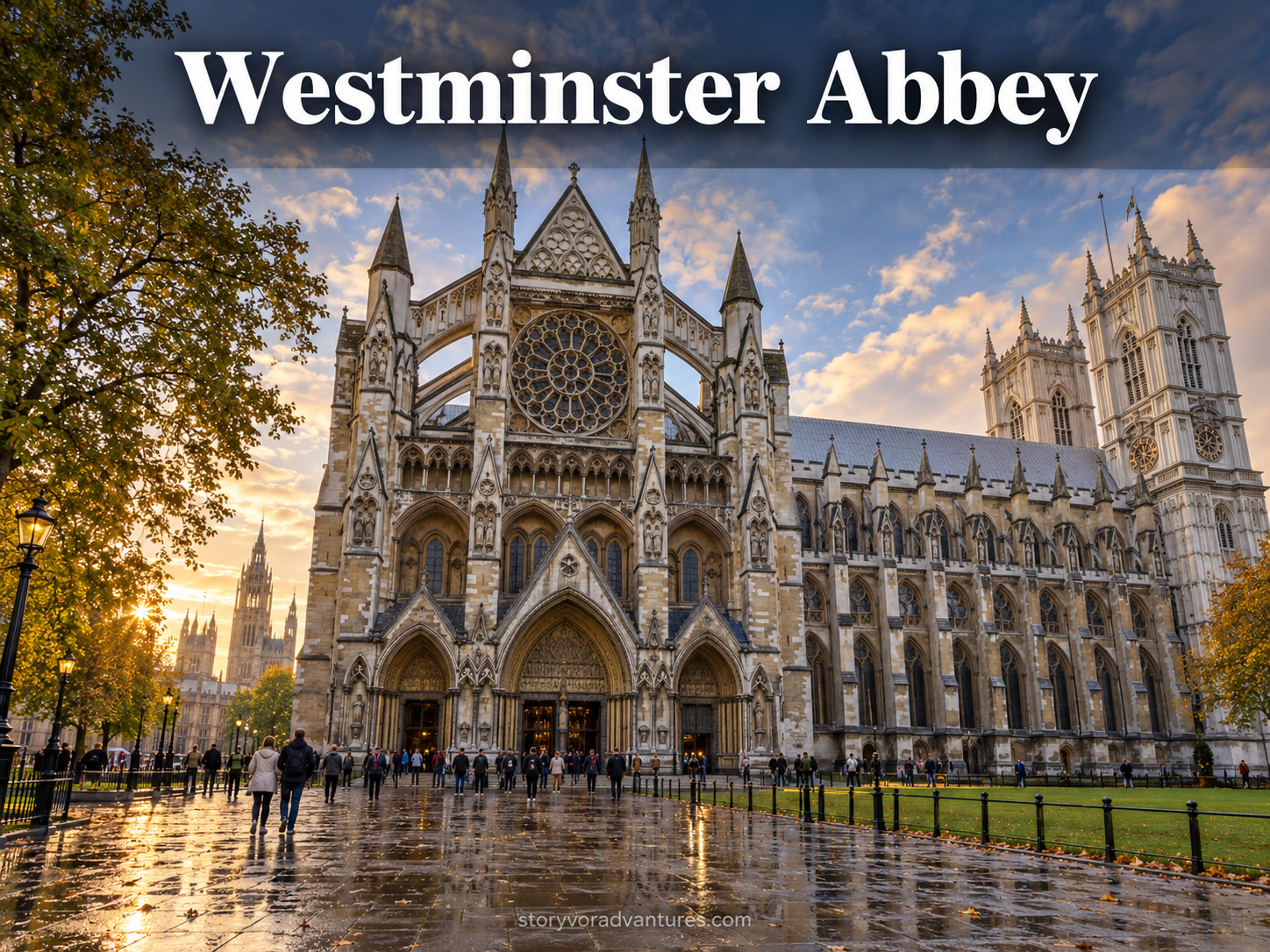
This isn’t just a stunning Gothic church; it’s the absolute centrepiece of British royal history. Over 3,000 notable people are buried or memorialised here, including monarchs, Isaac Newton, and Charles Darwin. From coronations to royal weddings, this is where it all happens.
- Planning Tip: You need at least 90 minutes here. The included multimedia guide can provide useful historical context (included in the ticket) to truly understand whose footsteps you’re walking in. Make sure to visit the Poets’ Corner and look down—you are literally walking over history.
- It is an active place of worship, meaning it can close abruptly for services. Always book timed tickets well in advance to skip the massive walk-up queue.
3. Big Ben and the Houses of Parliament

Seeing Elizabeth Tower (which houses the Great Bell, Big Ben) for the first time is always a “pinch-me” moment, especially now that it is beautifully restored and shining in gold.
- Planning Tip: The absolute best photos aren’t taken standing right under it. Walk halfway across Westminster Bridge, or cross the river entirely and shoot from the South Bank near St Thomas’ Hospital for a clear, unobstructed shot with red double-decker buses in the foreground.
- If you’re a history or politics nerd, you can actually go inside. Book UK Parliament Tours early. On Saturdays and during parliamentary recesses, you can walk through the stunning medieval Westminster Hall and stand in the actual House of Commons and House of Lords.
4. The London Eye and South Bank
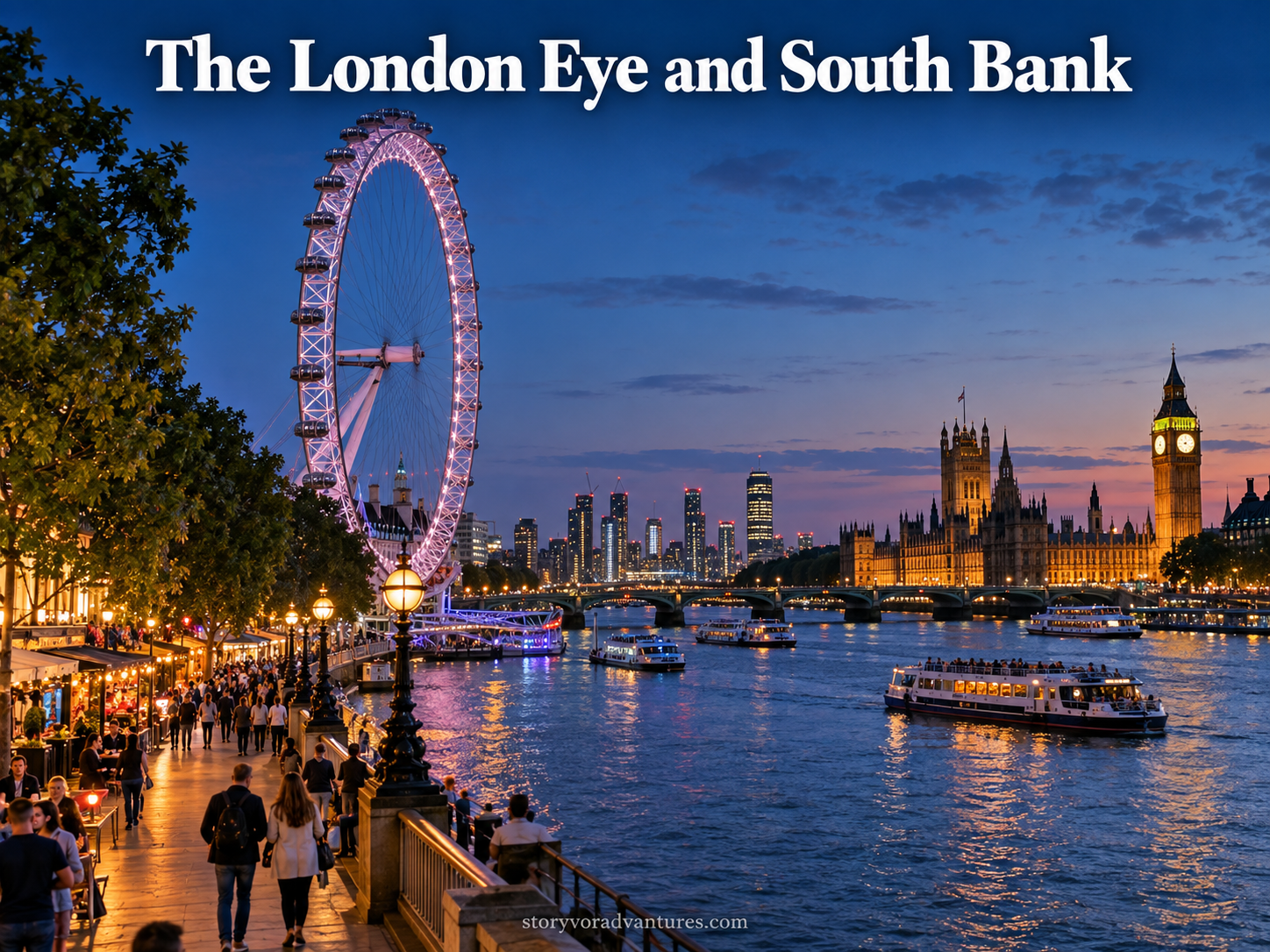
The London Eye gives you an unbeatable bird’s-eye view of the Thames and central London, but the queues can be soul-crushing if you show up unprepared.
- Planning Tip: Book a specific time slot online to avoid the massive ticket queues. Better yet, aim for a sunset ride so you get to see the city in daylight and as the night lights turn on.
- Even if you don’t ride the wheel, walking the South Bank is a non-negotiable must. Visitors can grab a coffee and walk past the street performers, the National Theatre, and the second-hand book market under Waterloo Bridge.
5. Tower of London
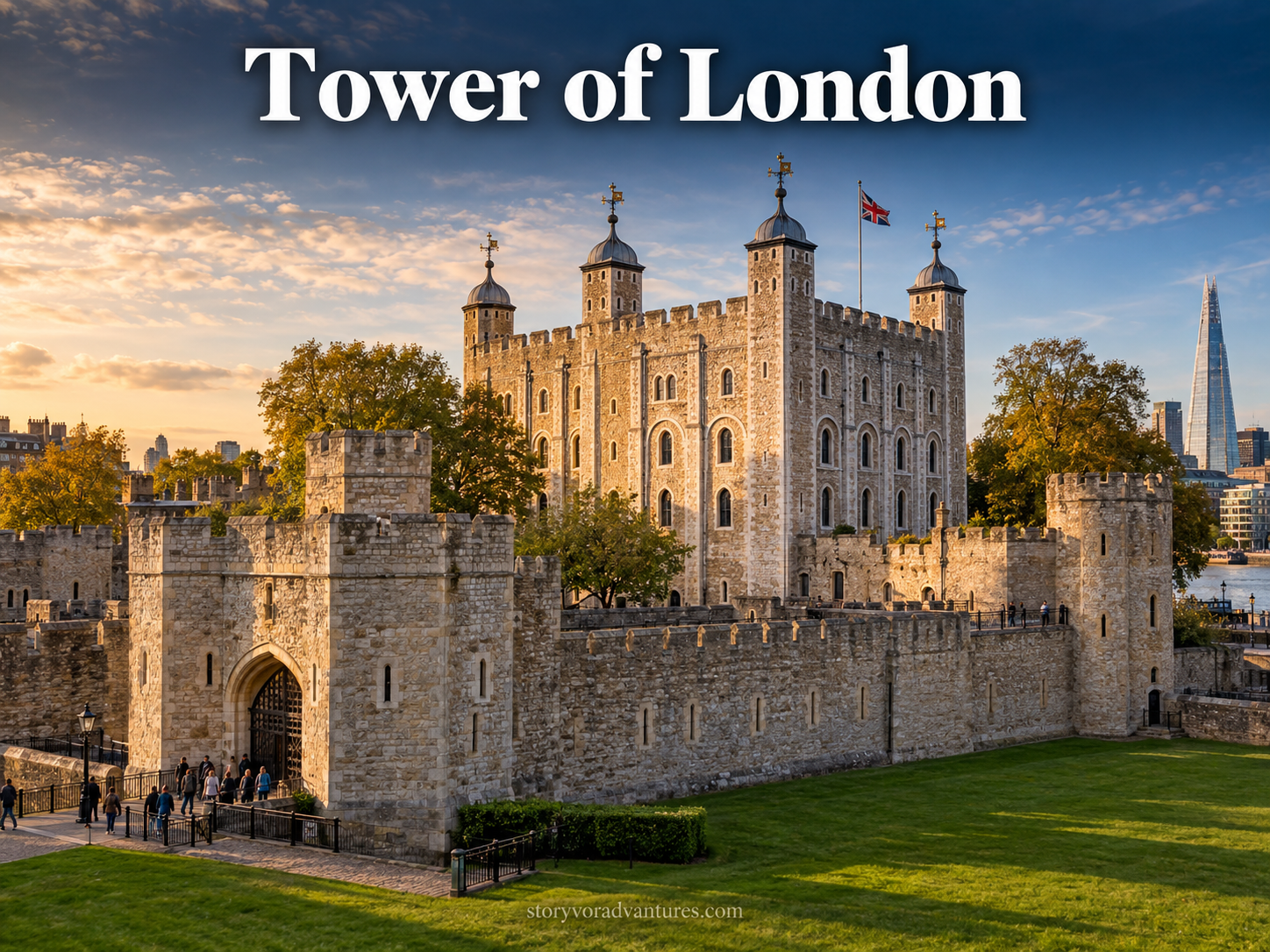
The Tower of London
is one of the city’s most important historical attractions. It’s a 900-year-old fortress, a former prison, an execution site, and the heavily guarded home of the Crown Jewels.
- Planning Tip: Arriving about 15 minutes before the morning opening time can help reduce waiting. The moment you are inside, run (don’t walk) straight to the back to see the Crown Jewels before the line wraps around the building.
- After seeing the jewels, catch one of the free Yeoman Warder (Beefeater) tours near the entrance. These guards live in the tower and are incredible, hilarious storytellers who bring the bloody history of the executioners’ block to life.
6. Tower Bridge
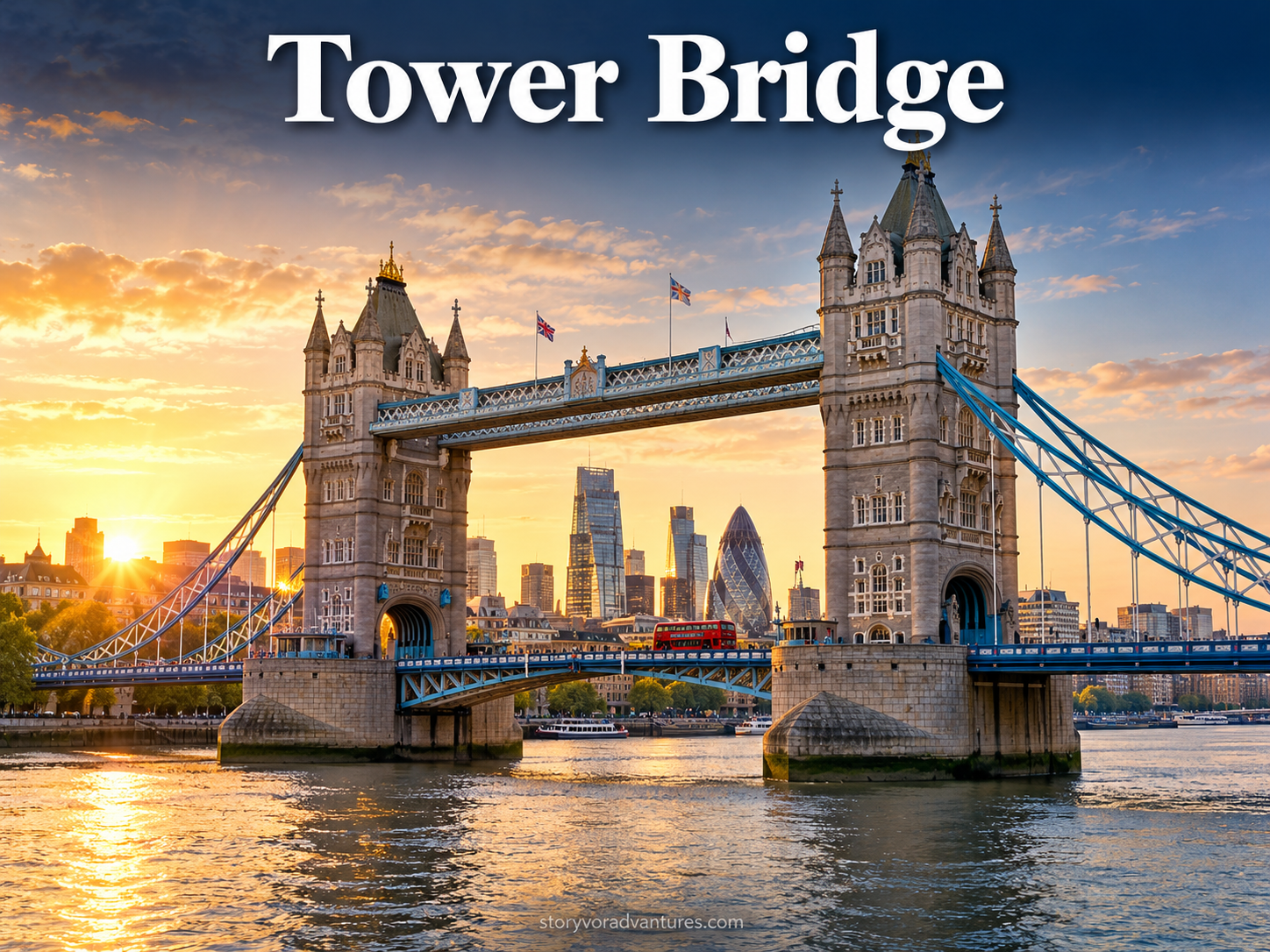
Often confused with the visually boring London Bridge, Tower Bridge is the stunning Victorian suspension bridge that opens for tall ships.
- Planning Tip: Walking the lower deck alongside traffic is completely free. But if you aren’t afraid of heights, buy a ticket to the upper walkways. Walking across the high-level glass floor while double-decker buses drive 42 metres directly beneath your feet is a wild experience.
- Before leaving the area, go down to the Engine Rooms to see the massive Victorian steam engines that used to power the bridge lifts.
7. St Paul’s Cathedral
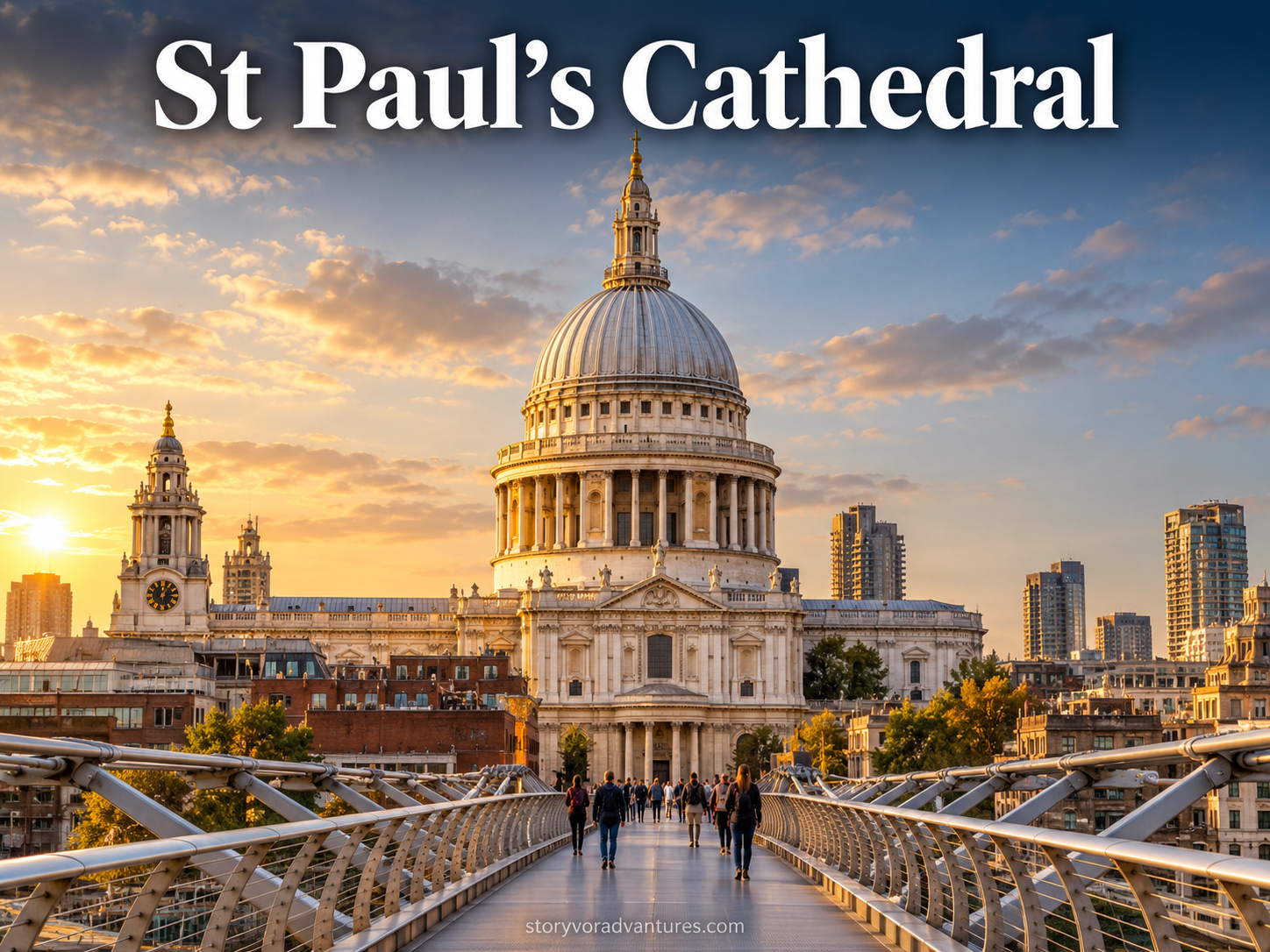
Sir Christopher Wren’s masterpiece is breathtaking, and the massive dome dominates the London skyline. The interior floor features gorgeous mosaics and the crypt holds the tombs of Lord Nelson and the Duke of Wellington.
- Planning Tip: If you’ve got the stamina, the climb up the dome is the best part. You first reach the Whispering Gallery inside the dome, but keep climbing the narrow, winding stairs to the outdoor Stone Gallery and Golden Gallery. The wind up there is fierce, but the panoramic, 360-degree views of the London skyline are unmatched.
- Budget hack: If you only want to see the main floor and hear the choir, you can attend the Evensong service (usually at 5 PM) for free, though photography isn’t allowed during worship.
8. The British Museum
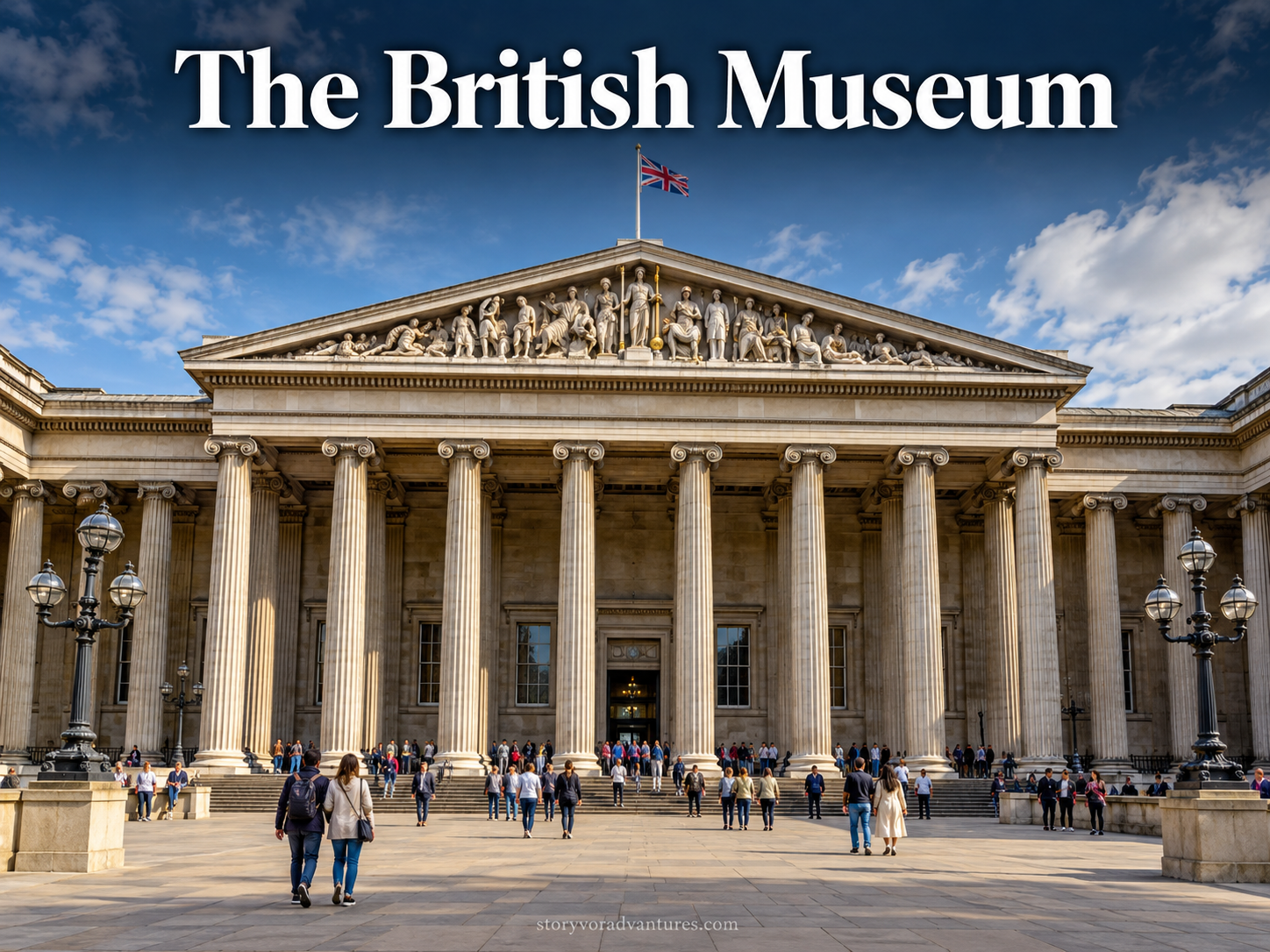
You could spend an entire week in this museum and still not see everything. The collection covers human history from across the globe, featuring heavy hitters like the Rosetta Stone, the Parthenon Sculptures, and Egyptian mummies.
- Planning Tip: General admission is completely free, but you should still book a free timed entry ticket online to bypass the massive queue at the front gates.
- Don’t try to see the whole building; you will get “museum fatigue” within two hours. Pick three specific sections you care about (e.g., Ancient Egypt, Greece, and Roman Britain) and spend a focused, highly rewarding two hours instead of aimlessly sprinting through 60 galleries.
9. The National Gallery and Trafalgar Square
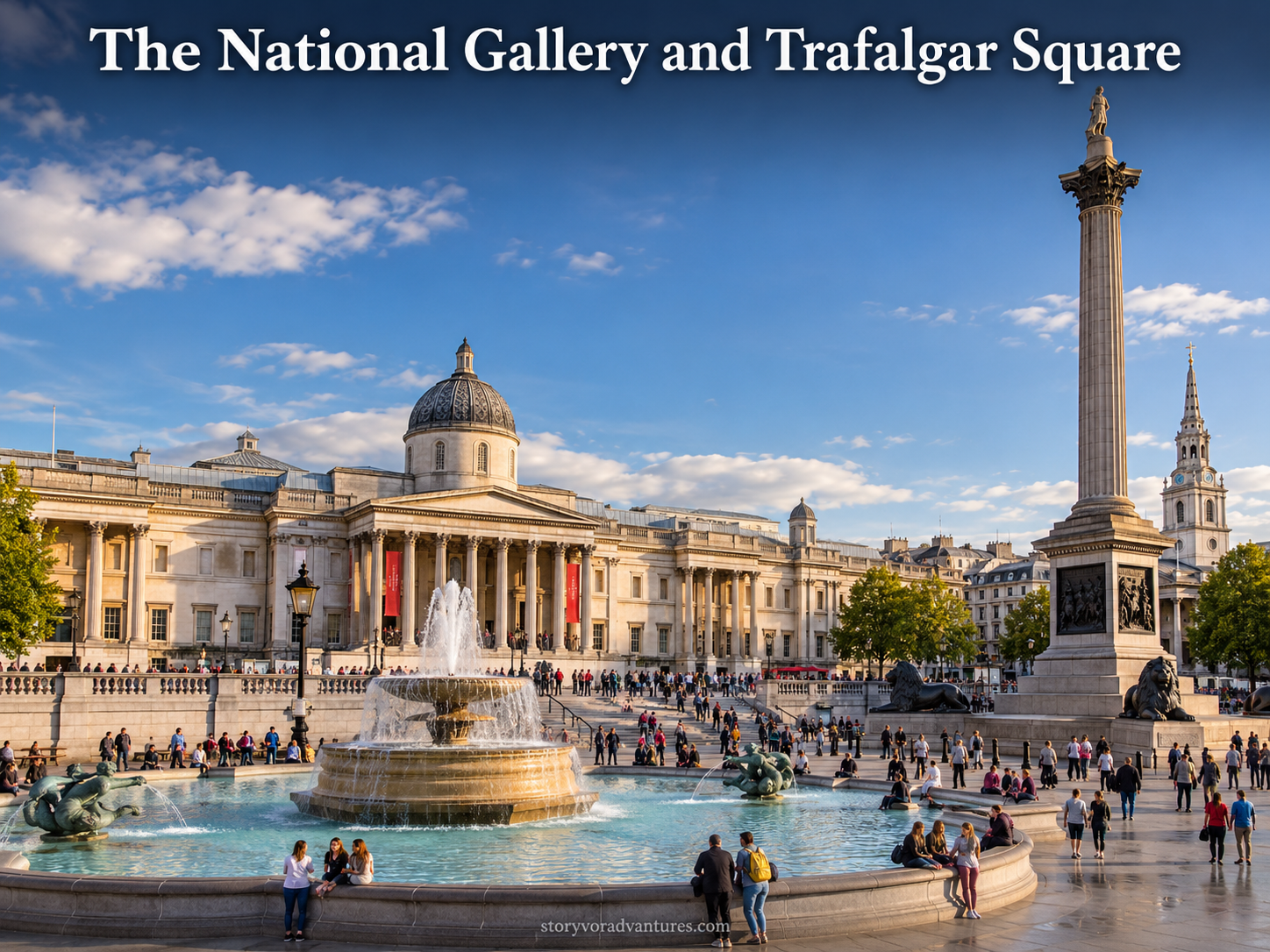
Sitting right on Trafalgar Square, the National Gallery is home to incredible European masterpieces by artists like Van Gogh, Da Vinci, Turner, and Monet.
- Planning Tip: Like the British Museum, general entry is free. Visitors can collect a floor plan, select five paintings they particularly want to see and spend about an hour exploring the galleries.
- Once you step outside, you’re in Trafalgar Square, guarded by the massive bronze lions at the base of Nelson’s Column. It is a fantastic people-watching spot and the perfect launchpad to walk towards Covent Garden or Soho for dinner.
10. Covent Garden
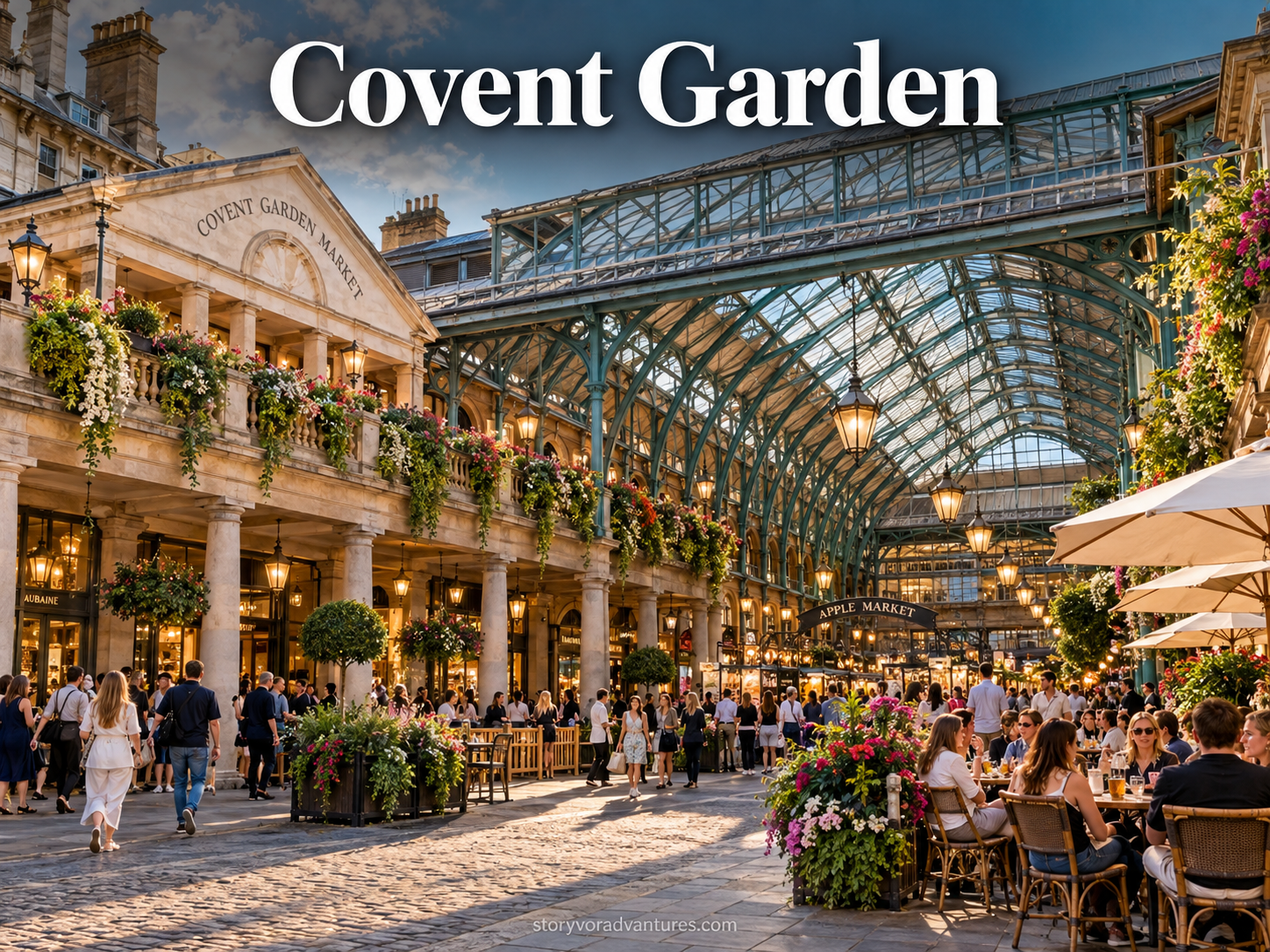
Covent Garden is all about atmosphere. It revolves around a beautiful 19th-century glass-roofed market building. It is famous for boutique shops, high-end beauty stores, and incredibly talented, rigorously auditioned street performers (buskers).
- Planning Tip: Explore the main piazza, but make sure you dive into Seven Dials—a cool, star-shaped intersection of seven streets just north of the market packed with independent boutiques and fantastic coffee shops.
- It’s a bit of a tourist trap to sit down for a full meal right in the main piazza, so Consider grabbing a pastry, watching a street performance and then walking slightly outside the square for lunch.
11. Soho, Chinatown, and the West End
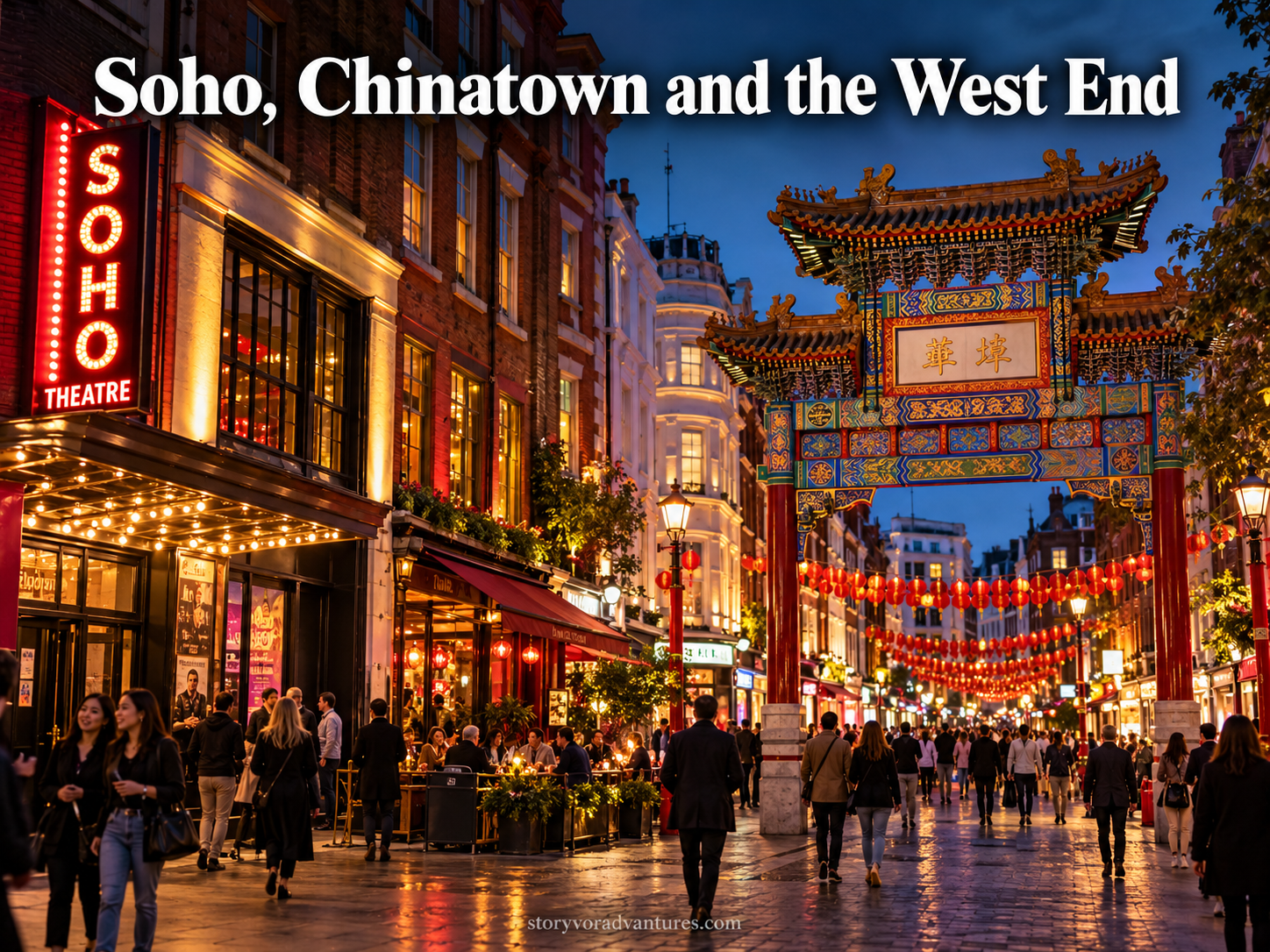
After sunset, Soho and the West End become popular areas for nightlife, dining and entertainment. Soho is London’s beating heart for nightlife, filled with hidden speakeasies, historic pubs, and trendy restaurants.
- Planning Tip: Right next door is Chinatown, marked by its vibrant red gates. The area offers roast duck, dim sum and Chinese bakery items across different price ranges. Look for places where the lines are spilling out the door.
- For the West End (London’s Broadway), if you don’t mind what show you see, go to the official TKTS booth in Leicester Square on the day of the performance for heavily discounted, last-minute tickets to major musicals.
12. Kensington Museums and Hyde Park
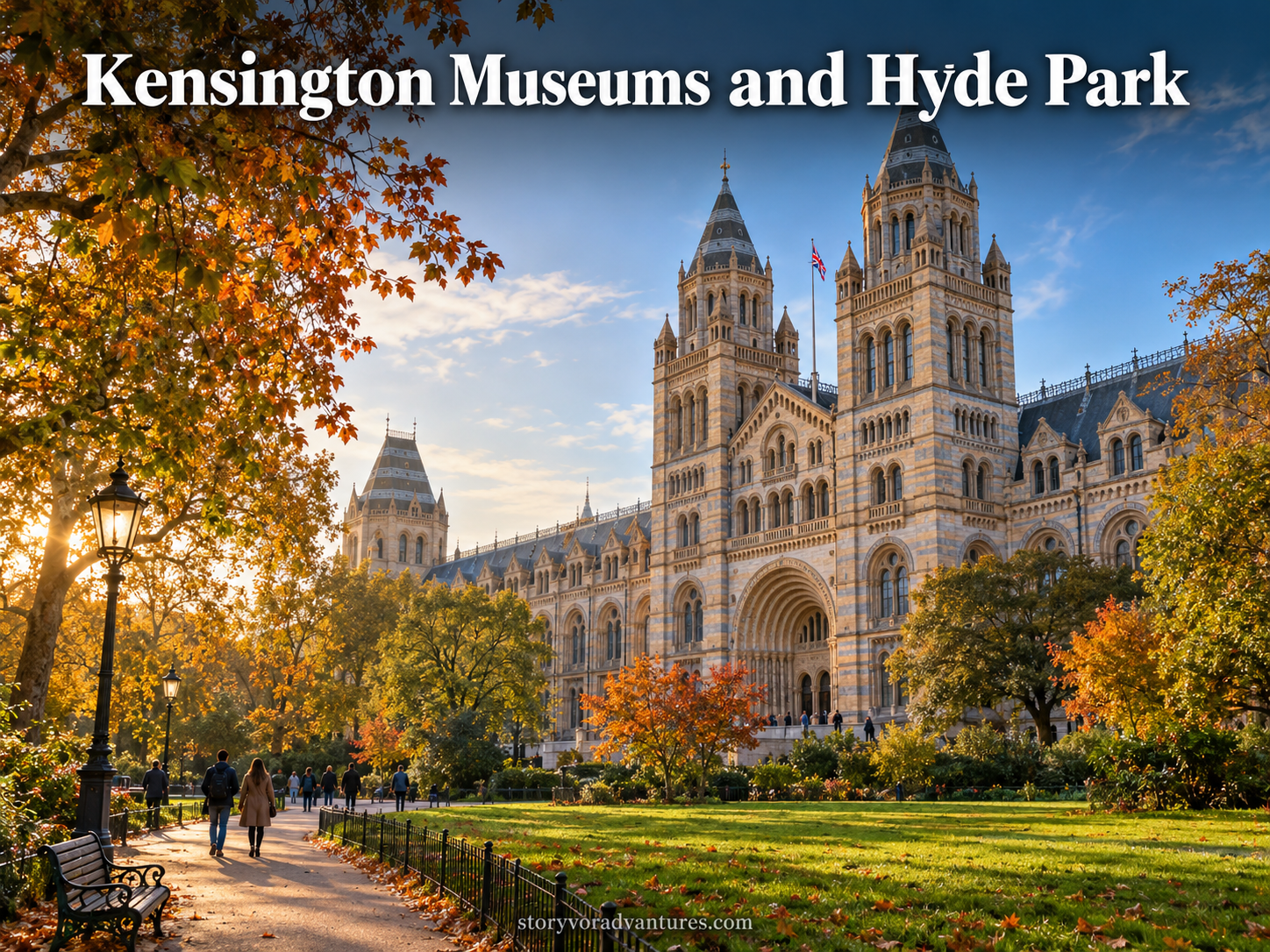
Exhibition Road in South Kensington is museum heaven. You have the Natural History Museum, the Science Museum, and the Victoria and Albert Museum (V&A) all right next to each other, and all have free permanent collections.
- Planning Tip: Pick one per day to avoid mental burnout. The Natural History Museum is known for its impressive exhibits, while the V&A is especially suitable for visitors interested in fashion, sculpture and design. The V&A also has a stunning central courtyard with a shallow pool that is perfect for resting your feet.
- Afterward, cross the street into Hyde Park and Kensington Gardens for a long walk to decompress.
13. Borough Market and the Thames Walk
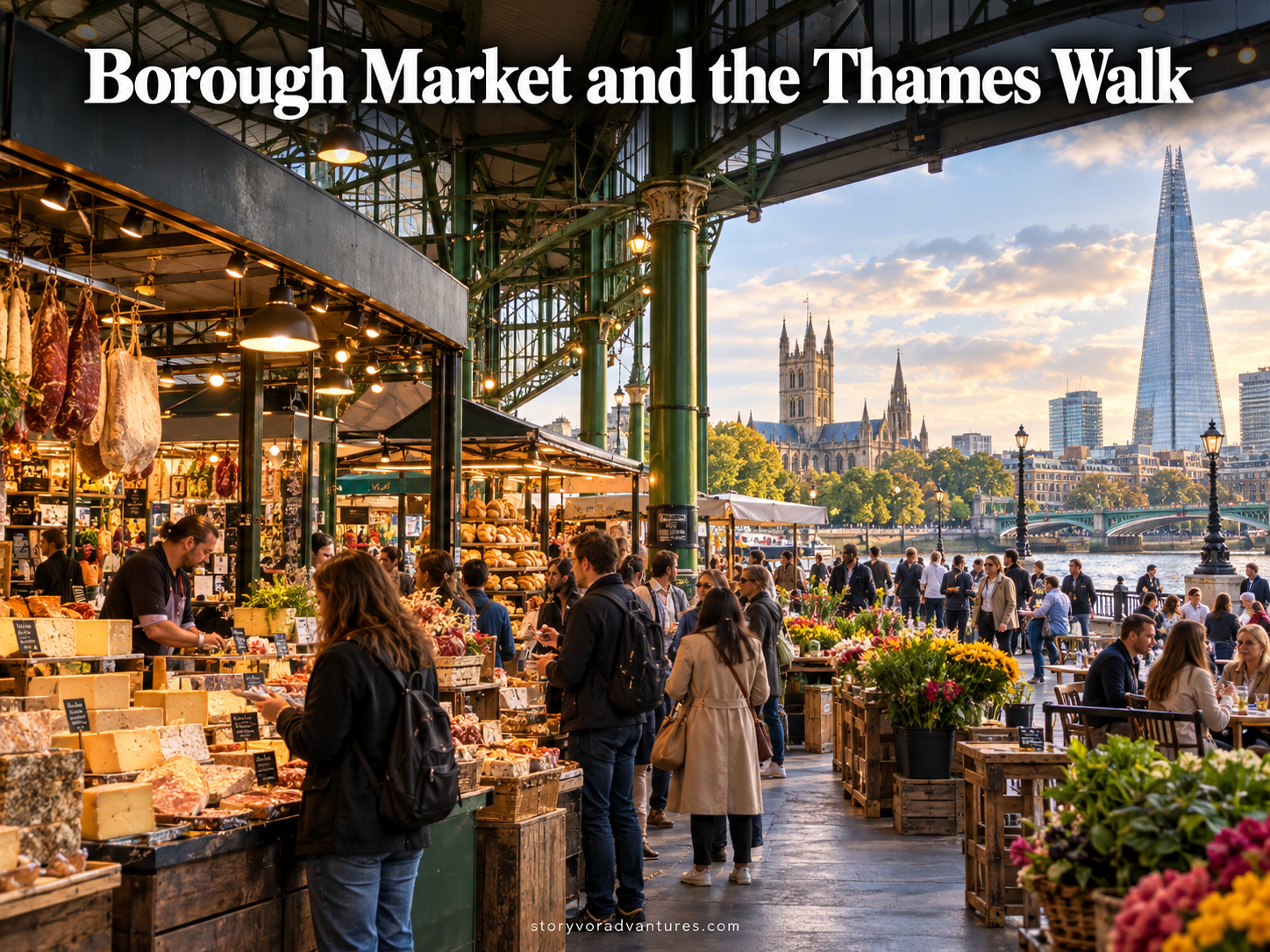
If you are a foodie, Borough Market is non-negotiable. Nestled under railway arches, it’s packed with artisanal baked goods, fresh oysters, massive wheels of cheese, and international street food.
- Planning Tip: Do not go on a Saturday at 1 PM unless you enjoy being crushed by crowds. Go on a Wednesday or Thursday morning around 10:30 AM before the lunch rush hits. Bring cash just in case, though most stalls take cards.
- Grab a wild mushroom risotto or a gourmet scotch egg, and walk off the calories by following the Thames path westward, past Shakespeare’s Globe theatre and the Tate Modern art gallery.
14. Camden Market and Regent’s Canal
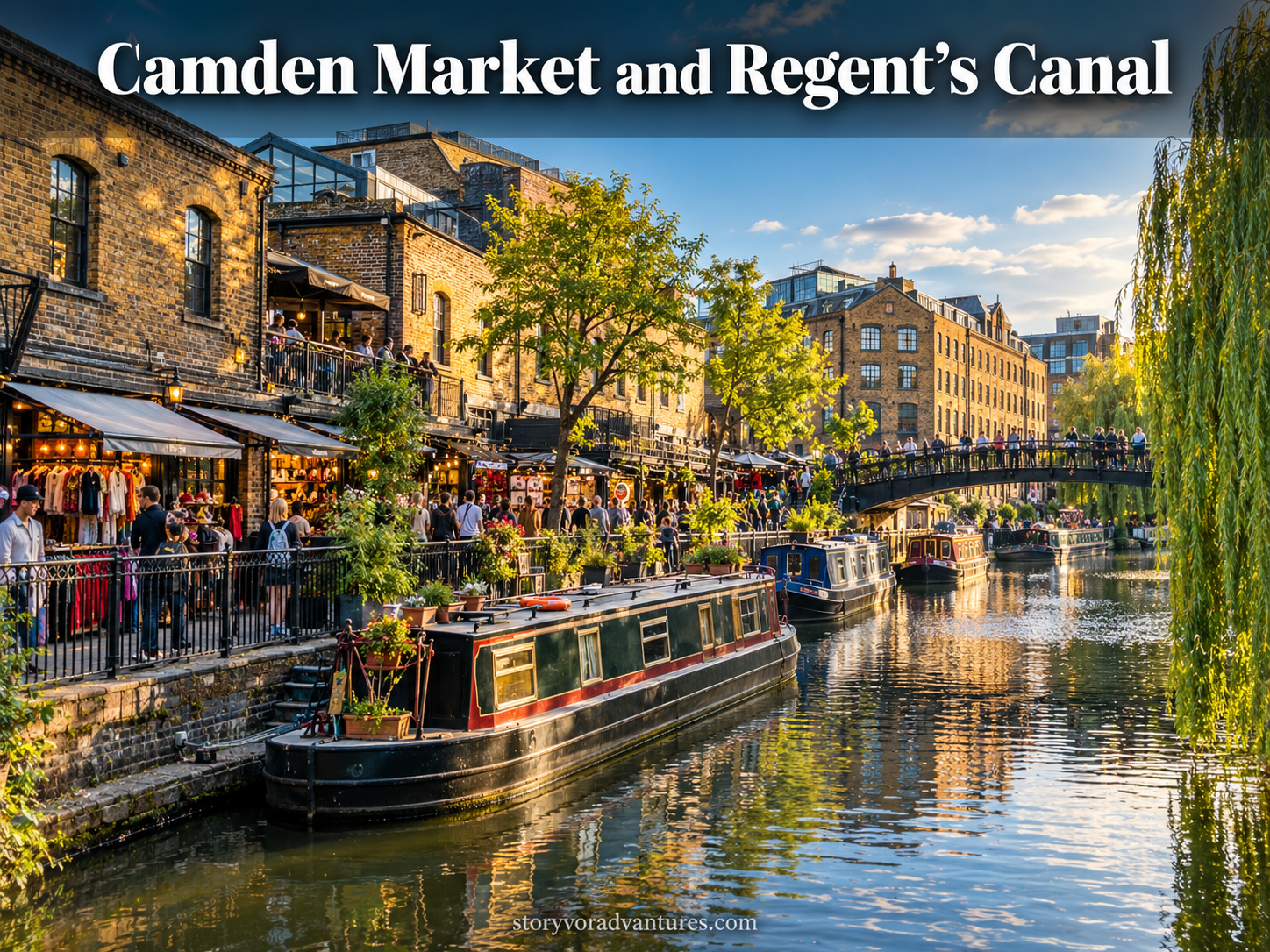
Camden has a completely different energy than central London—it’s alternative, loud, and steeped in punk and Britpop music history. The market is a sprawling maze of vintage clothes, handmade jewelry, and food stalls.
- Planning Tip: The main street gets chaotic on weekends. The real charm is walking away from the massive neon signs of the high street and heading toward Camden Lock. Grab some street food, sit by the water, and then take a gorgeous, quiet 45-minute walk along the towpath of Regent’s Canal towards Little Venice or Regent’s Park.
15. Greenwich
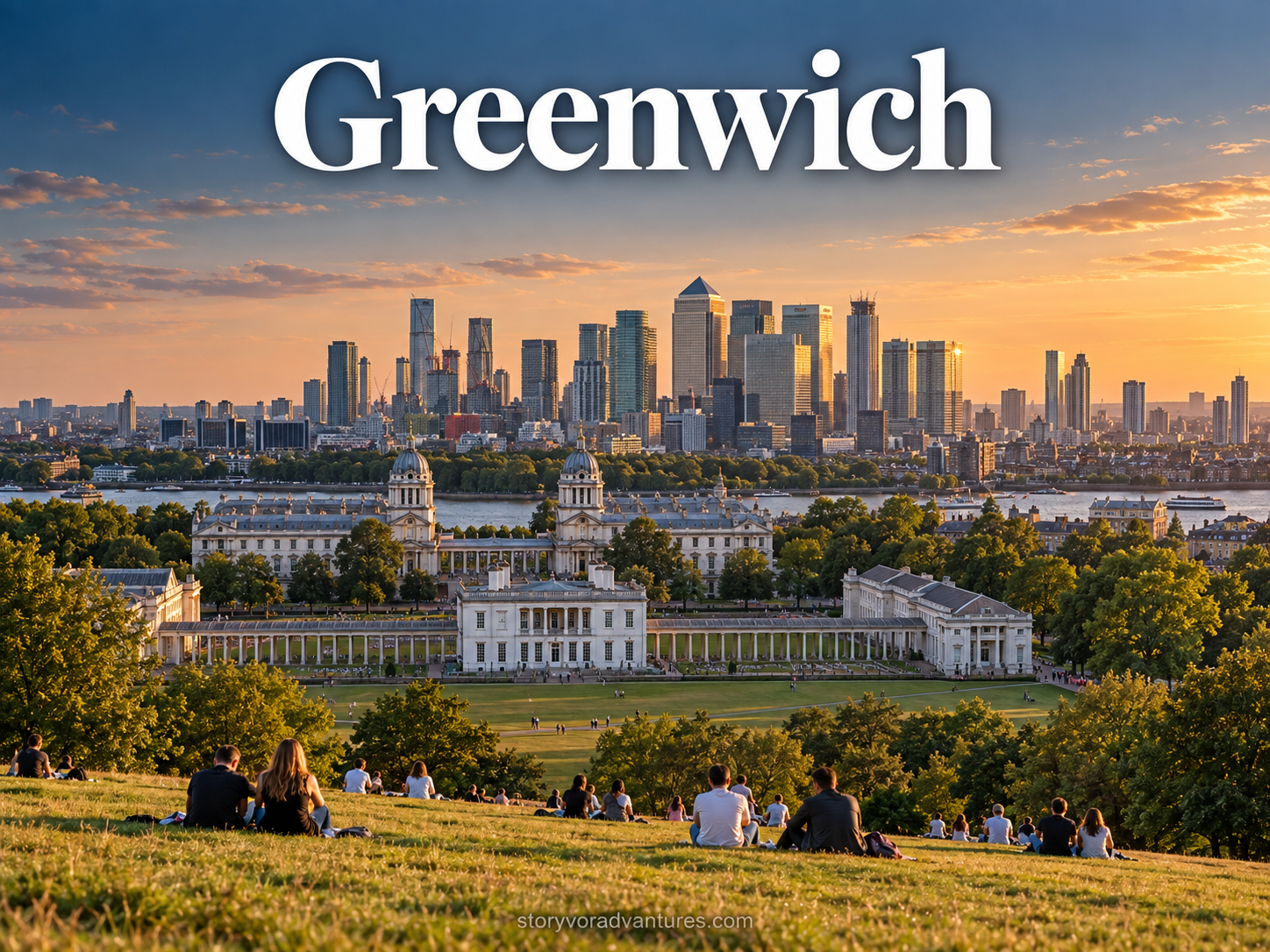
Taking the Uber Boat along the River Thames is a scenic and convenient way to reach Greenwich.
It feels like a village that time forgot.
- Planning Tip: Greenwich Park involves a seriously steep hill climb, but the payoff is worth it. At the top, you can stand with one foot in the eastern hemisphere and one in the western on the Prime Meridian line at the Royal Observatory.
- Before you leave, check out the Painted Hall at the Old Royal Naval College—it’s often called Britain’s Sistine Chapel and is visually spectacular.
Practical 5-Day London Itinerary
Day 1: Royal London & The South Bank
Start your morning at Buckingham Palace and stroll through St James’s Park. Head down to Westminster Abbey, check out Big Ben, and cross Westminster Bridge. Spend your afternoon walking the South Bank, grabbing street food, and riding the London Eye at sunset.
Day 2: Castles, Bridges & Cathedrals
Get to the Tower of London exactly when the gates open. Afterward, cross Tower Bridge and walk along the river to Borough Market for an incredible lunch. Continue walking the Thames path past the Tate Modern, cross the Millennium Bridge (the “Harry Potter” bridge), and finish your afternoon at St Paul’s Cathedral.
Day 3: Museums & Parks
Dedicate your morning to one of the big South Kensington museums (The Natural History Museum and the V&A are both practical choices). Spend the afternoon wandering through Hyde Park and Kensington Gardens. Wrap up your day exploring the colourful streets and historic pubs of Notting Hill.
Day 4: History & Theatreland
Spend a couple of focused hours in the morning at the British Museum. Walk down to Covent Garden for lunch and street performances. Spend the afternoon exploring Trafalgar Square, Chinatown, and Soho. Finish the night by catching a world-class West End show.
Day 5: The Vibe Check (Greenwich or Camden)
If you want deep naval history, a boat ride, and sweeping skyline views, take the riverboat to Greenwich. If you want alternative culture, vintage shopping, and canal walks, head north to Camden Market.
Where to Stay in London
- Westminster: Best for first-timers who want to be right next to Big Ben and the palaces. It’s very safe but quite pricey, and the area gets a bit dead at night once the government workers go home.
- Covent Garden & Soho: Perfect if you want to step out of your hotel right into the middle of the action. You can walk to the theatres, bars, and top restaurants. The trade-off is higher prices and smaller rooms.
- South Bank & Waterloo: Great transport links, slightly more modern hotels, and lovely river views right on your doorstep.
- Kensington & Paddington: A bit quieter, gorgeous Victorian architecture, close to the parks, and Paddington Station offers a super-fast connection to Heathrow Airport.
- King’s Cross / St Pancras: The absolute best base if you plan on taking day trips out of London by train (to Edinburgh, Paris, or York). The regenerated area behind the station is full of modern restaurants and cool public spaces.
Getting Around the City
London’s black cabs are iconic, but they can be expensive. The public transport network is phenomenal. You have the Tube, the iconic red buses, the super-fast new Elizabeth line, and the DLR.
Here is the best part: you do not need to figure out paper tickets or buy a tourist Oyster card anymore. Just use your contactless bank card, Apple Pay, or Google Pay. Tap your phone on the yellow reader at the ticket barriers for trains (both when you enter and exit), but only tap in once when you get on a bus.
Crucial tip: Make sure you use the exact same card/device every single time. The TfL system is smart and will automatically cap your daily spending so you never pay more than a set limit, no matter how much you travel in zones 1 and 2. Check the Transport for London fares page for current daily caps and individual ticket prices
Navigating the Airports
- Heathrow (LHR): The new Elizabeth line is fantastic and gets you to central London smoothly and cheaply. The Heathrow Express is slightly faster but is usually considerably more expensive.
- Gatwick (LGW): The Gatwick Express goes straight to Victoria Station, but regular Thameslink or Southern commuter trains on the exact same tracks take only 5 minutes longer and cost noticeably less.
- Stansted (STN) & Luton (LTN): Both cater to budget airlines and require a much longer train or bus journey. Factor the high cost of the train ticket in before you assume a £20 Ryanair flight is actually a bargain.
- London City (LCY): Right in the city and connected to the DLR. Its smaller size and DLR connection can make it a convenient arrival airport.
How Much Will You Spend?
London can be tailored to your budget, but you have to be intentional about it.
- Budget traveller: £70–£120 a day. You’ll be staying in hostels, grabbing £5 meal deals from Tesco or Sainsbury’s supermarkets for lunch, taking the bus instead of the Tube, and focusing heavily on the incredible free national museums.
- Mid-range traveller: £160–£280 a day. This covers a standard nice hotel room, sit-down dinners at mid-tier restaurants, a few paid attractions (like the Tower of London), and maybe a theatre ticket.
Money-Saving Tip: Walk! Central London is much more walkable than the abstract Tube map makes it look. Taking the Tube from Covent Garden to Leicester Square costs money and involves going deep underground, but walking takes just 5 minutes above ground.
What to Eat
Forget the outdated stereotype that British food is bad. Consider trying a traditional Sunday roast with Yorkshire puddings or fish and chips at a local pub, but London is one of the greatest global food hubs on earth.
You can find incredible, authentic curries in Brick Lane or Southall, amazing East Asian food in Chinatown, and high-end Afternoon Tea at places like The Ritz or Claridge’s (which you must book months in advance). Don’t sleep on the street food markets either—places like Seven Dials Market or Mercato Mayfair (which is inside a stunning restored church) offer incredible gourmet meals for under £15.
Staying Safe
London is very safe for tourists, but you need to be street-smart. Violent crime against tourists is incredibly rare, but petty theft and phone snatching (often by thieves on electric bikes or mopeds) in crowded areas like Oxford Street and on the Tube is a real issue. Keep your phone zipped away near train doors and don’t stand on the edge of the pavement blindly staring at Google Maps.
Also, a crucial unwritten rule for surviving the locals: Stand on the right, walk on the left when using escalators. If you stand on the left, a grumpy London commuter will definitely let you know.
Visas and Entry Requirements
Entry rules depend entirely on your passport. In 2026, the UK is heavily expanding its Electronic Travel Authorisation (ETA) scheme, and some nationalities still require a Standard Visitor Visa.
I cannot stress this enough: do not rely on blogs, including this one, for visa info because it changes constantly. Always verify your specific legal requirements directly on the official UK Government visa checker
before you book your flights or hotels.
How to Be a Responsible Traveller Here
London is home to nearly 9 million people, and popular visitor areas are also residential neighbourhoods and daily commuting routes.
- Please don’t block the narrow pavements taking group selfies.
- Keep the noise down on residential streets, especially in places like Notting Hill or Chelsea where people are living inside those famous colourful houses.
- Try to support independent coffee shops, historic family-run pubs, and market vendors rather than just handing your money to massive international chain restaurants.
A trip to London is exactly what you make of it. Don’t stress about seeing every single landmark on a checklist. Have a pint in a pub that is older than your home country, get lost in a museum, and just enjoy the chaotic, beautiful energy of the city.