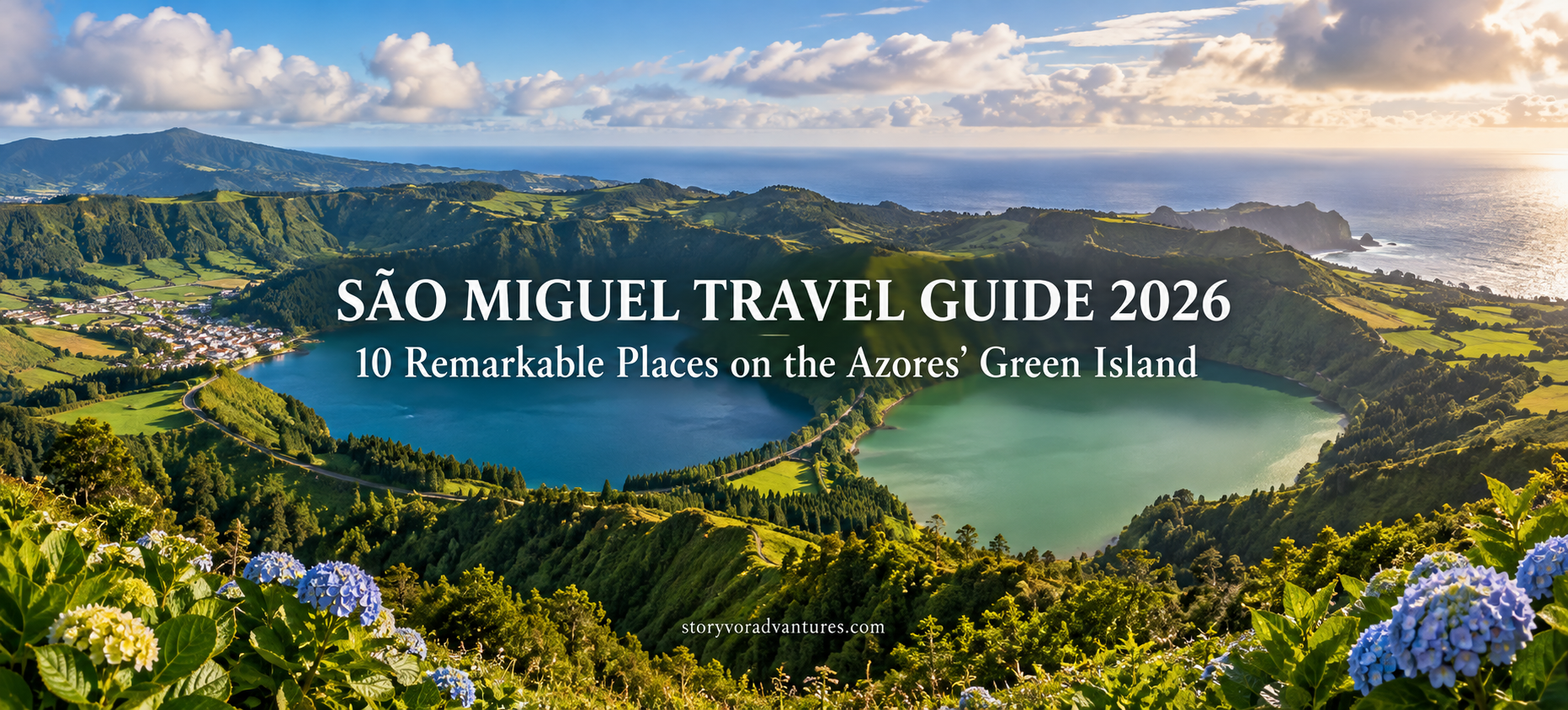
São Miguel Travel Guide 2026: Remarkable Places on the Azores’ Green Island
Plan a São Miguel trip in 2026 with 10 places across Portugal’s Azores, plus practical itinerary, transport, base and weather tips.
São Miguel travel essentials
| Location | São Miguel, in Portugal’s Azores archipelago |
| Island group | Eastern Group, alongside Santa Maria |
| Arrival airport | João Paulo II Airport (PDL), serving Ponta Delgada |
| Suggested stay | Four to six days for a first visit |
| Good base | Ponta Delgada for a single base; Furnas for an eastern overnight stay |
| Getting around | Rental car, organized tours or local buses with careful planning |
| Trip style | Volcanic landscapes, walking, gardens, coast and local food |
A different kind of Atlantic island
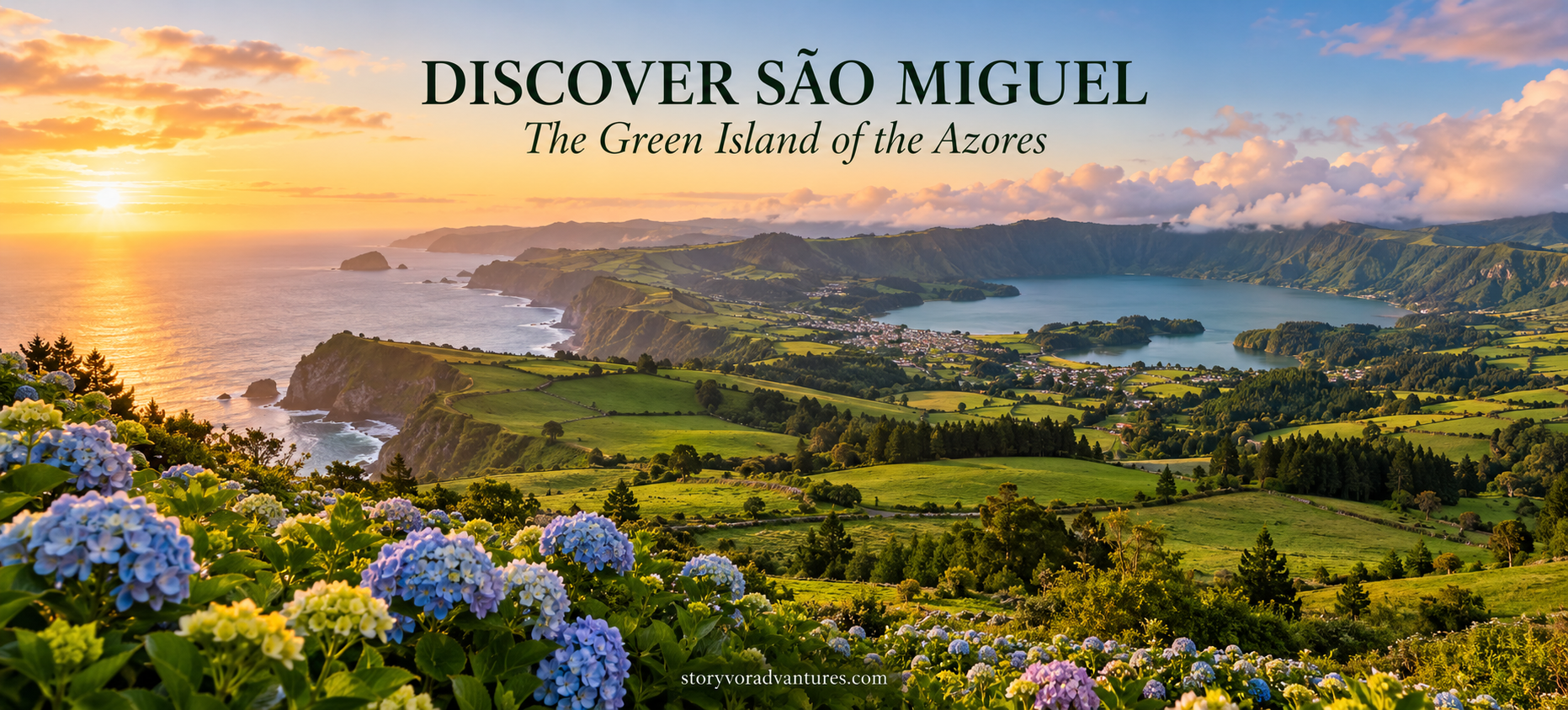
São Miguel makes you adjust your idea of an island holiday. Its coast has ocean views, but the interior draws you toward crater lakes, steaming ground, gardens and hills that can disappear into cloud without warning. You might start a day looking across a volcanic lake and finish it tasting tea grown beside the Atlantic. The contrast is what makes the island memorable.
This guide stays on one island, so you can travel at a comfortable pace rather than racing between airports and ferries. Ponta Delgada is a useful starting point, but the places below spread from the western crater of Sete Cidades to the trails of the east. Build your days by region and give the weather room to change your plans.
Why visit São Miguel?
São Miguel suits travellers who want variety without changing islands. Sete Cidades and Lagoa do Fogo reveal its volcanic interior; Furnas brings geothermal landscapes and gardens; the north coast adds tea-growing history; and eastern trails lead into quieter terrain. These are distinct experiences within a single trip, so a first visit can feel full without a complicated island-hopping schedule.
The island also has a city side. Ponta Delgada is a useful place to begin or end a day, with streets to explore and a choice of places to eat. Outdoors, you can choose walking, a guided marine excursion or a designated thermal bathing area. The best itinerary gives these places time rather than treating every viewpoint as a compulsory stop.
1. Sete Cidades: look beyond a single viewpoint
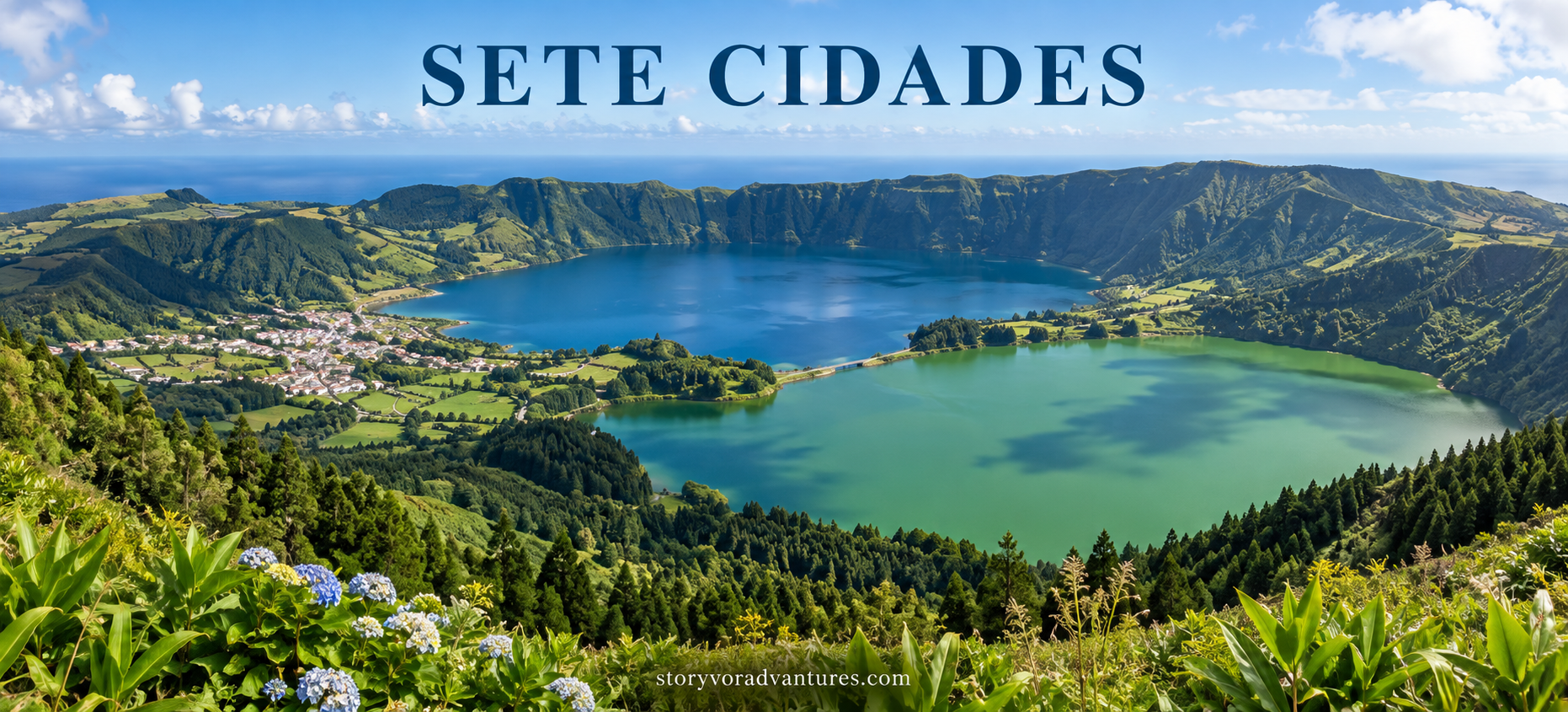
Sete Cidades is one of São Miguel’s defining landscapes: lakes rest inside a broad volcanic caldera, surrounded by slopes and small settlements. The Vista do Rei viewpoint offers a famous introduction, but the area becomes more interesting when you continue toward the village or choose a marked walking route. From below, the place feels less like a postcard and more like a lived-in landscape.
Cloud can hide the view even when the coast is sunny. Keep your western-island day flexible and check conditions before committing to a long drive. If you walk from Vista do Rei toward the village, read the official route description first and arrange how you will return. Sete Cidades landscape · Vista do Rei walking route
2. Lagoa do Fogo: a lake shaped by weather
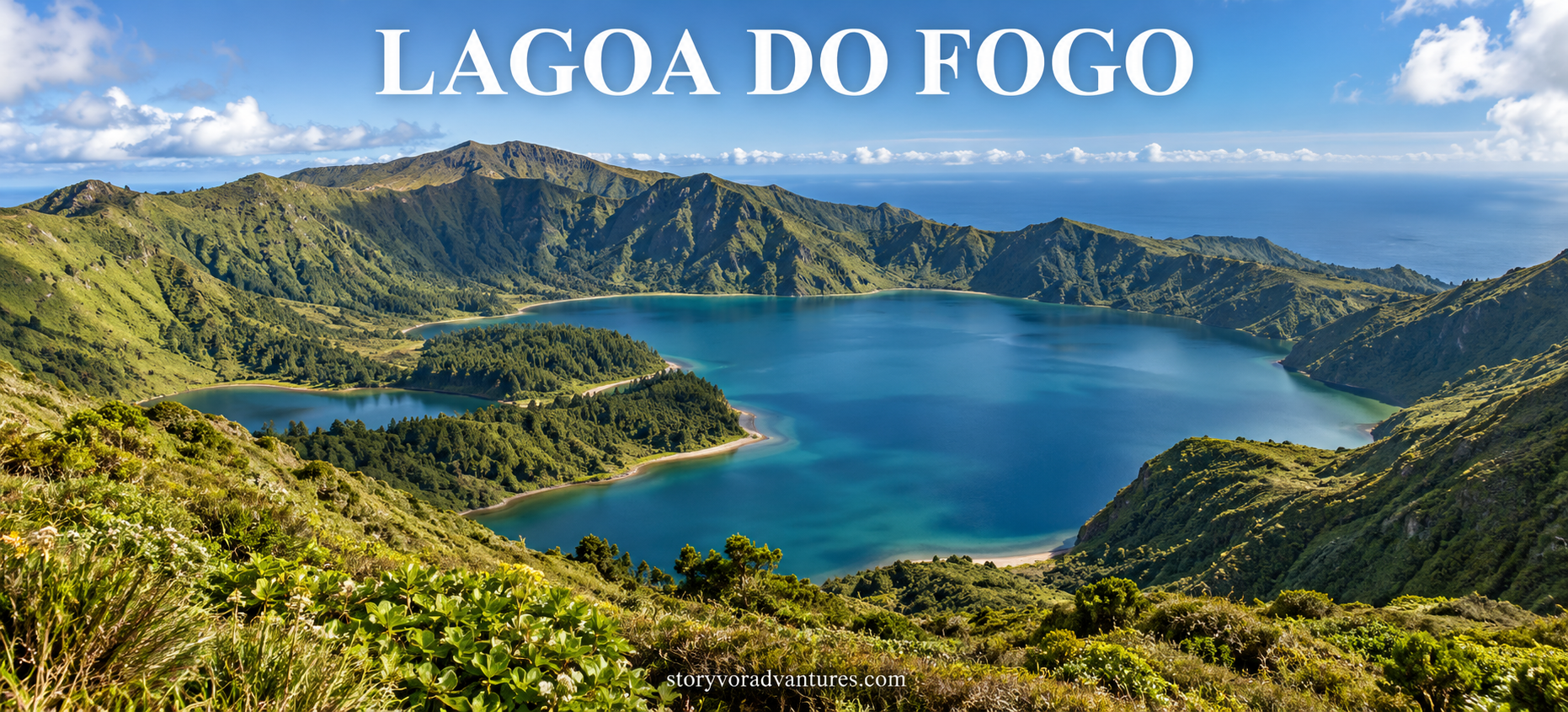
Lagoa do Fogo occupies a high volcanic setting in the middle of the island. Its appeal is partly the uncertainty: a clear opening in the clouds can reveal the lake, surrounding slopes and ocean in a single sweeping view. Instead of scheduling a rigid photo stop at one exact hour, watch the weather and be ready to change the order of your day.
Access management can change seasonally, including the use of a shuttle. Check the current arrangement before driving uphill and keep to designated viewpoints and trails. Lagoa do Fogo visitor information
3. Caldeira Velha: a forest encounter with geothermal São Miguel
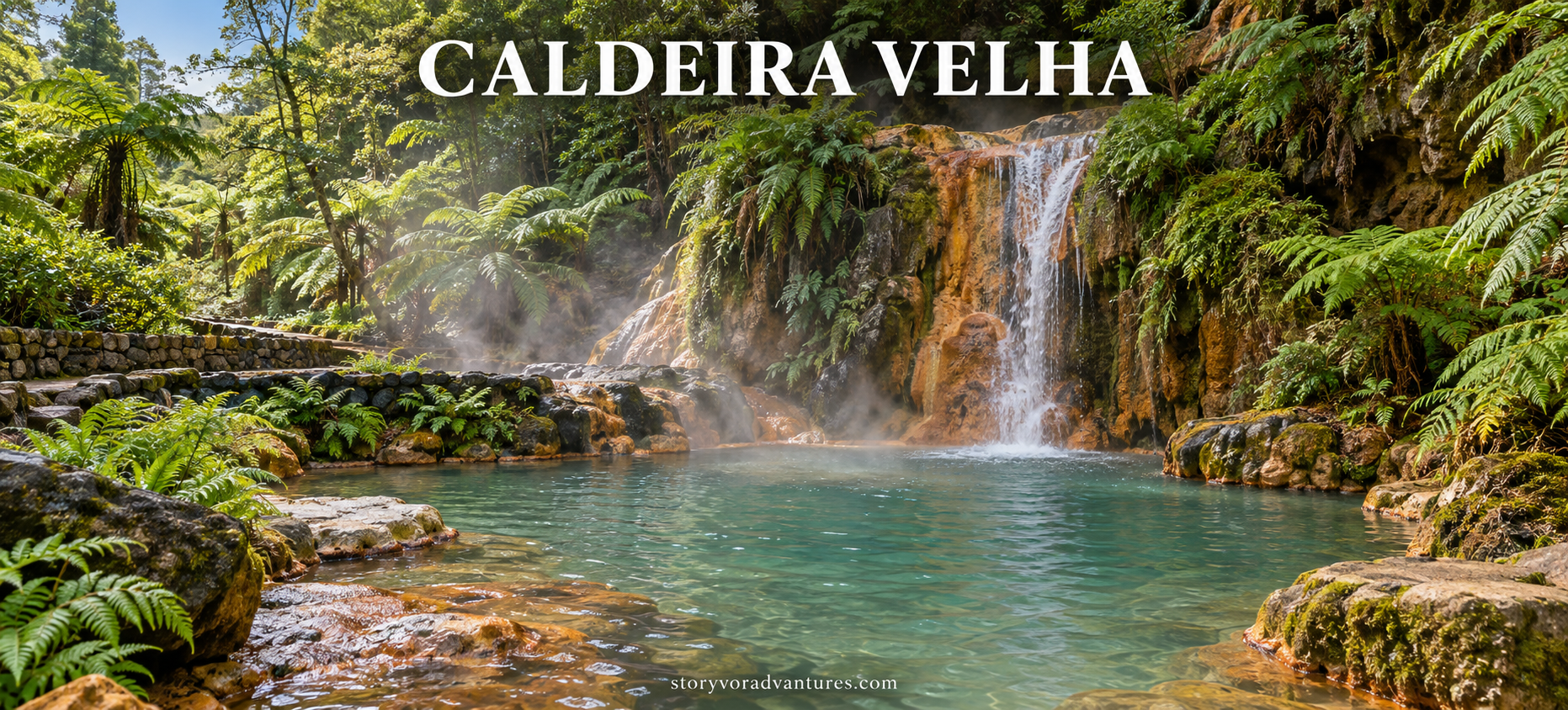
Near the slopes of the Fogo volcano, Caldeira Velha brings together lush vegetation and geothermal activity. It gives first-time visitors a close view of how the island’s volcanic character appears in everyday travel, far beyond a dramatic crater panorama. Arrive prepared for a managed visitor site rather than an unrestricted wilderness pool.
Entry conditions, permitted bathing areas and time slots may change. Check the official information before packing swimwear or building your schedule around a soak. Respect posted water-temperature and access guidance on site. Caldeira Velha information
4. Furnas Valley: slow down around a living volcanic landscape
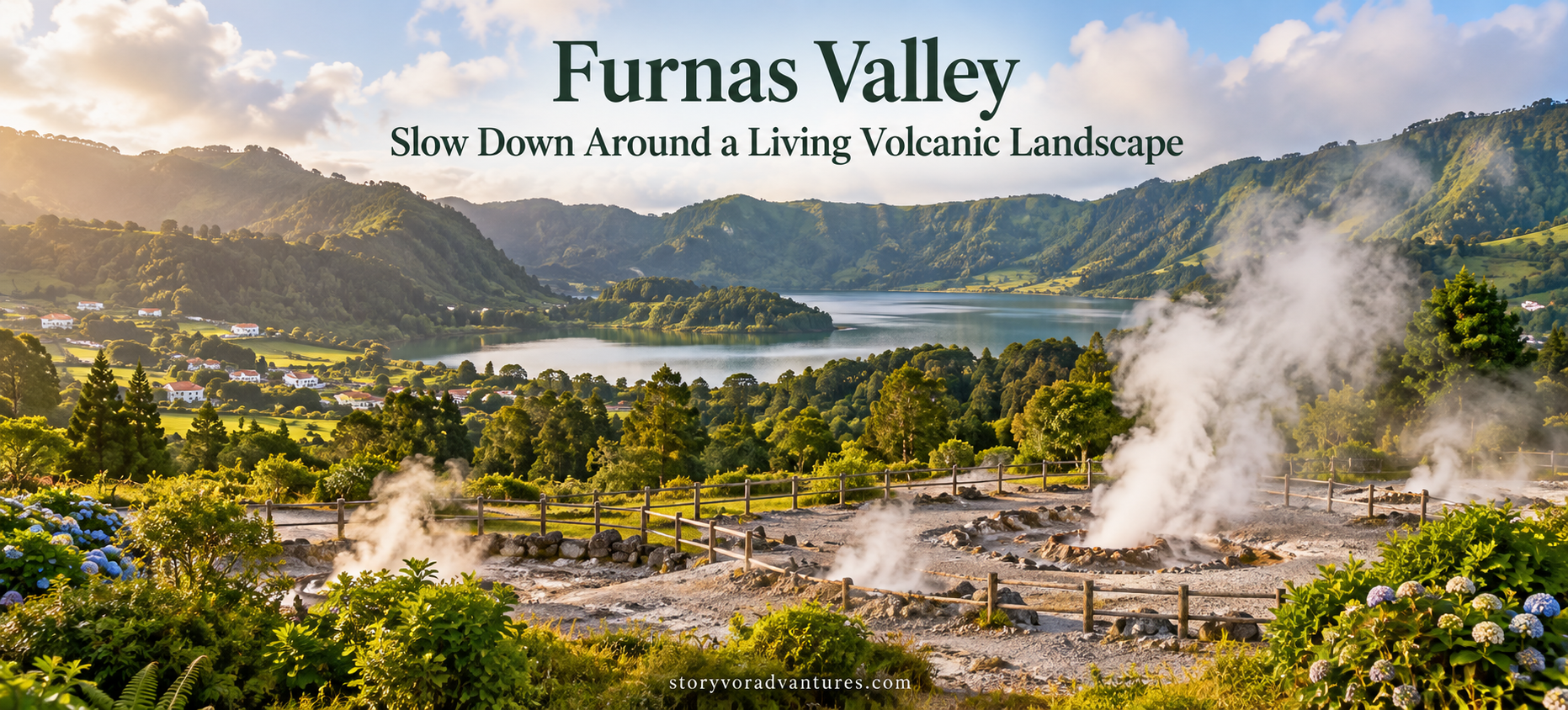
Furnas is where São Miguel’s geothermal identity is particularly visible. Steam, mineral-rich ground and a lake sit close to a town with gardens and restaurants. Plan more than a hurried stop: a relaxed day lets you see the valley, try local food and notice how residents live alongside these natural features.
One local dish worth learning about is cozido das Furnas, a stew traditionally cooked using geothermal heat. If you order it, ask your restaurant about serving times and ingredients instead of assuming it will always be available on arrival. Keep to marked visitor areas around hot ground. Furnas Valley guide
5. Terra Nostra Park: explore the garden before the pool
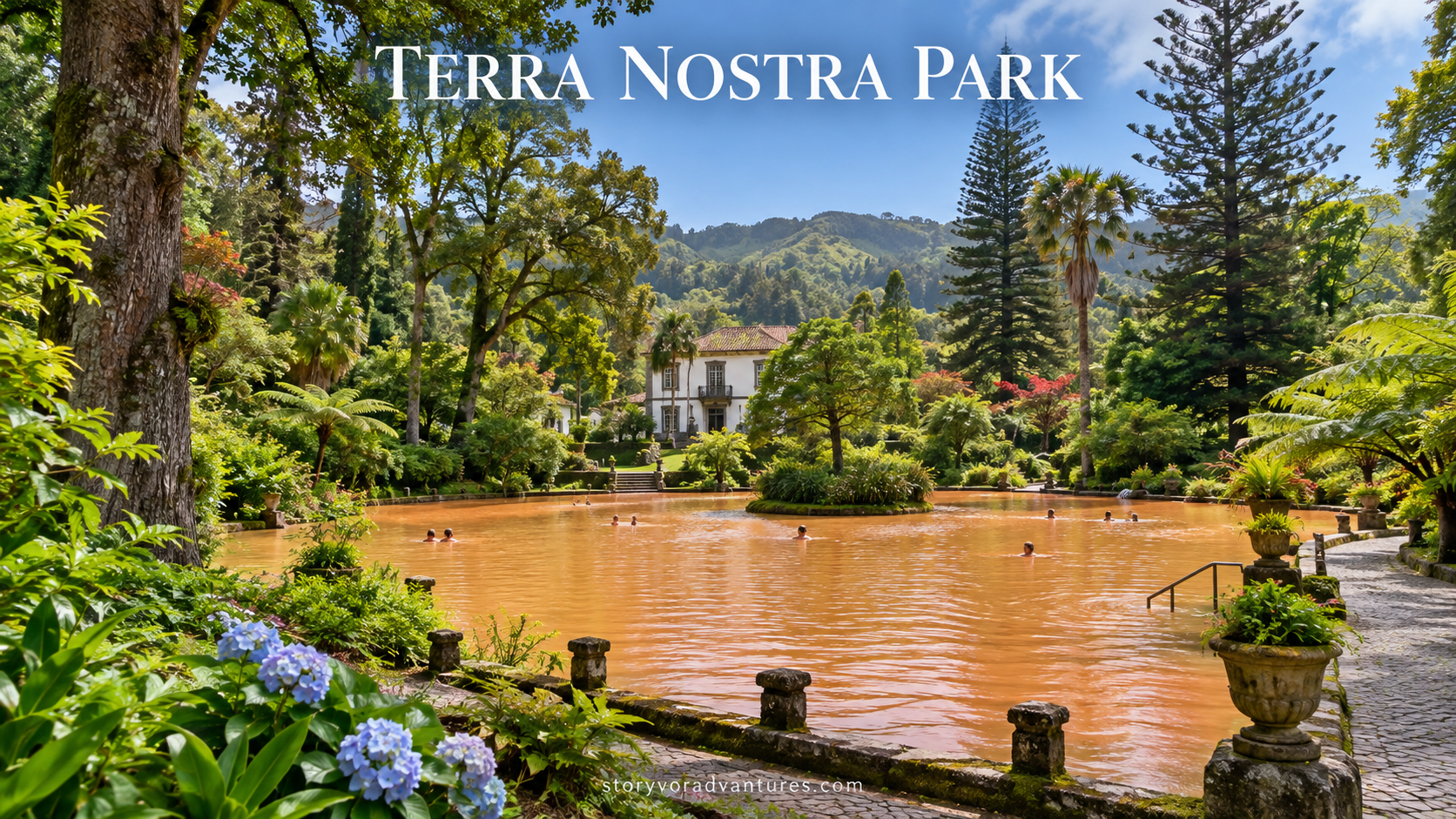
Terra Nostra Park is often mentioned for its thermal pool, yet the gardens deserve time of their own. Walking under mature trees changes the rhythm of a day that might otherwise be filled with driving and viewpoints. The park works especially well alongside Furnas, giving you a gentle contrast between tended landscapes and geothermal scenery.
Confirm opening hours, admission and bathing rules before visiting. Mineral-rich thermal water can stain light-coloured swimwear, so pack accordingly if you plan to enter the pool. Terra Nostra Park
6. Chá Gorreana: see a working tea landscape

On the north coast, Chá Gorreana offers something different from another lookout: rows of tea plants and a working production tradition. A visit helps connect São Miguel’s green hills to its agriculture and local economy. Take time to understand the process and, if the route is open, walk through the surrounding plantation landscape rather than stopping only for a cup.
The official trails site describes a marked Gorreana walk and provides route information. Check whether the factory and any visitor facilities are open on your intended day. Chá Gorreana trail
7. Ribeira dos Caldeirões: waterfalls and watermills together
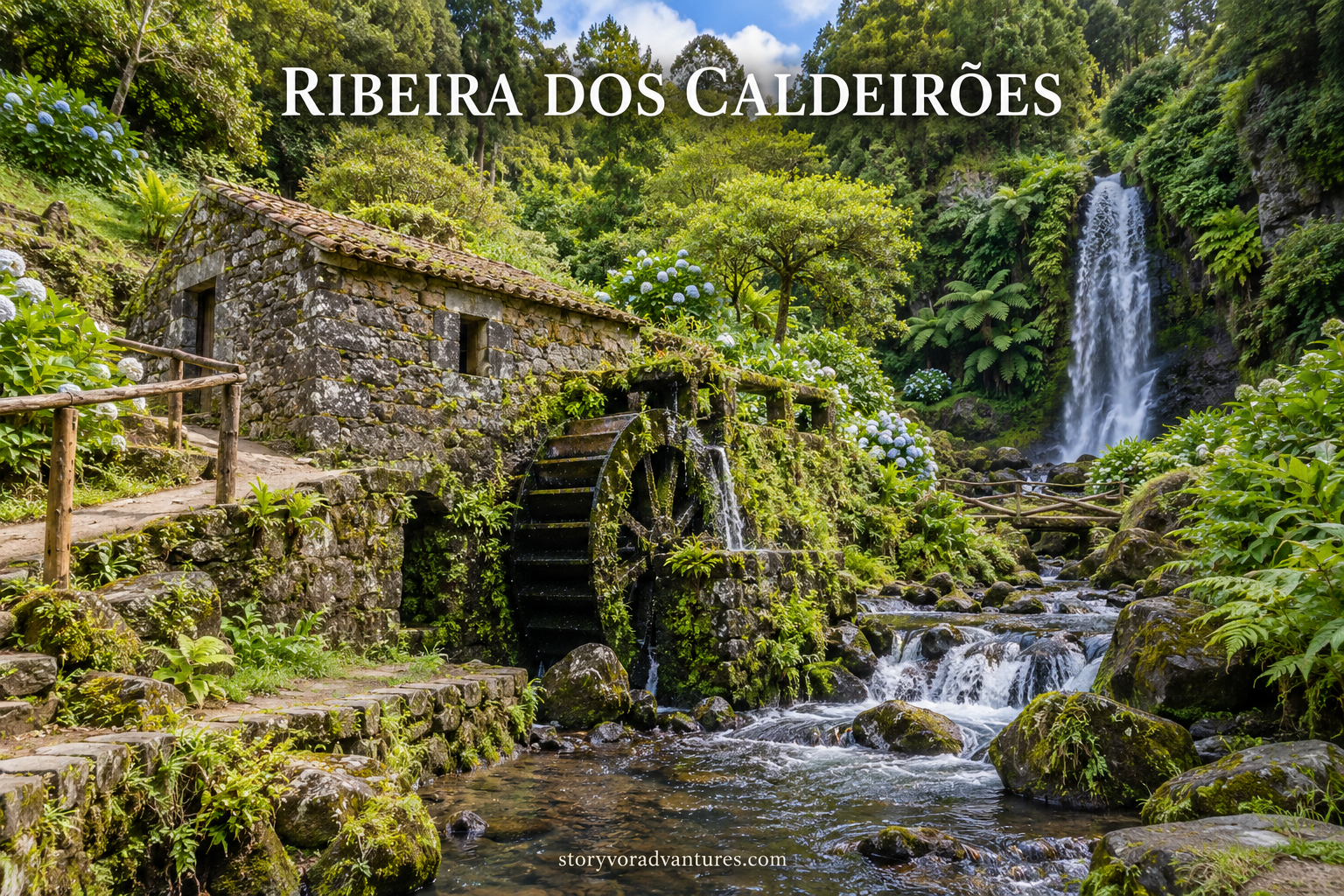
Ribeira dos Caldeirões Park combines water, vegetation and traces of how people have used the landscape. Its watermills make the stop more than a waterfall photograph. Walk the paths slowly and look at the relationship between the flowing stream and the built features around it.
This is a sensible addition to a northeastern driving day. Paths can be wet, so comfortable shoes are more useful than dressing only for a roadside viewpoint. Ribeira dos Caldeirões Park
8. Nordeste: give the quieter east its own day
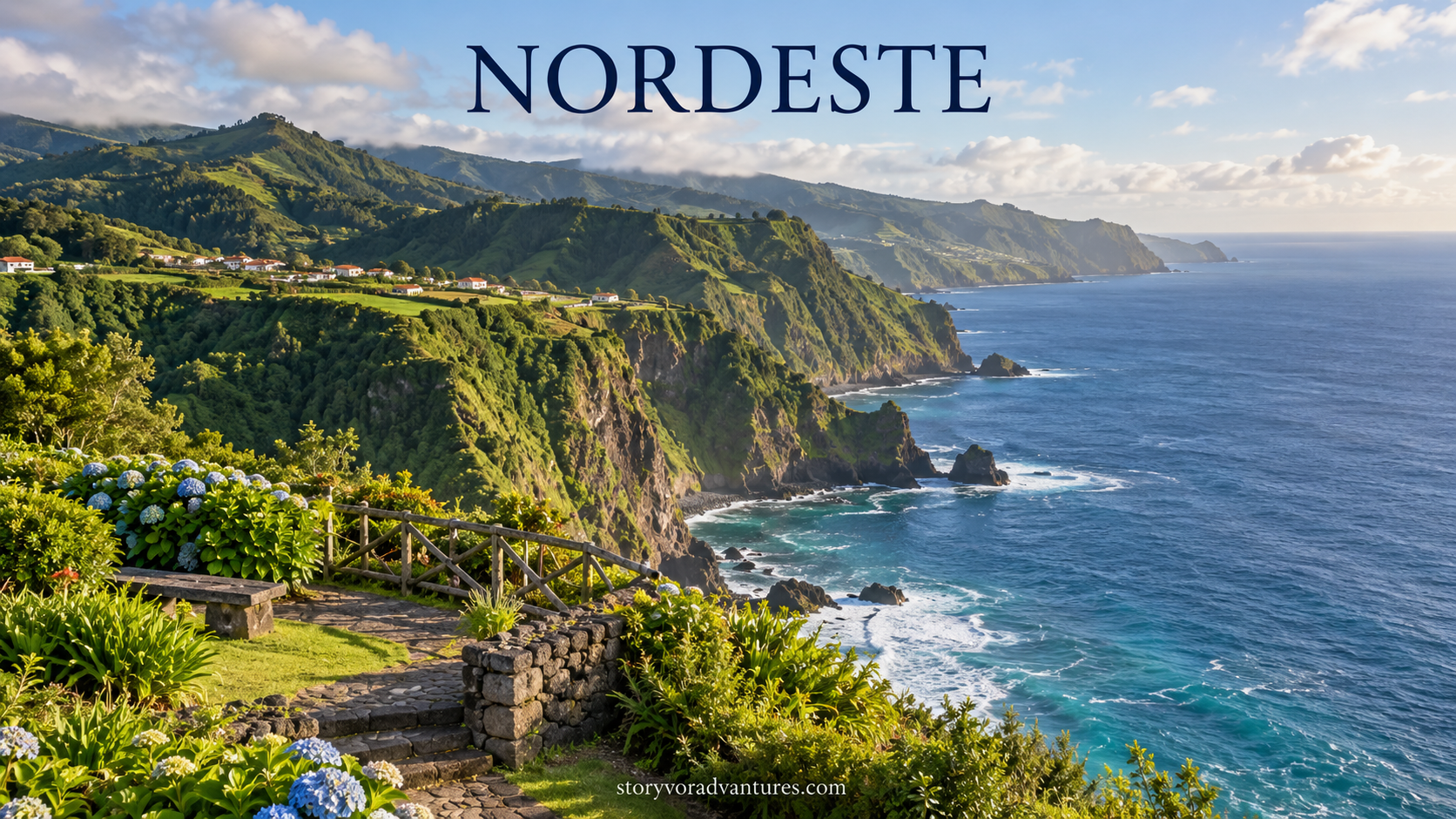
The eastern part of São Miguel rewards travellers who resist the urge to turn back after Furnas. Nordeste’s coastal slopes, villages and viewpoints create a different experience from the better-known crater lakes. The pleasure here is in the drive broken into small pauses, rather than one attraction that needs to be ticked off.
Start early enough to avoid rushing narrow roads late in the day. Choose a few official viewpoints and leave space for food or a short walk. The island’s tourism information highlights the walking landscapes between Nordeste and nearby eastern settlements. São Miguel regional overview
9. Salto do Prego and Sanguinho: earn a waterfall view on foot
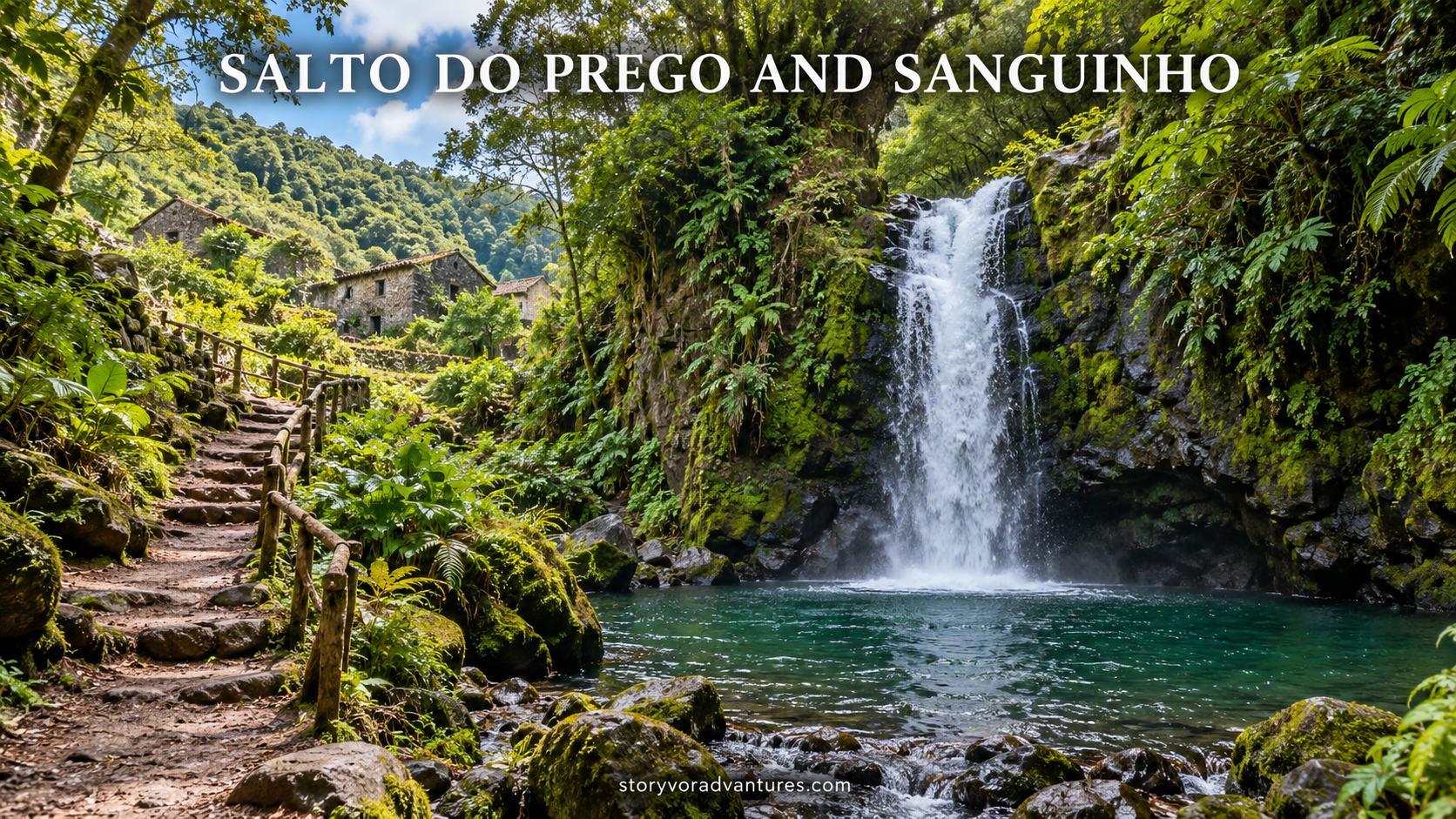
From Faial da Terra, a marked route leads toward Salto do Prego and passes the old settlement of Sanguinho. This outing gives active travellers a more grounded experience of the island than a series of drive-up viewpoints. The path, village and waterfall each offer a reason to go, so allow enough time to enjoy the entire route.
Check the trail’s current open status, elevation, weather and route map before setting out. Wear proper walking shoes and do not use a photo to judge the difficulty of a trail after rain. Official Salto do Prego and Sanguinho trail
10. Vila Franca do Campo Islet: plan around protection and access

Off the south coast, the Vila Franca do Campo Islet surrounds a sheltered saltwater inlet. It looks close to shore, but visiting is a separate excursion with protected-area rules and transport arrangements. The experience makes a fitting final stop because it shifts your attention from crater interiors to the Atlantic environment around the island.
Boat services and access may be seasonal, and visitor numbers can be controlled. Confirm the current rules before adding the islet to a fixed itinerary. If boats are unavailable, you can still explore Vila Franca do Campo on the mainland. Official islet information
Experiences to add if you have more time
Walk around Ponta Delgada
Set aside part of an arrival or departure day for the streets and waterfront of Ponta Delgada. A city walk balances the volcanic sights with an everyday sense of life on São Miguel. Check individual museums and churches for their own opening times instead of assuming they share one schedule.
Choose a whale-watching trip responsibly
Marine excursions offer a way to learn about the Atlantic ecosystem, but sightings can never be promised. Choose an authorized operator that explains its wildlife approach and cancellation policy, and allow for a change of plan if sea conditions are poor. See the official Azores whale-watching overview.
Taste tea and local food
A stop at the north-coast tea-growing area adds an agricultural perspective. In Furnas, learn about geothermal cooking and try local dishes when available. Leave room for an unplanned meal instead of making every stop a sightseeing deadline.
How to organize a first visit
With four days, group nearby places: spend one day at Sete Cidades, one around Lagoa do Fogo and Caldeira Velha, one in Furnas and Terra Nostra, and one along the north or east coast. With six days, add a dedicated Nordeste and Salto do Prego day, plus time for Vila Franca do Campo or a weather backup. These are planning suggestions, not promises that every attraction will be open or that mountain views will be clear.
A car makes the regional groupings easier, but it is not the only option. Compare organized day tours and public transport if you do not wish to drive. If you add another Azorean island, allow for transport time and check current flight or ferry services rather than assuming every crossing runs daily. Official Azores trip-planning page
Getting around and keeping a weather backup
A rental car gives freedom to change route when cloud covers a crater lake. Guided day tours are useful if you would rather not drive, while buses need closer timetable planning for rural sights. Keep high-altitude stops movable: if Sete Cidades is cloudy, visit a coastal town, a garden or the tea area, then try the viewpoint on a clearer day. Check the official Azores planning page.
Where to stay
| Base | Why choose it | Consideration |
|---|---|---|
| Ponta Delgada | Convenient single base with city services and island excursions | Eastern stops mean longer days on the road. |
| Furnas | Easy access to geothermal sites and an unhurried eastern stay | Less convenient for western viewpoints. |
| Split stay | Fewer repeated cross-island drives on a longer trip | Requires changing accommodation once. |
Frequently asked questions
How do I reach São Miguel?
Flights arrive at Ponta Delgada Airport (PDL). Routes and frequencies vary by origin and season; check the airline and airport’s official information before making connections.
Is São Miguel enough for a full Azores holiday?
Yes. São Miguel alone has crater landscapes, thermal areas, coastal outings, gardens, hiking and food experiences. For a first trip of four to six days, focusing on one island can be more satisfying than spending large parts of the holiday changing islands.
When is a good time to visit?
The island can be visited across different seasons, but the best dates depend on your plans. Check operating periods for marine trips, swimming areas and individual attractions, and expect some changeable weather in any month.
What if the crater viewpoints are cloudy?
Treat high viewpoints as flexible stops. Switch to a garden, town, tea plantation or lower-altitude coastal route, then try the viewpoint again when conditions improve. Island weather can vary across short distances, so avoid judging the entire day by the forecast at your accommodation.
Do I need to rent a car?
A car offers the greatest flexibility for early viewpoints and multiple stops. Tours can cover major highlights, while buses require more careful planning for places outside the main towns. Choose based on how much independence you want and check current transport schedules before booking.
Can I add another Azorean island?
Yes. Regional flights and some boat routes connect islands, but the availability of each route depends on season and destination. For a short first trip, give São Miguel enough days before adding another island. Check inter-island options.
Can I swim everywhere there is warm water?
No. Geothermal water temperatures and access rules vary. Use designated bathing areas and follow posted instructions. Ocean sites need a separate check of weather, tide and local safety guidance.
Final thoughts
São Miguel’s most interesting moments often happen between the headline viewpoints: a tea-growing hillside after rain, a quiet garden path in Furnas, or a trail that leads past an old village before revealing a waterfall. Give the island enough days to change your plans when cloud arrives. The reward is a trip shaped by the place itself, rather than a race through its most photographed stops.
Travel note: Confirm trail status, booking rules, transport and opening hours on the linked official pages before travelling.