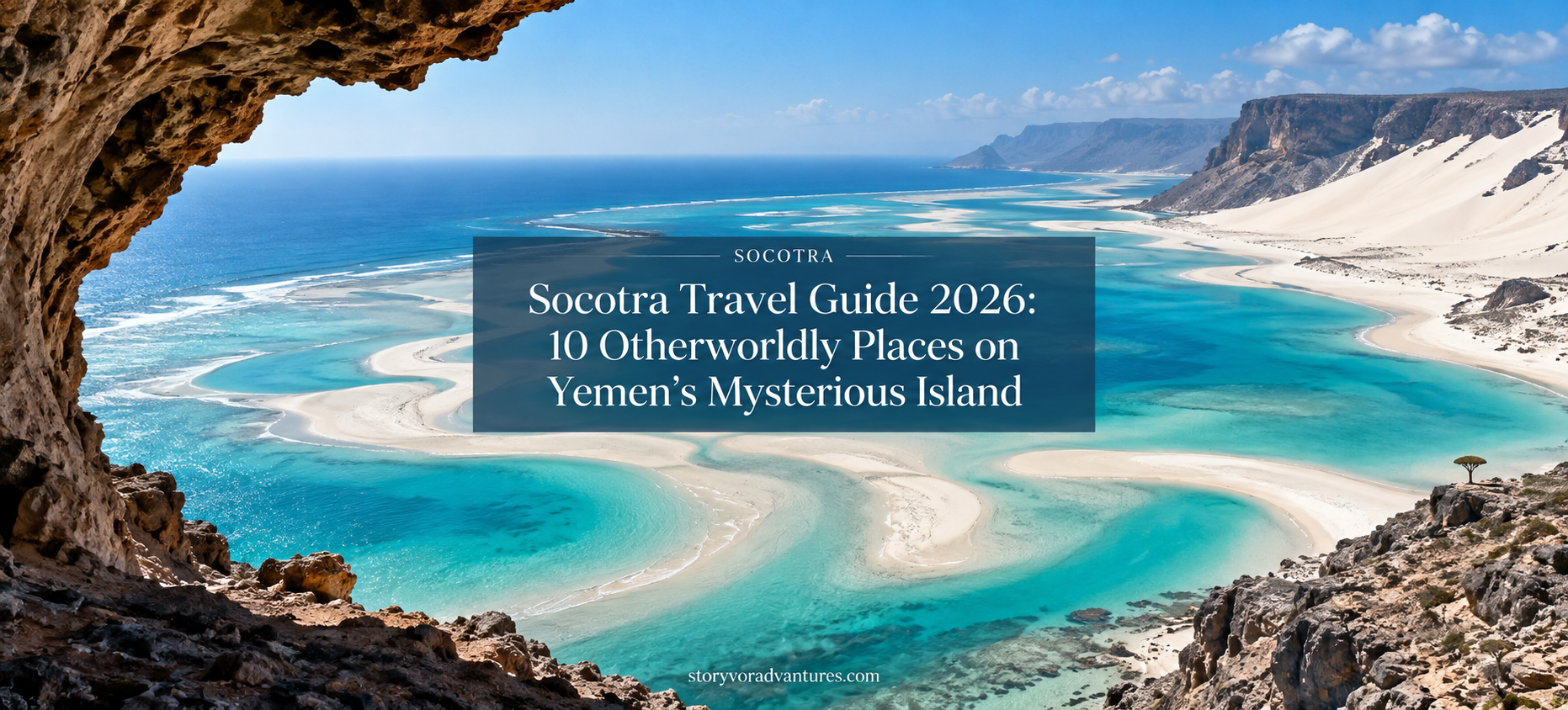
Socotra Travel Guide 2026: 10 Otherworldly Places on Yemen’s Mysterious Island
Discover 10 otherworldly places on Socotra Island, from Dragon Blood Tree forests and Detwah Lagoon to caves, dunes and remote beaches.
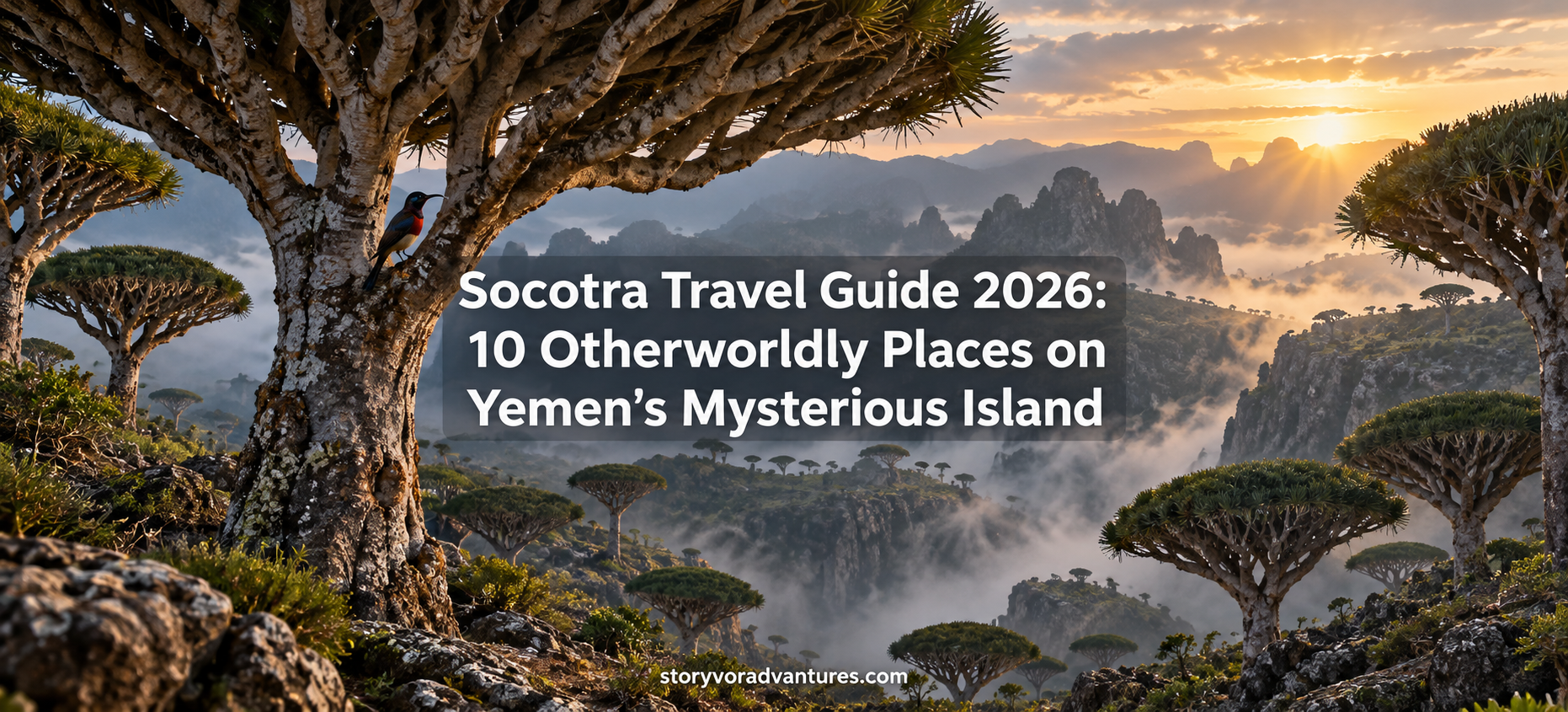
There are remote islands, and then there is Socotra—a destination so visually unusual that parts of it appear to belong to another planet. Rising from the north-western Indian Ocean near the Gulf of Aden, the Socotra Archipelago is internationally recognised for its extraordinary plants, wildlife and landscapes.
The archipelago’s long isolation allowed many species to develop independently. According to UNESCO, 37% of its plant species, 90% of its reptile species and 95% of its land-snail species occur nowhere else on Earth. This exceptional biodiversity helped Socotra earn recognition as a UNESCO World Heritage Site in 2008.
Socotra is not a conventional beach holiday. Its roads can be rough, accommodation may be simple, facilities are limited, and many natural areas require careful planning. More importantly, Socotra belongs to Yemen, and official travel advisories may warn against travelling there because of unpredictable security conditions. This guide is therefore intended for education and future trip planning—not as a recommendation to travel against government advice.
If conditions eventually permit a responsible visit, these ten remarkable places reveal why Socotra remains one of the most distinctive island destinations in the world.
1. Dragon Blood Tree Forests
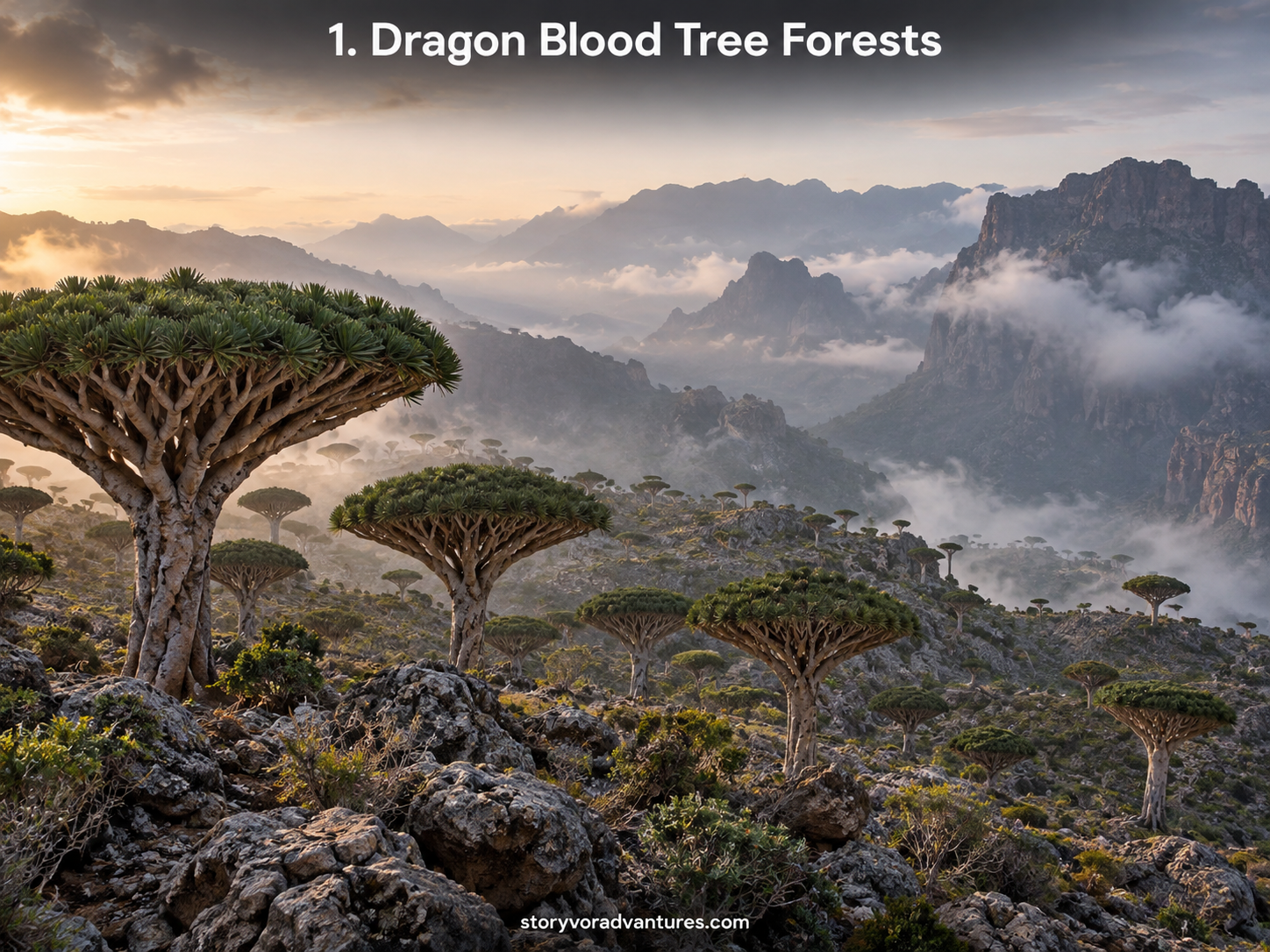
The dragon blood tree is Socotra’s most recognisable natural symbol. Its branches spread outward and upward to form a dense, umbrella-shaped crown, creating a silhouette that looks unlike an ordinary tree. The name comes from the deep-red resin produced by the tree, which has historically been used for purposes including colouring and traditional preparations.
One of the best-known areas for seeing these trees is the highland landscape around the Diksam Plateau and Firmihin Forest. Against rocky ground and an open sky, groups of dragon blood trees create an almost prehistoric scene. Mist, changing light and distant mountains can make the same forest appear completely different throughout the day.
These trees are part of a fragile ecosystem rather than outdoor decorations. Visitors should avoid damaging bark, collecting resin, climbing trees or leaving marked routes unnecessarily. Travelling with a knowledgeable local guide can help visitors understand the tree’s ecological and cultural importance while reducing disturbance.
2. Detwah Lagoon
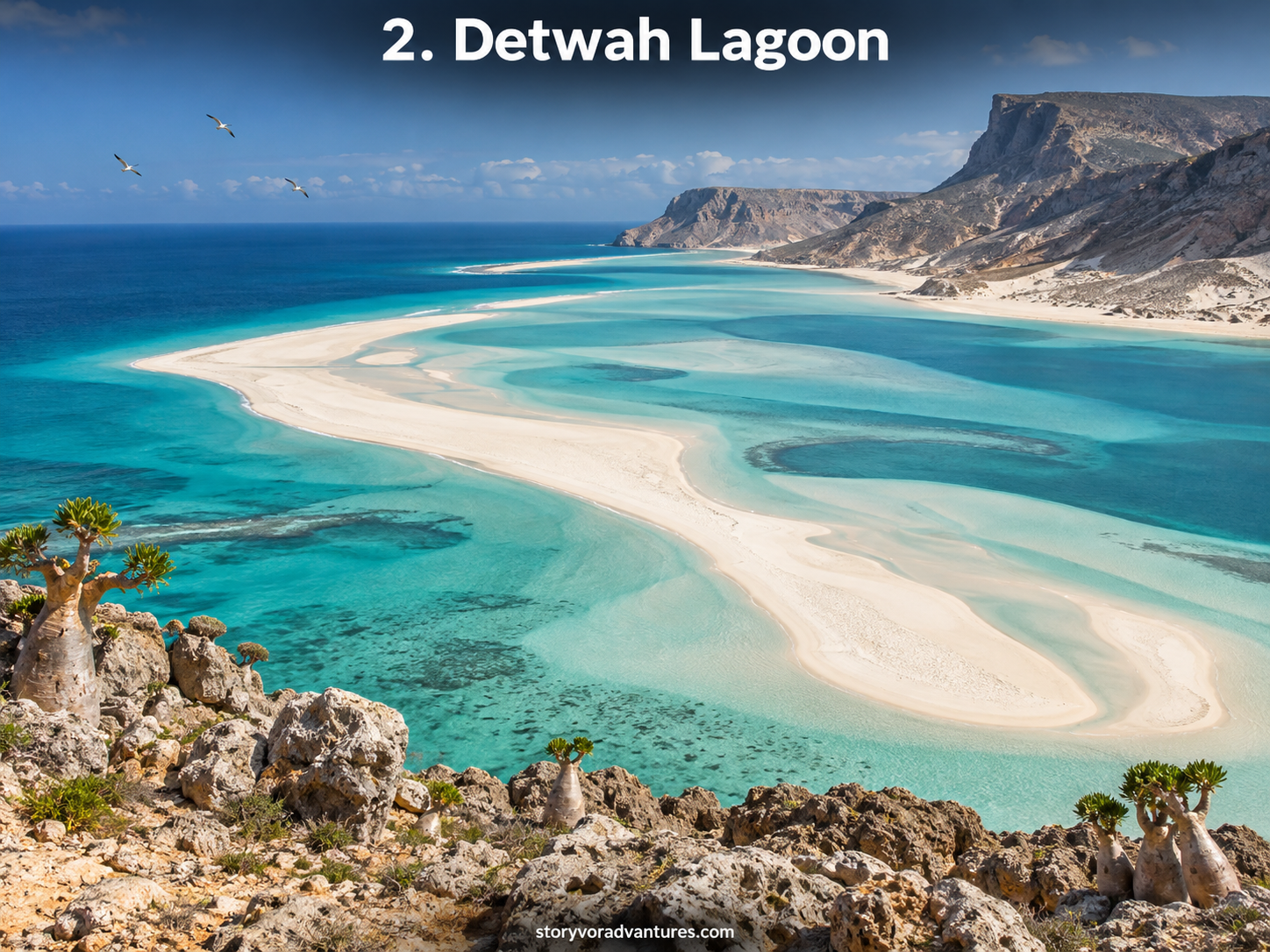
Detwah Lagoon lies near Qalansiyah on Socotra’s north-western coast. It is known for shallow turquoise water, pale sandbanks and surrounding limestone hills. From an elevated viewpoint, the lagoon appears as a broad sweep of blue and white merging into the Arabian Sea.
The attraction of Detwah is not limited to its scenery. The lagoon and surrounding coastal environment support marine life and bird activity, making it an important ecological area. Water depth, tides and weather can change its appearance considerably, so visitors may experience reflective shallows, exposed sandbars or stronger coastal conditions at different times.
Detwah is recognised as a wetland of international importance. Responsible visitors should avoid chasing wildlife, removing shells, leaving rubbish or disturbing sensitive shallow-water habitats. Quiet observation often produces a richer experience than trying to turn the landscape into a staged photograph.
3. Qalansiyah Beach
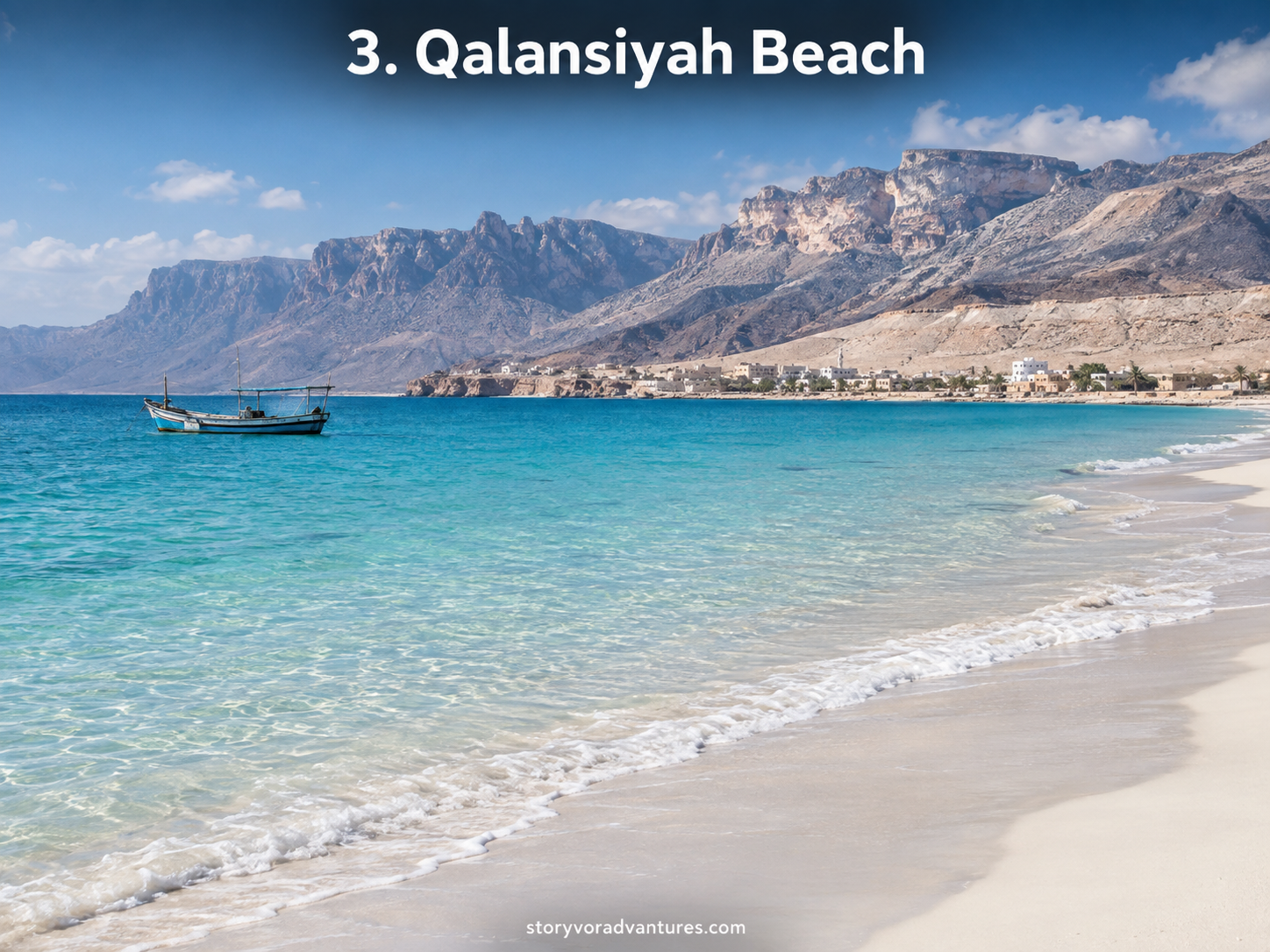
Close to Detwah Lagoon, Qalansiyah Beach presents another side of Socotra’s coastline. Bright sand, clear water and rugged mountains combine to create a view that can appear surprisingly untouched. The neighbouring town also provides an opportunity to see everyday island life beyond the famous wilderness photographs.
The beach can be peaceful, but its natural appearance should not create false expectations of a fully serviced resort. Shade, shops, changing facilities and emergency assistance may be limited compared with mainstream destinations. Travellers must carry sufficient drinking water, protect themselves from strong sunlight and follow local guidance about currents and sea conditions.
Respect for the nearby community is equally important. Visitors should dress appropriately away from swimming areas, request permission before photographing residents and avoid treating working villages as tourist displays. A beautiful destination remains someone else’s home.
4. Diksam Plateau
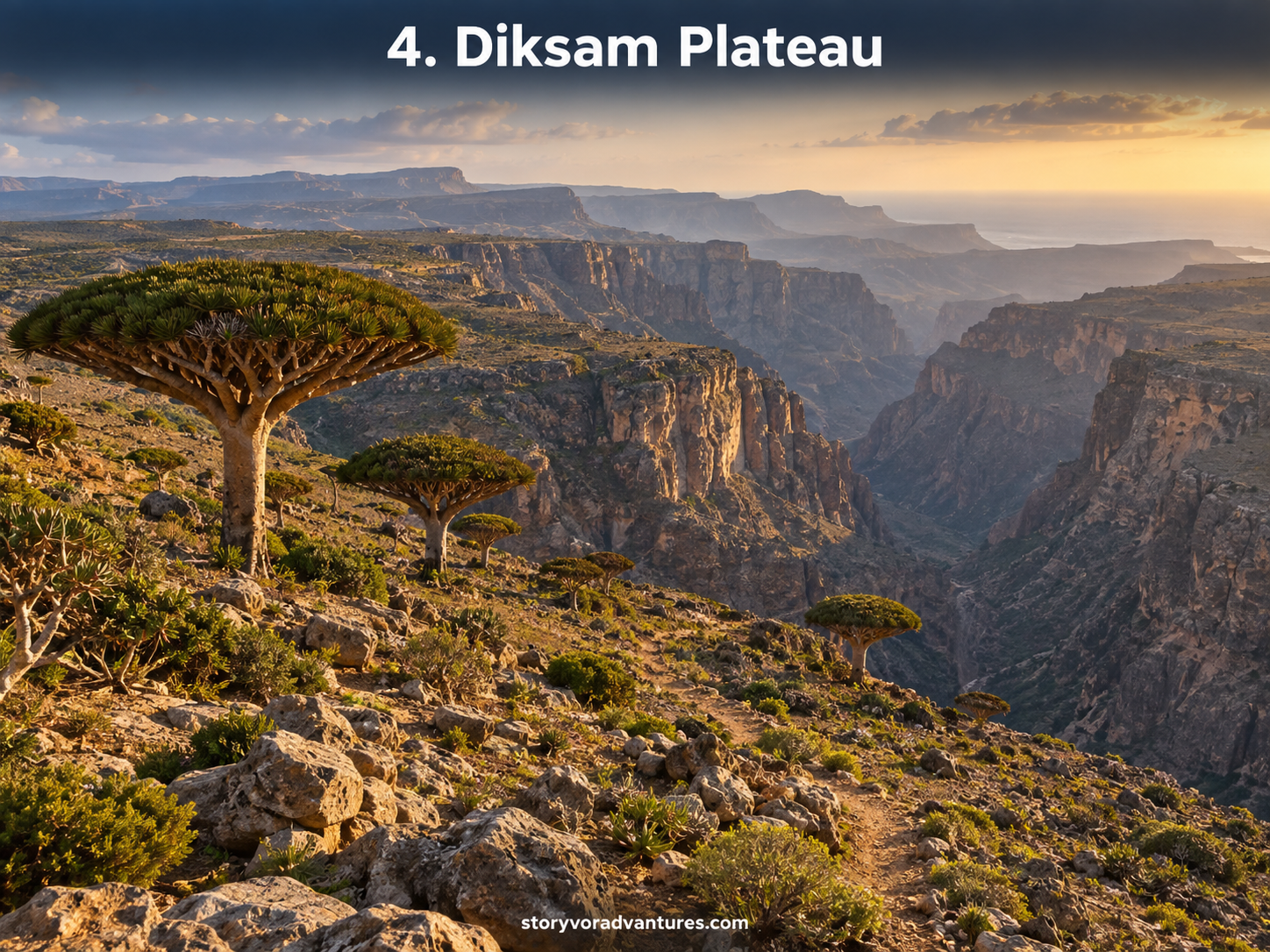
The Diksam Plateau is one of Socotra’s most memorable highland environments. Deep canyons cut through broad rocky land, while scattered dragon blood trees rise above the plateau. From several viewpoints, visitors can see enormous changes in elevation and understand how varied the island is beyond its beaches.
Diksam is especially attractive in the softer light of morning or late afternoon, when shadows reveal the depth of the surrounding valleys. However, exposed terrain can also bring strong sunshine, wind and quickly changing visibility. Good footwear and conservative walking plans are more useful here than trying to complete an ambitious route for photographs.
The plateau is also connected to local pastoral life. Goats and other livestock may be visible, and small settlements can appear across the landscape. Visitors should never enter homes, camps or private areas without invitation. Using local services and guides allows tourism spending to reach the people who understand and care for this environment.
5. Hoq Cave
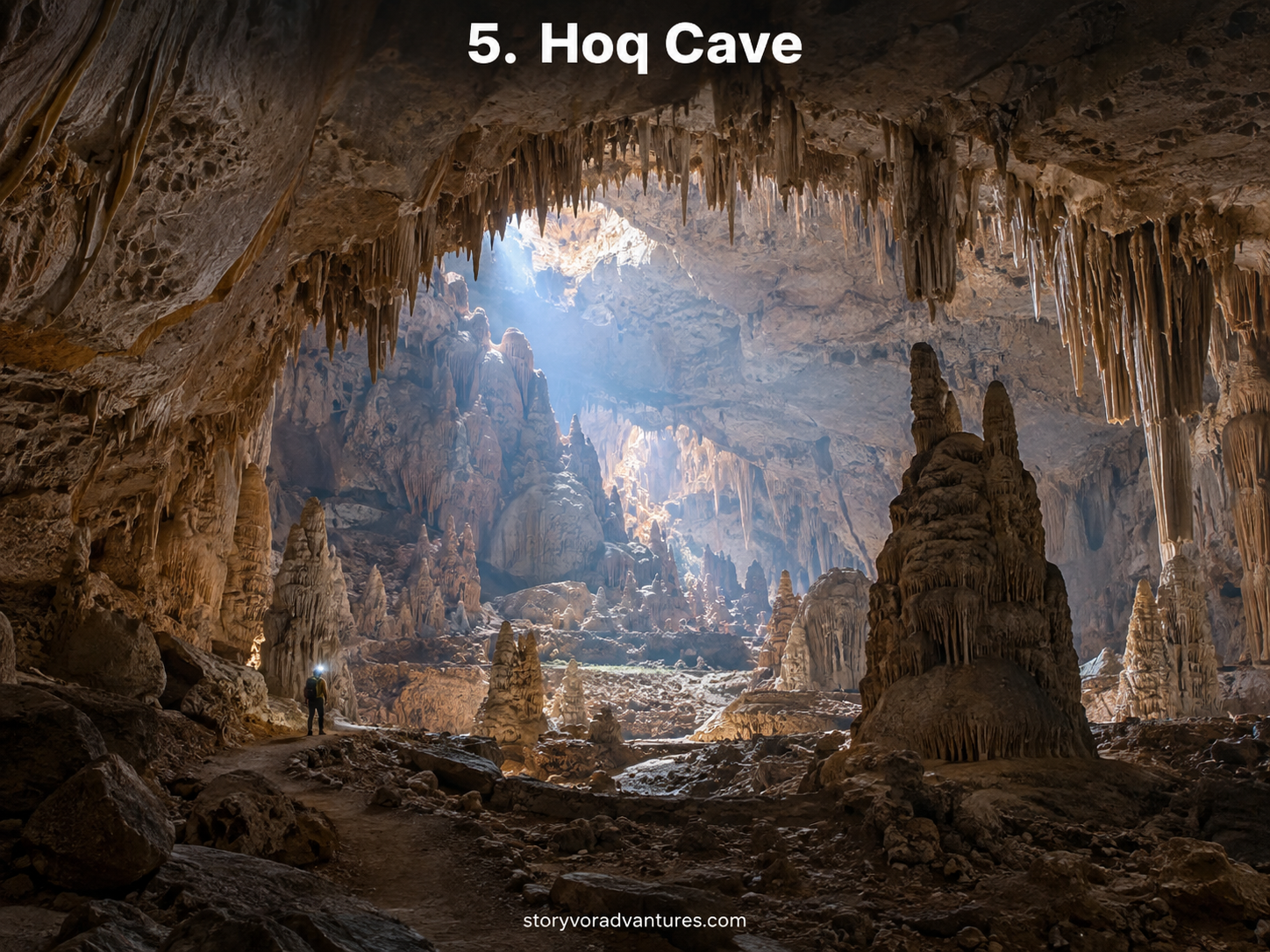
Hoq Cave offers a dramatic contrast to Socotra’s open coast and highland forests. Reached by a hike through rocky terrain, the cave contains an extensive underground environment shaped by water and geological processes over long periods.
Inside, visitors may encounter impressive stalactites, stalagmites and large chambers where light gradually disappears. The journey can feel adventurous, but caves are sensitive environments. A broken mineral formation cannot quickly regenerate, and careless footsteps or touching can cause lasting damage.
Visitors should enter only with suitable local guidance and dependable lighting. Head protection, sturdy footwear and backup illumination may be appropriate depending on current conditions. Nobody should write on cave surfaces, remove material or leave waste. People uncomfortable with darkness, uneven ground or enclosed spaces should honestly assess whether the experience suits them.
6. Arher Beach and Sand Dunes
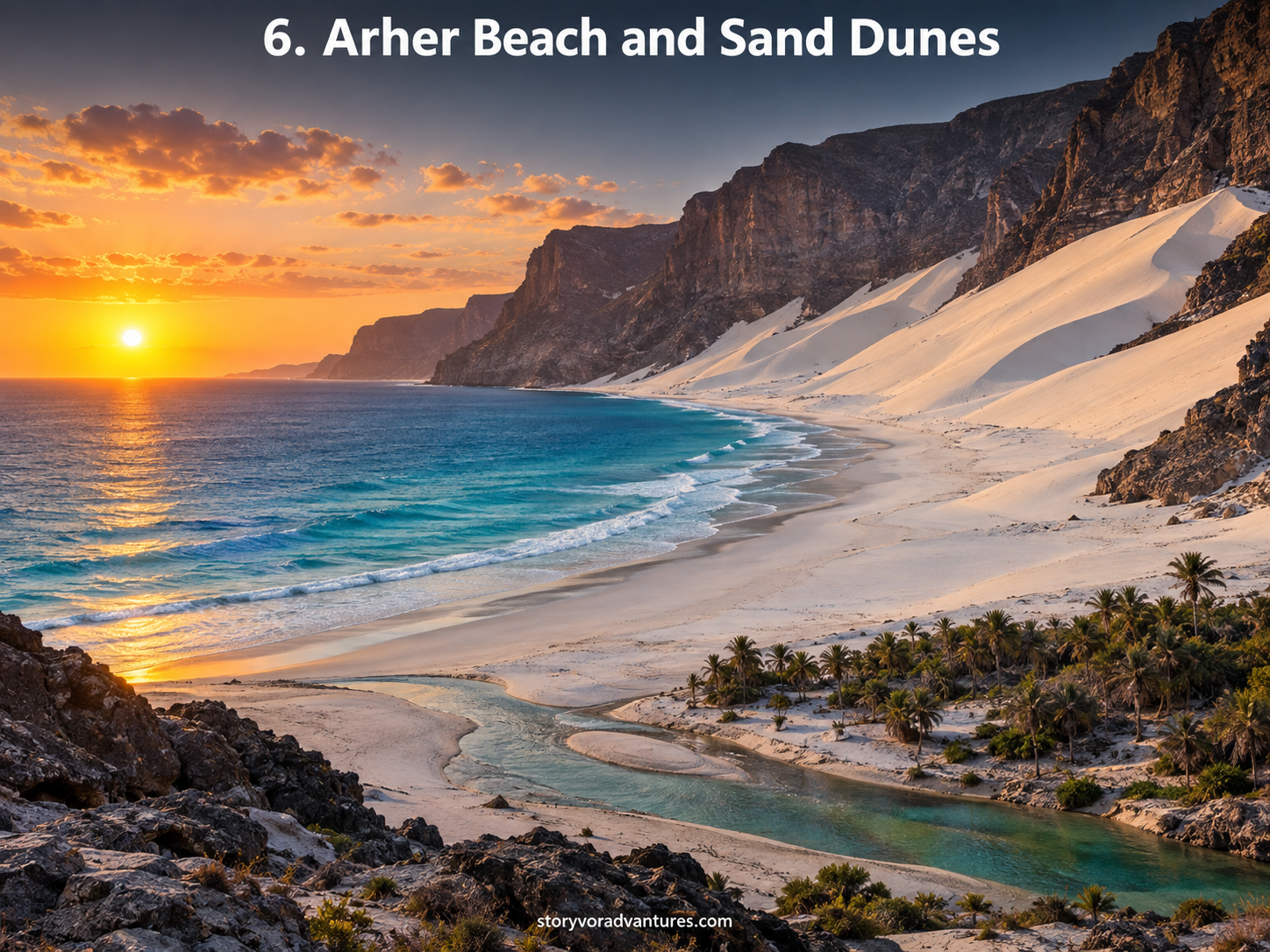
Arher is one of Socotra’s most striking meetings of land and sea. Enormous white sand dunes rise against steep cliffs while freshwater emerges near the coastline. The combination of mountain, dune, stream and blue water creates a landscape that feels both dramatic and improbable.
Climbing the dunes can offer impressive views, but loose sand and steep gradients make the ascent more tiring than photographs suggest. Midday heat may increase the difficulty, while strong wind can reduce comfort and visibility. Travellers should follow their guide’s advice, carry water and turn back before exhaustion becomes a safety issue.
Camping is sometimes associated with the Arher experience, yet low-impact behaviour is essential. Waste must be removed, freshwater areas should not be contaminated and camps should avoid unnecessary noise or bright lighting. The objective should be to leave the beach looking as though nobody had camped there.
7. Firmihin Forest
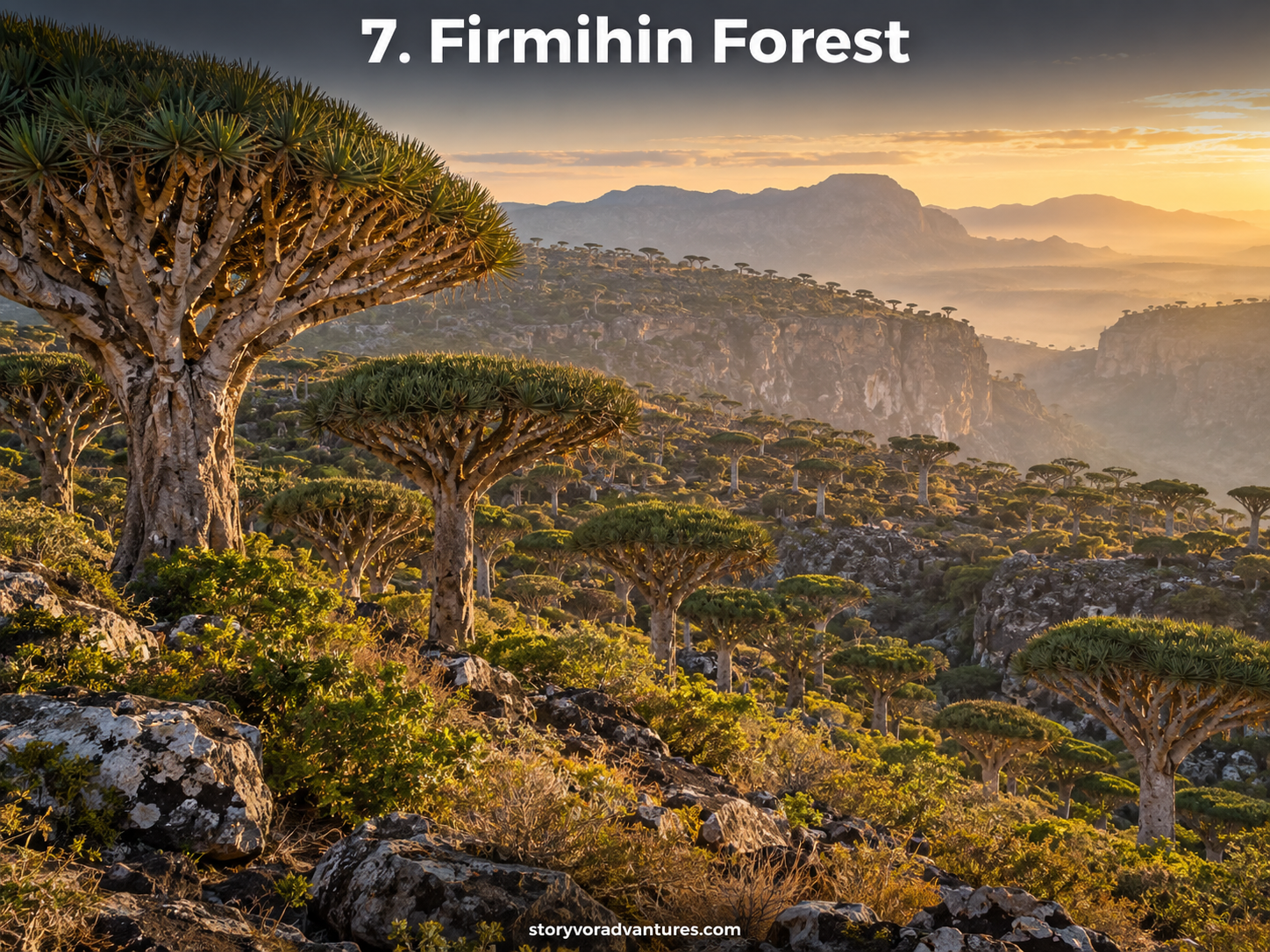
Firmihin Forest contains one of Socotra’s most significant concentrations of dragon blood trees. Viewed across the rocky plateau, their umbrella-like crowns form a pattern that cannot be confused with an ordinary woodland. The forest demonstrates why Socotra is often described as one of the planet’s most biologically distinctive islands.
The forest also reveals the pressures faced by the island’s natural systems. UNESCO identifies concerns affecting Socotra’s biodiversity, including overgrazing, resource use, road development, invasive species and the possible effects of unsustainable tourism. Climate and regeneration challenges can make the future of specialised trees particularly important.
Visitors should remain on appropriate routes and avoid collecting natural souvenirs. Photographing a tree causes no harm; carving it, climbing it or removing resin can. Supporting conservation-minded local guides gives the forest greater value as a living ecosystem rather than as a resource to be consumed.
8. Homhil Protected Area
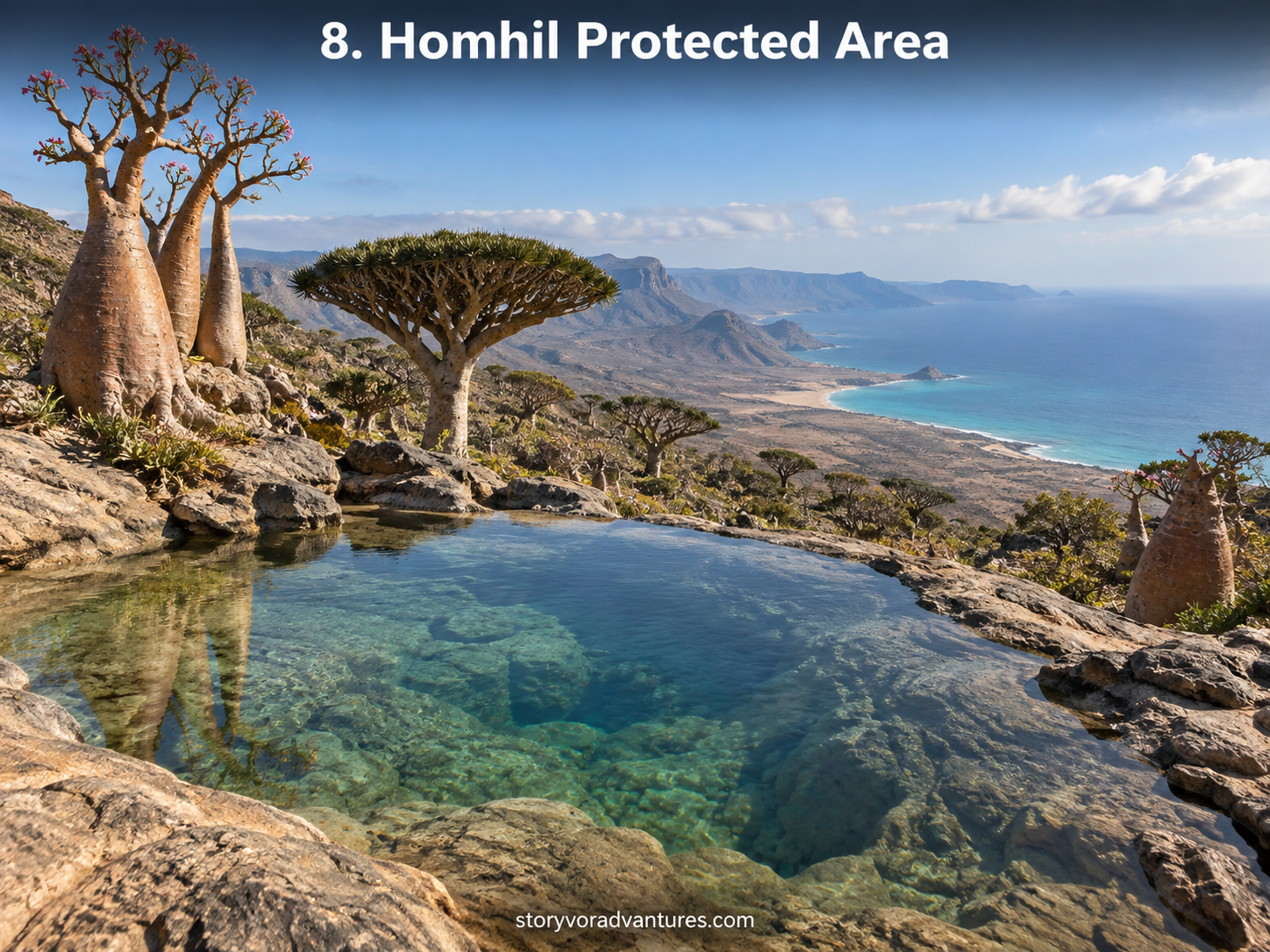
Homhil Protected Area brings together several of Socotra’s distinctive features, including unusual vegetation, elevated views and rugged walking terrain. Dragon blood trees and bottle-shaped desert rose plants can appear across the landscape, while viewpoints look toward the coast.
A natural pool is frequently associated with Homhil, but its appearance and water conditions may vary with weather and season. Visitors should never assume that a location seen in an old photograph will look identical on arrival. Local advice should determine whether approaching or entering any pool is appropriate.
The walk can involve heat, uneven paths and limited shade. Travellers should carry more water than they expect to need and avoid leaving tissues, plastic or food packaging behind. Plants should be admired without being touched or picked, particularly in areas known for endemic species.
9. Shuab Beach
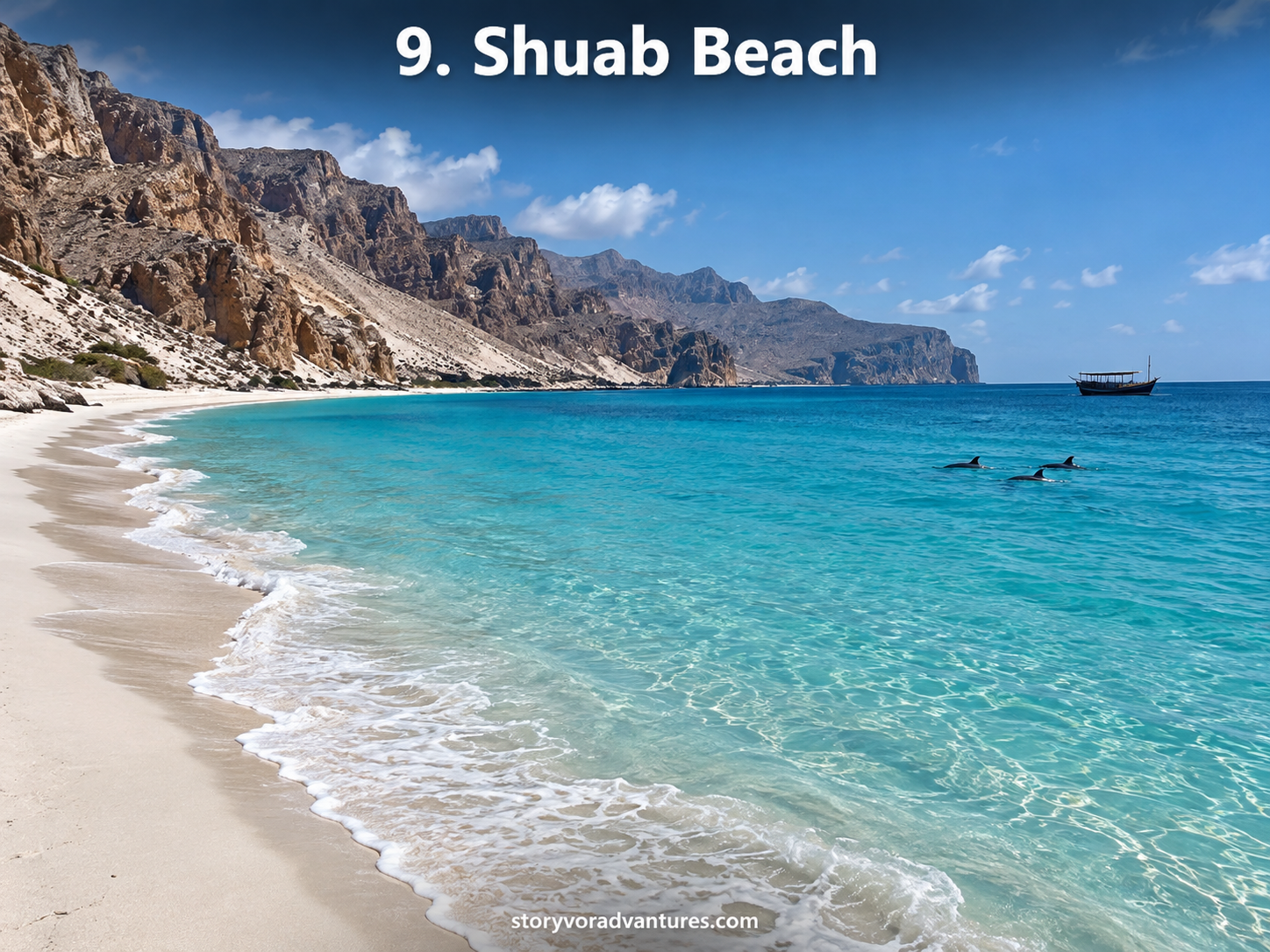
Shuab Beach is a remote coastal destination commonly approached by boat from the Qalansiyah area when conditions allow. The journey can reveal cliffs, open sea and sections of coastline that are difficult to reach by road. On arrival, visitors encounter pale sand and clear water framed by a largely undeveloped landscape.
The trip depends heavily on wind, waves and local marine conditions. Boat journeys should never be demanded when an experienced operator considers the sea unsafe. Life jackets, adequate fuel, communication arrangements and a realistic return plan matter more than maintaining a fixed itinerary.
Marine wildlife may occasionally be observed during coastal journeys, but responsible viewing requires distance. Boats should not chase, surround or block the movement of dolphins, turtles or other animals. Feeding wildlife to create a photograph can alter natural behaviour and should be avoided.
10. Wadi Dirhur Canyon
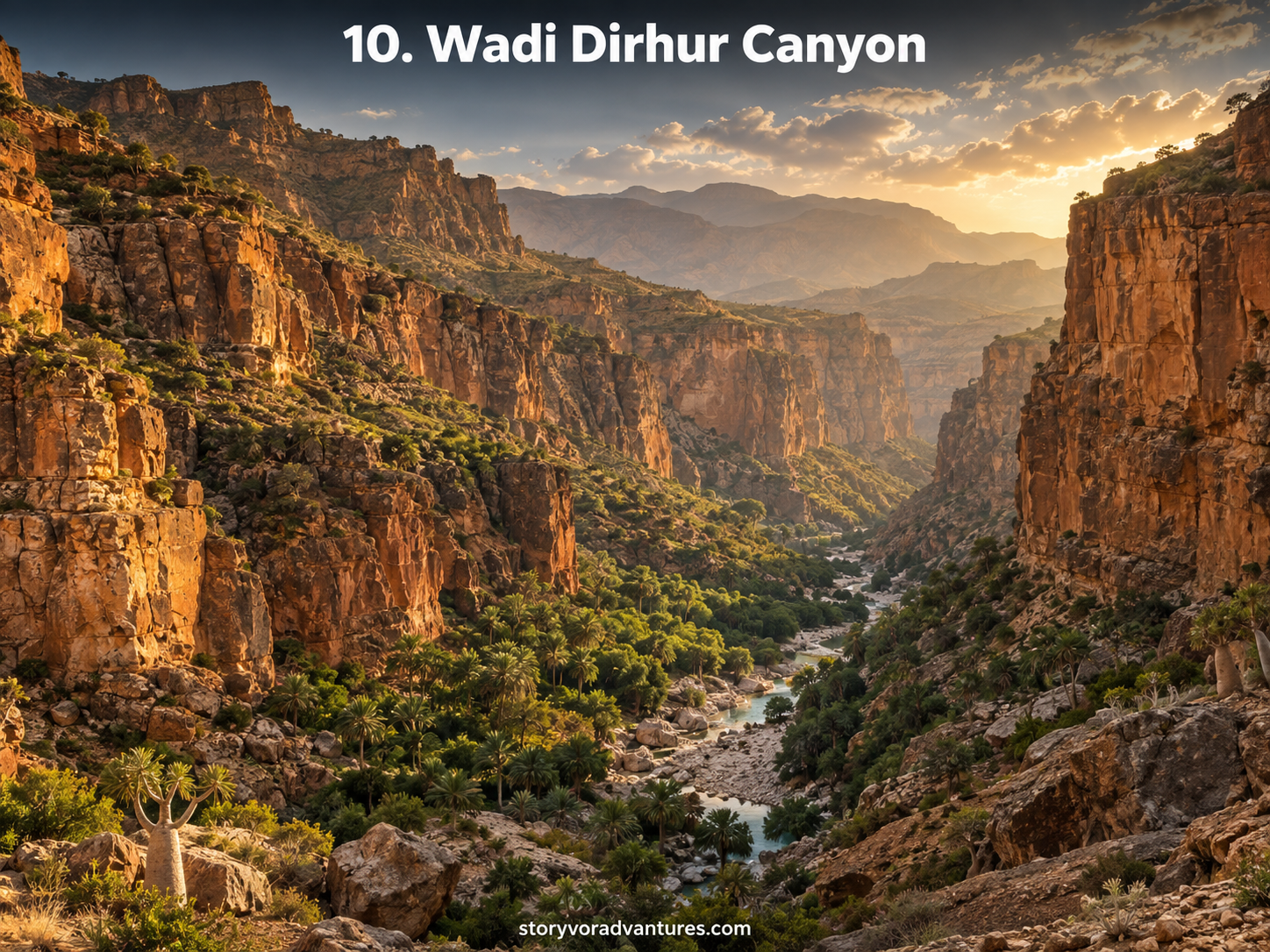
Wadi Dirhur cuts dramatically through Socotra’s central highlands near the Diksam area. Steep rock walls, scattered vegetation and seasonal water features create a landscape that feels both harsh and unexpectedly alive.
Walking through the wadi can help visitors appreciate the island’s geological scale. Conditions may range from dry and rocky to wet or slippery depending on recent weather. Flash flooding can be dangerous in canyon environments, even when rain is falling somewhere beyond the visitor’s immediate location.
A local guide is valuable for choosing a sensible route and recognising weather risks. Travellers should avoid climbing unstable rock faces, entering narrow sections during uncertain weather or assuming that mobile-phone coverage will be available. Remote beauty requires greater preparation, not less.
Best Time to Experience Socotra
Socotra’s weather is strongly influenced by seasonal winds and monsoon patterns. Conditions can affect flights, boat trips, camping and access to individual locations. There is no universal month that guarantees perfect weather across the island.
Before considering a journey, travellers should check current flight operations, entry rules, seasonal conditions and official government travel advice. Information published by tour companies should be compared with independent official guidance rather than treated as a substitute for it.
Accommodation, Transport and Facilities
Socotra’s tourism infrastructure is limited compared with popular island destinations. Depending on the itinerary, travellers may use simple guest accommodation or organised camps. Electricity, internet access, hot water and other services should not always be expected to operate at urban-hotel standards.
Road conditions vary, and several natural attractions require capable vehicles and drivers familiar with the terrain. Travellers should not rent an unsuitable vehicle and attempt to explore isolated locations independently. A flexible schedule is important because weather, road conditions and transport availability can change plans.
Medical services are also limited. Anyone considering future travel must discuss personal health needs with a qualified professional, carry permitted essential medication and confirm whether insurance remains valid for the destination. Emergency evacuation could be difficult, delayed or extremely expensive.
Responsible Travel on Socotra
Socotra’s isolation protected much of its biodiversity, but increasing attention can create new pressure. UNESCO specifically identifies unsustainable tourism as a potential threat alongside invasive species and other environmental challenges.
Visitors can reduce their impact by using refillable water containers where safe systems permit, refusing wildlife products, avoiding single-use items, carrying waste out of natural areas and staying on established routes. Seeds, plants, shells, stones and animal material should not be removed from the island.
Local communities should receive a meaningful share of tourism income. Hiring local guides, drivers and cooks and purchasing appropriate locally made goods can help, but interactions should remain respectful. Consent must be obtained before photographing people, homes, children, livestock or cultural activities.
Important Safety and Travel Advisory
Socotra is legally part of Yemen. As of September 2026, some governments—including the UK Foreign, Commonwealth & Development Office—advise against all travel to Yemen because of unpredictable security conditions. Travelling against official advice may invalidate insurance, and consular assistance can be severely limited or unavailable.
This article does not override government guidance or confirm that any flight, visa, tour or route is safe or legally available. Before making any booking, travellers must check the advice issued by their own government, current entry requirements, airline status, insurance exclusions and the latest local conditions.
If official advice says not to travel, postponing the journey is the responsible decision.
Final Thoughts

Socotra’s greatest appeal is not simply that it looks unusual. Its real importance lies in the natural history represented by its forests, caves, wetlands, mountains and coastal ecosystems. Many of its species evolved in isolation and exist nowhere else.
The Dragon Blood Tree Forests may attract travellers first, but the island’s deeper story is about ecological rarity and the responsibility that comes with visiting fragile places. Socotra should never become a destination where collecting photographs matters more than protecting the landscapes inside them.
For now, travellers can learn about the archipelago, support credible conservation work and monitor official advice. If safe and responsible travel becomes possible, Socotra deserves to be approached patiently—with local guidance, realistic expectations and a commitment to leaving its extraordinary character undisturbed.